Iranian Hostage's Daughter Launches Campaign Against Executions
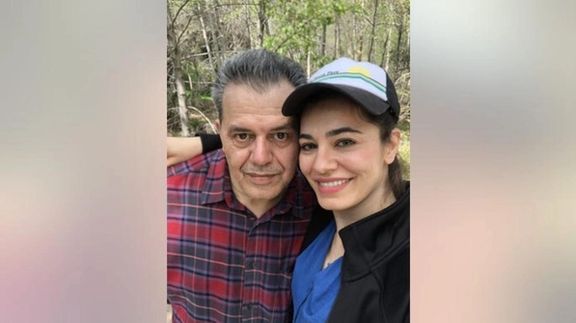
German-Iranian US citizen Jamshid Sharmahd and his daughter Gazelle
Gazelle Sharmahd, daughter of a dual-nationality prisoner sentenced to death in Iran, has launched a global campaign dubbed "CutTheRope" to protest against the surg in executions in Iran.
Jamshid Sharmahd, a 68-year-old software developer and California resident, was abducted by Iranian agents during a visit to the United Arab Emirates in 2020 and forcibly taken to Iran. In February 2023, the Iranian judiciary sentenced him to death on charges of endangering national security.
Sharmahd, who holds German and Iranian citizenship, was convicted of heading a pro-monarchist group named Tondar accused of a deadly bombing incident that occurred in 2008 at a religious center in Shiraz, killing 14 and injuring 215 more.
Drawing support from a coalition of families of prisoners, human rights activists, and political figures, the movement against capital punishment in Iran has gained traction globally.
Among the prominent supporters of Sharmehd's campaign are Yasmine Pahlavi, wife of Iran’s exiled Prince Reza Pahlavi, as well as Kylie Moore-Gilbert and Nazanin Zaghari-Ratcliffe, two former political prisoners in Iran.
The campaign encourages individuals to share photos or videos of themselves with the hashtag #CutTheRope as a symbol of protest against executions in Iran.
According to Human Rights Activists News Agency, in 2023 alone, at least 791 citizens, including 25 women and two juvenile offenders, were executed -- a 33 percent increase compared to the previous year. Additionally, reports from Amnesty International revealed that from January 2012 to July 2023, over 5,000 individuals, including 57 children, were executed in Iran.
United Nations Secretary-General António Guterres had previously warned the UN General Assembly about the escalating execution rates in Iran, urging immediate action to address the concerning trend.
UK’s National Union of Journalists (NUJ) demands action against Iran after documents reveal secret trials of journalists working for Persian language media abroad.
The documents, released by the hacker group Edalat-e Ali, have identified 44 journalists and media activists accused by Iran's judiciary of engaging in "propaganda against the Islamic Republic system."
Among those implicated are ten journalists affiliated with BBC Persian in London, along with others associated with Iran International, Manoto TV, Gem TV, Voice of America, and Prague-based Radio Farda (Radio Free Europe/Radio Liberty).
Michelle Stanistreet, General Secretary of the NUJ, strongly condemned Iran's actions, characterizing them as part of an aggressive campaign against Iranian journalists both domestically and internationally.
“It is deeply shocking that a state can act in this abhorrent way, putting journalists and their families in real danger in a flagrant abuse of press freedom. Once again, we will be contacting the UK’s government and the UN and we ask that the wider international community speak out against this outrageous weaponizing of journalists,” she added,
The revelation came following the publication of a database of criminal cases from the Tehran Judiciary by Edalat-e Ali, which included details of both public and secret cases totaling three million in number. The affected journalists were reportedly unaware of their conviction until the hacked documents were made public, revealing that they had been tried in absentia without legal representation or access to the indictment.
Following the disclosure of the documents, Iran's notorious Judiciary initially denied any hacking of its computer systems. However, all the files are accessible to the public on Telegram.
Iran will face a “swift and severe” response if it sells ballistic missiles to Russia, the United States warned on Thursday, reacting to reports earlier that Tehran may have done so.
Reuters reported Wednesday that Iran has provided Russia with hundreds of surface-to-surface ballistic missiles, adding to the large number of Iran-made drones and guided bombs and artillery ammunition –all of which has been used against Ukraine.
US National Security Council spokesman John Kirby said Thursday that the Biden administration will impose more sanctions on Iran for supplying drones to Russia, and it would go even “further” if it’s established that Iran has given Russia ballistic missiles, implying that the US government is yet to see clear evidence of that.
“We will implement additional sanctions against Iran and we will coordinate further response options with our allies and partners in Europe and elsewhere,” Kirby said. “I can assure you that the response from the international community will be swift and it will be severe.”
Iran and Russia are the two countries with the greatest number of US sanctions against them. And it’s expected that both countries will be at the receiving end of even more in the near future. The Biden administration is expected to announce its new set of Russia sanctions Friday, coinciding with the second anniversary of the war in Ukraine and the death of Alexei Navalny, Putin’s best-known opposition figure.
“We have demonstrated our ability to take action in response to the military partnership between Russia and Iran in the past,” Kirby said. “We will do so in the future. In response to Iran’s ongoing support for Russia’s brutal war.”
Iran has repeatedly denied that it provided Russia with weapons. Foreign Minister Amir-abdollahian showed sign of frustration Thursday when asked about the Reuters report.
“I strongly condemn the baseless accusations against Iran,” he said, “repeating unsubstantiated assertions on this issue has reached a boring state.”
Based on the Reuter’s report, citing several sources inside Iran, around 400 Iranian missiles have been sent to Russia, including Zolfaghat, which is said to have a maximum range of 700 km.
“During the Trump administration, Iran had barely any cash. Now it can afford to manufacture enough missiles to send 400 to Russia,” Senator Tom Cotton said Thursday in an interview with Fox News. “Joe Biden allowed this to happen through his appeasing and relaxing sanctions on the ayatollahs.”
Many in Washington blame President Biden for what they see as a clear ascendency of “the enemies of the United States,” namely, Russia, China, North Korea, and Iran.
“Reports that Iran is now supplying hundreds of missiles to Russia is another sign of deepening military cooperation between them,’ Senate Foreign Relations Committee Ranking Member Jim Risch posted on his account on X. “Putin's ability to acquire missiles from Iran and the DPRK (North Korea) stands in stark contrast to the Biden administration's dithering on providing Ukraine Army Tactical Missile System (ATACMS).”
Ukraine has for many months been a contentious issue in Washington. A group of Republicans have blocked the aid package that would boost Ukraine’s war efforts to the tune of $70 billion.
That’s in stark contrast to the missile deal between Iran and Russia, which according to an Iranian source cited by Reuters, was finalized in late 2023, allowing for shipments to begin in early January 2024.
The UN Security Council sanctions on Iran's export of drones and some missiles expired in October 2023. The US and EU sanctions on Iran's ballistic missile program are still in place, however, mainly due to concerns that the regime would give these weapons to Russia –and its regional proxies, of course.
Four men were charged on Thursday in connection with a vessel that was intercepted by the US Navy in January while allegedly transporting Iranian-made weapons, the US Justice Department said.
Two US Navy SEALs were reported missing after boarding the unflagged vessel in a Jan. 11 operation near the coast of Somalia. They were declared deceased 10 days later after an exhaustive search.
"Two Navy SEALs tragically lost their lives in the operation that thwarted the defendants charged today from allegedly smuggling Iranian-made weapons that the Houthis could have used to target American forces and threaten freedom of navigation and a vital artery for commerce," Deputy Attorney General Lisa Monaco said in announcing the charges.
The US has carried out a string of strikes against Houthi targets in Yemen in response to the group's attacks on merchant ships in the Red Sea that have disrupted global trade and raised fears of supply bottlenecks.
The Justice Department said the boat's captain, Muhammad Pahlawan, had been charged in a criminal complaint with transporting by ship explosives that he knew were intended to cause death or harm and with lying to the federal agents who boarded the vessel.
Mohammad Mazhar, Ghufran Ullah and Izhar Muhammad were each charged with lying to the federal agents. The four men were carrying Pakistani identification, prosecutors said in the criminal complaint.
A search of the boat following the raid turned up what are believed to be Iranian-made advanced weaponry, including components for medium-range ballistic missiles and anti-ship cruise missiles.
A leaked document has revealed that Tehran’s Revolutionary Court convicted 44 foreign-based journalists and media activists in absentia two years ago over the allegation of “propaganda against the government.”
At the time of the verdict, the journalists were working for foreign-based Persian-language media outlets including Iran International, BBC Farsi, Manoto, Radio Farda, GEM TV and Voice of America.
Dated February 9, 2022, the leaked document concerns the legal proceedings which led to the conviction of the journalists in the 26th branch of Tehran’s Revolutionary Court. According to the document, the verdict was issued in secret.
The names included renowned figures such as Mahmoud Enayat, Aliasghar Ramezanpour, Mehdi Parpanchi and Keivan Abbasi.
Following the revelations, Michelle Stanistreet, the secretary general of the UK-based National Union of Journalists (NUJ), called it “a flagrant abuse of press freedom". "It is deeply shocking that a state can act in this abhorrent way, putting journalists and their families in real danger,” she said.
Noting that the majority of those convicted are based in London, she called on the UK, the United Nations and the international community to condemn “this outrageous weaponizing of journalists.”
She warned, “Particularly worrying is the use by the regime of red notices through Interpol which can inhibit the movement of these journalists, as they travel abroad for work or to meet with family in third countries".
According to the NUJ, the 44 journalists and media activists had no information about their sentences prior to the release of the leaked documents by the hacktivist group. This shows they were convicted “without legal representation or access to the indictment,” the union stressed.
Meanwhile, another document obtained by the hackers revealed that the Iranian regime targeted dozens of Iran International TV staff with financial bans and threats to their families amid national protests in 2019.
Iran International was aware of the regime’s intimidation tactics at the time, but the documents offer indisputable proof that Iran’s Intelligence Ministry and judicial officials were coordinating the harassment efforts.
This is not the first time Tehran’s schemes to harass and target foreign-based Iranian journalists, especially those affiliated with Iran International, are disclosed.
The situation is no better for journalists and media activists inside Iran. Earlier in the month, Defending the Free Flow of Information (DFI), a group monitoring freedom of speech and media in Iran, reported that over 20 journalists and media outlets and managers in the country underwent judicial scrutiny in January 2024.
Iran is a leading persecutor of journalists among the ranks of China, Russia, and Belarus, and one of the most oppressive regimes concerning freedom of expression and media liberties.
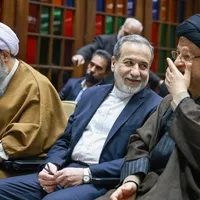
The Assembly of Qom Seminary Scholars and Researchers of Iran has claimed "the elections have lost their meaning" in the country on the eve of the upcoming polls in the country.
The group also announced its decision to abstain from providing a list for the introduction of candidates for the Assembly of Experts and the parliament.
The proclamation comes in the wake of a recent round of elections marked by what the organization describes as a “narrow-minded approach leading to broader restrictions, leaving many citizens disheartened and disillusioned, ultimately turning them away from the ballot boxes.”
The Assembly highlighted the significant decline in voter participation in several recent elections, the government continually narrowing the field of choice for the electorate.
The Assembly branded the government ineffective amid mass discontent, pointing out that “the capabilities of electoral, legislative, and executive institutions have been restricted, rendering people's choices ineffective.”
The organization called for “a restoration of meritocracy in governance, urging rulers to abandon the current mode of governance to restore confidence in the electoral process and encourage greater participation among citizens.”
The upcoming parliamentary and Assembly of Experts elections, scheduled for March 1, are anticipated to witness historically low voter turnout, reflecting a crisis of legitimacy for the Islamic Republic.