Sweden Releases Convicted Iranian Official In Prisoner Swap
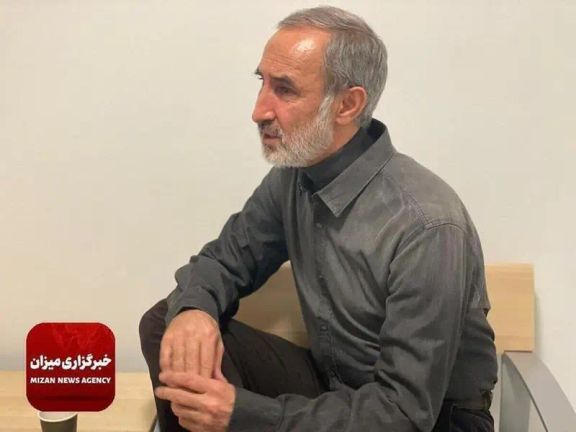
Hamid Nouri, a former Iranian judiciary official
Iran has announced the imminent return of Hamid Nouri, a former Iranian prison official who was convicted of crimes against humanity and incarcerated in Sweden, as part of a prisoner exchange deal.
Kazem Gharibabadi, head of Iran’s High Council for Human Rights, stated on social media platform X that "Hamid Nouri, who has been in illegal detention in Sweden since 2019, is free and will return to the country in a few hours."
Nouri was sentenced to life imprisonment by a Swedish court in 2022 for crimes against humanity linked to his involvement in the mass executions of prisoners during the 1980s in Iran. He was arrested when he visited Sweden according to the principle of universal justice.
In a reciprocal move, Swedish Prime Minister Ulf Kristersson confirmed the release of two Swedish citizens, Johan Floderus and Saeed Azizi, who had been detained in Iran under unclear circumstances.
The Swedish Prime Minister noted, "Today, they will land on Swedish soil and be reunited with their families and loved ones. Welcome home!" He emphasized that the Swedish government had "worked intensively" to secure their freedom.
Saeid Azizi’s lawyer, Reza Shafakhah, revealed that the prisoner exchange deal was conducted without his or the Azizi family's prior knowledge. "This exchange was done without my knowledge as a lawyer and without the client's family's knowledge,” Shafakhah stated on X on Saturday. Shafakhah further disclosed that Azizi was released from prison last night and subsequently flew to Sweden.
The Iranian clerical rulers decided to summarily execute about 5,000 political prisoners in 1988 and prosecutors proved that Nouri was involved in the mass crime as a prison Guard.
The prisoner exchange can become controversial due to the nature of Nouri's convictions, and Iran's practice of arresting foreigners to use them as de facto hostages. Critics argue that such swaps might undermine international legal standards by effectively rewarding countries that detain foreigners on dubious grounds. The return of Nouri, in particular, raises ethical questions about the implications of negotiating with governments accused of severe human rights violations.
The United States last year released around $6 billion in Iran's frozen funds to secure the release of five dual nationals arrested on trumped-up charges and held in Iran. That arrangement raised strong public criticism about rewarding hostage taking.
In recent years, the Iranian Revolutionary Guards have detained numerous dual nationals and foreigners, predominantly on accusations of espionage and security threats. Human rights organizations have criticized Iran for these arrests, suggesting they are strategically used to leverage concessions from other nations.
Ahmad Ali Goudarzi, commander of Iran's border guards, says that a "terrorist group" allegedly planning "sabotage activities" ahead of presidential elections was intercepted trying to cross into Iran through the borders in the southeast.
Iran is scheduled to hold a snap presidential election on June 28 following the sudden death of President Ebrahim Raisi and his companions in a helicopter crash last month.
According to Goudarzi, the border guards engaged in an “intense armed confrontation”, injuring “several terrorists and preventing their entry into the country.”
“A significant cache of weapons and explosives, including C4, gunpowder fuses, electronic detonators, an M16 rifle scope, Kalashnikov and pistol ammunition, US-made hand grenades... and a walkie-talkie were confiscated,” he alleged.
Jaish al-Adl, designated a terrorist organization by Iran and included in the United States' list of foreign terrorist organizations since 2010, is often accused by Iranian officials of being behind similar attacks.
Critics argue that the Islamic Republicleverages such incidents to justify oppressive measures against its citizens, with many Iranians skeptical of the government's claims about its military and intelligence prowess. Iranian security officials often claim foiling terror plots but they rarely produce evidence to hold trials.
In a separate incident on Saturday, Hamed Torkashvand, the head of a Sharia punishment office in Paveh, western Iran, was killed on Saturday. The motive behind Torkashvand's killing remains unclear.
Mehdi Ghannadi, the Public Relations Manager of the Kermanshah Prosecutor's Office disclosed, "Investigations have shown that the assailant had been lying in ambush outside the victim's residence for several hours before the attack."
He added that the perpetrator fired four shots at the Torkashvand's head and chest.
Abdolfattah Navvab, representing Iran's Supreme Leader Ali Khamenei in Hajj affairs, has voiced objections over what he describes as the "arrest of some Iranian pilgrims" during the annual Hajj ceremonies in Saudi Arabia.
During a meeting in Mecca, attended by the Iranian Ambassador to Riyadh, Navvab stated that "Some of the host country's (Saudi Arabia) actions have been unprecedented in any previous Hajj seasons."
He highlighted the recent expulsion of six individuals, identified by Iranian officials as members of an Iranian government media group, suggesting that these expulsions occurred under questionable circumstances. Navvab also mentioned that an Iranian detained in Medina is facing harsh conditions, with little hope for a prompt release. No further details about this individual were provided.
The statement by the official come as Tehran has historically used the Hajj and the presence of Iranian pilgrims to instigate political demonstrations. In a speech on May 6, Supreme Leader Khamenei criticized the US and Israel, indirectly targeting Saudi Arabia by condemning those who befriend these nations.
He reiterated a call for Iranian pilgrims to distance themselves from "the criminal Zionist enemy and its supporters," reviving a rhetoric of confrontation reminiscent of past decades.
Although the Islamic Republic resumed diplomatic relations with Saudi Arabia last year, brokered by China, after a seven-year break, the two regional powers are far from establishing close ties and exhibiting mutual trust.
Hassan Moslemi-Naeini, head of Iran’s Academic Center for Education, Culture and Research (ACECR), claims that “a number of Iranian scientists residing in the US have shown willingness to collaborate with Iranian academic institutions.”
The Iranian official did not reveal any details or provide any names.
Doubts persist about the feasibility of these claims. The trend of Iranian expatriates returning to contribute to state-run projects remains minimal, with many questioning the viability of repatriation efforts amidst ongoing internal issues such as political instability, economic challenges, and a lack of academic freedom.
These conditions have historically driven the brain drain, pushing numerous academics and professionals to seek opportunities in more stable environments abroad.
Moslemi-Naeini discussed the plans in the context of launching a national center, focused on advancements in artificial intelligence and robotics, slated to be operational by year's end.
However, critics argue that while the Iranian government projects optimism about attracting global talent, the systemic issues that plague the nation cast a long shadow over the potential success of such initiatives.
In September, Dr. Saeid Moidfar, chairman of the Iranian Sociological Association, conveyed a grim outlook for Iran. He noted the pervasive sense of despair among Iranians, exacerbated by the government’s severe crackdown on dissent, curtailment of women’s rights, and a deepening economic crisis. Moidfar criticized the governance of the country, stating that when people feel disconnected from decision-making, suffer economically every day, and witness the degradation of social values, they see no future in staying.
Iran has imported at least $10 million worth of drone engine parts over the course of two months from countries including China, Turkey, the UAE, Germany, and even the US despite global sanctions.
Data from Iran's customs organization, analyzed by Iran International, showed that several items listed under a US advisory guide were imported in the first two months of the current Iranian year, which began on March 20.
Earlier this month, the US issued an advisory to alert the public about the threat posed by Iran’s procurement, development, and proliferation of unmanned aerial vehicles (UAVs).
Given Iran's dependence on foreign procurement for items it cannot produce domestically, specific trade product codes were identified by the US so that “exporters, manufacturers, distributors, and financial institutions” avoid unintentionally contributing to Iran’s UAV programs. Among these codes is 840710, which pertains to aircraft spark-ignition reciprocating or rotary internal combustion piston engines.
The Islamic Republic’s customs report indicated that between late March and May 2024, approximately $10 million worth of goods with this code were imported from China, Hong Kong, Thailand, Germany, the UAE, Russia, Turkey, Italy, the US, Qatar, and Oman.
Following Iran's significant transfer of lethal drones to Russia starting in mid-2022, sanctions have been imposed by the US, UK, and EU against Iranian individuals and entities involved in the UAV supply chain, as a violation of UN Security Council Resolution 2231.
In February, hackers revealed that Iran was receiving gold from Russia as partial payment for the drones.
The hackers breached the Iranian Revolutionary Guard Corps (IRGC) email servers, uncovering data on the sale of Shahed drones to Russia via a front company, Sahara Thunder.
In April, the US Treasury, in coordination with the UK and Canada, targeted Sahara Thunder, accusing it of supporting the IRGC and Russia's war in Ukraine. The Treasury highlighted Sahara Thunder's pivotal role in designing, developing, manufacturing, and selling thousands of drones, many of which were transferred to Russia.
Additionally, the Treasury targeted Sahara Thunder's leadership and shipping network, facilitating the sale and shipment of Iranian commodities to China, Russia, and Venezuela.
The sanctions followed Israel's call for international support after Iran's direct assault in April, which involved over 300 missiles and drones launched from Iran, most of which were intercepted by Israel and its allies.
Tehran asserted that the attack was a retaliation for an Israeli airstrike on its consulate in Syria on April 1, which resulted in the deaths of IRGC commanders.
Additionally, after Tehran's attack, the EU expanded its sanctions on Iranian drone and missile producers, complementing existing measures against Iran for selling drones to Russia for use in the Ukraine conflict.
Furthermore, Iran's exports are not limited to Russia. It has reportedly provided weapons technology to militant groups in the region, such as the Houthis.
Since November, the Houthis have utilized Iranian-provided missiles and drones to target commercial vessels in the Red Sea, an essential artery for global trade. Initially triggered by the Israeli military operations in Gaza, these attacks have significantly disrupted maritime commerce in the area.
The Houthis' offensive in the Red Sea commenced following a directive from Iran's Supreme Leader, Ali Khamenei, urging Muslim nations to obstruct Israeli trade routes.
Iran's June 28 snap presidential election is a race dominated by hardliners which is widely considered by critics as a "selection", highly engineered by the state.
In this week's episode of ‘Eye for Iran,' host Negar Mojtahedi speaks to author and journalist Arash Azizi, and Gabriel Noronha, who served as the Iran advisor to the US State Department during Trump's presidency, about the six candidates approved by the Guardian Council to run and what they mean for the future of Iran.
Who will succeed the late president Ebrahim Raisi? Will the 'Woman, Life, Freedom' movement impact the outcome of the elections?
'Eye for Iran' attempts to answers those questions and more.
Azizi and Noronha both believe Mohammad Bagher Ghalibaf is a top contender to win, and the reason has to do with Iran's Supreme Leader Ali Khamanei and his age.
"I think the most important question for the future Iran right now is what's going to happen when Khamenei dies...I think Iran after Khamenei is moving into a definitely less clerical and even less Islamist ideology in many ways, into more of a military authoritarian state," said Azizi.
With there being one moderate in the mix, namely Masoud Pezeshkian, Noronha believes it won't make much of a difference. He said "there's the talk about the moderates and the reformists. I don't believe at this point, if you're part and parcel of the Iranian government and establishment, that there is a real reformist movement left at all. And I don't think most of the Iranian people really believe that there's much of a difference at this point."
Watch and listen to this week’s episode of ‘Eye for Iran’ as your host and guests dig into these topics.