Iranian Candidate Claims Khamenei Permitted Attacks on JCPOA
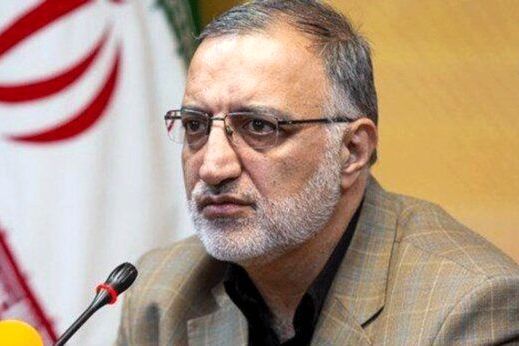
Tehran's mayor and a member of IRGC Basij, Alireza Zakani
Tehran’s mayor, who is a candidate in Iran’s presidential election, has claimed on national TV that Supreme Leader Ali Khamenei permitted politicians to attack the 2015 nuclear deal, known as the JCPOA.
In a televised roundtable on Saturday, June 15, Zakani said, "In 2015, I expressed my concerns about the JCPOA to the Supreme Leader. The Leader emphasized that officials should fulfill their duties regarding the JCPOA, which led me to draft an urgent parliamentary bill to clarify the dimensions of the agreement."
Zakani, who is a staunch hardliner, was speaking about relentless attacks by conservative loyalists of Ali Khamenei that started almost immediately after the JCPOA was signed and continued throughout the presidency of Hassan Rouhani until 2021.
Zakani, who has been sanctioned by Western countries for his role in suppressing protests in Iran, added, "After reading the JCPOA, I said I wouldn't sign such a contract with my own brother."
Alireza Zakani
Under the pressure of UN Security Council sanctions, the Islamic Republic began secret talks with American officials sometime in 2013. These initial discussions eventually evolved into official multilateral nuclear negotiations, culminating in the signing of the JCPOA.
When the talks began, Khamenei famously referred to his decision as demonstrating “heroic flexibility,” indicating a willingness to reach an agreement with the West. It was clear at the time that he had authorized the negotiations, although his demeanor suggested reluctant approval.
Hardliners almost immediately began attacking the agreement, and it was clear to those in Iran that without Khamenei’s permission no one would dare to question such a strategic decision. Despite Khamenei’s own public blessing for the agreement, hardliners blamed Rouhani and his foreign minister Mohammad Javad Zarif for being pro-West and compromising Iran’s interests.
Zakani insisted that Khamenei did not endorse the JCPOA. "Some decided on behalf of the regime and claimed it was the regime's decision, but that was not the truth," he declared. In the political jargon of the Islamic Republic the word “regime” often means Ali Khamenei.
However, on Saturday, Fayyaz Zahed, candidate Masoud Pezeshkian's representative, said during a debate on the radio, "The JCPOA was the decision of the regime, not the Hassan Rouhani administration." But hardliners would not have any of that. Amirhossein Thabati, Saeed Jalili's representative, declared during the radio debate that "This agreement is a burden that Rouhani and Zarif imposed on the country, and now even a thousand wise men cannot lift it."
On Saturday, France, Germany, and Britain, original signatories of the 2015 nuclear deal with Iran, condemned Tehran’s latest actions to further expand its uranium enrichment.
"Iran has taken further steps in hollowing out the JCPoA, by operating dozens of additional advanced centrifuges at the Natanz enrichment site as well as announcing it will install thousands more centrifuges at both its Fordow and Natanz sites." the joint statement said, referring to the Joint Comprehensive Plan of Action signed with Iran in 2015.
Centrifuges are machines that enrich or purify uranium to up to 90%, which can be used to produce nuclear weapons. Iran has been enriched to 60% purity since 2022 in retaliation for the US withdrawal from the JCPOA in 2018.
Iran has also substantially reduced the ability of the UN nuclear watchdog, the International Atomic Energy Agency (IAEA), to monitor its nuclear facilities. IAEA’s Board of Governors passed a resolution on June 4 censuring Iran and demanding from Tehran to cooperate with the agency. Iran vowed to retaliate and days later informed the watchdog about the expansion of its enrichment.
"This decision is a further escalation of Iran’s nuclear program, which carries significant proliferation risks," it added.
The joint statement stressed that "Iran’s decision to substantially increase its production capacity at the underground Fordow facility is especially concerning".
"Iran is legally obliged under the Non-Proliferation Treaty to fully implement its safeguards agreement, which is separate to the JCPoA."
The United States on Thursday had also threatened to respond to Iran if it further accelerates its uranium enrichment, hours after the UN nuclear watchdog, the IAEA warned that Tehran has increased its capacity.
The US State Department issued a statement warning Iran of its response. “The report issued today by the IAEA makes clear that Iran aims to continue expanding its nuclear program in ways that have no credible peaceful purpose. These planned actions further undermine Iran’s claims to the contrary. If Iran implements these plans, we will respond accordingly.”
Ultra-hardliner candidate and former nuclear negotiator Saeed Jalili on Friday defended his own record in nuclear negotiations while strongly criticizing President Hassan Rouhani's government for its diplomacy.
“I told the previous [Rouhani] government that there were actions they had to take to eliminate the maximum pressure strategy [by the US against the Islamic Republic], but some people in that administration didn’t agree … In Mr. Raisi’s administration, however, these strategies were implemented, and consequently, the enemy confessed to the futility of the maximum pressure strategy,” Jalili said in his first economic discussion aired on state television.
The Trump administration withdrew from the Obama-era JCPOA nuclear agreement in 2018 and imposed crippling sanctions on Iran. Oil exports plunged from a high of 2.2 million barrels a day in 2017 to less than 300,000 in 2019.
This plunged Iran into a deep recession and led to inflation rates persisting at 50% until now. Although the economic crisis is the most pressing issue for most voters, candidates have avoided addressing Iran's foreign policy and nuclear program that have led to isolation and sanctions.
Jalili meeting Cuba's Fidel Castro in 2005
Jalili, former Secretary of the Supreme National Security Council and nuclear negotiator under populist Mahmoud Ahmadinejad, who formed a shadow government when Hassan Rouhani was elected president in 2013, has held the Rouhani administration responsible for the "doubling" of sanctions. He claimed that during Ebrahim Raisi's three-year presidency, Iran succeeded in increasing its oil exports.
“Constructive and extensive relations with the world are required for [improving] the economy. This happened during the tenure of Martyr Raisi. Now the US foreign secretary has to explain to the Senate why Iran can sell two million barrels of oil now,” he said.
Like other candidates, Jalili was accompanied by two economic advisers during his TV appearance. Three economic experts questioned the candidate and his advisers during the 45-minute program.
“Mr. Jalili’s foreign policy policies are a continuation of Dr. Raisi’s,” one of Jalili’s advisers, Deputy Foreign Minister Mehdi Safari, said while stressing that relations with neighboring countries, including economic relations, had improved during Raisi’s unfinished term of presidency. “Currently two-thirds of the red meat we need is imported from neighboring countries. Exports have increased and we have expanded the infrastructures,” he said.
During the discussion, Jalili came under attack from one of the experts who questioned his performance as Iran's nuclear negotiator. Ebrahim Mottaghi, a professor of economy at Tehran University, said there was no progress in the nuclear talks when Jalili was responsible from 2007-2013, and the situation developed into several UN resolutions against Iran.
“What tangible achievements did you make during your tenure that you want to continue the same policy as announced previously?” he asked Jalili.
“We will have a more pronounced presence in equations with an increase in our power,” Jalili said in response. He argued that during the time referred to by Mottaghi, the United States had a strong presence in Iraq and Afghanistan which it could not keep due to the effectiveness of the policies that the Islamic Republic had adopted.
“[The US] could not implement the plans it had for us and this was the result of [our] planning … I believe in reducing threats and maximum use of opportunities as [a desired] outcome of foreign policy rather than mere trips and meetings with foreign [officials],” Jalili said.
“Why is the enemy and hostile media networks more sensitive about you than other candidates?” Foad Izadi, another expert on the panel who shares Jalili’s economic views, asked him. Jalili implied in his response that he was targeted, as the question suggested, because they expect him to succeed like Raisi allegedly did in defeating the maximum pressure strategy against the Islamic Republic.
Iran's June 28 snap presidential election is a race dominated by hardliners which is widely considered by critics as a "selection", highly engineered by the state.
In this week's episode of ‘Eye for Iran,' host Negar Mojtahedi speaks to author and journalist Arash Azizi, and Gabriel Noronha, who served as the Iran advisor to the US State Department during Trump's presidency, about the six candidates approved by the Guardian Council to run and what they mean for the future of Iran.
Who will succeed the late president Ebrahim Raisi? Will the 'Woman, Life, Freedom' movement impact the outcome of the elections?
'Eye for Iran' attempts to answers those questions and more.
Azizi and Noronha both believe Mohammad Bagher Ghalibaf is a top contender to win, and the reason has to do with Iran's Supreme Leader Ali Khamanei and his age.
"I think the most important question for the future Iran right now is what's going to happen when Khamenei dies...I think Iran after Khamenei is moving into a definitely less clerical and even less Islamist ideology in many ways, into more of a military authoritarian state," said Azizi.
With there being one moderate in the mix, namely Masoud Pezeshkian, Noronha believes it won't make much of a difference. He said "there's the talk about the moderates and the reformists. I don't believe at this point, if you're part and parcel of the Iranian government and establishment, that there is a real reformist movement left at all. And I don't think most of the Iranian people really believe that there's much of a difference at this point."
Watch and listen to this week’s episode of ‘Eye for Iran’ as your host and guests dig into these topics.
Less than two weeks before voting day, there is little sign of the upcoming presidential election among the Iranian public, which appears indifferent. Some speculate this might change, but that seems unlikely given the trend in recent elections.
The six candidates, handpicked by the regime, have so far confined their campaigns to free appearances on state television, participating in dull interviews that have failed to engage or motivate viewers.
It appears the Islamic Republic has run out of politicians who can effectively communicate with the public. The same familiar faces appear on television news daily, offering generic statements like, "We need to use all potentials to turn threats into opportunities!" These platitudes are repeated about nearly every issue, from increasing wheat production or imports to addressing the need for higher salaries and reducing the 50% annual inflation rate.
In the TV interviews, the candidates are often seen sitting, appearing as if they are in great agony. Smiles are rare, as are new and interesting comments or any sense of humor.
The interviewers seem hesitant to ask serious questions about anything. Foreign policy and the nuclear issue are not discussed, suggesting they have been perhaps instructed to avoid sensitive topics. For the first time, state television has openly acknowledged censoring candidates' statements. In at least one instance, the broadcast of an interview with candidate Mohammad Bagher Ghalibaf was delayed for this reason.
The only candidate who has so far been observed to try to be charming is right-wing cleric Mostafa Pourmohammadi who is being presented as a 'moderate" candidate. He was brave enough to speak against restrictions on social media.
The cleric is the only one of the six candidates who occasionally manages to smile, a stark contrast to his 45 years of habitual frowning. Additionally, he stands out for his well-tailored clerical robes and good taste in color coordination, a notion seemingly loston the other candidates.
He is the only candidate with an organized campaign and a campaign manager well-known to Iranians interested in cultural issues. His campaign manager, Hojjatollah Ayubi, is recognized as one of the most liberal officials the Islamic Republic has ever had in the area of cinema. In contrast, other candidates have typically selected individuals with military or political backgrounds. These factors make Pourmohammadi, who has a controversial background in the judiciary, security, and intelligence affairs, stand out among the six candidates.
Unlike the other candidates, he is transparent about his association with Nameh News, the website that supports him and which he has always been behind. In contrast, other candidates have never publicly associated themselves with the numerous media outlets that serve their interests and are often funded by the government. For instance, Hamshahri newspaper and its affiliated publications support Mayor Zakani, while the hardline websites Raja News and Mashregh News advocate for Jalili's candidacy.
Massoud Pezeshkian likely has the best access to media, with the Reform Front endorsing his candidacy. His images are prominently featured in the two centrist dailies, Ham Mihan and Sazandegi, although these publications occasionally criticize him for one or two mistakes.
Next week the campaign scene will probably change as candidates are to face each other in televised debates. Unlike current interviews that are being aired in a fragmented way from various channels with varying degrees of popularity and viewership and deprive the candidates from being seen by the right viewers at the right time, the debates will be aired from the key channels such as the news channel IRINN at a time that suits most viewers.
State TV has openly stated that it will moderate the debates and has warned candidates to avoid controversial and sensitive issues. However, it will be difficult for most candidates to appear as timid as they do in the interviews, as they might have to respond to accusations and counter-accusations.
But will they have anything different and interesting to say? That remains to be seen. Will the public pay attention to the candidates and their statements? That is an even bigger question.
Pro-reform candidate Massoud Pezeshkian argued in his first economic discussion aired on state television that Iran's international isolation must end and that foreign investment is essential for economic improvement.
Pezeshkian was accompanied by two economic advisers and was questioned by three economic experts during the 45-minute program about his proposed plans. Throughout the program, however, he insisted that he was not an expert and would only follow the advice of economists.
“As a physician, I will ruin everything if I enter the economic arena [on my own],” he said. Some of his critics on social media charge that without economic knowledge he is more likely to ruin the economy anyway.
“Instead of establishing cooperation and attracting investment they do something else [that defeats the purpose]. We cause such catastrophes even when an investor comes to our country that they regret their decision to invest here,” Pezeshkian said.
“Bringing foreign investment can prevent the [continuation of] current pressures,” he said while also criticizing policies that have resulted in the country’s brain-drain problem.
Pezeshkian's remarks are typical of regime insiders, who when compelled to address the worsening economy, avoid mentioning the real reasons for Iran's isolation: its confrontational foreign policy and its controversial nuclear program. Their typical response is to blame inefficient officials, who do not fully follow policies and laws.
Iran's average annual economic growth rate for the past 12 years has been around zero, with international sanctions on oil exports and international banking devastating the economy and preventing investments. Tehran has also refused accession to global financial transparency conventions, which has further impeded foreign investments.
Ahmad Midari, one of the two advisers accompanying Pezeshkian, mentioned that tensions caused by political factionalism in the foreign policy apparatus and other government bodies was an impediment to the economy that Pezeshkian’s government would try to eliminate.
“The truth of the matter is that those who are unfairly called ‘pro-West’ are executives who were in a position of authority when the establishment decided to negotiate with the West or were employed at such times due to their expertise in negotiation,” he said.
In his introduction to the program, Pezeshkian pointed out that official figures indicate the inflation rate has been over 40 percent between March 2021 and March 2023 and that excluding oil the economic growth rate was negative.
All the presidential candidates have admitted that the economy is in trouble, but none have directly attributed it to Tehran's foreign policy, because that would be viewed as a criticism of Supreme Leader Ali Khamenei.
Pezeshkian, however, tried to highlight some negative economic indicators. The government’s debt to the Central Bank has more than doubled to $5.4 billion since March 2021 and its debt to other banks has doubled to $13.5 billion, he said, adding that during the same time the value of securities issued by the government has reached $12.4 billion from $5.5 billion.
Pezeshkian has been criticized for his choice of economic advisers due to their very different expert views. Hossein Abdo-Tabrizi, a former secretary general of the Tehran Stock Exchange (2003-2005), founder of a private bank (Eghtesad Novin), and owner of the banned Sarmayeh (Capital) newspaper is known for defending a free market economy while Midari, deputy minister of cooperatives, labor and social welfare under Hassan Rouhani, upholds left-leaning views and is a researcher in poverty.
Conservative politician Yahya Al-e Es'haq who was a former head of the Tehran Chamber of Commerce and served as minister of commerce under Akbar Hashemi-Rafsanjani sat on the three-member panel that questioned Pezeshkian and his advisers.
Al-e Es'haq was heard several times during the program saying “well said, well said” in response to Pezeshkian’s remarks including when he argued that there was no shortage of laws and problems stemmed from neglecting the existing ones.
Another member of the panel, Davoud Danesh-Jafari who currently sits on the Macro-Economy Committee of the Expediency Council and served as minister of economy under Mahmoud Ahmadinejad also occasionally showed his approval of Pezeshkian and his advisers by nodding his head.
The third 'expert' on the panel, Mohammad-Hossein Hosseinzadeh-Bahraini, a cleric and former lawmaker, tried to pressure Pezeshkian into admitting that he supported the elimination of fuel subsidies—an admission that could alienate the public. However, Pezeshkian responded by stating that he would rely solely on expert opinions if such a measure was necessary and would keep the public informed of the details.
Sudden announcement of an increase in fuel prices under Hassan Rouhani resulted in unrest across the country in 2019, during which security forces killed at least 1,500 protesters.