It makes no difference to Tehran who won the US election, Iran's President says
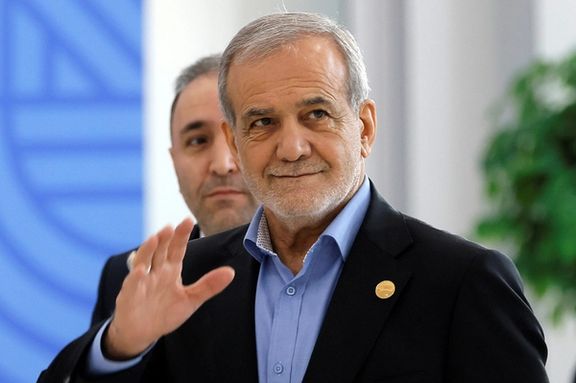
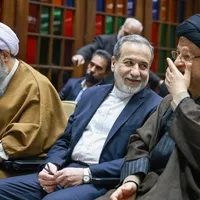
Iranian President Masoud Pezeshkian arrives at the BRICS summit in Kazan, Russia October 23, 2024.
The outcome of the US election is irrelevant to Tehran, which will continue its inclusive approach in international relations, Iran's President Masoud Pezeshkian said on Wednesday.
"It does not matter to us who won the US election because our country and system rely on our internal strength and a proud, great nation," Pezeshkian said in his first response to Donald Trump's victory in the US election.
He emphasized that his government’s priority is strengthening ties with Islamic and neighboring countries, insisted that his administration would not adopt a “closed or limited approach” toward expanding relations with other nations.
Iran’s Foreign Ministry, on the other hand, responded cautiously on Thursday to US President-Elect Donald Trump’s victory, reflecting on past US policies and stressing that Tehran would judge the new administration by its actions.
As Trump prepares to return to the White House as the 47th president, a spokesperson for Iran’s Foreign Ministry expressed Tehran’s cautious stance, saying, “We have had very bitter experiences with the past policies and approaches of various US administrations.”
In a statement, ministry spokesperson Esmail Baghaei said the actions of the US government will be the ultimate benchmark for Iran. "What matters to Iran and serves as a criterion for evaluation is the performance of the US government," he added.
Trump’s victory, confirmed with 292 electoral votes, marks his return to the presidency after a four-year hiatus, a win that could bring stricter enforcement of sanctions on Iran, initially imposed after his first administration withdrew from the 2015 nuclear deal. During his previous term, Trump’s maximum pressure policy aimed to cripple Iran’s oil revenue, escalating economic strain on Tehran.
Baghaei went on to say that the US election is solely a decision by the American people, adding, “Now, the American people have made their choice.” He suggested that elections offer a chance for the US to reconsider its approach toward Iran, cautioning that Iran remains attentive to actions, not promises.
The reaction from Tehran was followed by a belligerent statement from a hardline member of the Iranian Parliament’s National Security and Foreign Policy Commission, who issued a warning to Trump, calling on the US to withdraw its military forces from the Middle East.
"We tell Trump, the gambler and killer, to gather CENTCOM’s dogs from West Asia before it’s too late and focus on his own deep internal crises," said Mojtaba Zarei, referring to the US Central Command’s presence in the region.
Trump's return to office has reignited speculation over tougher US policies on Iran next year. The Biden administration had somewhat softened Trump’s “maximum pressure” approach, aiming for a diplomatic solution. This approach saw little progress until October 2023, when Iran’s ally Hamas launched an attack on Israel, leading to over a year of conflict in the region.
When an Iranian university student stripped down to her underwear—a move that drew global attention from figures like Richard Branson to Nobel Peace laureates—her protest refocused attention on the Woman, Life, Freedom movement.
The mysterious young woman was said to have resorted to the unheard of action, in a strictly controlled Muslim country, after she was harassed by university security for not wearing proper hijab.
International human rights lawyer Gissou Nia said the female university student is another example in a long list of cases where women’s bodies are being policed.
Nia, who led a campaign to have Iran removed from the UN Commission on the Status of Women after the in-custody death of Mahsa Jina Amini in 2022, said the discussions around Iran are finally shifting from geopolitics to human rights.
“As the discussion around the Islamic Republic becomes more focused on what their actions are in Israel, in Lebanon... and becomes more about geopolitics...we haven't seen as much in the global media that what was being sought for during the Woman, Life, Freedom movement is still an ongoing process,” said Nia an interview with Iran International.
A video surfaced online Saturday showing the woman in her underwear sitting on steps, then walking around the campus grounds at the Islamic Azad University in Tehran. The video, which lasted close to 15 minutes, later showed her being forcibly detained by authorities in a car.
Some witnesses said she stripped down after an altercation with Iranian authorities over the compulsory hijab.
According to an Iranian minister she is now undergoing treatment for mental health issues. This is not the first time the Islamic government tries to pin mental illness on dissidents and protesters.
"Investigations revealed that she is experiencing family and psychological challenges and is currently receiving treatment with her family’s support," science minister Hossein Simaei Sarraf said on Wednesday.
“They're famous for insinuating that anyone who dissents with their repressive rules is crazy. The reality is that women in Iran have a long history of resistance against their misogynistic rules,” human rights activist Nazanin Afshin-Jam told Iran International news.
What Afshin-Jam pointed out is common practice in Iran. For example, during the height of the Masha Amini protests, Iranian authorities said protestor, Nika Shahkarami, who became famous for standing on top of an overturned garbage bin, waving her headscarf, committed suicide. A CNN investigation uncovered dozens of videos and eyewitness accounts that she was chased and detained by Iranian security forces that night.
The details surrounding what led up to the university student’s incident are scarce. On social media people are calling her Ahou Daryaei and people inside Iran are writing her name on bathroom mirrors across universities and people around the world have created murals out of her image.
Amnesty International is demanding her release, saying she was “violently arrested” after protesting Iran’s Islamic dress code.
“It is Ahoo Daryaei’s Rosa Parks moment,” said Afshin-Jam about the women who sparked another flame in the embers of Iran’s Women, Life, Freedom movement that haven’t burned out.
Reporters Without Borders (RSF) on Wednesday announced that Iran International along with BBC Persian and other media in exile covering Iran had been shortlisted for their annual Press Freedom Award for courage.
The global media advocate listed 25 individual journalists, teams of journalists, photographers and media outlets for prizes in five categories - courage, impact, independence, photography and African investigations.
"Since September 2022, exiled Iranian journalists have faced unprecedented pressure and attacks from the Iranian government. Iran International and BBC Persian have been labelled as enemies and publicly threatened by the Iranian regime," RSF said.
"Their journalists have received death threats and, in March, an Iran International journalist, Pouria Zeraati, was stabbed outside his home in London," it added. "These journalists are not only subjected to alarming levels of online abuse — including graphic rape and death threats, hacking and smear campaigns — but their families in Iran are frequently targeted and punished by the authorities."
RSF's awards ceremony will be held on December 3 in Washington DC.
Minutes after Donald Trump declared victory, hardline Iranian lawmaker Ahmad Naderi summed up the establishment’s stance: “We have a blood feud against Trump!”—a reference to his 2020 order to kill Quds Force Commander Qasem Soleimani.
Hard feelings toward trump among Iranian officials existed even before Soleimani was killed.
In 2019, Supreme Leader Ali Khamenei told former Japanese Prime Minister Shinzo Abe, who had delivered a message from the US president: “I do not see Trump as worthy of any message exchange, and I have no reply for him, now or in the future.”
Iranian officials, from moderates like former President Hassan Rouhani to hardliners like Supreme Leader Khamenei, have consistently blamed Trump for Iran's crippling economic woes since 2018, when he withdrew the United States from the 2015 nuclear deal and imposed severe sanctions. Trump demanded that Tehran should make concessions on its nuclear ambitions, regional proxy wars, and support for militant groups across the Middle East and beyond.
However, on Wednesday, Tehran-based economic journalist Maryam Shokrani remarked, “The hardships faced by Iran’s poor and middle class are the result of our own domestic policies. Don’t waste time blaming the presidents of other countries for Iran’s current situation.”
Iran International TV's Iran analyst Morteza Kazemian observed that "Trump took pride in the elimination of Soleimani. Now Khamenei faces the return of a US president he deeply detests and once said was “dumped in the trash bin of history.” Trump’s comeback adds new challenges for Khamenei, especially in light of Israel’s recent and relentless strikes on Iran’s allies, Hamas and Hezbollah, and a direct airstrike on Iranian targets on October 26.
Kazemian noted, “Now, the back-and-forth exchanges between Iran and Israel have a new player: Trump. This shift, combined with the dynamics between Trump and Russia's President Vladimir Putin, means Khamenei can no longer depend on the Russian leader. Russia had already distanced itself from Khamenei, but that gap is likely to widen with Trump’s return to the forefront.”
Meanwhile, prominent Iran analyst Hossein Bastani wrote on X, “In the next 10 weeks, the Islamic Republic faces tough strategic decisions on its nuclear program. Tehran must decide whether to push the program as close as possible to the point of no return. Rival factions in Iran may advocate for either maximum nuclear advancement or extreme caution to avoid further tensions with the United States.”
Bastani opined that "it is not even clear whether Khamenei is in a position to approve any one of the two approaches. However, it is difficult to imagine that the decision makers around Khamenei would not discuss these options."
Some Iranian media outlets engaged in bold speculations on Wednesday. Matin Ghaffarian, lead columnist for the Rouydad24 website, wrote in a Wednesday commentary, “Domestic conflicts might drive Trump toward war. Nothing keeps a leader mired in crises in power quite like a conflict. Netanyahu knows this well, and now he’s Trump’s closest ally.”
Although Ghaffarian is talking about Trump, obviously, others, including Khamenei might also find themselves in that situation soon.
Meanwhile, many observers, including former Iranian diplomat Fereidoun Majlesi, noted that Iran’s hardliners have welcomed Trump’s victory. The reason, however, lies within Iran’s domestic politics: hardliners hope Trump’s return will weaken President Masoud Pezeshkian’s relatively moderate administration, paving the way for them to gain even more influence in Iran’s already fragile government.
The female university student who shed her clothing on Saturday in an apparent protest over Islamic dress code enforcement was not expelled and is now undergoing treatment, an Iranian minister said on Wednesday without providing details.
"Investigations revealed that she is experiencing family and psychological challenges and is currently receiving treatment with her family’s support," science minister Hossein Simaei Sarraf said.
Sarraf provided no additional details about the woman’s medical diagnosis, the reasons for her treatment or where it is taking place.
Footage widely circulated on Saturday showing the woman in her underwear at Tehran's Azad University, with officers eventually forcibly detaining her. A university official later said that the student was sent to a police station due to "severe psychological distress."
The incident ignited an online backlash, with many viewing it as a familiar tactic by authorities to delegitimize female protesters by portraying them as mentally unstable.
Meanwhile, government spokesperson Fatemeh Mohajerani denied reports of any harsh confrontation, saying during a Wednesday press briefing: "The situation was handled very well. There was no harsh confrontation, and she was transferred via social emergency services," she told reporters.
Amnesty Iran has called for the immediate and unconditional release of the student, urging authorities to safeguard her from mistreatment while in custody.
“Authorities must protect her from torture and other ill-treatment and ensure access to (her) family and (a) lawyer,” wrote Amnesty Iran on X.
Rights groups since the crackdowns on the Women, Life, Freedom protests which saw women defying hijab mandates have highlighted allegations of abuse in prison.
"Allegations of beatings and sexual violence against her during arrest require independent and impartial investigation. Those responsible must be held accountable,” the group added.
Iranian politicians and activists predict tougher days for President Masoud Pezeshkian after Trump’s victory in the US presidential elections and prospects of negotiations to lift sanctions waning.
Davari pointed out that from his very first days in office, Pezeshkian has had to deal with various crises including the assassination of the Hamas leader Ismail Haniyeh in Tehran, Iran's missile attack on Israel, Israel’s retaliation a few weeks later, “and now after 75 days he has become afflicted by Trump,” he wrote.
Pezeshkian promised disillusioned Iranian voters to do all in his power to lift the draconian sanctions that Donald Trump imposed on Iran in 2018 and continued to increase under Democrat Joe Biden.
Unlike his hardliner rivals who insisted sanctions are a “blessing” that would help Iran to develop and maximize its own capacities, Pezeshkian has on many occasions said the sanctions that have isolated the country from international markets are the cause of the current economic crisis.
Shortly after Trump victory, the Iranian government spokeswoman Fatemeh Mohajerani told reporters in Tehran that Iran was not worried about his re-election because “more than five decades of sanctions have toughened Iran” and insisted that who won in the US elections made no difference to Tehran and its macro-policies.
Pointing out that it was Trump who withdrew from the 2015 nuclear deal and imposed the toughest sanctions on Iran, social media activist Sahand Iran-Mehr in a tweet predicted much harder times than during Trump’s first term ahead of Iran with Gaza War as a new component.
Some ultra-hardliners on social media are describing Trump’s win as “a funeral” for Pezeshkian and reformists who, they say, hoped Kamala Harris would win and make the path to direct talks with the US less bumpy for Pezeshkian’s government.
They are reminding Pezeshkian, who has previously suggested openness to direct talks with the United States, that he should avoid even considering such talks under Trump’s presidency, given Supreme Leader Ali Khamenei’s strong disdain for him.
“Mr. Pezeshkian, …, Get the thought of negotiating with Trump out of your head,” Kaveh, an ultra-hardliner social media activist tweeted referring to Khamenei’s statement in his meeting with the visiting Japanese Prime Minister Shinzo Abe in June 2019.
Iran's Supreme Leader Ali Khamenei told Abe, who was said to be delivering a message from the US President, that he did not consider Trump a person “worthy” of exchanging messages with although Trump had expressed his willingness to negotiate with the Islamic Republic.
After the Revolutionary Guards’ Quds Force Commander Qasem Soleimani’s targeted killing in Baghdad on Trump’s orders in January 2020, Khamenei also said that “Trump and likes of him belong to the trash bin of history”. In another speech later that year, he scornfully described Trump’s failure to win as being “kicked out of the White House”.
Some reformists on social media, on the other hand, allege that supporters of Pezeshkian’s ultra-hardliner rival, Saeed Jalili, are pleased with Trump’s victory because it diminishes the chances of direct talks with the US, which Jalili strongly opposes.
“We aren’t pleased with Trump’s presidency. We look happy because you [reformists] are upset with Harris’s failure to win,” another ultra-hardliner social media activist tweeted.
Trump’s win has thrilled some ordinary Iranians who believe his tougher stance against the Islamic Republic will help bring it down although Trump has on various occasions suggested that regime change in Iran is not on his agenda.
In an interview with Iranian-American podcaster Patrick Bet-David on October 17, Trump said he would like to see Iran be very successful. “The only thing is, they can't have a nuclear weapon,” he said. Asked if he would seek regime change, Trump said the US could not “get totally involved in that” when it had problems running the country.
“Congratulations to the opposition, who prayed to God and wished Mr. Trump to win,” the prominent reformist pundit Sadegh Zibakalam tweeted Wednesday.
“Let's wait and see what the racist, misogynist, anti-black, anti-immigrant and Latino, anti-Palestinian and anti-Muslim Trump will do to advance democracy and improve human rights in Iran as the opposition believes,” he added.