Iranian oil tycoon Babak Zanjani released from prison, lawyer suggests | Iran International
Iranian oil tycoon Babak Zanjani released from prison, lawyer suggests
Babak Zanjani, an Iranian oil tycoon convicted of embezzling billions of dollars in oil revenues and sentenced to death, has apparently been released from prison according to social media posts by his lawyer.
Rasoul Kouhpayehzadeh posted a photo of Zanjani on Instagram with the caption, "In the name of God, the Merciful, the Compassionate," but provided no further details.
The Instagram story, shared around midnight Saturday, has been covered by Iranian media outlets which sought in vain for details on how Zanjani won his release.
His lawyer had said in an earlier post that Zanjani had paid his debts and can legally be freed, without providing details.
"As the assets were returned to the country and the debt was fully settled, the Supreme Leader, upon the request of the Tehran Province Justice Department and the approval of the Chief Justice, granted clemency to my client, reducing their sentence to 20 years' imprisonment, his lawyer had said in April.
Zanjani was convicted in 2016 of misappropriating funds during sanctions-era oil sales, a case that symbolized corruption and mismanagement in Iran's oil sector.
Iran's Foreign Minister Abbas Araghchi met UAE Foreign Minister Sheikh Abdullah bin Zayed on Sunday during a visit to Dubai.
Araghchi's visit to Dubai took place on his way back from China.
As part of his trip to China, Araghchi met his Chinese counterpart Wang Yi in Beijing on Saturday.
The two top diplomats reviewed progress in implementing the comprehensive strategic partnership between Iran and China and discussed the latest developments in the region, according to state-media.
Iran’s Islamic Revolutionary Guard Corps (IRGC) issued a statement on the anniversary of the December 30th pro-government protests, urging citizens to unite in the face of foreign threats while the country edges towards further unrest.
Referring to Iran's foreign archenemies, the US and Israel, the statement specifically laid the blame of the unrest at their door.
“The epic of December 30th was a monumental, faithful, and national movement that stunned the malicious network of American and Zionist conspirators, proving the deep insight and resilience of the Iranian people," it said.
It went on, further detailing how it blames the country's domestic chaos on foreign interference. "With utmost intelligence and resilience, they [the Iranian nation] will navigate through the challenges and difficulties stemming from the enemy’s think tanks, manifesting in threats, sanctions, economic warfare, cognitive warfare, the injection of despair and hopelessness among the people, attempts to portray the system as ineffective, and fear-mongering within society," the statement said.
This year’s statement to commemorate the event of 2009, comes amid rising threats of protest as the country battles its worst economic crisis since the founding of the Islamic Republic and critical shortages of energy.
The December 30th rallies, referred to as the "Dey 9" by Iranian authorities, were organized to counter mass anti-government demonstrations following the disputed presidential election earlier that year.
Protests erupted over accusations of electoral fraud that ensured Mahmoud Ahmadinejad's controversial victory. The movement reached a critical point during the Ashura religious observances, where protesters were accused by the government of disrespecting sacred traditions—an allegation authorities used to justify a violent crackdown. The counter-rallies were framed as a show of loyalty to the system and condemnation of dissent.
Iran’s economic difficulties since the 2022 uprising, sparked by the death in morality police custody of Mahsa Amini, for not wearing her hijab properly, have only deepened, making the risk of further protests ever more likely.
"The economic situation has reached a breaking point for many families,” a Tehran-based economist told Iran International on condition of anonymity. “The government appears incapable of reversing the downward spiral, which only fuels resentment.”
Externally, Tehran faces mounting pressure as Israel intensifies its actions against Iranian military allies across the region and direct strikes on Iran as the two nations continue their tit-for-tat war.
Hamas dismissed an Israeli media report about the details of the assassination of the Iran-backed group's leader Ismail Haniyeh in Tehran.
"The Israeli regime's claim that martyr Haniyeh was assassinated using a bomb at his official residence in Tehran is completely baseless," Hamas said in a statement.
The group added that joint investigations with Iranian security agencies revealed the operation involved a 7.5-kilogram guided missile that directly targeted Haniyeh's mobile phone.
On Saturday, Israel’s Channel 12 reported that an explosive device was planted in advance in Haniyeh's bedroom in the Neshat compound of the Revolutionary Guards, before an air conditioning malfunction almost jeopardized the entire operation.
In an interview with Saudi Arabia’s Al Arabiya, Syria’s new de-facto leader, Ahmed al-Sharaa, said he had expected a more positive engagement from Iran following the fall of the decades-long Assad government.
"We were expecting positive statements from Tehran”, the leader of Hay'at Tahrir al-Sham said as Tehran remains tight-lipped on what happens next. Syria had been a key route to arm its ally Hezbollah in Lebanon, and was strategically critical militarily with bases and military personnel stationed across Syria.
While he expressed hope that Tehran would scale back its military intervention in the region, he said that "a broad segment [of the country] aspires to a positive Iranian role in the region,” the Syrian population having seen both Iran and Russia heavily involved in Syrian affairs since the 2011 civil war.
Referring to the killing of an Iranian embassy worker and the storming of the Iranian embassy on December 8, when rebels took control of Damascus and President Bashar al-Assad fled to Moscow, he told Al Arabiya that the group’s military “did its duty towards the Iranian headquarters despite the injuries”.
It sparked a diplomatic fiasco in Tehran. Foreign ministry spokesman Esmaeil Baghaei said last week that Davood Bitaraf was killed by “terrorists”, shot in his vehicle in Damascus, saying that the Syrian transitional government is responsible for "identifying, prosecuting, and punishing the perpetrators of this crime.”
In a statement to the media, he said: ”The Ministry of Foreign Affairs is seriously pursuing the matter through appropriate channels and various diplomatic and international avenues.”
The new leader, a former member of Al Qaeda, has made no secret of his pleasure at reducing the influence of Iran in Syria, saying that since the fall of Assad, Syria's opposition had “set the Iranian project in the region back by 40 years”.
“By removing Iranian militias and closing Syria to Iranian influence, we’ve served the region’s interests—achieving what diplomacy and external pressure could not, with minimal losses,” he said, referring to Iran’s military allies which span the Middle East.
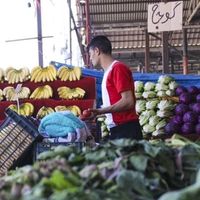
Business owners and employees in Tehran’s historic bazaar staged a rare strike on Sunday against runaway inflation and soaring foreign currency rates, spurring protests in other commercial hubs in the capital.
Unrest in Iran's historic heart of commerce reflects the bleak outlook of the country as it faces dire economic straits. In 1979, protests in the bazaar heralded the onset of the Islamic Revolution which toppled Iran's monarch.
The strike, which began with shoe sellers in the 15th Khordad area, quickly spread to other sectors.
Videos shared with Iran International show merchants in the bazaar chanting “Don’t be afraid, close up,” and “Brave merchants, support, support".
A fabric merchant who joined the protest cited the impact of surging raw material costs, exacerbated by the devaluation of Iran’s currency.
“With the dollar now above 810,000 rials, our expenses have skyrocketed,” the merchant said. “Many workshops have shut down, and even those still running are struggling to sell goods in such a sluggish market.”
The protests soon expanded to key commercial hubs, including Abbasabad Market and Baghe Sepahsalar, known for fabric and shoe vendors.
Hamidreza Rastgar, head of Tehran’s Chamber of Guilds, acknowledged the discontent among manufacturers.
"Producers fear that items priced at these exchange rates will simply be out of reach for most consumers,” he said.
The Iranian rial’s sharp depreciation has had ripple effects across the economy. For merchants, it has created an untenable mix of higher costs and reduced consumer demand as at least one third of Iran is now living below the poverty line.
Security forces were deployed to control the demonstrations and gatherings appeared to have subsided by the end of the day.
There were no immediate reports of violence, but the heavy presence of law enforcement forces highlighted the Islamic Republic's sensitivity to unrest in this economically vital area.
Iran's economy is in its worst state since the founding of the Islamic Republic in 1979, with US-led sanctions over its nuclear program, support for militant groups and arms transfers for Russia's war on Ukraine squeezing the country.