Over 1,500 people executed in Iran in a year, rights group says
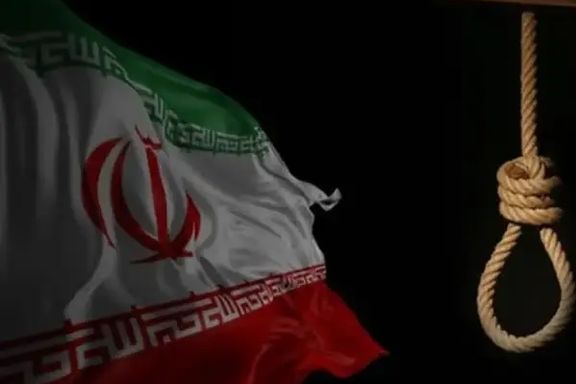
At least 1,537 people were executed by hanging in Iran between October 2024 and October 2025, the highest figure in a decade, the Human Rights Activists News Agency (HRANA) reported on Thursday in its annual report marking the World Day Against the Death Penalty.
The report documented an 86 percent increase in executions compared with the previous year’s 823 cases. Of those executed, eight were hanged in public, 49 were women, and three were under 18 at the time of the alleged crimes.
“This increase peaked between 2024 and 2025, with at least 1,537 executions recorded, the highest number documented in the past decade,” HRANA said.
The data were collected from a combination of judicial sources, local reports, and the agency’s network of independent observers, according to HRANA.
94.14 percent of executions, it said, were carried out secretly and never announced by official sources, a pattern it said reflected the authorities’ efforts to “omit, conceal, or restrict the collection of such data.”
Nearly half of all executions, 48.34 percent, were related to drug offenses, while 43.46 percent were for murder. Other charges included rape, moharebeh (ear against God), espionage, and corruption on earth.
The report showed the highest number of executions in Alborz province, where Ghezel Hesar Prison accounted for 183 hangings. Isfahan and Fars provinces followed, with 124 and 118 executions respectively at Dastgerd and Adelabad prisons. The data also indicated that the months of September, August, and May 2025 saw the most executions, with 191, 165, and 162 cases respectively.
A decade of reversal
Its ten-year analysis, HRANA said, revealed that after a relative decline between 2015 and 2019, executions in Iran have increased steadily since 2021. The report found that the majority of those executed came from socially and economically vulnerable groups, including defendants convicted under Iran’s strict anti-narcotics laws.
Inside prisons, resistance has grown. On October 7, prisoners across 52 facilities continued hunger strikes under the “Tuesdays No to Execution” campaign, which has been running for 89 consecutive weeks.
The death penalty was being used by the authorities as a political tool to suppress dissent amid economic crisis and public discontent, HRANA added.
Call for international response
The agency urged the United Nations and foreign governments to intervene. It called for “urgent and coordinated action by the international community to halt the ten-year wave of executions, reform domestic laws, hold perpetrators of extrajudicial executions accountable, and take unified international measures to confront the growing wave of executions in Iran.”
Hydropower generation at the Amir Kabir Dam in Karaj, west of Tehran, has stopped after storage fell to 25 million cubic meters, while lawmakers warned that several provinces could soon face acute drinking water shortages.
The Amir Kabir Dam, inaugurated in 1960 as Iran’s first multipurpose dam, is now at its lowest level in more than six decades of operation. Once vital to supplying Tehran province, it currently holds only about 14 percent of its 205 million cubic meter capacity, according to the Iran Water Resources Management Company.
“At present, nearly 86 percent of the reservoir is empty,” the agency said in its latest assessment, citing low inflows from upstream rivers and continued extractions for urban, agricultural, and environmental needs.
A year ago, the dam contained around 111 million cubic meters of water, with the long-term seasonal average closer to 120 million cubic meters. The year-on-year comparison reflects a 76 percent decline in stored volume.
Hydropower operations were suspended earlier this autumn when levels fell below 28 million cubic meters, disabling the facility’s turbines. Officials said the dam has not yet reached its “dead storage” level of 10 million cubic meters, below which the water becomes unusable.
In central Iran, Isfahan officials warned that the city’s water crisis has grown beyond provincial boundaries and could soon affect several regions.
Mohammad-Taghi Naghdali, head of Isfahan’s parliamentary delegation, said the situation required “a national commitment and cross-provincial coordination.” A task force known as the “water command” has been established to pursue solutions, he added.
“We have exhausted all legal and parliamentary means to stop unauthorized withdrawals,” Naghdali said. “If action is delayed, the entire country will face a grave catastrophe.”
Experts have cautioned that decades of overconsumption, mismanagement, and uneven rainfall have left Iran’s reservoirs critically depleted, threatening both electricity production and drinking water supplies nationwide.
The United Nations said on Thursday it could not confirm Iranian Vice President Mohammad Reza Aref’s statement that Secretary-General António Guterres told him the June war with Israel had ended efforts to topple the Islamic Republic.
“I’m not able to confirm that the Secretary-General would ever have said that,” UN spokesperson Stéphane Dujarric told reporters in New York. He said Aref appeared to be referring to an August meeting in Turkmenistan and pointed to the UN readout from August 5 as the accurate record.
Aref told Iranian state media that Guterres had said “the file of overthrowing the establishment was closed after the 12-day war.” He did not say when or where the conversation took place.
Guterres has made no such remark publicly. During the June conflict, he said on X that he was “gravely alarmed” by the use of force by the United States against Iran, calling it a dangerous escalation and a threat to international peace.
The 12-day war began with Israeli strikes that killed Iranian nuclear scientists and ended with US bombings of three key nuclear sites.
Aref spoke days after US President Donald Trump warned Washington would strike Iran again if it restarted its nuclear program. Speaking at a Navy anniversary event in Virginia, Trump called the June 22 airstrikes “perfectly executed” and said Tehran had been weeks from building a nuclear weapon.
Iran says it does not seek confrontation but will respond if attacked. Aref said the conflict showed US forces “could not achieve their objectives.”
The remarks came as Britain, France and Germany moved to reimpose UN sanctions lifted under the 2015 nuclear deal.
A conservative Iranian lawmaker said parliament is reviewing an emergency motion to stop the implementation of Iran’s conditional approval to join a United Nations convention against terror financing, arguing it would expose the country’s sanction-busting networks.
Mojtaba Zonouri, a member of parliament from Qom, said on Friday the measure on joining the UN Convention for the Suppression of the Financing of Terrorism (CFT) remains suspended in parliament, and that a “triple-urgency motion” submitted by Tehran lawmaker Malek Shariati is under review to prevent it from taking effect.
“As long as we are forced to bypass sanctions to meet the country’s needs, joining the CFT is like putting a rope around our own necks,” Zonouri said, according to Iranian media. He added that Iran could join the convention only “when sanctions are fully lifted.”
His remarks come after Iran’s Expediency Council — the body overseen by Supreme Leader Ali Khamenei that resolves disputes between parliament and the Guardian Council — conditionally approved the country’s accession to the UN convention earlier this month, after years of delay.
The CFT, one of the 49 measures linked to the Financial Action Task Force (FATF) standards, requires countries to track and report financial transactions to combat money laundering and terror financing. Hardliners argue that joining would expose Iran’s financial channels used to evade sanctions and support allied armed groups across the Middle East.
The conditional approval followed the reimposition of UN sanctions on Iran on September 28 under the nuclear deal’s snapback mechanism. In April, over 150 lawmakers had urged the Council to reject the convention until “the risk of renewed sanctions is entirely eliminated.”
The United States has long accused Tehran of using its regional allies to fund and coordinate attacks across the region, labeling Iran the world’s leading state sponsor of terrorism for 39 consecutive years.
The newly published text of a draft Iranian anti-espionage law increases punishments for the use of Elon Musk's Starlink internet technology, including the death penalty if used for spying.
The use of Starlink or other unauthorized satellite internet services for personal purposes is explicitly banned and punishable by six months to two years in prison.
"The use, possession, purchase, sale, or import of unlicensed electronic, internet, or satellite communication devices—such as Starlink—for personal use is prohibited and punishable by sixth-degree imprisonment, with the equipment to be confiscated," it says.
"If any of these actions are committed with the intent to act against the system or for espionage, and the perpetrator is deemed to be an enemy agent, the punishment is death," it added.
Iran suffered serious blows and intelligence failures during its 12-day war with Israel and the United States in June. The draft law was introduced following the conflict.
It further specifies that “any intelligence or espionage activity for the aforementioned regimes, governments, groups, or their affiliates shall result in confiscation of all property and the death penalty" and frequently cites the charge of "corruption on earth."
The religious phrase constitutes a formal charge under Iran’s Islamic legal system and is frequently used by Revolutionary Courts to hand down death sentences against political prisoners.
Since Starlink is an American company, activities related to its use, distribution or import could fall under the scope of “corruption on earth” charges.
Starlink, owned by Elon Musk’s SpaceX, became a symbol of digital freedom in Iran after it was used to bypass government internet shutdowns during the Woman, Life, Freedom nationwide protests.
The unrest began in September 2022 after the death of 22-year-old Mahsa Amini in the custody of Iran's morality police, who detained her for allegedly violating hijab rules.
Western governments had encouraged the deployment of Starlink to help Iranians access the open internet when the regime imposed widespread restrictions.
Iran is poised to implement a new anti-espionage law expanding government control over social media and online activity which could expand the death penalty for internet speech.
The text of the law, which was published by the moderate outlet Entekhab on Wednesday, details sharp new penalties for alleged national security offenses online.
"The fabrication or dissemination of false reports, or the creation or publication of any content that typically causes public fear and panic or is contrary to national security, shall—if not constituting the crime of corruption on earth—be punishable, at the court’s discretion, by third-degree imprisonment," it said.
Corruption on earth is a formal charge in Iran's theocracy which carries the death penalty. It has long been invoked in Islamic Revolutionary courts to win death penalty convictions of political prisoners.
Third-degree imprisonment refers to 10 to 15-year terms.
The law's wording equates dissemination of fear-inducing content with crimes such as manufacturing explosives or weapons, both of which can carry the death penalty.
"The sending of videos, images or information to foreign networks, media outlets, or social media pages, if deemed contrary to national security—and similarly, the sending of such materials to hostile networks, media outlets, or pages—shall, unless subject to a more severe punishment, be punishable ... by fifth-degree imprisonment," it added, referring 2-5 years in prison.
'Hostile' states
Formally titled "The Intensification of Punishment for Espionage and Cooperation with the Zionist Regime and Hostile States Against National Security and Interests," the law was passed by parliament in late June following a 12-day war pitting Iran against Israel and the United States in June.
The United States and Israel are explicitly defined as hostile states, and any contact, activity, or content connected to them is considered an act against Iran’s national interests, subject to the death penalty.
The Guardian Council, the 12-member body of clerics and jurists that vets Iran’s legislation and elections, initially sent the bill back in July citing ambiguities.
After revisions, it approved the law last week, saying it no longer conflicted with Islamic law or the constitution.
The parliament speaker on Tuesday referred the bill to Iran’s president for implementation, state broadcaster IRIB reported.
The legislation was first introduced following a surprise Israeli air campaign in June that exposed Tehran's intelligence failures and killed hundreds of military personnel and civilians.
Israeli airstrikes targeted Iranian nuclear and missile facilities, prompting Tehran to retaliate with missile salvoes.
Iranian authorities later announced the arrest of hundreds of people accused of spying for Israel and the United States, executing several.
Starlink
The use of Starlink or other unauthorized satellite internet services for personal purposes is explicitly banned and punishable by six months to two years in prison.
"The use, possession, purchase, sale, or import of unlicensed electronic, internet, or satellite communication devices—such as Starlink—for personal use is prohibited and punishable by sixth-degree imprisonment, with the equipment to be confiscated," it says.
"If any of these actions are committed with the intent to act against the system or for espionage, and the perpetrator is deemed to be an enemy agent, the punishment is death," it added. "Otherwise, if the act does not constitute corruption on earth, enmity against God, or a more severe offense, it is punishable by fourth-degree imprisonment," or 5-10 years.
The bill instructs the ministry of intelligence to publicly identify hostile networks, media outlets and online accounts within one month of the law’s ratification and to update the list at least every six months.