Rights lawyer's memorial turns into pro-monarchy rally in Iran's holiest city
The people gathering outside a mosque in Mashhad where a memorial service was held for Iranian rights lawyer Khosrow Alikordi on December 12, 2025
People attending a memorial service for a prominent human rights lawyer in Iran's holy city of Mashhad on Friday chanted slogans against the ruling theocracy and in favor of the pre-1979 monarchy, according to videos posted online.
"Death to the Dictator," some of the people mourning Khosrow Alikordi's death chanted in an apparent reference to Iran's Supreme Leader Ali Khamenei.
The raucous gathering constituted one of the more prominent expressions of public discontent with the Islamic Republic in recent years. It was not immediately clear how large the crowd was.
Nobel Prize Laureate Narges Mohammedi appeared to be heckled off a stage by some of the pro-monarchy attendees, before she and other activists in attendance were arrested by security forces.
Mourners chanted "Long Live the King" and "The King will come back home" in support of Iranian exiled prince Reza Pahlavi, who is based in the United States.
"Death to the three corrupt forces: the mullah, the leftist and the Mujahid (exiled opposition group MEK)" was also chanted in the ceremony, referencing the groups that Pahlavi supporters blame for the 1979 Islamic Revolution.
Several people also chanted slogans in memory of the exiled prince's grandfather, Reza Shah, who reigned from 1925 to 1941.
Alikordi was found dead in unclear circumstances in his office in Mashhad last week, with fellow lawyers and activists questioning the official account of cardiac arrest and alleging that he may have been killed by security forces.
Nobel peace prize winner Mohammadi appeared unable to placate the crowd despite invoking the memory of Majid-Reza Rahnavard, a monarchy-supporter whom authorities hanged in December 2022.
Mohammadi's arrest along with several other activists attending the ceremony was confirmed by Mashhad's governor in remarks to state media.
A 2024 survey conducted by a Netherlands-based institute found that the majority of Iranians would vote for either a regime change or a structural transition away from the Islamic Republic, highlighting demands for political change across Iran.
However, the survey by the Group for Analyzing and Measuring Attitudes in Iran (GAMAAN) found no consensus on what system should emerge in its place.
A secular republic was backed by 26 percent of respondents, while 21 percent supported a monarchy. Another 22 percent said they lacked enough information to decide.
Rights groups say Iran remains one of the world’s most restrictive environments for free expression, with activists frequently detained, prosecuted and imprisoned.
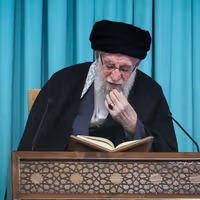
Iran’s intelligence minister said on Saturday the Islamic Republic's enemies are seeking to target Supreme Leader Ali Khamenei, warning about attempts to incite another wave of unrest in the country.
Esmail Khatib described Khamenei as the “pillar and axis” of the Islamic Republic and said: “That is why the enemy tries to target the leadership… sometimes through assassination and sometimes through hostile attacks that are today perhaps even pursued from inside the country.”
He did not provide further details about alleged attempts to target Khamenei, though other senior officials have previously voiced similar concerns.
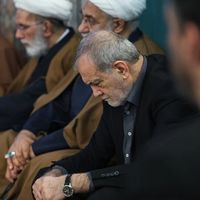
On November 11, Masoud Pezeshkian, the president of the Islamic Republic, said during a speech on the parliament floor that during the 12-day war he feared harm might come to Khamenei.
Iran’s cohesion and stability hinge on the Supreme Leader’s security, he told the lawmakers, warning that an attack on him during the June war could have provoked internal clashes posing a greater threat than any external enemy.
In June, US President Donald Trump, reacting to the Supreme Leader’s comments about winning the 12-day war, said the US knew where Khamenei was hiding during the war but did not want him killed “for now.”
Earlier this month, the Israeli newspaper Israel Hayom, in an analysis about continuing Iranian threats against Israel, wrote that the option of killing Khamenei was not pursued in the June battle but “remains possible.”
'Regime change policy shelved'
The Iranian intelligence minister said on Saturday that the country’s adversaries have moved from attempts to overthrow the Islamic Republic to efforts aimed at weakening it from within, including through efforts to target the leadership.
Khatib said during a visit to Kohgiluyeh and Boyer-Ahmad Province that Israel and the United States had changed their strategy “from overthrow and disintegration to containment through pressure,” using cyberattacks, disinformation and attempts to fuel social divisions.
He said such efforts were meant to undermine public trust and sow discord.
“Anyone who knowingly or unknowingly walks in this path is serving the goals of the enemies,” he said.
Six years after Iran’s blackout and mass killings, two women keep alive the month the Islamic Republic tried to bury.
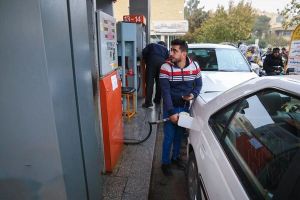
Six years ago, on a cold, rainy November night, the price of gasoline in Iran tripled at midnight. By morning, the streets were burning. The state would later compress that nationwide protests into a bureaucratic phrase, “the gasoline protests,” yet inside Iran it endures as something far more elemental, a breaking point, the moment a long-strained relationship between rulers and ruled finally gave way.
An overnight decree, issued without warning, landed on a society already thinned by corruption, sanctions, and the slow corrosion of trust. Gasoline was not merely fuel; it was the last fragile order of an ordinary life.
By dawn on November 15, unrest had spread through more than a hundred cities. The slogans outgrew the price hike almost instantly. Within hours, the government offered not explanation but silence, plunging the country into a nationwide internet blackout that severed families, stifled communication, and obscured what would unfold in the dark.
Inside that manufactured quiet, the killing quickened. Snipers appeared on rooftops. Live rounds struck torsos and heads. Amnesty International confirmed at least 304 deaths; internal figures passed abroad placed the toll far higher, closer to fifteen hundred. Leaked hospital logs, morgue records, and satellite images of hurried burial sites supported the higher count. No official list of the dead has ever been released, but the names that remain are the ones families refused to let vanish.
The Program
On my Persian-language call-in show, “The Program,” broadcast from Iran International, a Persian-language satellite television channel, two mothers recently spoke to a worldwide audience. Their voices — steady, unadorned — carried the weight of those missing lists, two fragments of a record the state has never acknowledged.
One mother introduced herself not with biography but with loss: “I am the mother of Navid Behboudi. Twenty-three years old. Born in 1998. They killed my child.”
Another spoke with the same stripped-down clarity: “I am Mahboubeh Ramazani, the mother of Pejman Gholipour. My son was eighteen. Born in 1998. They killed him because of the price of gasoline.”
Neither woman had sought confrontation with the state. They wanted what any parent wants — a future for their children, a degree, a job, the possibility of a wedding. Instead, they entered a world of interrogations and quiet threats designed to smother even private grief. Cameras now watch over their children’s graves. Intelligence agents monitor who comes to mourn. In Iran, even grief carries a political charge.
The mothers speak with a precision that feels almost liturgical, as though exactness might preserve what the state has tried to erase.
One recounts the final hours of her son’s life: “At 7:30, I called him. My Pejman was still breathing. At 8:20, they shot my son.”
His clothes still hang untouched behind his bedroom door. “When I go out,” she said, “and my child comes home, he will look for his clothes.” She speaks in the present tense. Grief has its own grammar.
The other mother remembered the moment she saw her son’s body. She had once imagined seeing him in wedding clothes. Instead, she saw him prepared for burial. “I asked him, Navid, open your eyes and look at me,” she said. “He never opened his eyes.”
The machinery of silence
What followed the killings was a choreography of pressure and containment. Families were summoned to Kahrizak, a notorious detention center long synonymous in Iran with torture and coerced confessions. Officials demanded written pledges: no public grief, no interviews, no large funerals.
Even the burial was not theirs to decide. “They told us we had no right to choose where to bury him,” one mother said.
Another recalled being instructed: “Do not cry. Do not gather people. Go home.”
Many families discovered cameras mounted above the graves. “Not just my son’s,” a mother told me. “All of them.” She described visiting the cemetery on her son’s birthday, arriving at 10:30 a.m. and staying until nine at night. “They locked the doors,” she said. “No one was allowed in. We were not allowed to mourn.”
This system is built not only to punish dissent but to prevent solidarity. Silence becomes ritual. Mourning becomes a private burden, watched and circumscribed.
Inside Iran, no independent investigation has ever been allowed. The same institutions implicated in the killings oversee the judiciary. But abroad, a coalition of rights groups convened the Aban Tribunal in London, a people’s court modeled on historical international inquiries. After reviewing hundreds of pieces of evidence, the panel concluded that Islamic republic authorities had committed crimes against humanity, including murder, torture, and sexual violence.
The judgment has no legal force, but for families denied even the vocabulary of justice, the act of naming the crime offered its own narrow, necessary recognition.
The mothers of Aban
The mothers of Aban — Aban being the Iranian month that corresponds roughly to November — have never let November end. Each year, as the month approaches, they begin a ritual that resists the state’s enforced forgetting.
“Today my son was alive,” they tell one another. “Tomorrow he was still alive.” They measure the month not by dates but by the life still present before the gunshots.
One mother described the conversations she continues to hold with her son: “I tell him, Pejman, do you know what happened that day? Maybe we were not careful. Maybe we lost you by mistake.”
She knows precisely who fired the bullets, but maternal instinct searches for any version of the story in which the ending might be undone. “I still cannot accept that he is gone,” she said. “I still cannot accept that he will not walk through that door.”
Amid the devastation, a narrow line of resolve endures. Not hope for happiness — “I will never be happy again,” one mother told me — but hope for a future in which no parent is ordered not to cry at a grave.
“I hope our voice reaches the world,” she said. “We have not lived for five years. Our life is black. Full of tears.”
Their plea is disarmingly simple: that their children not disappear into the silence the state demands, that remembering become a form of resistance, that the world not look away.
The state tried to bury the victims of November 2019 twice — once in the ground and once in memory. The mothers refuse the second burial.
“This government is even afraid of our children’s graves,” one of them said. “If they fear the graves, imagine how afraid they are of the living.”
Holding a candle in the cold November rain
The internet can be shut down. Protests can be crushed. Cemeteries can be lined with cameras. But on a November night, a mother can speak her son’s name into a static-filled line on “The Program,” and a country can still hear its echo.
That night’s show was heavy for all of us on The Program. When I finally walked home through the rain, the city felt emptied out, as if carrying the weight of those two voices. By the time I reached my door, the rain had stopped. I took my dog outside for a walk, put on my headphones, and, almost without thinking, whispered into the dark:
“Nothing lasts forever, not even cold November rain.”
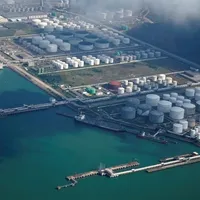
Thousands of contract workers at the South Pars gas complex in southern Iran held a large protest on Tuesday demanding better working conditions, fair pay, and the removal of private labor contractors, Iranian labor outlets reported.
The demonstration, held near the headquarters of the Pars Gas Complex in Assaluyeh, drew more than 3,000 workers from twelve refinery units and nearby facilities, including the Fajr Jam Gas Refinery, according to ILNA. Protesters called for changes to the job classification system, improved benefits, and the introduction of a rotation plan that would allow administrative and support staff two weeks of work followed by two weeks of rest.
They also urged officials to address the status of hired drivers, reinstate travel and housing allowances that were cut, and move toward direct employment under state companies. Many said the contractor system has left them without security, equal pay, or access to benefits given to permanent staff.
South Pars, the country’s main natural gas hub, has long been a flashpoint for labor unrest, with workers frequently demanding overdue pay and more stable contracts. Tuesday’s gathering adds to a wave of protests in Iran’s energy and industrial sectors over recent months.
Earlier in November, oil contract workers rallied outside the presidential office in Tehran, accusing the government of breaking promises to eliminate middlemen and standardize pay across the industry. Similar demonstrations have been held by petrochemical and steel workers in Ilam and Ahvaz, showing persistent frustration among Iran’s industrial labor force despite repeated pledges of reform.
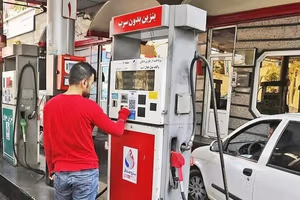
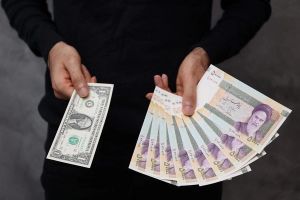
An Iranian lawmaker said policymakers lack the resolve to take long-delayed decisions on subsidized petrol, bread and exchange rates, urging the government to settle the issues and adopt a single foreign-exchange rate.
Mohsen Zanganeh, a member of parliament’s Plan and Budget Committee, said “no one has the courage to decide” on key price and currency reforms and that “there is no choice but unification” of exchange rates, adding he was willing to accept responsibility for such a move, local media reported.
He said unresolved policy cases had been passed from one administration to the next and called on President Masoud Pezeshkian to close them to reduce public uncertainty.
Zanganeh also criticized reluctance to address fuel pricing, saying prolonged debate without action burdens the economy, and argued the president can consolidate or remove budgets for subordinate agencies without new legislation.
Iran maintains heavily subsidized fuel and multiple exchange-rate windows; previous efforts to unwind them have stoked inflation and unrest.
British activist Tommy Robinson vowed to burn an image of Iran's Supreme Leader as anti-government activists plan to perform the protest on Friday in solidarity with a man found dead in Iran after filming himself doing so.
Robinson appeared on the YouTube channel Tousi TV on Tuesday, where host Iranian-American host Mahyar Tousi relayed a request from an audience member for the outspoken activist to take part in the symbolic act against Ali Khamenei.
"Print a big picture of the scumbag, and I will happily burn it," said Robinson, 42, an anti-migration activist whose legal name is Stephen Yaxley-Lennon.
Iranians on social media have launched a campaign to burn Khamenei's image after Omid Sarlak was found dead in a car in the city of Aligoudarz in western Iran on Sunday.
His death came shortly after posting a video of himself burning a picture of the 86-year-old theocrat with a speech by Iran's last shah playing in the background.
Local police described it as a suicide, but family members and rights activists blamed authorities. The United States on Wednesday called the death "suspicious" and suggested Tehran was responsible.
His death came as senior Iranian clerics renewed calls for severe punishment of those who insult or threaten the Supreme Leader, which is a crime in the Islamic theocracy.
One prominent official said such acts amount to "waging war against God" and warrant the death penalty.
Robinson was cleared by a UK court on Tuesday on charges relating to his refusal to provide the PIN for his mobile phone to investigators, which is an offence under counterterrorism laws.
He thanked Elon Musk, the world's richest man and in recent years a strong advocate of right-wing commentators, saying the owner of the X social media platform paid his legal fees.