Maryam Sinaiee
Iran International
A British Iranian journalist and political analyst and a regular contributor to Iran International
Iran International
A British Iranian journalist and political analyst and a regular contributor to Iran International
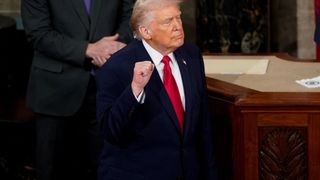
Iranians at home and abroad watched President Donald Trump’s State of the Union address late Tuesday searching for clues about war or peace—and emerged more uncertain than before.
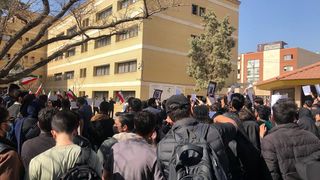
The new academic term in Iran has begun under heavy tension, with students at several major universities staging anti-government protests and forcing authorities to confront a familiar dilemma: suppress dissent or risk wider unrest.
A sense of fatalistic anticipation is spreading in Iran as the threat of a US strike grows, with many expressing fear of war but also resignation that it may be unavoidable—or even transformative.
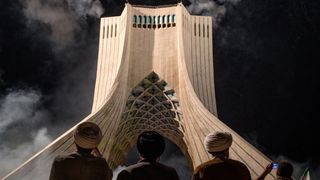
Iran’s January massacre of protesters has left scars far beyond the streets. In cemeteries and hometowns, families are transforming centuries-old mourning rites into defiant celebrations of lives cut short.
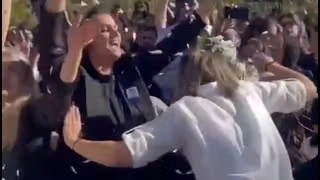
A sharp increase in US military deployments to the Middle East has intensified uncertainty in Tehran, where analysts and officials are debating whether the buildup signals imminent conflict or a bid to gain leverage in nuclear negotiations.

The second round of Iran–US nuclear talks was met with a muted and often critical reaction in Tehran, where official outlets questioned Washington’s commitment after American negotiators left Geneva within hours despite Iran’s offer to continue discussions.
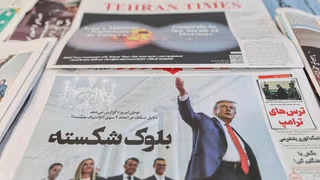
Iranians and the government held rival ceremonies Tuesday marking the 40th day after the January 8–9 protest killings, with families staging independent memorials as officials organized a state event critics called an attempt to “appropriate” the victims.
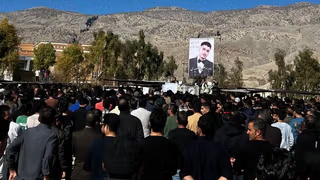
Tehran's decision to form a committee to investigate violence during January protests has been met with widespread skepticism, including from some moderate voice inside Iran who say only an independent investigation can establish credibility.
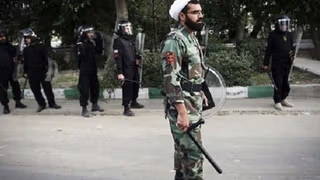
Reports from Tehran by a British Muslim commentator depicting normalcy and freedom after Iran’s violent crackdown on dissent have triggered a backlash, with critics accusing authorities of using foreign voices to legitimize their narrative.
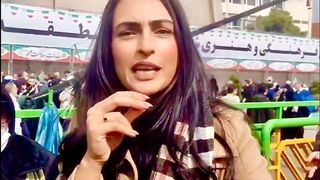
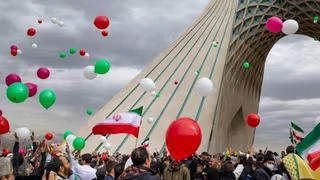
Iranians took to social media on the anniversary of the 1979 Revolution to challenge the Islamic Republic’s claims of overwhelming public support, sharing videos of anti-government chants and questioning the authenticity of state broadcasts.