Website In Iran Says Hostage Is Spy After US Calls For His Release
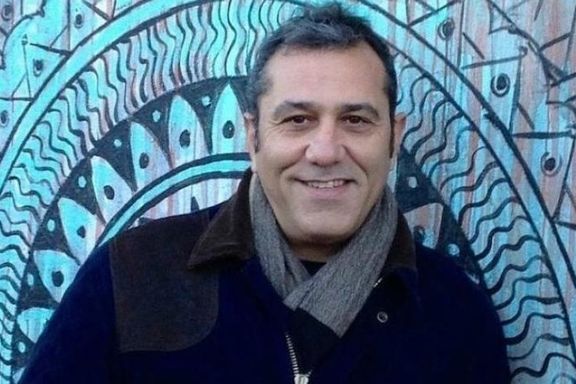
American-Iranian hostage Emad Sharqi
Following calls by the US officials for the release of American Iranian dual national Emad Sharghi, an Iranian hardliner website has published an article emphasizing that he is a spy.
Fars News, with links to Iran’s Revolutionary Guards, , two days after US Secretary of State Antony Blinken urged the Islamic Republic to release Sharghi and stop its policy of holding people as political pawns.
published the piece on Monday
In a tweet on Saturday, Blinken called on Iran to stop this “inhumane practice” saying, “For four years, the Shargi (Sharghi) family has waited anxiously for the Iranian government to release Emad”.
Special Envoy for Iran Robert Malley and Republican Senator Marco Rubio also twitted for his release, noting that he remains unjustly detained in the Evin Prison under false charges.
Fars News said, “Sharqi's family and the US government must answer why he had documents at the time of his arrest that showed his interest in spying on the Iranian military”.
It added that his business activities were a cover for espionage, “especially in the field of helicopter warfare”, claiming that “he had gathered information about the helicopter industry with the help of his accomplices”.
The article speculated that he probably sought to disrupt the supply chain for helicopter repairs.
The 56-year-old businessman was arrested on December 6, 2020. According to reports, he has been sentenced to ten years in prison on charges of espionage and collecting military.
Over 100 Iranian state-owned and private websites were targeted by a cyberattack and their systems’ data were stolen, the government confirmed on Sunday.
Claiming responsibility for the attack, the hacking group "Uprising till Overthrow" sent pictures and videos to Iran International showing that about 50 domains of the Agriculture Ministry and its affiliated offices have been hacked.
A deputy director for the security of Iran’s information center, Meysam Maghsoudi Goudarzi, said late on Sunday that a security loophole in a software frequently used by governmental organizations made the large-scale cyberattack possible.
He said that the attack was “neutralized” in its early stages, noting that “The hackers obtained information from the websites but did not obtain the basic information of these government centers”.
Maghsoudi Goudarzi also claimed that no damage was done to the infrastructures of the organizations, adding that “This cyberattack was designed like a 'time bomb’ to attack more than 100 [online] services of the country at a certain time and date to disrupt their activities”.
He said the IPs used for the cyberattack belonged to the Netherlands, Britain and the United States, and that due legal action will be taken in the future.
In mid-March, the portal of the Ministry of Culture and Islamic Guidance (Ershad) and its affiliated websites were hit by a cyberattack.
Hackers posted on the website photos of leaders of the Mujahedin-e Khalq (MEK) opposition group, Maryam and Masoud Rajavi, as well as a photo of Supreme Leader Ali Khamenei with a large red X, drawn on his face.
The foreign ministry in Tehran has confirmed that Iran and Saudi Arabia held a fifth round of "positive" talks in Baghdad last Thursday on normalizing bilateral ties.
"The fifth round of talks between Saudi Arabia and Tehran were held in Iraq and the talks were progressive and positive," foreign ministry spokesman Saeed Khatibzadeh told a televised weekly news conference.
The resumption of talks come as Iran’s nuclear negotiations with the United States came to a standstill in March, after Tehran demanded the removal of its Revolutionary Guard from the US list of terrorist organizations. The US in return has asked for a wider discussion of Iran’s destabilizing role in the region.
Predominantly Sunni Muslim Saudi Arabia and Shi'ite Iran, which are locked in proxy conflicts across the Middle East, started direct talks last year to try to contain tensions.
But Iran suspended the talks in March without giving a reason after Saudi Arabia executed 81 men in its biggest mass execution in decades. Tehran condemned the executions that activists said included 41 Shi'ite Muslims.
On Sunday, Iraq's Foreign Minister Fouad Hussein said Baghdad would host a new round of talks.
Khatibzadeh said "initial talks were underway between Tehran and Riyadh on sending 40,000 Iranian pilgrims to the haj in Mecca" this year.
Riyadh severed ties with Tehran in January 2016 after Iranian protesters stormed the Saudi embassy in the Tehran following the execution of a Shi'ite cleric in Saudi Arabia.
The Russian embassy in Tehran has denied that Iranian networks help smuggle munitions and military hardware sourced from Iraq to Russia for the war in Ukraine.
The embassy said in a tweet on Sunday, “The information that appeared in some media about the supply of Iranian weapons to Russia is fake and does not correspond with reality”.
The Guardian had quoted Iranian-backed Iraqi militias and regional intelligence services on April 12 as saying that undercover networks were used in the past month to supply rocket-propelled grenades (RPGs), anti-tank missiles and Brazilian-designed rocket launcher systems to Russia.
The embassy rejected the report about 12 days later probably because reports have emerged saying that flights by Iranian military-affiliated planes to and from Russia have increased since the beginning of the Russian invasion of Ukraine on February 24.
The Iranian embassy in London also dismissed the Guardian article as “baseless storytelling”.
A source who helped organize the transport said the Iranian authorities had also donated an Iranian-made Bavar 373 missile system, similar to Russia’s S-300, to Moscow. Tehran also returned an S-300 to Russia, the source said.
Earlier in April, The Telegraph reported that Russia was running out of some weapons because critical parts were made in Ukraine, including Kh-55 nuclear capable cruise missiles that are also used by Iran and China.
A leopard was shot dead in the northern Iranian city of Ghaemshahr in Iran on Sunday after attacking and injuring a policeman.
The endangered big cat "was killed by two bullets to save the life of the police officer”, creating uproar among the Iranian social media users.
A video circulating on social media shows the panicked leopard standing on the front side of an apartment building above a bank.
The director general of Mazandaran province Environment Protection Organization, Attaullah Kavian, said in a video message on Sunday that the leopard was about five years old and was seen in the city in the morning and then took refuge in a garden house.
He added that despite numerous warnings, a large number of people gathered in front of the house, which panicked the leopard, and made it attack the police officers who had entered the premises.
The officers fired at the animal before the Environment Organization shot it with tranquillizer darts.
It was transferred to a wildlife center nearby, but the vets didn’t manage to save the leopard.
Officials said it was not yet clear how and why the leopard entered the city, but a report by Fars News Agency said it belonged to a citizen.
Since 2016, Panthera pardus tulliana -- which is a leopard subspecies native to the Iranian Plateau and surrounding areas -- has been listed as endangered, as the wild population is estimated to be less than 1,000 mature individuals, with most of them living in Iran.
A large group of students held a demonstration at their Tehran university against tightened measures by morality guards to force students to comply with hijab.
Students of the University of Science and Technology held a gathering and a march at their campus to protest the atmosphere of fear, intimidation and interference of morality guards to force them to comply with Islamic dress and other codes.
The rally took place four days after a member of the Islamic Association of the university was beaten while distributing a statement against the newly enforced measures by morality guards and and supervisors at the women’s dormitories.
The students chanted slogans against the measures and the morality guards and university authorities such as "Girls' dormitory is a prison cell" and "We do not want police-style guards".
Iran international reported on Friday that some universities in the capital Tehran have tightened dress code restrictions as the students have started to attend in person after over two years of virtual classes due to the Covid-19 pandemic.
In an unprecedented move, morality guards of the University of Science and Technology and Amirkabir University began motorcycle patrols to force students comply with hijab and other Islamic regulations.
Other guards who are stationed at the gates of the university and its dormitories have also been unprecedently strict since universities reopened, students said, denying access to those whose appearance is not deemed "appropriate".
The university security is also tasked with watching over the social and political behavior of students and the new motorcycle patrols started to check if the students are always observing the hijab rules, and if male and female students sit and mingle together on the campus. If they saw anyone who didn’t comply with the regulations, they wrote down their student numbers, which means they could face more severe consequences if they repeat such behavior.
Similar measures have also been reported in other universities of the capital Tehran, with some students describing the unprecedented restrictions as similar to those imposed by the Taliban.
On Wednesday, students at the Iran University of Science and Technology wrote an open letter in protest to the new restrictions, saying “University is not a barracks, and the dormitory is not a prison”.
The Islamic Students Associations of the University of Tehran and Tehran University of Medical Science also wrote to the president of their universities in the past few days to criticize the new measures.
Students say after the re-opening of higher education institutions this year, the atmosphere has greatly changed. Authorities appointed after hardline President Ebrahim Raisi was elected, they say, are apparently finding it a good time to enforce an aggressive approach to Islamic discipline on students.
Since hijab became compulsory in Iran, within a couple of years from the Islamic Revolution of 1979, all government offices and universities have had special officers monitoring women's abidance by the rules of compulsory hijab and preventing those failing to meet their standards of modesty from entering the premises.