Shin Bet Says It Foiled Iranian Plot To Lure Israelis Abroad To Kidnap Them
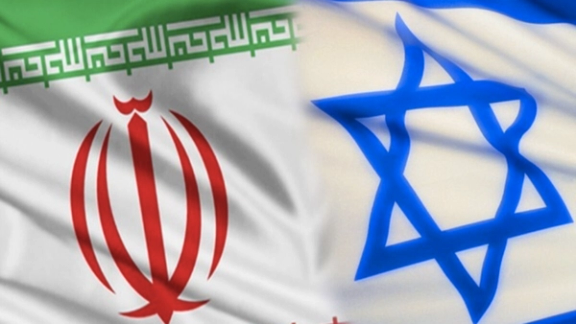
A combined photo of Iranian and Israeli flags
Israel’s security agency Shin Bet has uncovered an alleged plot by Iranian intelligence to lure Israeli academics and former defense officials to travel abroad in order to kidnap them.
The agency said on Thursday that Iranians contacted the Israelis while posing as academics, journalists, business people and philanthropists, using spoofed emails with the identities of real people living overseas who were unaware their names were being used.
The Iranian operatives used the stolen identities and relevant cover stories in an attempt to gather intelligence about Israelis and to invite them to locations abroad -- some under the guise of a conference -- in order to abduct or harm them.
“It is a well-known method of operation of the Iranian intelligence and security bodies, headed by the Intelligence Organization of the Revolutionary Guards, Quds Force and the Ministry of Intelligence,” the Shin Bet said.
In one case disclosed by the agency, Iranians invited the potential victims to a conference in Europe via email addresses similar to official institutes and with their logos, and in another case, the operatives pretended to be the assistant of a Russian billionaire, named “Nikolai” to contact Israelis of Russian descent and convince them to meet abroad.
Earlier this month, the Shin Bet said it uncovered an operation in which the Iranians had created a fake Facebook profile under the name of Sara Puppi, pretending to be a young Jewish girl with connections and business ties in Israel.
The Iranian intelligence minister on Thursday accused detained members of a teachers’ union of “contact with terrorist groups” and “spies residing abroad.”
“There is reliable information that some members of the said illegal groups had connection with known terrorist groups and certain spies who reside abroad and have been identified,” Esmail Khatib told a national gathering of prosecutors in reference to the arrest of some members of the Teachers Association.
The association has organized regular nationwide protests and strikesfor better wages and working conditions as well as freedom for their colleagues arrested during the past year. The association recently said in a statement that the teachers' movement would not be subdued by security and judicial crackdowns on union activists.
Last week Iran's Intelligence Ministry announced the detention of two European nationals who have now been identified as French citizens Cécile Kohler, the head of the biggest federations of teachers' unions in France, and her partner Jacques Paris. The couple travelled to Iran as tourists and were arrested a few days later on their way to the airport.
Kohler is the head of the National Federation of Education, Culture and Vocational Training (FNEC FP-FO), a trade union representing education and related staff in France. Her partner Paris is also a member of the same union.
Teachers gathered in Iran to demand higher wages and release of jailed colleagues. February 19, 2022
The French couple’s trip to Iran coincided with intensification of Iran’s crackdown on teachers’ protests and union activists over their latest round of widespread rallies which were held on May 1, the international Labor Day. The couple met with some members of the Coordination Council of Iranian Teachers’ Trade Unions (CCITTU) during their stay.
Iran's state television on Tuesday showed a 3-minute report on the recent arrestof the French couple, saying they were “spies” who "intended to foment unrest in Iran by organizing trade union protests".
Khatib said the two French nationals had come to Iran to create organizational connections between “illegal agitator groups (unions) … to fulfil the goals of [outlawed political] groups and [foreign] intelligence services under the guise of unions.”
In a statement Thursday, Defenders of Human Rights Center led by Nobel Peace Prize laureate Shirin Ebadi, condemned the French couple’s arrest and what it called Iran’s security forces “script” to suppress the teachers’ and workers’ protest movement by creating an atmosphere of fear. It underlined that contact with foreign nationals or labor unions is not a crime in any of the country’s current laws. “Depriving the nation from its fundamental freedoms with such unfounded and illegal accusations is clear proof of abuse of power,” the statement said.
Teachers’ Trade Association in a statement published Thursday said the CCITTU has been an official member of the FNEC FP-FO since it was formed and criticized the “script-writing” of security forces to use the meeting between the French teachers and their Iranian colleagues to crack down on their movement.
“The film [shown on the state television] intends to ascribe teachers’ protests to plots by western intelligence services to silence the justice-seeking voice of teachers,” the statement said while declaring that such scripts will only “result in the disgrace of those who write them.”
In the past few months people from different walks of life, including teachers, nurses, firefighters, and pensioners have held protestto demand better wages and pensions. On Monday bus drivers in the capital Tehran went on strike and Truck Owners and Drivers Union has also said they are planning a strike in the coming days.
US President Joe Biden and Saudi Arabian Crown Prince Mohammed bin Salman could meet for the first time as soon as next month, CNN reported on Thursday.
Biden administration officials are in talks with the Saudis about arranging a potential in-person meeting while Biden is overseas next month, the report added.
The White House said it could not confirm if there were any plans for Biden to meet the Saudi crown prince. National security adviser Jake Sullivan said on Thursday he discussed the issue of oil production with Saudi Arabia.
US-Saudi ties have been strained by Biden's decisions last year to curtail support for the Saudi-led military campaign in Yemen and to publish intelligence that the crown prince approved an operation to capture or kill journalist Jamal Khashoggi, who was murdered in Turkey in 2018.
The Saudi government has denied any involvement by the crown prince, who is known as MBS, in the murder.
Relations between the United States and the world's largest oil exporter have also been frayed by Biden's efforts to revive the 2015 Iran nuclear deal, which US allies in the Gulf argue does too little to prevent Tehran from getting an atomic bomb.
Washington has also been trying, so far without success, to persuade Saudi Arabia to pump more oil to offset potential losses in Russian supplies after Moscow was sanctioned by the West over its invasion of Ukraine. Saudi Arabia has refused to take sides in the Russia-Ukraine conflict.
Iranian truckers have announced plans to hold a nationwide strike as anti-government protests continue and Tehran’s bus drivers have been on strike all week.
In a statement issued on Thursday, the Union of Truckers and Drivers' Organization said that holding strikes and protests for the realization of their demands are their inalienable right. The date of the strike is to be announced soon.
Their demands include better transport fares based on the weight of the cargo per kilometer, higher pays and job security, lower prices for spare parts, lower fuel prices through subsidies, removing customs tariffs and road tolls, as well as welfare and health facilities at terminals.
The statement referred to the previous nationwide strike by the truck drivers that took place in over 160 cities four years ago, saying that their demands have not been met since then and their lives have become harder.
“For the past four years, we have been struggling with a lot of pain and suffering every day and every moment... Today, the country's road transport fleet is on the verge of destruction”, they said.
"The experience of that great strike tells us that we can unite again and shout our demands”, the statement read.
The 2018 strike finished following unfulfilled promises by the government, threats of serious repercussions and hundreds of arrests.
Authorities scrapped a food import subsidy in early May, which triggered a sudden jump in prices and led to protests that have taken on an anti-regime tone.
The US Treasury Department on Thursday issued new Hezbollah-related sanctions, designating Lebanese businessman and the Iran-backed group's financial facilitator, Ahmad Jalal Reda Abdallah, and his companies.
Abdallah, five of his associates and eight of his companies in Lebanon and Iraq were sanctioned and added to the sanctions list of the US Treasury Department's Office of Foreign Assets Control, the department said.
Abdallah is a Hezbollah official and an active member of its global financial network, according to the Treasury. He has supported Hezbollah for decades, carrying out commercial activities in various countries where the profits are transferred to the Iran-backed group, the department said.
Founded in 1982 by Iran's Revolutionary Guards and classified by the United States and other Western countries as a "terrorist organization," Hezbollah is a powerful group in Lebanon because of a heavily armed militia that fought several wars with Israel. It grew stronger after joining the war in Syria in 2012 in support of President Bashar al-Assad.
The United States said Abdallah used his senior employees and relatives to establish new businesses throughout the Middle East on behalf of Hezbollah.
Hezbollah on Sunday faced an electoral setback when the group and its allies lost their parliamentary majority in elections in Lebanon.
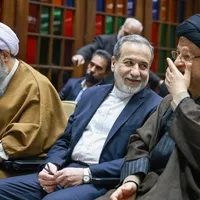
Hossein Mousavian, a former Iranian ambassador and now a research fellow at Princeton University, says foreign investors find Iran insecure country for capital.
In an interview with the reformist Ensaf News website in Tehran Mousavian said that politics, ideological biases, and obstacles created by certain interest groups in Iran not only hinder foreign investment, but also dissuade Iranian expats from investing in the country.
The former Iranian official also insisted that Iran can never attract foreign capital as long as it refuses to solve its problems with the United States. While lack of coordination among various institutions inside Iran has paralyzed the system, Tehran’s enmity with Washington has led to devastating US sanctions and all this has made Iran an insecure and high-risk country for investment.
Mousavian recalled that once he invited a prominent German industrialist to Iran, but officials refused to meet him. Speaking of another problem that hinders foreign investment, Mousavian said that despite rich natural and human resources in Iran, the misery index, which was around 14 percent before the Islamic Revolution, has reached 50 percent. This is an index directly linked to corruption, inflation, unemployment, crime and insecurity, he explained.
Mousavian’s remarks are a noteworthy admission by a former Iranian diplomat and operative that the Islamic Republic has failed in many respects.
Mousavian, currently a research fellow at Princeton, has been accused of lobbying for the Islamic Republic in the United States. He has also been implicated in court cases in Europe following the assassination of Kurdish leaders by Iranian and Lebanese terrorists in Germany in 1992. However, he has defended himself in several interviews since then. His explanations have not been convincing for Iranian activists and human rights defenders abroad.
Mousavian recalled, “Once when I was Iran’s ambassador in Germany, I found out that Hossein Sabet, an Iranian in Germany had made a big investment in Spain. I contacted him and urged him to invest in Iran. But as soon as he arrived in Iran security forces confiscated his passport. I chased his case for several days and officials found out that it was another Mr. Sabet with whom they had a problem. Nonetheless, terrified and worried, Sabet left Iran and did not look back again.”
Mousavian said, “The detention of foreigners and dual nationals in Iran is a familiar issue in international media. I invited many Iranian expats to invest in Iran when I was Iran’s ambassador to Germany, but most of them refused to have anything to do with Iran. Sabert was only one of therm.”
Mousavian said that some of Iran’s officials basically do not believe in the importance of foreign investment, others were not able to remove the obstacles.
According to Mousavian, there are around 6 million Iranians living abroad with a total wealth of around $3 trillion but the Iranian government’s policies and ideological biases deprive the country of this huge financial resource. He added that during the past 40 years Iran has been suffering from the adverse effects of brain drain and capital flight.
Meanwhile, Mousavian added that Iran’s poor and problematic foreign relations have pushed capital out of Iran to neighboring countries.
Mousavian, 65, was Iran’s ambassador to Germany (1990-1997). His latest position in Iran was the deputy director of the Presidential Office’s Strategic Research Center (2005-2007). He was briefly jailed in 2007 on charges of espionage but was soon cleared of the charges.