Human Rights Groups Call On Belgium To Reject Prisoner Swap Treaty With Iran | Iran International
Human Rights Groups Call On Belgium To Reject Prisoner Swap Treaty With Iran
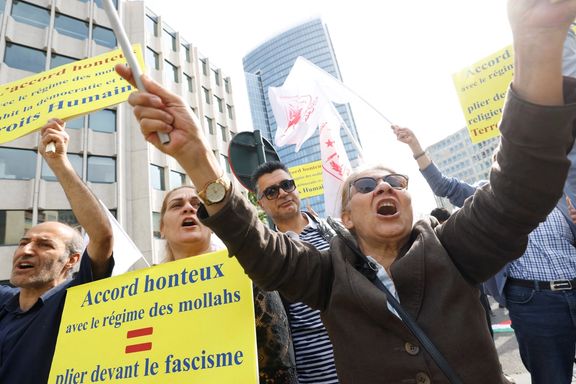
Iranians protest to the treaty with Iran in Brussels July 6, 2022
More than 10 human rights and activist groups urged Belgian lawmakers Tuesday to reject a prisoner swap deal with Iran that could result in the release of a convicted terrorist.
In a statement, the signatories said approving such a treaty condones hostage-taking policy by the Islamic Republic and undermines accountability for Iranian officials convicted for acts of terrorism abroad.
“We warn against a political deal that would legitimize Iran’s hostage-taking and swap deals as an acceptable state’s foreign policy,” they said, adding, “Belgium must call out Iran’s shameless instrumentalization of human lives to impose its political agenda upon the international community, not facilitate it.”
They called on the Belgian Parliament to say no to a treaty “which may result in impunity for human rights violators, and put lives of Europeans and dual nationals in danger,” noting that the international community should “step up its efforts to hold Iran accountable for its human rights violations and for its shameless instrumentalization of human lives. Impunity should never be an option.”
A draft law could lead to the release of Assadollah Assadi, an Iranian diplomat serving a 20-year prison sentence in Belgium for planning a terror attack in Paris four years ago.
An official of Ukrainian President Volodymyr Zelenskyy’s political party says news of Tehran planning to arm Russia with drones has shocked Ukrainian officials.
Yevheniia Kravchuk who is also a member of the Ukrainian parliament told Iran International Tuesday that Tehran’s decision would lead to the death of more Ukrainian civilians.
US National Security Adviser Jake Sullivan Monday said that Russia wants to obtain hundreds of drones from Iran, both for surveillance and attack, to use in its war in Ukraine.
“Our information indicates that the Iranian government is preparing to provide Russia with up to several hundred UAVs, including weapons-capable UAVs on an expedited timeline,” he told reporters Monday, adding that Washington’s information further indicates that Iran is “preparing to train Russian forces to use these UAVswith initial training sessions slated to begin as soon as early July.”
The Iranian foreign ministry gave an evasive answer to a reporter who asked about Sullivan’s statement. “The Islamic Republic’s cooperation with the Russian Federation in some new technologies predates the war in Ukraine and lately there have been no particular new developments,” the ministry spokesman Naser Kanani said.
"The position of the Islamic Republic of Iran regarding the war in Ukraine is quite clear and has been officially announced many times," he added, but did not clearly deny the news about delivering drones.
The Russian President Vladimir Putin is to visit Tehran next week.
Tehran has not officially taken side with Russia on Ukraine and says the conflict should be resolved through dialogue but many officials, including President Ebrahim Raisi, have implicitly pointed a finger at Ukraine and accused the country of instigating Russia to attack by seeking to join NATO.
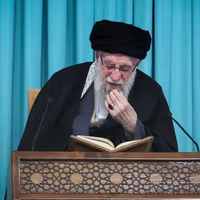
In a televised speech in early March Iran’s Supreme Leader Ali Khamenei said Iran was against war in Ukraine but held the US responsible for disrupting stability and "creating a colored coup". Reiterating that the US and Western countries cannot be trusted, Khamenei said Ukraine has fallen victim to US policies and the crises created by Washington without mentioning Russia's invasion in his speech.
Tehran has very close political and military ties with Moscow, whereas its relations with Ukraine have been quite sour since January 2020 when the IRGC shut down a Ukrainian commercial flight near Tehran killing all 176 passengers onboard.
Military analyst Samuel Bendett of the CNA think tank told Associated Press that Russia’s choice of Iran as a source for drones is logical because “for the last 20 years or more Iran has been refining its drone combat force. Their drones have been in more combat than the Russians’.”
Bendett said the Iranian drones could be very effective at striking Ukrainian power stations, refineries and other critical infrastructure. Bendett added that before the Ukraine war, Russia had licensed drone technology for its Forpost UAV from Israel which is no longer supplying them to maintain neutrality.
US President Joe Biden and Israeli Prime Minister Yair Lapid will sign the Jerusalem Declaration this week, which also pledges a joint stance against a nuclear Iran.
The declaration that outlines US-Israeli strategic partnership will include a mutual commitment against Iran’s nuclear program and regional aggression, with both countries pledging they will use “all elements of national power” to ensure Iran never builds a nuclear weapon.
President Biden will be in Israel on Thursday during a regional trip, with the highlight of a long-expected visit to Saudi Arabia.
During Biden’s visit Iran will be a focal point of discussions, with attempts to launch a regional air defense system including Israel and US Arab allies. It could also culminate in steps to bring Saudi Arabia closer to normalizing relations with Israel.
President Biden is also expected to reaffirm US commitment to Israel’s security with annual assistance and a pledge to uphold its military edge, which is becoming more important with the advance of Iran’s missile program.
The Jerusalem Post quoted an unnamed official as saying that Iran will be at the top of the bilateral agenda, with talks to restore the 2015 nuclear deal stalled and Iran boosting uranium enrichment. He added that Iran is playing for time, calculating that the longer the current situation lasts the more advantage it will gain.
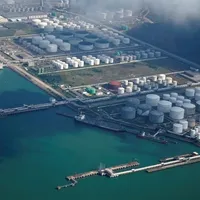
Iran says its oil production in June increased by 31,000 barrels a day, rejecting reports that Russia has taken market share, shipping more oil to China.
The government’s office news website IRNA said Tuesday that the latest OPEC monthly report shows that Iran produced 2,574,000 barrels per day in June, slightly higher than in May.
Kpler, a market intelligence firm reported in June that Iran’s oil shipments had halved in May due to Russian competition after many countries boycotted imports from Moscow after the invasion of Ukraine. Other reports said that more than 30 million barrels of Iranian oil remained unsold in Asia.
IRNA highlighting the small increase in production has rejected these reports saying that despite US sanctions on Iran’s oil exports sales continue.
However, the impact of Iran’s illicit oil exports is not felt in Tehran’s financial markets where the currency, rial is close to its all-time lows and the government this week failed to pay monthly cash handouts to fixed-income Iranians.
Amid its economic crisis the hardliner government of President Ebrahim Raisi tries to present the overall situation in a positive light as it refuses to make a deal with the United States over limiting its nuclear program in return for the lifting of sanctions.
OPEC overall increased oil production by 234,000 barrels per day in June.
Iran International has learned that Iran’s satellite carrier rocket Zoljanah exploded after launch despite Tehran’s claim of its recent successful test-launch.
The suborbital Satellite Launch Vehicle (SLV) is currently at the experimental stage and was not carrying any satellite during the test-launch, the source said, adding that the Islamic Republic is yet trying to have a truly successful launch before it would mount a satellite on it. Iran claims that Zoljanah can carry satellites weighing up to 220 kilograms into an orbit 500 kilometers above the Earth.
Defense Ministry spokesman Ahmad Hosseini had claimed that "the third stage of the development of this satellite carrier has started thanks to data -- or telemetry – collected from this launch."
The three-stage Zoljanah (Zuljanah) satellite launch vehicle, which has two solid propulsion phases and a single liquid propulsion phase, was test-fired at a desert launch pad at Imam Khomeini Space Center southeast of Semnan, the site of frequent recent failed attempts. It is Iran’s third SLV after the Safir and Simorgh, the latter of which has failed five times in a row. A fire at the Imam Khomeini Spaceport in February 2019 also killed three researchers.
The United States says that space launches by Iran defy UN Security Council resolution 2231 and could be a cover to develop intercontinental ballistic missiles that would be able to deliver nuclear warheads. The US intelligence community’s 2022 threat assessment, published in March, claims such a satellite launch vehicle “shortens the timeline” to an intercontinental ballistic missile for Iran as it uses “similar technologies.”
Resolution 2231 in 2015 formalized the nuclear agreement between Iran and world powers known as the JCPOA. It banned missile technologies capable of delivering nuclear warheads.
Expressing concern about the launch, a Pentagon spokesman US Army Major Rob Lodewick, said the American military “will continue to closely monitor Iran’s pursuit of viable space launch technology and how it may relate to advancements in its overall ballistic missile program.”
Zoljanah is named after the horse of third Shiite imam Hussein, the grandson of Prophet Muhammad. The satellite carrier is 25.5 meters long and weighs about 52 tons. It utilizes a 1.5-meter diameter solid fuel engine with 74 tons of thrust.
An Iranian banking official says enforcing newly ordered strict dress code – or hijab – restrictions on clients will result in banks losing customers.
Mohammad Reza Jamshidi, the secretary of the Association of Private Banks and Credit Institutions, said on Tuesday that “when bank branches want to force out customers who have not observed the desired form of hijab, or do not allow them to enter,” they are bound to lose clients. “They will not even open an account there,” he said.
He added that these new conditions and restrictions have been ordered just a few days ago so “we should wait to see the consequences.”
These issues have caused some people not to accept the position of the manager of the branch and opt to become the deputy head as the branch manager will be accountable for all the responsibilities.
In the past few weeks, authorities have launched an extensive campaign against women they call ‘bad-hijab’. In addition to crackdowns by the ‘morality police’ on streets, some officials have ordered extra measures, including to government offices, banks, and public transportation authorities to withhold service to ‘bad-hijab’ women.
In the jargon of religious and political hardliners women who are unwilling to wear the hijab and display their displeasure by wearing small and colorful headscarves with tight-fitting, short dresses are called ‘bad-hijab’ ones.
Meanwhile, social media posts from Iran indicate many women left home Tuesday without hijab in response to calls from activists to defy the government’s forced dress code.