Iranians Protest Song Receives 95,000 Submissions For Grammy Award
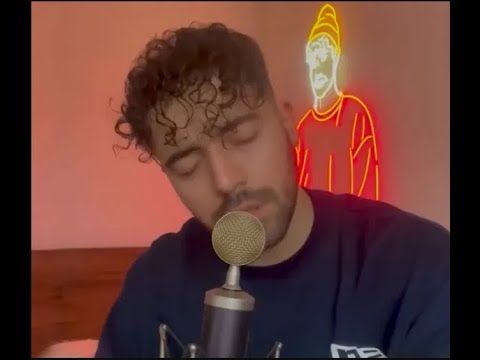
Iranian singer-songwriter Shervin Hajipour
Iranian protest song by singer-songwriter Shervin Hajipour, which has become the anthem of the current uprising, has flooded the submission box for the Grammys’ newest special award category.
The song “Baraye...” -- which means “For the Sake Of” in Persian -- received 95,000, or over 83 percent, of the 115,000 total submissions for the award following a campaign on TikTok urged users to nominate the song, which is the de-facto manifesto of the protests.
It has been reuploaded to YouTube and other social media platforms, and “was used by Iranians all over the world as a rallying cry,” a crowdsourced guide for nominating the song for a Grammy says.
The special merit award is meant to honor a song “that has had a profound social influence and impact,” the Recording Academy said on its website. Submissions are open through October 14.
The Recording Academy was “deeply moved” by the social media campaign, Chief Executive Officer Harvey Mason, Jr. said in an e-mailed statement. “While we cannot predict who might win the award, we are humbled by the knowledge that the Academy is a platform for people who want to show support for the idea that music is a powerful catalyst for change.”
Hajipour, who shared his song amid the protests over Mahsa Amini’s death in custody of hijab police, was himself arrested and released on bail and later was banned from leaving Iran on charges of anti-regime propaganda and inciting violence. He composed the song from tweets and other social-media posts from protestors commemorating Mahsa Amini.
Iran’s interior minister Ahmad Vahidi Tuesday claimed that overthrowing the Islamic Republic “is a stupid idea” because the regime is at “apex of its power”.
The minister was visiting the western city of Sanandaj where protesters have been defying hundreds of government troops and gunmen for at least three days. There are no clear figures about casualties in the city but several people have been killed and dozens injured by live fire.
Reports by activists on social media indicated that the wounded have been turned away form hospitals, or they have refused to seek helpknowing that doctors are under orders to call security agents when a wounded person is brought in. The government arrests them on the spot before they are treated and taken to prison.
Demonstrators were chanting and bullets flying in Sanandaj as the interior minister was apparently inspecting a water project in the area. The city has a majority Kurdish population and was one of the first spots where protests started in mid-September, following the killing of Mahsa Amini in the custody of Iran’s notorious hijab police.
There were also bloody protests in other Kurdish-populated cities and towns such as Baneh and Saqqez, the hometown of Mahsa Amini. These protests were continuing Tuesday night at the time of this writing.
Strikes by oil and petrochemical workers that started Monday continued in some spots on Tuesday, notably at the oldest refinery in the Middle East in Abadan, near the Persian Gulf. There were also strikes in Asalouyeh, a city which is home to many petrochemical and natural gas plants.
A video released by striking workers threatened destruction of plants and equipment if the Revolutionary Guard and its various armed groups do not lay down their weapons and stop killing civilians in the country.
Wednesday can become another milestone in the 26-day old antigovernment protest movement that clearly has assumed features of a revolutionary push to overthrow the clerical regime in Iran. A group of activists known as ‘Tehran Youth’ have called for nationwide protests on Wednesday. This was the group that had called for the large protests on Saturday, October 8, which brought out crowds in various parts of Tehran and several other cities, showing the power of the “revolutionaries”.
The call for another round of nationwide protests starting at noon October 12 came as a response to government violence in Sanandaj, amid a mood of national unity against the Islamic Republic. Protesters proudly highlight slogans of mutual support, especially for outlying regions such as Kurdish areas close to Iraq and the Baluch city of Zahedan which is located at the opposite end of the vast country, near Pakistan.
The Baluch region is a neglected and poor part of Iran, where security forces more likely felt they could kill more indiscriminately on September 30 when around 60 protesters were gunned down in Zahedan. The death toll has now risen to around 90.
No one knows exactly how many people have been killed nationwide, but some human rights groups put the figure at close to 200. Security forces have also arrested between four to five thousand protesters, including many university students and even school children.
French Foreign Minister Catherine Colonna said Tuesday Paris was pressing Iran to free detained nationals, confirming five were currently held.
“I hope to speak to the Iranian foreign minister today to ask once again for the immediate release of all our compatriots,” Colonna told France Inter radio. The minister said she expected a meeting of European Union foreign ministers October 17 to “validate” a set of sanctions against Iran targeting those “behind the repression.”
France Monday advised nationals against going to Iran for any reason and directed those there “to limit their movements…to imperatively avoid any type of gathering and to make themselves known to the French Embassy in Tehran.”
The five French detainees include Cecile Kohler, a trade union leader, and her partner Jacques Paris, who were arrested in May, accused of involvement in teachers’ protests seeking higher pay, and whose ‘confessions’ aired last week on an Iranian state television station. The pair said they were in Iran on holiday. A trailer on the Arabic-language Al-Alam station said they had arrived with “packets of money.”
Also in jail is French-Iranian researcher Fariba Adelkhah, arrested 2019 and sentenced to five years in prison for “undermining national security.” Another French citizen, Benjamin Briere, was arrested in May 2020 and sentenced to eight years and eight months for espionage, without due process of law.
‘Adhere to the rules’
After the recent outbreak of protests following the September 16 death of Mahsa Amini after her arrest in Tehran by ‘morality police,’ Iran said late September it had detained nine foreign nationals linked to unrest, including those from France, Germany, Italy, Poland and the Netherlands.
Foreign Ministry spokesman Nasser Kanaani said Monday that foreigners “should adhere to the rules and regulations and not enter into issues that are basically not within the scope of the normal travel of foreign citizens.”
The French embassy in Tehran Tuesday announced delays in processing visa applications from Iranians due to “the internet filtering the Iranian authorities have decided to do.” Harmatullah Rafiei, head of a leading tourism association, had earlier suggested some European embassies had suspended processing Schengen visas. Iran argues that social media has been used by foreign-based groups to foment violence including attacks on ambulances.
‘Brutal suppression’
The European Union has as yet given no indication of what sanctions may be agreed at the foreign ministers’ meeting October 17. German Foreign Minister Annalena Baerbock told Bild am Sonntag, a Sunday newspaper, that Berlin would support measures freezing the assets and banning the EU entry of those responsible for “brutal suppression,” referring to antigovernment protests.
While Baerbock did not name any persons or organizations, the United Kingdom announced Monday it was sanctioning Iran’s ‘morality police,’ the police’s national head Mohammad Rostami and its Tehran chief Ahmad Mirzaei, and well as national police chief Hossein Ashtari and other officials, whom it accused of “serious human rights violations.” Tehran summoned the British ambassador Monday evening to protest over ‘interference in internal affairs.’
Many people injured by the Islamic Republic’s security forces amid current protests avoid treatment in hospitals for fear of being arrested, reports say.
Some Iranian medical professionals, who spoke to CBS on condition of anonymity out of concern for their safety, said they felt a duty to help the wounded, with one of them – who is a nurse – saying that she treated two protesters whose skulls had been fractured. "They were afraid to go to the hospital," she said, adding that she had to tend to their wounds on the street during the unrest.
Another Iranian nurse and emergency call operator said, "We are required to report all gunshot cases to the police because all of the phone calls are recorded,” noting that the risk of arrest to injured protesters is real.
Dr. Kayvan Mirhadi, an Iranian American and chief of internal medicine at the Clifton Springs Hospital in New York, said he receives around 500 Instagram messages daily from wounded protesters from Iran, begging him for medical advice.
He said if he fails to refer them to his trusted doctors in Iran, he tries to walk them through the best home remedies possible. According to him, their injuries range from fractures and significant head injuries, to second- and third-degree burns from electric batons, as well as bullet and pellet wounds.
According to another doctor, ambulances in the capital Tehran transport injured protesters directly to police stations. "As soon as they enter the hospital, there are intelligence agents and members of Revolutionary Guards who record their names," he said.
Many Iranians have taken to social media in the past few days to refute allegations of sectarianism levelled at some protesters by officials and hardline media.
Pro-government officials and media have increasingly been accusing protesters of “terrorism” and “fomenting sectarianism” following their harsh crackdown on demonstrators in the Baluch city of Zahedan in the southeastern province of Sistan and Baluchestan September 30, which left nearly a hundred dead, including children and bystanders, and the ongoing crackdown in Sanandajin the western Kordestan (Kurdistan) province.
Protests will result in Iran's partition if the government does not crack down, they warn. They also blame “foreign enemies”and “terrorist groups” for the unrest that began 24 days ago when Mahsa Amini, a young woman was killed in police custody, and has spread since then.
Antigovernment activists say that the harsh crackdown on ethnic groups is the government’s tactic to foment more tensions and appear as the savior of Iran’s territorial integrity and public security.
The Revolutionary Guards (IRGC)-linked Tasnim news agency wroteSaturday that because “foreigners failed” to use the ethnic card in the protests they resorted to other disruptive tactics.
Tasnim was referring to a hactivist group’s disruption of a state TV’s news program which suddenly transitioned from a clip showing Supreme Leader Ali Khamenei to chants of “women, life, and freedom”, the signature slogan of the current protests, or revolution, as many describe it now.
The IRGC which had initially not used overwhelming military force against protesters on the streets, has been attacking the positions of Kurdish Iranian insurgent groups in Iraqi Kurdistan with artillery and drones in the past three weeks.
Sectarian groups have been active in both provinces for decades but there is no indication, judging from the slogans protesters chant in both places that they are fighting for any cause other than toppling the clerical regime.
“Down with the Dictator” and “Death to Khamenei” are at the top of the protesters’ list of slogans in Zahedan, capital of Sistan and Baluchestan, and Sanandaj, capital of Kordestan, as in all other areas of the country.
“The people of Kordestan donated blood for the people of Zahedan and chant ‘Kordestan supports Zahedan’. Accuse them of separatism if you dare!”, a supporter of protesters tweeted.
“You had ‘separated’ us for 43 years: men from women, the younger from the older generation, the Kurds from the Turks, The Luris from the Baluchis, the Persian speakers from the Gilaki speakers, … We have just united to separate the Islamic Republic and its clerics from our Iran,” another tweet which has become very popular said.
Others have pointed outin their social media posts that officials consistently refer to peacefully protesting university students as “rioters’, celebrities who have supported protesters as “lackeys of the West”, ethnic groups as “separatist” and claim that the youth who have turned into the driving force of the protests as kids who are only acting up.
“You are resorting to everything you can to instigate sectarianism in some part of the country [but you keep failing]. You tried Baluchestan but you failed, now you are targeting Sanandaj. No part of the Iranian territory has been or will be separated from it. Whenever it happened [in the past] it was because of the incompetence of the rulers at the time. You’ve lost your power of tricking people,” US-based Iranian journalist Ehsan Karami tweeted.
The UN's body for humanitarian and developmental aid to children, UNICEF, has called for the protection of children and adolescents amid Islamic Republic’s crackdown on popular protests.
In a statement on Monday, UNICEF Executive Director Catherine Russell said, “We are extremely concerned by continuing reports of children and adolescents being killed, injured and detained amid the ongoing public unrest in Iran.”
Describing violence against children – by anyone and in any context – as “indefensible,” she called for “the protection of all children from all forms of violence and harm, including during conflict and political events.”
According to Norway-based Iran Human Rights organization said on Saturday, October 8, that at least 19 children have been killed in protests across Iran since mid-September, when 22-year-old Mahsa Amini was killed in custody of hijab police. The Oslo-based organization added that at least 185 people have been killed in the government’s crackdown on the uprising.
The protests first erupted in Mahsa Amini’s hometown Saqqez and capital Tehran and soon spread to other cities and garnered support from Iranian expatriate communities around the world as well as foreign governments and officials.