Mystery Surrounds Report That Ali Larijani Will Stand for Presidency
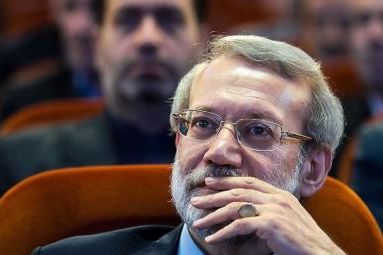
Iran's Former Parliament Speaker Ali Larijani
Mystery surrounded the state-affiliated Borna news agency announcement that ex-parliament speaker Ali Larijani will run in the upcoming presidential election in spite of Larijani not confirming his intention to run.
When asked about his candidacy on Monday, the 66-year-old moderate conservative responded, "Let's see what happens." It is widely believed that Larijani is seeking assurances from Supreme Leader Ali Khamenei to avoid disqualification, a fate he faced during the 2021 elections allegedly due to his daughter's residency in the US.
The elections are slated for June 28 in the wake of the sudden death of Ebrahim Raisi who died in a helicopter crash on the Azerbaijan border this month, along with the foreign minister and other delegates.
In spite of Larijani's uncertainty, Borna claimed the former Parliament Speaker has finalized his decision and will soon register as a candidate, suggesting the tacit approval of Khamenei who is lining up a roster of allies for the upcoming polls.
Larijani, who has no political party affiliation but has been a prominent figure in the Islamist Principlist camp, has held numerous high-ranking positions appointed by Khamenei, including chief of the state broadcaster (IRIB) and secretary of the Supreme National Security Council. He also served as Iran's top nuclear negotiator from 2005 to 2007 and is currently a member of the Expediency Council and an advisor to Khamenei.
Meanwhile, former defense minister Hossein Dehghan dismissed the possibility of his presidential candidacy, stating, "Thank God, the number of people running for the presidential election is so high that it needs to decrease."
Dehghan, an Iranian military officer and former IRGC Air Force brigadier general, currently heads the Mostazafan Foundation, a “charitable” organization that claims to promote the living standards of disabled and poor individuals in Iran. The Mostazafan Foundation is closely associated with the Islamic Revolutionary Guard Corps (IRGC).
Candidate registration is scheduled from May 30 to June 3, with the Guardian Council expected to complete vetting within two weeks. Official campaigning will commence after that, leading up to the election on June 28.
Tehran representative Mahmoud Nabavian has claimed true Islam includes fighting Iran's archenemies, the US and Israel.
"The criterion for being a Muslim is, first and foremost, fighting against America and Israel," Nabavian declared. As Iran continues its decades-long proxy war against the Jewish state, he said the Iranian revolution is meaningless without opposing Israel, citing the incorporation of the principles in the Iranian Constitution and parliamentary laws.
Iran has long employed an anti-US and anti-Israel propaganda strategy as a central pillar of its ideological and foreign policy agenda. The narrative is perpetuated through state-controlled media, educational curricula, and political rhetoric, consistently framing the United States and Israel as principal adversaries.
This messaging is not only aimed at bolstering domestic support by uniting the population against external "enemies," but also at extending Tehran's influence across the Middle East, Iran having given birth to a host of militant groups across the region such as the Houthis in Yemen and Hezbollah in Lebanon, supporting others such as Hamas in Gaza.
Amid the ongoing war in Gaza, fueled by Hamas's October 7 invasion of Israel, Iran's proxies have all launched allied attacks on both US targets for having supported Israel's right to defend itself as well as Israel, from Syria, Yemen, Lebanon, Iraq and Gaza.
Last month saw the first direct attack on Israel from Iran when over 350 missiles and drones were launched towards Israel, mostly intercepted by Israel and a US-led coalition force as the tit-for-tat shadow war between the two states was drawn out into the open.
Iran is at the forefront of a surge in recorded executions in 2023, as revealed by the latest report from Amnesty International.
“In Iran, the authorities intensified their use of the death penalty to instill fear in the population and tighten their grip on power, carrying out executions across the country,” said Agnès Callamard, Amnesty International’s Secretary General.
A total of 1,153 executions were recorded last year, with Iran responsible for 74%of these executions and Saudi Arabia for 15%.
“The huge spike in recorded executions was primarily down to Iran,” said Callamard.
Currently, in Iran there are at least dozens of dissidents at threat of imminent execution. That includes prominent rap artist Toomaj Salehi.
At least seven other dissidents, Amnestysaid last week, are awaiting execution following their involvement in the "Woman Life Freedom" uprising in Iran.
Among them are Fazel Bahramian, Mahmoud Mehrabi, Mamousta Mohammad Khazrnejad, Manouchehr Mehman Navaz, Mehran Bahramian, Mojahed (Abbas) Kourkouri, Reza (Gholamreza) Rasaei.
The recorded executions in Iran disproportionately targeted Iran's Baluchi ethnic minority, making up 20% of recorded executions despite representing only about 5% of Iran's population.
Additionally in Iran, at least 24 women and five individuals who were minors at the time of the crime were executed.
Surge in Drug-Related Executions Continues
More than half of Iran’s recorded executions were unlawfully carried out for acts that should not result in the death penalty under international law, including drug-related offenses, robbery and espionage, the report said.
Amnesty has called this a "distressing return to a lethal anti-narcotics policy since Ebrahim Raisi’s rise to presidency in 2021."
Execution for drug-related offenses surged and constituted 56% of recorded executions in 2023, an increase of 89% from 255 executions recorded in 2022.
“The Iranian authorities showed complete disregard for human life and ramped up executions for drug-related offenses, further highlighting the discriminatory impact of the death penalty on Iran’s most marginalized and impoverished communities,” Calamard noted.
Iran’s escalating executions since the 2022 uprising
This year, the organization's report titled "Don't Let Them Kill Us", called for urgent international intervention to halt the surge in executions, which it describes as transforming Iranian prisons into grounds for mass executions.
In January, Deputy US Special Envoy for Iran Abram Paley said that the death penalties in Iran were often imposed following "sham trials against defendants who lacked adequate legal counsel."
Following the nationwide protests in Iran in 2022, Amnesty says, Iranian authorities have committed numerous violations of international law in a bit to stifle dissent.
These include hundreds of unlawful killings, arbitrary execution of seven protesters, tens of thousands of arbitrary arrests, widespread torture (including rape of detainees), extensive harassment of victims' families advocating for truth and justice, and reprisals against women and girls challenging discriminatory compulsory veiling laws.
The number of people executed in Iran marks a 48% rise from 576 in 2022.
Iranian Supreme Leader Ali Khamenei's office is organizing a memorial service in the religious city of Qom for Nahdia Hashem Safi Al-Din, the mother of Hassan Nasrallah, the Secretary General of Hezbollah.
Safi Al-Din, who had nine children, is related to prominent figures within Iran's militant networks. Her cousin is the father-in-law of Zainab, the daughter of the late Qassem Soleimani, the former commander of the IRGC Quds Force.
Nasrallah did not attend his mother's funeral south of Beirut on Monday due to security concerns and the need to avoid exposure. Instead, his close associate and potential successor, Hashem Safi al-Din, who is the Chairman of the Hezbollah Executive Council, was present.
Iran's support for Hezbollah, its biggest and most powerful proxy, has been a key element of its foreign policy and regional strategy since the group's inception in the early 1980s. Tehran provides Hezbollah with extensive financial aid, estimated at hundreds of millions of dollars annually, in addition to advanced military equipment and training.
The backing has transformed Hezbollah from a local militia into a formidable political and military entity in Lebanon, significantly influencing the country's political landscape and security situation.
Ali Bagheri Kani, Iran's acting Foreign Minister, denied reports that the nuclear file had been handed over to Ali Shamkhani, an advisor to the Iranian leader.
"We have no such thing as a file in the nuclear discussion. Nuclear activities continue within the framework of the system's policies under the supervision of the Supreme National Security Council," Bagheri Kani stated.
The acting foreign minister emphasized that nuclear activities are managed under the Supreme National Security Council, despite unofficial reports suggesting Shamkhani took over the management of the nuclear file.
Shamkhani, who oversaw nuclear talksduring former President Hassan Rouhani's tenure, served as Secretary General of the Supreme National Security Council for a decade.
On Monday, Foreign Ministry spokesman Nasser Kanaani responded ambiguously to questions about Shamkhani’s alleged new role, saying, "I have no specific comment on this matter." His vague response has been interpreted by many domestic media outlets as a tacit confirmation of the reports.
Bagheri Kani also addressed journalists about the ongoing indirect negotiations and message exchanges between Iran and the United States, stating, "Message exchanges continue as before, and there has been no interruption in the process."
Reports of Ali Shamkhani's appointment come in the wake of an Axios news article revealing that indirect negotiations took place on May 18 between Iranian and US officials in Muscat. According to informed sources quoted by Axios, this round of talks was the first since January and included Brett McGurk, advisor to the US President for Middle East affairs, and Abram Paley, the US special envoy to Iran.
The website did not disclose the identities of the Iranian officials involved in the discussions, which focused on addressing US concerns about the status of Iran's nuclear program.
Tasnim News Agency, affiliated with Iran's Revolutionary Guard (IRGC), reported on Wednesday that Iran has supplied the Houthi rebels in Yemen with the Ghadr ballistic missile.
The missile, described as the first Iranian anti-ship ballistic missile, is now in the hands of Yemeni fighters, enhancing their capability to target maritime vessels.
The revelation is significant as it confirms that Tehran has been arming its proxy forces in Yemen with advanced ballistic missiles.
This follows a pattern of Iran's military support to its allies in the region, further destabilizing the Middle East.
Tasnim's report also highlighted the history of the anti-ship ballistic missile's development, pointing out that Iran needs to be able to threaten US and other foreign navies in the broader Middle East.
In March, UK Defense Secretary Grant Shapps accused Iran of supplying ballistic missiles to Russia for use in Ukraine, highlighting Tehran's expanding role in global conflicts.
Since November, the Houthis have been using Iranian-supplied missiles and drones to attack commercial ships in the Red Sea, a critical global trade route. The attacks were initially a response to the Israeli military offensive in Gaza but have since severely disrupted maritime trade in the region.
The Houthi campaign in the Red Sea began after Iran's Supreme Leader Ali Khamenei called on Muslim nations to blockade Israeli trade.
Despite US and British military strikes on Houthi targets starting in January aimed at degrading their arsenal, the group’s attacks have continued.
The situation has been exacerbated by the expiration of UN Security Council restrictions on Iran's export of certain missiles, drones, and related technologies in October. However, the United States and European Union have maintained sanctions on Iran's ballistic missile program, citing persistent concerns over the proliferation of Iranian weaponry to proxies in the Middle East and to Russia.
This ongoing transfer of advanced military technology to the Houthis underscores the Iranian regime's commitment to extending its influence and military capabilities through proxy warfare, posing a significant threat to regional and global stability.