US expands sanctions on Iran's oil sector in response to missile attack
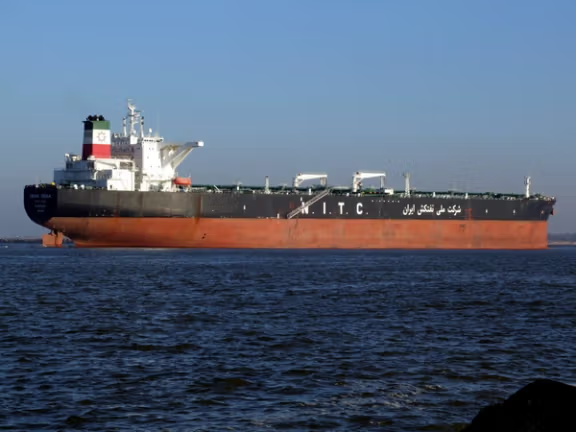
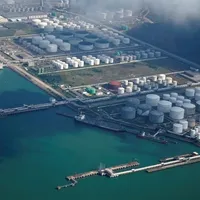
An Iranian oil tanker onshore
The United States announced new sanctions on Iran’s oil and petrochemical sectors on Friday in its first official response to the Islamic Republic's Oct. 1 missile attack on Israel.
The move aims to make it harder for Iran to sell oil, by far the largest source of foreign currency for the country's ailing economy.
The announcement comes "in response to Iran’s October 1 attack on Israel, its second direct attack on Israel this year", the Treasury’s Office of Foreign Assets Control (OFAC) said.
“Today’s sanctions target Iranian efforts to channel revenues from its energy industry to finance deadly and disruptive activity - including development of its nuclear program, the proliferation of ballistic missiles and unmanned aerial vehicles, and support to regional terrorist proxies,” US Secretary of the Treasury Janet Yellen said in a statement on Friday.
The new sanctions target 10 entities and 17 vessels involved in shipping Iran’s sanctioned oil and petrochemical products, the treasury statement said.
The US State Department also sanctioned six entities and six vessels engaged in the transportation and sale of Iranian oil, the statement added.
A series of US-led sanctions on Iranian oil over the past decade have forced Iran’s government to resort to a network of tankers, often referred to as a shadow fleet, to evade restrictions and continue its oil trade.
The US treasury has identified and sanctioned a number of these tankers as well as their operating companies, many of which are registered in the United Arab Emirates.
Iran exported more than $70 billion worth of oil after the 2015 nuclear deal, according to the data released by the Organization of the Petroleum Exporting Countries (OPEC). This fell to less than $10 billion in 2020, following a unilateral US withdrawal from the nuclear agreement and Donald Trump’s so-called maximum pressure campaign.
The figure rose again to just above $40 billion in 2023, in large part due to a myriad of smaller Chinese refineries purchasing Iranian oil masked as originating from other countries.
Due to heavily discounted sale prices and substantial expenses involved in using shell companies and the shadow fleet, little in the way of profit materializes in the coffers of Iran’s government.
Iranian authorities have intensified a crackdown on journalists and political activists by forcing them to erase social media posts and coerce them into publishing favorable content, sources told Iran International.
The moves come after a wave of SIM card disconnections and summonses ordered by security agencies followed by interrogations targeted activists and journalists.
According to information received by Iran International, the individuals were coerced by security agents and prosecutors, particularly at Evin Prosecutor's Office, to delete their social media posts and share content they did not agree with.
At least three people, including a journalist and two women’s rights activists whose identities are being protected by Iran International for safety reasons, have faced charges related to their online activities.
These charges include - per official legal language - propaganda against the regime, spreading false information to disturb public opinion, and defaming regime officials with the intent to weaken the Islamic Republic. They have appeared in court and presented a defense.
In similar cases, criminal charges had been filed against several unnamed individuals after their social media activities were monitored, the Mizan News Agency affiliated with Iran’s judiciary reported on Oct. 4.
Citing the Tehran Prosecutor’s Office, Mizan said these individuals were spreading false news and "creating fear to undermine the public's psychological security."
One case involved Iranian journalist Sadaf Fatemi, who on October 9 erased all her posts from X and Instagram, replacing them with an image stating, "Access to the website you are trying to reach is not possible."
Fatemi had shared on September 24 that new restrictions had been imposed on her by security agencies, including the unexplained disconnection of her SIM card.
Mehdi Amirpour, a sports journalist and Fatemi’s husband, condemned the incident as a new method of suppressing journalists. He revealed on his X account that after about a month without a functioning SIM card, Fatemi was "forced to delete all her Twitter and Instagram posts" and replace them with a state-ordered post.
On October 9, Motahareh Goonehi, a student activist was also arrested and transferred to prison for her posts on social media allegedly “regarding Iran’s recent military actions,” according to, the US-based rights group, Human Rights Human Rights Activists News Agency (HRANA) citing Mizan.
Last month, Iran International reported that several journalists and political activists in Iran had experienced similar SIM card disconnections on orders from security agencies.
Tehran-based human rights lawyer Payam Derafshan, speaking to Shargh newspaper also noted that such restrictions had been imposed in similar cases in the past.
The crackdown comes despite criticism from international human rights organizations which continue to condemn Iran for violating freedom of speech and targeting journalists.
This year alone, the Islamic Republic has arbitrarily prosecuted at least 91 journalists, media activists and outlets, as indicated by the latest report from the Defending Free Flow of Information (DeFFI).
The European Union will on Monday sanction a number of Iranian individuals and organizations connected to the Islamic Republic's transfer of missiles to Russia, Reuters reported citing a senior EU official.
The sanctions will be the bloc's first punitive measures over the alleged transfers and will come at a time when Iran and Russia have drawn closer.
Their presidents met on the sidelines of an international conference in Turkmenistan on Friday.
"Our assessments of events taking place in the world are often very close," Russia’s president Vladimir Putin told Iran’s president Masoud Pezeshkian, according to Russian state news agency TASS.
Pezeshkian reciprocated: “Our relations are being strengthened day by day and becoming more robust," according to Iran’s state news agency IRNA.
Iran has been helping Russia’s war effort in Ukraine, providing drones that Kiev says have been used to target urban areas.
Iranian officials including Pezeshkian have denied any delivery of ballistic missiles. But foreign minister Abbas Araghchi told a European Union official that shorter range missiles were sent to Russia, according to the Wall Street Journal’s EU reporter, Laurence Norman.
“Senior EU official says Araghchi acknowledged in NY that Iran had sent missiles to Russia of less than 250km range. Claimed they were not "ballistic" missiles,” Norman posted on X on Friday. He added that EU’s sanction over Iran’s missile supplies to Russia would likely include Iran’s main commercial airline, IranAir.
The EU warned Iran last month that it will face sanctions for its alleged transfer of ballistic missiles to Russia. “We will respond swiftly and in coordination with international partners," EU foreign policy chief Joseph Borrel said at the time.
The measures—expected to be introduced on Monday— will not be the end of such measures, according to Norman citing EU officials. “There are also discussions on sectoral sanctions vs Iran that won’t be decided Monday,” he wrote on X.
Iran conveyed to its Arab and regional neighbors that they would face retaliation if US or Israeli attacks on the Islamic Republic used their territory or air space, the Wall Street Journal reported citing Arab officials.
The warnings could mean any escalation to flaring Iranian-Israeli tensions could draw in other countries in the critical oil-exporting region.
"Iran has warned it would respond with devastating hits on Israel’s civilian infrastructure, and would retaliate against any Arab state that facilitated the attack," the daily reported.
Some US allies in the region have conveyed to Washington that they disapprove of Israeli or American use of their airspace for any attack on Iran or having their land used as a launchpad for any strike, the paper added, citing US defense officials.
Israel has vowed a painful retaliation for an Oct. 1 Iranian attack with nearly 200 ballistic missiles, while the United States has publicly urged its ally in the region to carry out a proportional response that avoids nuclear and oil sites.
Arab states astride the Persian Gulf including Saudi Arabia, the United Arab Emirates and Qatar have refused to let Israel use their air space in any attack, Reuters reported on Wednesday citing Arab officials.
The US allies are lobbying Washington to prevent Israel from striking oil facilities in Iran for fear that their own oil infrastructure would be hit in a counterattack.
Much of the oil market's spare capacity lies with Arab countries in the Persian Gulf region.
Top oil exporter Saudi Arabia has had a political rapprochement with Tehran since 2023 which has helped ease regional tensions, but relations remain strained.
Saudi Arabia has been wary of an Iranian strike on its oil facilities since a 2019 attack on its key refinery at Abqaiq briefly shut down more than 5% of global oil supply. Iran denied involvement.
A medical network affiliated with Iran's Islamic Revolutionary Guard Corps (IRGC) claims to have intervened in thousands of abortion cases, stating it monitors hospitals and clinics to identify couples considering the procedure.
On Thursday, Mohammad Hossein Zarezadeh, head of the IRGC-affiliated Basij Medical Society, asserted their efforts have prevented approximately 6,000 abortions over the past three years, reporting a success rate of 90%.
The organization relieson a network of intermediaries—doctors, midwives, and health workers—to identify couples seeking abortions. These intermediaries are said to refer individuals to Basij advisors, who then offer religious, legal, and medical counseling aimed at discouraging the procedure.
This initiative aligns with the state’s broader agenda to boost national birth rates, supported by policies like the "Youthful Population" law enacted in 2021.
However, some of the officials’ statements last year suggest that Iran's population growth rate has dropped to 0.6 percent from 1.23 three years ago which was also much lower than the 4.21 percent in 1984, five years after the Islamic Revolution of 1979.
In an effort to counter this continuing trend, Iranian officials announced in July the establishment of anti-abortion centers in 250 cities nationwide, according to a Health Ministry official.
These centers, part of the Nafas network—a state initiative aimed at reducing abortions—have been referred to by some observers as “anti-abortion patrols,” drawing comparisons to Iran’s hijab enforcement units for their active role in monitoring personal behavior.
The Iranian government’s restrictions on reproductive choices intensified after March 2021, when parliament passed a law barring public health services from offering family planning options—such as contraceptives, vasectomies, and tubectomies—except when a woman’s health is at risk.
Zarezadeh also noted that economic hardship is a major factor driving many abortion decisions, particularly during the engagement period. To address this, the Basij coordinates with charitable organizations to provide financial support, including dowries, to encourage couples to marry and start families rather than opt for abortion.
The Basij, initially formed as a volunteer paramilitary force during the 1980–1988 Iran-Iraq War, has since extended its influence across various sectors of Iranian society, including healthcare. Operating under the IRGC, the Basij aligns its activities with state policies that promote population growth and traditional family values.
Internationally, the IRGC and its affiliates, including the Basij, are designated as terrorist organizations by the United States, adding complexity to their domestic and global activities.
On Friday, Russian President Vladimir Putin emphasized a "very close" alignment of views with Iranian President Masoud Pezeshkian amid escalating tensions in the Middle East, fueling concerns of a broader conflict in the region.
"We are actively working together in the international arena, and our assessments of events taking place in the world are often very close," Putin said during a meeting with Pezeshkian on the sidelines of an international conference in Turkmenistan, as reported by Russia’s state news agency TASS.
"Economically and culturally, our communications are being strengthened day by day and becoming more robust," Pezeshkian was cited as telling Putin by Iran's official IRNA news agency.
"The growing trend of cooperation between Iran and Russia, considering the will of the top leaders of both countries, must be accelerated to strengthen these ties," he said.
In their first face-to-face meeting, Pezeshkian accepted an invitation from his counterpart to visit Russia, according to the state-run RIA news agency. However, RIA did not mention a specific date for the visit.
According to the Russian head of state’s aide, Yuri Ushakov, discussions between the leaders focused on strengthening bilateral relations and addressing the rapidly escalating crisis in the Middle East.
The deepening partnership between Iran and Russia has sparked renewed alarm in Washington and London, particularly over Tehran’s provision of ballistic missiles and suicide drones to support Moscow's war in Ukraine. In exchange, Russia is suspected of supplying Iran with sensitive nuclear technology and intelligence—a development that has left Western officials increasingly uneasy, as it could edge Iran closer to achieving its long-pursued ambition of developing nuclear weapons.
According to sources cited by Bloomberg, "the Kremlin has increased its cooperation with Iran over its ambitions to obtain atomic weapons in recent months," referencing concerns raised by Western officials.
Western intelligence has observed growing collaboration between Moscow and Tehran, sparking alarm over the potential transfer of nuclear expertise that could accelerate Iran’s path toward weaponizing its atomic program. These revelations were reportedly a key topic of discussion during a meeting between British Prime Minister Keir Starmer and US President Joe Biden at the White House in September.
During the international gathering, both Iran and Russia issued strong condemnations of Israel, with Pezeshkian asserting that Israel must "stop killing innocent people" while also attributing its actions in the Middle East to support from the United States and the European Union.
After a series of devastating Israeli operations targeting Hezbollah and the killing of its leader, Hassan Nasrallah, Iran retaliated on October 1 with a large missile barrage against Israel. This marked Iran's second missile strike since April, though, like the previous attack, it resulted in minimal damage. While Israel quickly vowed a decisive response, no counterattack has occurred so far.
Both Russia and Iran face heavy Western sanctions, leaving them somewhat isolated on the global stage. Russia's invasion of Ukraine made it the most sanctioned country in the world, surpassing Iran. Despite aiming for $40 billion in bilateral trade, the current level stands at just $4 billion, a gap even acknowledged by Iranian officials.
As both nations navigate sanctions, Iran is solidifying long-term agreements with key partners like China and Russia, in line with Supreme Leader Khamenei’s "Looking East" policy—a cornerstone of the hardliners' “revolutionary economy.” While Pezeshkian supports this approach, he has also expressed openness to dialogue with the West, aiming to ease sanctions.