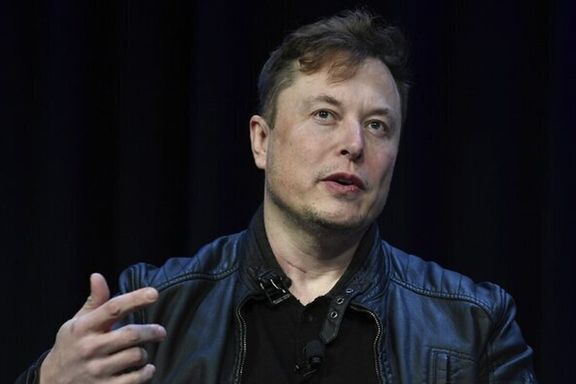
Iranian officials have so far remained silent on reports that Elon Musk, a Trump team insider, met with Tehran’s ambassador to the UN. However, some state-controlled media outlets have described the meeting as potentially beneficial.
The New York Times reported on Thursday that Musk had a secret meeting with Amir Saeid Iravani in New York. Two Iranian officials speaking with the newspaper described the meeting as “positive” and “good news.”
Neither Elon Musk nor President-elect Donald Trump’s team has denied the report, suggesting it may represent an initial step by the incoming administration to establish contacts and engage with the Islamic Republic. This development comes despite widespread expectations that Trump will adopt a hardline approach toward Tehran, for example allowing Israel to launch more direct strikes.
Faced with the dual threats of aggressive Israeli actions and the election of Donald Trump, Tehran has been signaling its willingness to show flexibility, as reflected in statements by Foreign Minister Abbas Araghchi throughout the week. However, the IRGC has maintained its hardline rhetoric.
After the news about Musk’s meeting in New York, the conservative website Nameh News in Tehran expressed optimism that Trump has changed and is willing to compromise.
“An early and direct meeting between a senior Iranian official and Elon Musk hints at the possibility of negotiations and a potential agreement on the horizon. It appears that Trump has genuinely decided to adopt a different approach toward Iran, perhaps, as Abbas Araghchi put it, moving from 'maximum pressure' to 'maximum rationality,'” the website argued in an article on Friday.
Some Iran watchers on social media warned that Tehran is playing its old and tested method of enticing the United States with the prospect of negotiations and an agreement, trying to buy time to outlast the Trump administration.
Iran nuclear program analyst Andrea Stricker, from the Foundation for Defense of Democracies—a think tank critical of the Islamic Republic—tweeted a message directed at Musk, stating, “Don’t lay the groundwork for a bad deal with Iran. Tehran’s goal is simply to outlast Trump while preserving its nuclear capabilities.”
Others expressed doubt about the accuracy of the NYT report, questioning if Musk would meet with an Iranian official. An Iranian-American activist tweeted that "The more I learn about the 'meeting' between Elon Musk and Amir Saeid Iravani the more questions I have. The story that broke has IRI propaganda written all over it."
Another Tehran website quoted an analyst who said that goodwill by individuals such as Musk are not enough to bring about a serious change. Trump needs to form dedicated teams to draft negotiating positions regarding outstanding issue.
Although during his campaign Trump emphasized that he would not allow Iran to acquire nuclear weapons, this is not the only major issue in potential discussions between the two countries. Iran's regional policies and its support for anti-Israel militant groups represent another Gordian knot that an Israel-friendly administration needs to address.
For now, Iran’s diplomats and civilian officials have stopped threatening a retaliatory missile attack on Israel for the October 26 air strikes that targeted Iranian military sites. But the IRGC and its supporters still renew the threat.
On Thursday, former IRGC commander Mohsen Rezaei warned that Iran is preparing the retaliation. Earlier in the day, Army Commander-in-Chief Abdolrahim Mousavi said, Iran would “choose the timing and nature of our response to the Zionist regime, and when the moment arrives, we will act without hesitation," adding that "Our response will be decisive and uncompromising.”
Other senior IRGC officials intensified their warnings. Islamic Revolutionary Guard Corps Chief Hossein Salami said Iran was determined to respond.
“Our eyes are fixed upon you, and we will fight to the very end. Retribution will come; we will respond with painful blows—just wait and see,” Salami warned.
Three IRGC officers and four assailants were killed, while six others were arrested, in an attack that took place during a military operations in Iran’s Sistan-Baluchestan province on Thursday.
Hours after the attack, Jaish al-Adl, a Sunni Baloch insurgent group, released a statement claiming that its operatives had engaged in direct clashes with IRGC special forces and intelligence units in the Jalalabad area of Sarbaz County.
The IRGC said that its forces were conducting drills in the province’s southern region near the Pakistani border, aimed at enhancing security. It pledged to continue operations until all objectives are achieved. However, it appears that government forces are engaged in anti-insurgency operations, rather than drills.
The attack is part of escalating violence in the region. Earlier this week, militants killed five IRGC Basij forces in a border outpost attack in Saravan, near the Iranian-Pakistani border. Governor Mansour Bijar identified the victims as local Baloch Sunni Muslims and said the attackers came from a neighboring country.
Last week, Jaish al-Adl killed an IRGC officer in the same area during clashes that also left four of their members dead and three civilians injured. Hours after Friday’s attack, Jaish al-Adl claimed responsibility, stating that their fighters had clashed with IRGC special forces and intelligence agents in the Jalalabad area of Sarbaz County.
The United Nations Security Council condemned the Jaish al-Adl attacks, calling them "cowardly terrorist acts." The group seeks an independent Baluchistan, uniting Baluch communities on both sides of the Iran-Pakistan border, and has a long history of ambushes, bombings, and raids in southeastern Iran. Their operations frequently target Iranian security forces and have caused numerous military and civilian casualties.
Iran's Sistan-Baluchestan province has long been a hotspot for violence, frequently targeted by Jaish al-Adl, a militant group with a history of ambushes, bombings, and other armed operations that have claimed the lives of both civilians and security forces.
The group has orchestrated numerous attacks in southeastern Iran, further destabilizing an already volatile region. The Baluch are one of the poorest ethnic groups in Iran, suffering from lack of decent public services and infrastructure.
On the fifth anniversary of Iran’s 2019 bloody fuel price protests, three economists reviewed lessons for the current government and warned against a similar decision for yet another fuel price hike.
The review follows a recent government decision in November to permit the import of high-octane gasoline, dubbed "super gasoline" by Iranians, to be sold at unsubsidized international prices—affordable only to the wealthiest citizens.
Critics have consistently warned the government that any increase in fuel prices will drive up the cost of all goods in Iran, including everyday staples, likely inciting widespread public anger and sparking street protests. During the 2019 protests, Reuters reported that as many as 1,500 people were killed by security forces.
The Iranian government heavily subsidizes gasoline and other fuels in addition to electricity. One gallon of gas is sold under 10 US cents. This policy cost the government more than $50 billion annually according to estimates.
Hossein Raghfar, a professor at Al-Zahra University in Tehran, told the reformist Jamaran News that the 2019 protests stemmed from years of accumulated pressure on millions of marginalized Iranian youths who saw no future for themselves. While these frustrations had been building, the gasoline price hike was the immediate trigger for the unrest.
Raghfar added that public trust in the government has steadily eroded since then, as repeated promises to resolve the ongoing economic crises have gone unfulfilled. He cautioned that under the current circumstances, any further increase in gasoline prices would likely harm everyone and exacerbate existing tensions.
Meanwhile, Jamaran News warned in a commentary that, despite the tragic events of 2019 that claimed many lives, some Iranian officials appear to have learned little from past protests and remain determined to raise fuel prices. Raghfar echoed this concern, stating it is evident that the Pezeshkian administration is set on increasing gasoline prices, seemingly indifferent to the potential economic and social upheaval it could cause.
Critics in Iran charge that by increasing the fuel prices, the government hopes to make up for the country's huge budget deficit. Raghfar pointed out that one of the reason for the budget deficit is that half of the country's foreign currency revenues never reach the government.
Without addressing the role of Khamenei's office in shaping major decisions in Iran, he noted that presidential administrations have historically had no influence over the country’s economic policies. These policies, he emphasized, are crafted by entities that bear no accountability for their outcomes.
Another economist, Jafar Kheirkhahan, acknowledged the need for a gasoline price hike but stressed that the public must first be convinced of its necessity. He argued that all those impacted by the increase should be included in the decision-making process. Reflecting on 2019, he criticized the government for implementing the price hike unilaterally, without consulting stakeholders.
On the other hand, Kheirkhahan emphasized that if the government’s reforms focus solely on fuel prices, they will yield no meaningful results. For the initiatives to succeed, the President must ensure that he fulfills his promises across various sectors. Kheirkhahan added that in achieving this, only Pezeshkian’s honesty and integrity can save him.
Kheirkhahan stressed that the government must change its approach, become more accountable, and stop burdening citizens with unnecessary regulations. He argued that the government needs to clearly explain how a fuel price increase will benefit the public. Without tangible benefits, he warned, people are likely to resist the government’s decisions.
Economist Hossein Rajabpour echoed these concerns, warning of the economic shock a fuel price hike could bring. He criticized the government for relying on quick fixes like fuel price increases rather than implementing meaningful reforms that could spur the country’s development. For instance, while the government recognizes the need to expand Tehran’s subway system from six to ten lines, it avoids tackling this complex but necessary project, opting instead for the simpler and faster solution of raising fuel prices.
Rajabpour also condemned the government’s failure to learn from past mistakes. He warned that not only is an abrupt fuel price hike unlikely to yield positive outcomes, but it is also poised to exacerbate the country’s existing economic and social challenges.
In the week since Donald Trump won the US election, Iran’s president Masoud Pezeshkian and his foreign policy chiefs have talked about the importance of engaging with Washington. Their wording may vary, but the message is one: that tensions with the US must be managed.
Pezeshkian, his right-hand man Javad Zarif, and Iran’s foreign minister Abbas Araghchi appear to have recognized that the era of American leniency toward Tehran under president Joe Biden is nearing its end.
In most countries, comments from a president and a foreign minister would be the ultimate reflection of that state’s foreign policy. Not in Iran.
On the biggest and most consequential questions in Tehran—whether or not to attack Israel, whether or not to support Hezbollah, whether or not to move toward nuclear weaponization, and of course, whether or not to talk to the Americans—on all these questions, Pezeshkian and his team hold little or now sway.
Their role is to present a civilized, more relatable face to the outside world. But the real face of power in the Islamic Republic is the supreme leader Ali Khamenei and the commanders of the Islamic Revolutionary Guard Corps (IRGC), who can hardly be clearer when voicing their anti-American and anti-Israeli agenda.
A few days ago, FM Araghchi suggested on X that US president-elect Donald Trump should adopt “Maximum Rationality" instead of returning to his “Maximum Pressure”, which in the eyes of Araghchi will lead to “Maximum Defeat” for America.
The irony of Iran calling for rational behavior aside, it seems unlikely that Trump would heed Araghchi’s advice or pay particular attention to similar comments from Zarif and Pezeshkian. The president-elect is much more likely to take note of Tehran’s attempt to hurt American interests and alleged attempts to assassinate him.
President Biden was relatively lenient in dealing with Iran. His team tried not to aggravate the ayatollahs and prevent an all-out war in the Middle East. This approach made Iran more aggressive, in fact. Regional armed groups aligned with the IRGC were emboldened..
Thus, it seems unlikely that the Iranian charm offensive, spearheaded by Araghchi, will alter the incoming Trump administration’s hawkish approach against the Islamic Republic. It’s also unlikely that Trump will engage in direct confrontation with Iran early in his term.
The president-elect said during his campaign that all he wants from Iran is not to make a nuclear weapon. It cannot be ruled out that he offers broader talks that include not just Iran’s nuclear program but missile capabilities. The latter is something Khamenei and IRGC commanders are unlikely to entertain.
The complicating factor in all this is that Tehran is closer to a nuclear weapon than it has ever been. And it has been suggesting for some time that it might reconsider its long-standing position against weaponization.
It’s hard to tell if this is just a bluff or a serious threat. Given Trump’s clear message about a nuclear Iran, and glancing over what Israel has been willing to do across the Middle East in the past year, Khamenei would be risking all if he were to follow with that threat.
Iranian Prince Reza Pahlavi said on Thursday that the opportunity was ripe for the end of the nearly half-century rule of the Islamic Republic that replaced his father, saying he was ready to assume temporary leadership.
"Global and regional developments have presented us with a new opportunity to reclaim and save our beloved Iran," Pahlavi said in a video message on X, without elaborating.
"At your call, I am ready to guide this change and lead the transitional period. My ability stems from your strength," he added, saying he was dedicated to "establishing a national government in Iran and garnering maximum global support to achieve it."
Pahlavi, who resides in the United States, is the most prominent figure in Iran's fractured opposition and has for years been calling for the downfall of the ruling system in Tehran.
The remarks were his most direct yet presenting himself as a potential successor, but did not directly address how the current authorities might be removed.
Israel and the Islamic Republic have confronted each other in a cycle of tit-for-tat aerial bombardments this year, in unprecedented direct military encounters which some opponents believe may herald the Islamic Republic's downfall.
The election of Donald Trump as US President has also fueled hopes among Tehran's detractors that tougher sanctions could dislodge Iran's theocratic rulers.
The US-based Center for Human Rights in Iran (CHRI) urged the United Nations and member states to immediately hold Iranian authorities accountable for a deadly crackdown on protests in 2019 as the fifth anniversary of the uprising approaches.
“Not a single official has yet to be held accountable for the lethal state force that killed hundreds if not over a thousand protesters,” the independent non-profit said on Wednesday.
The 2019 protests erupted in November in response to a sudden fuel price hike and were met with live ammunition, heavy weaponry, and widespread arrests.
Security forces enacted a shoot-to-kill policy on orders from the highest levels, including Iran’s Supreme Leader, who instructed officials to “do whatever it takes to end it” according to a report at the time by Reuters.
The crackdown resulted in the deaths of at least 1,500 people, according to the same report, and a nationwide internet blackout to prevent the full extent of the killings from being exposed.
CHRI warned that impunity for Iranian authorities has fueled further bloodshed, including the 2022 “Woman, Life, Freedom” protests sparked by the death of Mahsa Amini in morality police custody in which security forces killed over 500 protestors.
“The Islamic Republic has learned it can commit mass murder with little cost, and so it does it again and again,” said CHRI Executive Director Hadi Ghaemi.
The group has called on the UN to launch an inquiry into the events of November 2019, urging international action to address what it called persistent use of lethal force against civilians and systematic targeting of families seeking justice.
Member states are also encouraged to pursue Iranian officials implicated in these abuses under universal jurisdiction if they enter foreign territories.
Ongoing imprisonment and death sentences for protesters
The Iranian government has continued to prosecute and sentence 2019 protesters and has increasingly resorted to capital punishment as a means of silencing dissent, CHRI said in their report.
In September 2024, Iranian boxing champion Mohammad Javad Vafaei-Sani was sentenced to death for his involvement in the protests, despite a previous Supreme Court ruling overturning his sentence. Another protester, Abbas Deris, also faces execution following a conviction reportedly based on coerced confessions.
Additionally in August this year, Matin Hassani, who lost an eye in the protests, was summoned to serve a 31-month prison sentence for supporting victims' families and seeking justice.
Families face persecution
CHRI highlighted that the families of those killed in 2019 have faced continuous harassment, arrests, and imprisonment for their efforts to pursue justice.
Earlier in October this year, Farzad Moazami Goudarzi, cousin of slain protester Reza Moazami Goudarzi, was sentenced to five years in prison on charges of “assembly and collusion against national security.”
Meanwhile two mothers of slain protesters, Mahboubeh Ramezani and Rahimeh Yousefzadeh, received 18-month prison sentences in September on charges including “propaganda against the regime,” “membership in the Mothers of November 2019 Victims group” and “insulting the Supreme Leader.”
The family of Pouya Bakhtiari, a protester killed in 2019, has faced similar reprisals.
His father Manouchehr received an 18-year sentence earlier this year, while his mother, Nahid Shirpisheh, is currently serving a five-year term. Authorities have also detained Pouya’s uncle, Arian Shirpisheh, and assaulted another uncle, Mehrdad Bakhtiari, following their public appeals for justice.
Speaking on the lack of accountability, Soran Mansournia, a member of the Aban Families for Justice, and whose brother Borhan was killed during the protests, stressed the urgent need for a UN investigation to investigate: “Five years have passed, and we are still unsure about the most important issue—how many people were killed?"
It requires a collective will, a collective demand, to truly uncover the unseen aspects of November 2019," he added. "We are dealing with an impoverished social class that does not have the means to share their suffering—a group that does not have access to media or to the outside world.”