Iran executed 18 people every week in 2024, rights group reports
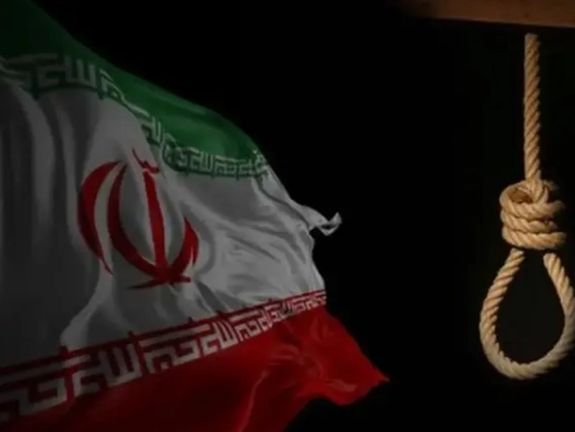
Iran witnessed a stark rise in executions this year, with at least 930 death sentences carried out, according to the Washington-based Abdorrahman Boroumand Center for Human Rights in Iran.
The figure for years 2023 and 2022 were 811 and 579 respectively, which shows an alarming upward trend.
“The international community must adopt a unified, consistent, transparent and effective response to protect those targeted and hold Iran, and other countries following its example, accountable,” read the report by Boroumand center on Tuesday.
Many death sentences are drug-related and are handed and carried out with relative ease, sparking criticism from human rights organizations that suggest the rise in executions may aim to intimidate the populace amid ongoing unrest.
Prominent voices have called for urgent international action. Nobel Peace Prize laureate Narges Mohammadi, in an open letter to UN Secretary-General António Guterres, urged the global body to demand that Iran halt its mass executions as a condition for any negotiations.
The cases of individuals executed on charges of political dissent have drawn particular scrutiny.
In August, Iran executed Reza Rasaei, arrested during the 2022 Woman, Life, Freedom protests, for allegedly murdering an intelligence officer. In October, Iranian-German dual national Jamshid Sharmahd was executed following a trial Amnesty International denounced as grossly unfair.
As 2024 concludes, Iran’s judicial practices remain under close scrutiny from the international community, which continues to advocate for accountability and the protection of fundamental rights.
Record number of Iranians left the country in 2024 to study abroad as the country's youth lose hope in change, according to a report carried by Iran's official news agency IRNA.
The number of Iranian students in the ten main destinations has almost doubled in four years, from 60,000 to 110,000, reflecting the nation's ongoing economic woes.
In previous decades, the number of Iranians studying abroad doubled every ten years.
"This trend is not just about education but reflects broader socio-economic factors pushing skilled individuals out of the country,” IRNA quoted migration analyst Bahram Salavati saying.
“In addition to surpassing the critical threshold of 100,000 Iranian students abroad, the list of primary destinations and the growth rates in these countries are particularly striking,” Salavati added.
Turkey has emerged as the leading destination, hosting nearly 30,000 Iranian students in 2024,a staggering 158% increase since 2020. Turkey's proximity is a key factor. It's also cheaper and easier to enter compared to most Western countries.
Other popular destinations for Iranian students include Canada, Germany, Italy, and the United States.
The sharp rise in student migration is closely tied to the worsening of living conditions and shows no sign of slowing despite repeated calls and warnings by Iranian officials.
The latest came from Iran's vice president Mohammad Reza Aref, who asked Iranian professionals overseas to return. "Iran is your homeland and home, and we welcome you to serve your country in the fields of science and technology," Aref said on Tuesday.
Iran’s migration policies remain heavily focused on managing inbound refugees, such as Afghan nationals, and little appears to be done beyond words to control the "brain-drain" or incentivize returns.
In 2022, the Iran Migration Observatory (IMO) reported that the country ranked 17th globally for students studying abroad. With the trend showing no signs of slowing, analysts warn that Iran’s economic and social stability could face even greater challenges without urgent intervention.
Fatemeh Mousavi, a sociologist and social researcher, said the exodus shows a lack of faith in Iran's trajectory among its youth.
“The 140% increase in the migration of young professionals in the past year alone can be seen as an exit strategy resulting from the loss of hope in change and reform in the government,” Mousavi told the Tehran-based outlet Khabar Online.
Protests swept through several Iranian cities on Tuesday, with workers and retirees demanding fair wages, better working conditions, and payment of overdue salaries.
Employees of Fajr Jam Gas Refinery, continuing a month-long series of protests, gathered in front of their administration building in Asaluyeh, southern Iran, to demand action on their grievances.
Contract workers at Gachsaran Oil and Gas Company, a subsidiary of National Iranian South Oil Company (NISOC), staged a protest over unfair wages, job security concerns, and livelihood issues, accusing Iran’s oil and gas sector of discriminatory practices
Drivers from Ahwaz Rolling & Pipe Mills Co. (ARPCO) in southern Iran took to the streets to protest unpaid wages and recent dismissals.
Nearly 150 welders at Tehran Refinery were fired last week with 15 representatives of oil contract workers facing dismissal for protesting unpaid wages and demanding better conditions.
In Ilam, western Iran, Ministry of Agriculture staff held a demonstration to protest low wages and livelihood challenges.
Retired educators staged protests in several cities, gathering in front of provincial governor’s offices in Shiraz (southern Iran), Kermanshah (western Iran), and Gorgan (northern Iran), demanding overdue pension benefits.
Retirees protest outside the Governorate building in Shiraz, 31 December 2024.
The growing wave of demonstrations reflects increasing frustration among various labor groups and retirees, whose repeated calls for justice and fair treatment have gone unheeded.
Earlier over the weekend, business owners and employees in Tehran’s historic bazaar also staged a rare strike against runaway inflation and soaring foreign currency rates, spurring protests in other commercial hubs in the capital.
Iranian workers are facing an increasingly difficult situation as the statutory wage, which once covered half of basic living expenses, now barely covers a quarter of the costs.
Iran's IRGC and judiciary chief warned against potential unrest last week, as Iran’s economic and energy crises intensify.
Iran's President Masoud Pezeshkian said on Tuesday that 20 to 30 million liters of fuel are smuggled out of the country daily, calling it a catastrophe amid the country's energy crisis.
"This level of smuggling when [fuel] production and distribution are in our own hands is absolutely unacceptable," he said.
"With this amount of fuel smuggling, will the public accept that we cut off gas and electricity to the industrial [sector] to manage energy consumption?" Pezeshkian added.
Pezeshkian did not specify the destinations for the smuggled fuel, but fuel smuggling in Iran often involves routes to neighboring countries where fuel prices are significantly higher.
Earlier this month, Reuters reported, citing informed sources, that a sophisticated fuel oil smuggling network generating at least $1 billion a year for Iran and its proxies has flourished in Iraq since Prime Minister Mohammed Shia al-Sudani took office in 2022.
US officials raised the need to prevent Iran's resurgence in Syria during talks with interim authorities in Damascus, according to the US Embassy in Syria.
The discussions also addressed maintaining the fight against ISIS, protecting US citizens, and investigating the fate of disappeared Americans, while emphasizing an inclusive political process that represents all Syrians.
The new leader, a former member of Al Qaeda, has made no secret of his pleasure at reducing the influence of Iran in Syria, saying that since the fall of Assad, Syria's opposition had “set the Iranian project in the region back by 40 years”.
Last week, the Arab League bloc of nations called on Iran not to sow discord in Syria following the ouster of President Bashar al-Assad, a long-time ally of Tehran.
One of Iranian President Masoud Pezeshkian's aides has called for direct negotiations with US President-elect Donald Trump, emphasizing the need for a new foreign policy to strengthen international relations.
"We must negotiate with Mr. Trump. The country's issues cannot be left unresolved, and the entire establishment has also reached the conclusion that direct negotiations are necessary," state-media quoted Ali Abdolalizadeh as saying on Tuesday.
Abdolalizadeh was the head of Pezeshkian's presidential campaign and now serves as his special representative for maritime economy.
“We must speak honorably and defend our national interests. From the beginning of the campaign (of President Pezeshkian), we have emphasized that we are proponents of negotiations,” he added.
However, the spokesman for Iran's Islamic Revolutionary Guard Corps (IRGC) on Monday dismissed the significance of Trump’s presidency on the future of Iran, saying “Whether it is Donald Trump or any other president, the strategy remains unchanged, and nothing will alter our path.”
Trump’s administration would revive its maximum pressure strategy against Iran, according to the incoming president’s newly appointed Middle East advisor, Massad Boulos.