Trump agrees to suspend extradition of Iranian detainee - Italian media
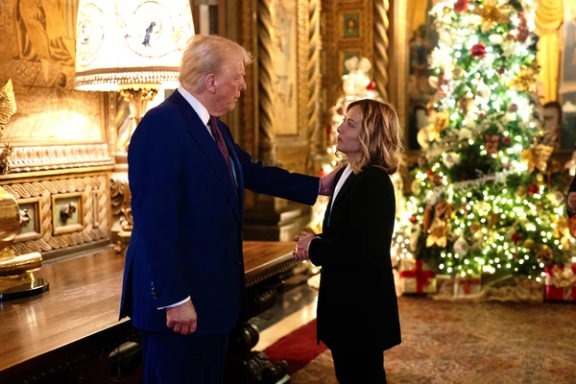
Donald Trump, Giorgia Meloni, Mar-a-Lago, Palm Beach, Florida, January 4, 2025.
US President-elect Donald Trump has agreed to temporarily halt the extradition of an Iranian detained in Milan, Italian media said on Monday after Iran International reported that Tehran tied an Italian reporter’s release to the Iranian detainee’s freedom.
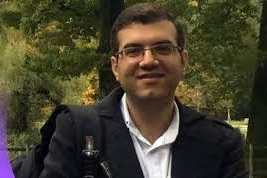
Mohammad Abedini Najafabadi, accused of transferring drone technology to Iran, was arrested at Milan Airport on a US warrant. Washington says the technology was used in an attack in February near the Jordan-Syria border that killed three American soldiers, an assertion Iran denies.
“The freezing of the United States' extradition request to Italy for Iranian Mohammad Abedini-Najafabadi, detained since December 16 in Milan's Opera prison on an American warrant, was the primary objective of Prime Minister Giorgia Meloni's swift visit to Mar-a-Lago, the Florida residence of US President-elect Donald Trump, who is set to be sworn in on January 20,” wrote the Italian newspaper Il Giornale on Monday.
Mohammad Abedini Najafabadi, accused of transferring drone technology to Iran, was arrested at Milan Airport on a US warrant on December 16. (File Photo)
The suspension gives Italy a brief window to negotiate the release of Italian journalist Cecilia Sala, detained in Tehran since December 19.
“The tipping point may come on January 15, when the Court of Appeal in Milan is set to rule on the request for house arrest for Abedini. This decision could allow the Italian government to advocate for a similar measure for Sala,” added Il Giornale.
Tehran made clear to Rome that the freedom of the Italian reporter detained in Iran depends on Italy's release of Abedini, a source familiar with discussions between the journalist's family and the Italian government told Iran International.
Iran, the source said, is prepared to free Sala “on humanitarian grounds" if the Italian government drops the extradition proceedings against Abedini and grants his release from Milan's brooding La Opera prison.
Iran denies link between Sala and Abedini cases
Tehran has denied any connection between the two detentions. Iranian Ministry of Foreign Affairs spokesperson Esmaeil Baghaei said on Monday, “These two issues are completely unrelated. The Italian journalist was detained for violating Iranian laws, while the Iranian individual is in custody for circumventing US sanctions.”
The Iranian embassy in Rome also claimed Sala is being treated humanely, while urging Italy to expedite action for Abedini’s release.
Italian journalist Cecilia Sala, detained in Tehran since December 19, 2024.
Tensions over Sala’s detention escalated after the Italian foreign ministry summoned Iran’s ambassador in Rome, Mohammadreza Sabouri, on January 2 to demand her immediate release.
Domestically, Prime Minister Giorgia Meloni’s diplomatic efforts have drawn praise. Deputy Prime Minister Matteo Salvini posted on X: “Well done Giorgia Meloni for visiting Donald Trump to talk about peace, industrial and commercial cooperation, security, and the freeing of Cecilia Sala.”
Milan’s Chief Prosecutor has opposed Abedini’s conditional release, while Meloni is scheduled to meet US President Joe Biden in Rome on January 12 to further discuss Sala’s detention.
The temporary suspension of Abedini’s extradition shows the high stakes for Meloni’s government torn between Washington and Tehran as it navigates the complexities of securing Sala's release, addressing what rights groups and nations such as France have branded as Iran’s 'state hostage-taking'.
French President Emmanuel Macron warned on Monday that Iran's nuclear program is nearing the point of no return, stressing the need for Paris to engage in strategic discussions with US President Donald Trump's administration about Tehran.
Macron urged the European parties to the lapsed 2015 nuclear deal with Tehran to consider reimposing sanctions, he told an annual conference with French ambassadors to outline foreign policy objectives in 2025,
"The acceleration of the nuclear program leads us nearly to the point of no return,” he said, describing Iran as the main strategic and security challenge for France and Europe.
Iran says its uranium enrichment program is for peaceful purposes but has accelerated activity since US President-elect Donald Trump withdrew from the 2015 nuclear deal - officially known as the Joint Comprehensive Plan of Action (JCPOA) - during his first term and reimposed sanctions on Tehran.
“Remember, when the United States decided to denounce the JCPOA, which they themselves had promoted, France had a simple view: we must move towards a broader agreement. This is our strategy today,” Macron added.
Last month, European powers France, Germany, and Britain warned that Iran’s actions had further eroded the agreement, noting that Tehran’s stockpile of highly enriched uranium has no credible civilian justification.
In December, the head of the UN nuclear watchdog reported that Iran was dramatically advancing enrichment close to the 90% purity needed only for weapons-grade material.
The three European nations, co-signatories of the 2015 accord, had brokered the deal under which Iran agreed to limit enrichment in exchange for the lifting sanctions. With the sanctions reimposed, Iran saw little to no incentive to keep its part of the bargain.
French, German, and British diplomats are scheduled to meet with Iranian counterparts on January 13 for a follow-up to last month’s talks, aimed at exploring serious negotiations in the coming months to ease tensions with Tehran as Trump prepares to return to the White House on January 20.
"In the coming months we will have to ask ourselves whether to use ... the mechanism to restore sanctions," Macron said, referring to October 2025 when the JCPOA formally expires.
Macron also mentioned Iran's ballistic missiles and support for Russia, labeling them threats to Europe and calling for diplomacy with Trump after he took office.
“Its (Iran’s) ballistic missile program threatens European soil and our interests. Iran is already involved in Russia's war against Ukraine through clear and fully identified military support.”
Warning that Iran’s use of terrorism continues throughout the world, he said, “Tehran’s support for dangerous groups across all conflict zones in the Middle East and its attempts to establish a presence in Africa amplify this danger through its so-called proxies.”
A video has gone viral on social media showing a woman without a mandatory headscarf confronting a cleric at Tehran's Mehrabad Airport, removing his turban and placing it on her own head like a scarf during the altercation.
The video, shared widely on social media on Sunday and Monday, shows the woman angrily removing the turban and saying to the cleric, "So you have honor now?”
She then searches for her husband, calling his name and asking, "What did you do to my husband?"
The exact date and cause of the initial confrontation remain unclear.
A media outlet affiliated with the Islamic Revolutionary Guard Corps (IRGC), Mashregh News, reported that the incident was unrelated to hijab and claimed the woman had "psychological problems."
The outlet also stated that the woman was briefly detained but later released "with the consent of the complainants."
The incident occurred within the context of increasing civil disobedience by women in Iran, particularly following the death of Mahsa Amini in police custody in September 2022. Crackdowns on women defying mandatory hijab in public places, including airports, have also intensified.
The government's tendency to pathologize dissent is a recurring theme. In November, a female student at the Azad University in Tehran’s Science and Research branch became a symbol of the movement for freedom of dress by removing her clothing in protest.
While many Iranians recognized the as an act of defiance, official narratives attempted to portray her as mentally unstable. Four Iranian psychology and psychiatry associations criticized the government last year for misusing psychiatry and psychology to suppress opposition to mandatory hijab.
Countering Mashregh News's claims, some social media users have interpreted the airport incident as a powerful act of protest, with some describing it as a " remarkable protest performance."
For instance, one user praised the woman's "transformation of the turban into a mandatory scarf" as an innovative form of resistance.
The Israeli television network Kan 11 also shared the video, framing it as a protest against the enforcement of mandatory hijab.
The incident highlights the ongoing struggle over women's rights in Iran. In the past two years, thousands of women have faced arrest, summons, fines, prosecution, or denial of public services for not adhering to the state-mandated dress code.
In December 2023, Mohsen Aghili, the head of airport police, stated that women would be denied airport services if they did not wear a hijab.
Prior to that, officials at airports in Fars province and Mashhad had announced the deployment of hijab enforcers to prevent what they called improperly veiled people from entering airports and terminals.
In July, the Tehran office of Turkish Airlines was temporarily closed due to its employees' non-compliance with hijab regulations.
The Human Rights Activists in Iran (HRANA) reported in December that over 30,000 women faced legal action last year for defying mandatory hijab.
The Iranian authorities' efforts to enforce hijab continue through various means, including the recently passed the so-called Chastity and Hijab Law.
The final text of the "Family Protection through Promoting the Culture of Chastity and Hijab" law was published in Iranian media in November, prompting widespread expressions of concern from several rights groups and activists, including UN experts.
Earlier in January, Rouhollah Momen-Nasab, the secretary of the Tehran Headquarters for Promoting Virtue and Preventing Vice, called for the law's implementation before the summer. However, the government is hesitant to enforce the law, likely due to concerns about public backlash.
Iran has denied any connection between the detention of Italian journalist Cecilia Sala and the arrest of Iranian national Mohammad Abedini Najafabadi in Milan, describing reports of a reciprocal exchange as false.
“These two matters are entirely unrelated,” foreign ministry spokesman Esmail Baghaei said during a press briefing on Monday. “The Italian journalist was detained for violating Iranian laws, while the Iranian individual was arrested for circumventing US sanctions.”
Baghaei also criticized what he described as the US targeting Iranian citizens abroad.
“Several Iranian nationals are pursued and extradited in certain countries at the request of the US, which we consider a form of hostage-taking,” he said.
However, a source familiar with discussions between Sala's family and the Italian government told Iran International that Tehran made clear to Rome that Sala's freedom depends on Italy's release of Mohammad Abedini Najafabadi, an Iranian arrested at Washington's behest.
While Iran's Supreme Leader continues calls for Syrian youth to reject the new leadership, Iran’s foreign ministry has reaffirmed its commitment to Syria’s sovereignty.
“Syria must not become a safe haven for terrorists, and its people should decide their future without foreign, regional, or extra-regional interventions,” Foreign Ministry spokesperson Esmaeil Baghaei said during a press briefing on Monday.
In contrast, Khamenei accused the United States and Israel of orchestrating the removal of former President Bashar al Assad, urging resistance against what he described as a foreign-imposed government.
The fall of Assad in December and the rise of Hay’at Tahrir al-Sham (HTS) has upended Iran’s influence in Syria, challenging its long-standing strategic foothold in the country.
“We respect the choice and decisions of the Syrian people,” Baghaei said. The foreign ministry is advocating for diplomacy and cooperation with Syria while Khamenei’s rhetoric signals Tehran’s unwillingness to relinquish its influence in the country, which turned from being a key ally to a potential adversary as the Sunni HTS aligns with Iran's rivals in the region and garners international support.
Iran's Foreign Ministry Spokesman Esmail Baghaei during a weekly briefing on January 6, 2024.
US pressures and nuclear negotiations
Simultaneously, Iran faces mounting pressure from the United States over its nuclear program.
National Security Advisor Jake Sullivan recently presented President Joe Biden with potential military options against Iranian nuclear facilities as reported by Axios. Baghaei condemned these threats as violations of the United Nations Charter, calling on the Security Council to address what he described as provocations undermining international peace and security.
“The threat of force against a country’s peaceful nuclear facilities constitutes a double violation of international obligations,” Baghaei said. He accused Washington of attempting to dictate policies in preparation for the next US administration.
Iran’s strained relations with Western powers extend to stalled nuclear negotiations. Baghaei said talks with European countries are set to resume in Geneva on January 12 and insisted that Iran remains committed to dialogue, saying, “We have never avoided the negotiation table and have always believed in honorable negotiations.”
The talks come at a critical time, as the IAEA reports Iran’s progress in enriching uranium to near-weapons-grade levels. Tehran insists its nuclear program remains peaceful, but international concerns persist over its potential for weaponization.
The "chain murders" of the 1990s—a series of assassinations targeting Iranian dissidents and intellectuals—claimed at least 80 lives and stand as a dark chapter in the Islamic Republic's history of extrajudicial killings.
Carried out by the Ministry of Intelligence under President Akbar Hashemi Rafsanjani, these killings sought to silence critics deemed threats to the state, continuing into the presidency of Mohammad Khatami.
In 1999, the Ministry of Intelligence officially—but only partially—admitted responsibility for four of the murders.
Q: Who were the dissidents killed by intelligence ministry agents?
Five individuals whose murders in November and December 1998 drew national and international attention were:
Majid Sharif: A translator and journalist.
Dariush Forouhar: Leader of the Pan-Iranist Nation Party of Iran.
Parvaneh Forouhar (Eskandari): Activist and wife of Dariush Forouhar.
Mohammad-Jafar Pouyandeh: Member of the banned Iranian Writers Association.
Mohammad Mokhtari: Member of the banned Iranian Writers Association.
The Ministry officially acknowledged responsibility for the killings of Dariush and Parvaneh Forouhar, Mohammad Mokhtari, and Mohammad-Ja’far Pouyandeh, but denied involvement in other cases, including Pirouz Davani’s death.
Q. How were the victims killed and where were their bodies found?
Majid Sharif’s body was found on the side of a road in Tehran on November 19, 1998, six days after he disappeared. Authorities claimed heart failure as the official cause of his death.
Dariush and Parvaneh Forouhar were stabbed to death in their Tehran home on November 22. Both sustained multiple stab wounds, suggesting the attack was both deliberate and exceptionally violent.
Mokhtari’s body was discovered on December 3 near a cement factory on a road south of Tehran, several days after he went missing.
Pouyandeh’s body was found in a field in Shahriyar, also south of Tehran, on December 8, a day after he left his office in the capital to return home.
Both bodies showed signs of strangulation, though the authorities never officially confirmed the cause of death.
Q: Were the killings limited to those in November and December 1998?
No. At the time, political groups and media outlets suspected the intelligence ministry of involvement in numerous other assassinations, often disguised as overdoses, car accidents, or unexplained stabbings.
The suspected victims of these systematic assassinations were primarily opponents of the Islamic Republic, including dissident politicians, literary figures, and translators. Others reportedly targeted included an Armenian, three Protestant priests, followers of the banned Bahá'í faith, a prominent university professor with no known political affiliations, and civilians allegedly linked to the intelligence ministry’s covert operations.
Q: When did government-linked murders begin and end?
Many believe the "Chain Murders" began with the killing of Dr. Kazem Sami, who served as minister of health in the first post-revolution cabinet in 1979.
Dr. Kazem Sami was stabbed to death in his medical practice in 1988. The individual accused of his murder reportedly died by suicide in prison. Years later, former President Akbar Rafsanjani, in his memoirs, referenced the alleged killer’s death, fueling further questions about the case.
Some activists and advocates argue that the "Chain Murders" never truly ceased, with allegations of systematic killings resurfacing in recent years.
Prominent filmmaker Kioumars Pourahmad, whose body was found without a suicide note in April 2023, andDariush Mehrjui and his wife, who were fatally stabbed in their Karaj home in October 2023, have been cited as possible victims of a renewed wave of targeted killings.
Q: Who did the authorities blame for the murders?
Supreme Leader Ali Khamenei and his supporters initially blamed “foreign enemies,” including Israel, for the murders of the Forouhars and the two writers.
Public outcry over these particular killings, however, put pressure on the so-called reformist government of President Mohammad Khatami.
At Khatami's insistence, a three-member independent team was established to investigate the killings. The committee ultimately confirmed suspicions of the intelligence ministry’s direct involvement.
On January 4, 1999, the ministry issued an unprecedented statement partially acknowledging responsibility by blaming “rogue” agents for four of the murders and describing the killings as “despicable and abhorrent.”
This limited admission prompted further scrutiny, as the intelligence ministry operates under the authority of Khamenei, raising questions about how such "rogue" actions could occur without his knowledge.
Q: What happened to the “rogue agents”?
Three top officials of the ministry—Saeed Emami, Mostafa Kazemi, and Mehrdad Alikhani—along with several agents, were charged with ordering and carrying out the assassinations.
Emami, widely regarded as the mastermind behind the killings, allegedly died by suicide in prison before his trial.
The remaining defendants were tried in Tehran's military court. Sentences ranged from qisas (death penalty) to life imprisonment, with some receiving as little as two and a half years.
Q: Were the death sentences carried out?
No. Judiciary authorities stated that the victims’ families had waived their Sharia-based right to qisas for the killers. This act of pardon spared the defendants from execution.
Q: Did the revelation of the ministry’s role in the killings affect the minister?
Ghorban-Ali Dorri-Najafabadi, a minister favored by Khamenei, who at the time had not yet fully consolidated his power as Supreme Leader, was forced to resign. He was replaced by the relatively moderate Ali Younesi.
Najafabadi has consistently denied any knowledge of the assassinations. However, some defendants in the case rejected this claim, stating that the "physical elimination" of targets identified by higher authorities was part of their job description.
In his 1999 trial, prominent reformist cleric and politician Abdollah Nouri accused Najafabadi of being aware of the killings.