$25m reward in manhunt for two Iranian suspects in missing FBI agent case
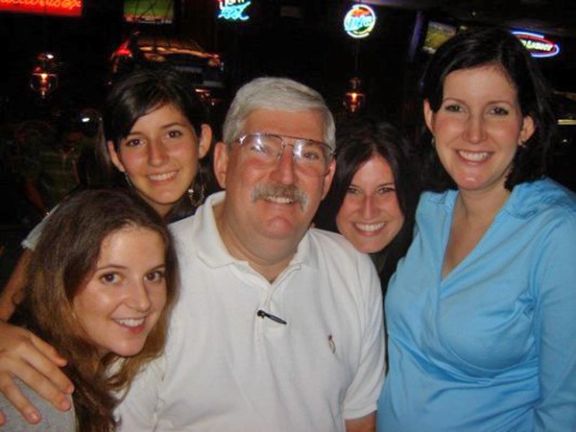
Retired FBI agent Bob Levinson and his family
The FBI has announced a $25m reward in the manhunt for two Iranian intelligence officers believed to be responsible for the nearly 18-year disappearance of retired FBI Special Agent Robert Levinson.
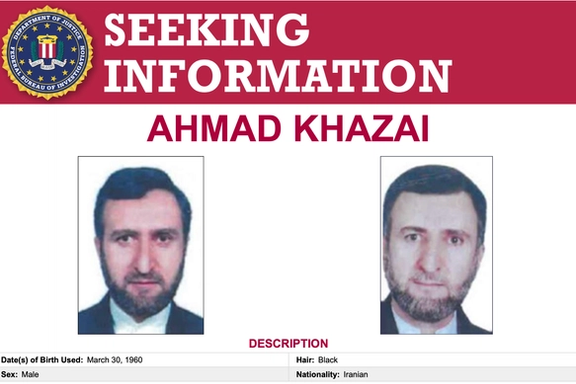
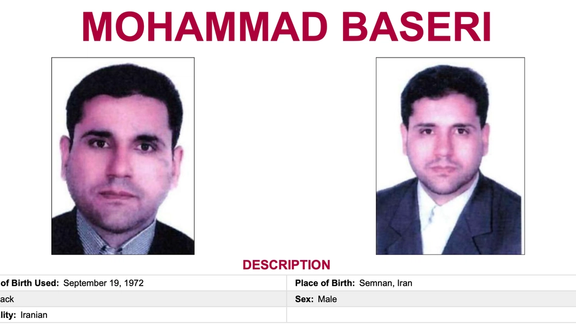
The bureau has released posters seeking information on the two men with a combined reward of up to $25 million - $5 million from the FBI and $20 million from the US State Department’s Rewards for Justice program - for information leading to Levinson's location.
The two Iranian intelligence officers identified by the FBI are Mohammad Baseri and Ahmad Khazai. The FBI alleges that Baseri and Khazai, acting as officials of Iran's Ministry of Intelligence and Security (MOIS), orchestrated Levinson's abduction, subsequent detention and likely death.
The former FBI agent vanished during a freelance investigation in Kish Island, southern Iran, in 2007. His disappearance has remained an open case for the FBI, which has vowed to bring him home.
Iranian officials have never acknowledged detaining Levinson.
"The FBI remains steadfast in our commitment to return Bob to his family," said Sanjay Virmani, Special Agent in Charge of the FBI Washington Field Office’s Counterterrorism Division.
“Our extensive investigation continues to develop new leads and intelligence, and we will pursue all options to hold every Iranian official involved in his abduction accountable.”
The US Treasury Department previously sanctioned both Baseri and Khazai in December 2020 for their roles in Levinson's disappearance.
His family announced that he was presumed dead in March 2020, on the advice of US officials.
The Levinsons said in a 2023 statement, “We will never stop demanding that Iranian leaders answer for what happened to Robert Levinson, the greatest man we have ever known. His abduction on Iranian soil in March 2007, his years of imprisonment with a total lack of any human rights or decency, and ultimately his murder, are on their hands.”
A prominent conservative commentator in Iran says that Supreme Leader Ali Khamenei's implicit remark about "making a deal" with the United States signals a shift in approach as Tehran faces growing challenges.
However, Mohammad Mohajeri, the former editor of the hardline daily Kayhan, also noted that Khamenei's remark is likely to provoke backlash from hardliners and those cautious about a potential rapprochement with Washington.
In an interview with the Jamaran News website, which is linked to former President Mohammad Khatami of the reformist faction, Mohajeri noted that Khamenei's use of the term "making a deal" suggests the possibility of an agreement. He argued that this could signal support for President Masoud Pezeshkian's efforts to push for sanctions relief.
"It won’t be easy and will take time," Mohajeri added. "Nonetheless, the statement could mark the beginning of a new strategy."
According to Jamaran, Mohajeri was referring to a sentence in Khamenei's latest speech on January 28 this year, in which he said: "Behind the smiles of diplomacy, there are always hidden and malicious enmities and resentments. We must open our eyes and be careful with whom we are dealing, trading, and talking."
“When a person knows his opponent, he may make a deal, but he knows what to do," Khamenei added.
Khamenei made these remarks while sitting beside President Masoud Pezeshkian, who has publicly expressed Tehran's openness to talks. The media widely interpreted the Supreme Leader's statements as a "green light for negotiations."
Asked if Khamenei's statement indicated a green light for starting the talks, Mohajeri said: "I do not like that expression. However, I believe this highlighted a new strategy." He added, "It was interesting that while the hardliners expected Khamenei to endorse their views, he did not express any opposition to negotiations though he warned officials to be wary of the enemy's deceit."
Mohajeri said Khamenei’s remarks angered hardliners, who may remain silent for now but will soon find another pretext to attack the government. "Before long, you’ll see them lashing out over other issues," he said, adding that they may also target negotiators, including Foreign Minister Abbas Araghchi, who is set to lead the talks.
In recent weeks, former Foreign Minister and current aide to President Pezeshkian, Javad Zarif, has come under increasing attack, with hardliners accusing him of proposing negotiations with the Trump administration.
Zarif, however, denied the claim, telling Jamaran News, "We did not make any proposal. We simply responded to their suggestion for interaction."
While reformist-aligned media have strongly defended Zarif, some analysts in Tehran suggest that his position within the government is not particularly strong.
Some conservative figures in Iran, including former state TV chief and Tourism Minister Ezzatollah Zarghami, have also weighed in on recent calls for talks with the US.
While Zarghami had told Iranian media that such proposals had created a "bipolar situation" in the country, he wrote in an X post after Khamenei's remarks that "the Leader’s clever measure put an end to the bipolar situation between supporters and opponents of negotiations with the United States."
Senator Chris Van Hollen called new government efficiency czar Elon Musk's bid to shut down the US international development organization USAID a gift to adversaries including Iran.
"Make no mistake this effort by Elon Musk and so-called DOGE to shut down the Agency of international development is an absolute gift to our adversaries, to Russia to China, to Iran and others because AID is an essential instrument of US foreign policy and US national security policy," Van Hollen said.
DOGE is the Department of Government Efficiency formed and led by world's richest man Musk under President Donald Trump. Musk on Monday said Trump wants to shut USAID down, and its offices were closed and employees told to work from home.
"This has nothing to do with making the US government more efficient and everything to do with aiding and abetting our adversaries around the world," the Maryland junior senator told a cheering crowd outside USAID's Washington DC headquarters.
Human rights activists have expressed concern about the impact of Trump's earlier 90-day pause in foreign aid on Iran-related programs, with some saying the order could help Tehran further restrict its people’s access to information.
The United States has supported civil society and human rights in Iran on everything from documenting abuses by Tehran, Washington's Mideast arch enemy, to backing efforts to transcend official internet censorship.
Musk in a discussion broadcast on the social media platform he owns X said USAID was "beyond repair". Trump told reporters on Sunday that USAID had "been run by a bunch of radical lunatics ... We're getting them out, and then we'll make a decision."
The United States is convinced that a secret team of scientists in Iran is exploring a faster way to develop a nuclear weapon - within months - should Tehran decide to build one, The New York Times reported on Monday.
Iranian engineers and scientists are seeking to be able to turn nuclear fuel into a weapon within months rather than a year or more, the report said citing intelligence collected in the last months of the Biden administration.
The report cited US officials as saying Washington still believes that Iran and its Supreme Leader Ali Khamenei had not made a decision to develop a weapon.
In December, White House National Security Adviser Jake Sullivan said the Biden administration was concerned that a weakened Iran could build a nuclear weapon and that he was briefing President-elect Donald Trump's team on the risk.
The Biden administration's intelligence assessment has been relayed to Trump’s national security team during the transition of power, the New York Times added.
The report was released as the relatively moderate president of Iran, Masoud Pezeshkian, has publicly expressed willingness to re-engage with the United States in talks over its nuclear program, which it says is for peaceful purposes.
Setbacks dealt to Iran and its regional allies in a 15-month conflict with Israel and the inability of Iranian missiles to pierce US and Israeli air defenses, the New York Times reported, galvanized Iran to to seek new ways to deter its adversaries.
On January 10, then-CIA Director William Burns suggested that Iran’s weakened strategic position marked by regional setbacks could open the door to renewed nuclear negotiations.
"That sense of weakness could also theoretically create a possibility for serious negotiations," Burns said in an interview with NPR, referencing his experience with secret talks involving Tehran more than a decade ago.
Last month, Trump, Biden and Israeli Prime Minister Benjamin Netanyahu all described Iran as weakened, citing Tehran's reduced influence following the fall of its ally Bashar al-Assad in Syria, Israeli attacks on its air defenses and the killing of leaders of its armed Palestinian and Lebanese allies.
However, Iran's Supreme Leader denied his country's power has been undermined. "That delusional fantasist claimed that Iran has been weakened. The future will reveal who has truly been weakened."
A former British soldier who escaped from custody while facing charges of gathering sensitive information for individuals linked to Iran’s IRGC was sentenced to 14 years and three months in prison at Woolwich Crown Court in London on Monday.
Daniel Khalife received six years for breaching the Official Secrets Act, six years for a terrorism offense, and two years and three months for escaping from prison, with the sentences to be served consecutively.
Khalife, 23, joined the British Army in 2018 and served with the Royal Corps of Signals. While enlisted, he "exposed military personnel to serious harm" by gathering and passing on sensitive information to Iran.
The judge said Khalife "took payment on two occasions and traveled to meet intelligence officers from Iran in Turkey." She noted that he "recorded a great deal of information," including the full names of fellow soldiers, and was "driven firmly to the conclusion that this was to send to the Iranians."
Khalife, who escaped from Wandsworth Prison in September 2023 but was caught days later, passed information to Iranian agents for cash and told handlers he would stay in the military for more than 25 years to serve them.
Iran's foreign ministry said on Monday that its senior diplomat, Abbas Araghchi, did not discuss negotiations with the United States during a recent visit to Doha.
Esmail Baghaei said the trip was within the framework of Iran-Qatar relations, emphasizing that Araghchi met with senior Hamas officials to review developments in Palestine.
“No specific discussion was raised regarding any other issue,” Baghaei said during a press conference on Monday, as reported by ILNA.
Iran and the US have not had diplomatic ties since 1980.
Araghchi traveled to Qatar last week, where he had discussions with Qatari Prime Minister and Foreign Minister Sheikh Mohammed bin Abdulrahman bin Jassim Al Thani.
Tehran has conveyed conflicting messages about its openness to negotiate with Washington following Donald Trump's re-emergence in politics.
Iran’s Supreme Leader Ali Khamenei said on Sunday "Death to America" during a gathering at his headquarters after having tacitly given the go-ahead to talks with the US.
Tehran took part in indirect talks with the Biden administration between 2021 and 2022, to restore US involvement in the nuclear agreement which was inked in 2015 following Trump’s 2018 withdrawal and the imposition of strict sanctions. However, the Vienna talks failed to reach a result.
Regional ties and policy toward Afghanistan
Beyond the Qatar trip, Baghaei addressed Iran's diplomatic outreach to Afghanistan, saying the foreign minister’s visit to Kabul followed a steady course of engagement over the past four years.
“We have many things in common with them, and we hope these shared interests will serve as a basis for resolving outstanding issues, such as water rights,” he said.
The water dispute between Tehran and Kabul centers on the Helmand River, which originates in Afghanistan and flows into Iran. A 1973 treaty was designed to regulate water-sharing, guaranteeing Iran an annual quota of 820 million cubic meters.
However, Iran has accused Afghanistan—particularly under the Taliban—of violating the agreement by restricting water flow through dam projects like the Kamal Khan Dam. Afghan authorities, on the other hand, say climate change and persistent drought have reduced the river’s capacity, making it difficult to meet Iran’s expectations.
Sweden's arrest of cleric
During the trip, Baghaei also condemned Sweden’s detention of a senior Iranian cleric, describing the arrest as politically motivated. He said the move was influenced by “third parties that do not seek to benefit either us or Sweden.”
“Our inherent duty is to protect Iranian citizens,” he said. “He has not committed a crime, and this action is incompatible with legal principles.” Baghaei added that Iran had lodged a formal protest, and the Swedish ambassador had been summoned to the foreign ministry.
The Swedish daily Expressen reported on Saturday that an Iranian cleric, Mohsen Hakimollahi, serving as an imam at an Islamic center in suburban Stockholm, has been detained for nearly two weeks and faces deportation from Sweden. No specific reason was reported for the arrest.
Hakimollahi, 63, was originally transferred from Iran to Sweden to manage the Imam Ali Center and had lived in the country for several years, establishing ties with local political figures and religious organizations.
Later on Monday, Iran’s Foreign Ministry summoned Sweden’s ambassador over the arrest.