Australian senator under fire for defending Iran’s treatment of women on state TV
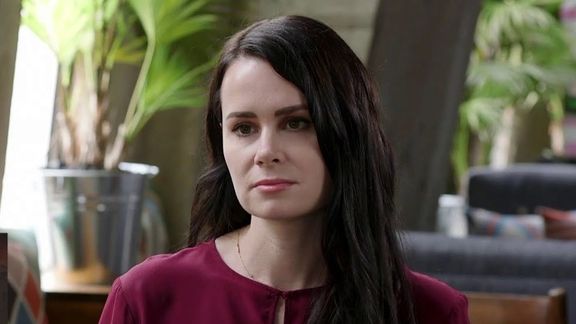
Dr. Kylie Moore-Gilbert, a researcher and former prisoner in Iran, in an undated photo.
Dr. Kylie Moore-Gilbert, a researcher and former prisoner in Iran, has criticized Australian Senator Fatima Payman for defending Iran’s treatment of women in an interview with the state-run Press TV.
In a post on X, Moore-Gilbert called Payman’s remarks “nonsense,” rejecting the senator’s claim that Iran allows women to participate in democracy.
She pointed out that Payman had previously attended a Senate inquiry into Iran’s human rights abuses and questioned why she would agree to speak with Press TV.
“The English-language propaganda arm of the Islamic Republic [is] known for broadcasting false confession videos and forced interviews with prisoners before they are executed," she said.
“The irony of a strong and powerful woman originally from Afghanistan… denying that her Iranian sisters face similar challenges just next door,” Moore-Gilbert wrote, adding that Payman’s stance contradicts her past expressions of solidarity with Iranian protesters.
Payman’s interview, in which she accused Western media of biased coverage on Iran, has sparked backlash, with critics arguing that her comments downplay the Islamic Republic’s record on women’s rights.
A new high-tech public art display at a Tehran metro station aimed at cajoling women into wearing hijabs has been met with scorn by some Iranians describing the immersive exhibit as a state-backed "repentance room."
A video showcasing the interactive installation at Tajrish station established by the Tehran municipality and run by the Daughters of the Revolution group aired on state television Tuesday.
The group, known for promoting an Islamic lifestyle and championing the Islamic veil is headed by Bahareh Jangravi, who said the project was a means of spreading the importance of wearing the hijab, in the wake of a national mass rebellion against the Islamic Republic's mandatory dress code.
The video shows women whose attire violates hijab rules weeping in the room. They are then offered headscarves by metro officials and encouraged to comply with the theocracy's strict regulations.
Concerns have also been raised on social media platforms about the authenticity of the video, with some suggesting that the women depicted either paid actors or women acting under duress.
Jangravi explained that her group's name, "Daughters of the Revolution," was chosen in response to the "Girls of Enghelab (Revolution) Street" movement, a wave of symbolic protests against mandatory hijab inspired by activist Vida Movahed's 2017 public act of defiance.
Vida Movahed protesting against compulsory hijab in Tehran in December 2017
The interactive installation also features images of slain Islamic Revolutionary Guard Corps commanders and other figures revered by the Islamic Republic.
They include the slain commander of the IRGC foreign operations arm Qassem Soleimani and Hamas leader Yahya Sinwar. The two figures revered by Iran's military-clerical establishment were killed by the United States and Israel, respectively.
The exhibit is a scaled model of the shrine of Imam Husayn ibn Ali, the third Shia Muslim Imam. Through VR goggles, visitors can explore a lifelike virtual rendering of the actual shrine and its surroundings in Karbala, Iraq.
The initiative has drawn widespread criticism, with many viewing the room as an inappropriate use of public space to enforce the government's ideological agenda.
Critics question the municipality's involvement, arguing it oversteps its mandate and diverts resources from pressing urban issues.
Similar controversies have surrounded previous actions by the municipality, such as the deployment of "hijab guards" in metro stations and the burial of "unknown martyrs" at universities and recreational sites, along with the construction of mosques in parks.
The controversy highlights the ongoing struggle over hijab enforcement in Iran since the nationwide Woman Life Freedom protest movement following the death of 22-year-old Mahsa Amini in the custody of morality police in September 2022.
A large number of women in Tehran and other major cities continue to defy the mandatory hijab, a trend that began with the 2022 protests.
The widespread non-compliance has strained police enforcement efforts, prompting the government to explore alternative methods, including a controversial new bill that emphasizes fines, deprivation of public services and the so-called cultural initiatives over direct confrontation.
Iran’s foreign minister and parliament speaker traveled to Beirut to attend the funeral of Hassan Nasrallah, the slain Secretary General of Hezbollah, and his deputy.
Abbas Araghchi and Mohammad Bagher Ghalibaf, along with several Lebanese politicians and leaders of Iran-backed groups, will attend the ceremony.
Lebanese media said Iran’s President Masoud Pezeshkian expressed a desire to attend but did not receive an invitation.
Iranian state media said that family members of the late President Ebrahim Raisi and former Foreign Minister Hossein Amir-Abdollahian, who were killed in a helicopter crash last year along with several government officials, also traveled to Lebanon as part of an official delegation of around 40 representatives.
Araghchi said: “Many people in Iran wanted to participate today to bid farewell to these two heroes of the resistance. The funeral will show that Hezbollah remains strong, loyal to its ideals, and that the struggle will continue.”
Iran’s Supreme Leader Ali Khamenei issued a message for Nasrallah’s funeral, honoring him as a pioneering leader of the resistance whose legacy will endure. He also praised Safieddine as a vital figure in Lebanon’s resistance, offering prayers for them and all fallen fighters.
Khamenei added that “the resistance against usurpation and oppression will continue until its goals are achieved.”
Hezbollah, designated a terrorist organization by countries such as the US and UK, is currently in a fragile US-French brokered ceasefire with Israel, while both sides allege continued violations.
Last year, while thousands of projectiles being fired by Hezbollah to Israel in allegiance with Iran-backed Hamas in Gaza, hundreds of Hezbollah operatives were killed by Israel, including the assassination of its decades-long leader, Nasrallah.
He was killed in a targeted airstrike targeting Hezbollah’s command center in Beirut’s southern suburbs.
Hundreds more operatives were also seriously injured in a two-day operation in which Israel targeted pagers and walkie-talkies belonging to the group's members.
Ahead of Nasrallah’s burial, the Lebanese government extended the suspension of flights to and from Iran indefinitely.
The Washington Post reported that with the cancellation of Iranian passenger flights, Hezbollah supporters are traveling through Iraq to reach Beirut.
The funeral procession for Nasrallah and Safi al-Din is set to begin Sunday at a sports stadium in southern Beirut. Naim Qassem, Hezbollah’s current Secretary General, is expected to deliver a speech.
The US Embassy in Beirut has advised its citizens to avoid areas surrounding the funeral, including the airport.
Once Iran’s most powerful regional proxy armed militia, Hezbollah was founded with the support of the Revolutionary Guards in 1982 but suffered heavy losses in last year’s war, with Israel significantly weakening its military and political power.
While Tehran remains its key backer, the group’s diminished strength has raised questions about its ability to project power as it once did.
Security forces arrested Iranian rapper Arash Seyedi, known as Eycin and his producer Rasam Sohrabi during a live underground performance at a cafe in western Tehran on Thursday, eyewitnesses told Iran International.
“He had a performance at a café in western Tehran in Janatabad when plainclothes officers and the police arrived, arrested him and his composer, and detained several people there,” one source said, requesting to remain anonymous for security reasons.
A video obtained by Iran International shows the moment the officers storm the venue and detain the underground rapper. A masked man can be seen in the footage, who the source said was one of those who detained Eycin.
“They came with a van and took everyone away. The venue was also sealed off,” the source added, "Eycin had scheduled several performances in cafes, on a tour, in Qeshm in recent weeks."
The fans were later released but two sources told Iran International that Eycin and his composer remained in detention.
A source said that both Eysin and Sohrabi appeared in court on Friday morning, however the charges against them remain unknown.
An image of duo surfaced on Iranian rap Telegram channels on Friday evening, showing them handcuffed.
“Lately, rappers have been organizing a lot of underground performances through various methods. It seems like they want to crack down before it spreads,” the source said.
International human rights organizations have condemned Iran's suppression of artistic expression in recent years.
In the aftermath of Iran's nationwide protests sparked by the death in custody of Mahsa Amini in September 2022, at least two rappers - Toomaj Salehi and Saman Yasin - were sentenced to death in connection with their music. Following an international outcry, their death sentences were revoked.
Hundreds of prominent filmmakers including top global celebrities have signed an open letter demanding Iranian authorities drop propaganda and obscenity charges against the two directors of recent film "My Favorite Cake".
The independent film about a widow's quest for companionship defied strict censorship laws in Iran to gain international acclaim, sparking outcry over the persecution of its creators.
The petition launched on Change.org calls for the immediate and unconditional dismissal of charges against the two filmmakers Maryam Moghaddam and Behtash Sanaeeha, who face trial in Tehran’s revolutionary court on March 1.
The charges include propaganda against the system, producing and distributing a film with obscene content, violating public morality and decency, and screening the film without a distribution license.
The petition has garnered widespread support from the global film community, with signatories including Pedro Almodóvar, Juliette Binoche, Jean-Pierre Dardenne, Jafar Panahi, Mohammad Rasoulof, Agnieszka Holland, Joachim Trier, Céline Sciamma, Arthur Harari, Dominik Moll and the directors of the Venice, Berlin, and Rotterdam film festivals.
The statement signed by the filmmakers condemns the prosecution of Moghaddam and Sanaeeha, describing it as part of a broader crackdown on artistic expression in Iran.
It highlights that the directors have faced "months of interrogation and two years of continuous travel bans" for making the film, which portrays the life of a middle-aged woman in Tehran struggling with loneliness and societal expectations.
The film, which received critical acclaim internationally, screened in competition at the 2023 Berlin Film Festival, winning the FIPRESCI Jury Award, and later received the Silver Hugo at the Chicago Film Festival.
The International Atomic Energy Agency (IAEA) chief said on Thursday it was prepared to help Iran prove it did not seek a bomb, in comments Tehran blasted as politicized and a boon to adversaries.
"We want to make ourselves available, providing technically sound alternatives to eliminate the possibility that Iran develops a nuclear weapon, to prevent Iran, or to help Iran prove that they don't want to develop a nuclear weapon," Rafael Grossi told reporters at Japan’s National Press Club.
"We hear the government say that. But as somebody said, we trust everybody, but we need to verify. So until we can have a very, very comprehensive watertight system of verification, we will not be satisfied."
Iran denies seeking a nuclear weapon but the United States assesses that it seeks such a capability and Israel sees its arch-foe wanting a bomb to destroy it.
The Atomic Energy Organization of Iran issued a statement shortly after condemning Grossi's remarks as biased and inaccurate, saying "the burden of proof is on the claimant.”
"The IAEA director general, as a senior official of an important international organization, is expected to speak and act impartially, professionally, and without political bias," it said.
"At a time when the United States and certain Western countries are attempting to misuse the IAEA to exert unjust pressure on Iran, such politically motivated and unprofessional statements could serve as a pretext for their illegitimate ambitions.”
Time may be running out for a peaceful resolution to the nuclear standoff.
The Wall Street Journal and The Washington Post reported last week citing US intelligence findings from last month that Israel saw an opening for an attack on Iranian nuclear sites as early as the first half of this year.
Iran is involved in ongoing negotiations with the so-called E3 European countries - Britain, France and Germany - who were signatories of a now largely defunct 2015 international deal over Iran's nuclear program.
Supreme Leader Ali Khamenei said on Monday that Iran could fend off an attack by its enemies, after rejecting an overture from Trump for a deal over Iran's nuclear program, which Tehran says is peaceful but Israel insists aims at building a bomb.
JCPOA
Despite calling his recent visit to Iran constructive, Grossi said, “Iran is not still cooperating as we would like them to do.”
Grossi described a 2015 nuclear agreement, or Joint Comprehensive Plan of Action, as outdated and in need of a replacement albeit with a similar philosophy of Western economic incentives exchanged for Iranian curbing of enrichment.
"I discussed this with the foreign minister of Iran, Mr. (Abbas) Araghchi, maybe what you can have is the same philosophy of JCPOA, which is tit for tat. Which is, I restrain my activities in exchange for incentives - financial, economical or otherwise. But beyond this, I think it is no longer applicable," Grossi said.
"The JCPOA is an empty shell," Grossi added. "The JCPOA talked about one type of centrifuges but they have much more. They are enriching at 60% or almost weapon level, so it is a completely different nuclear program.”
The 2015 nuclear deal, signed by the Islamic Republic and six world powers, was aimed to limit Iran’s nuclear ambitions in return for sanctions relief. However, during his first term, US President Donald Trump withdrew from the agreement in 2018, reinstating sanctions.
In response, Tehran reduced its commitments, and in 2020, its parliament passed a law restricting IAEA inspections beyond the Nuclear Non-Proliferation Treaty.