Protests erupt on Labor Day in Iran as union says teachers beaten
Labor Day in Iran was marked by demonstrations by teachers and heightened security in several cities across the country with allegations of violent suppression of protesters by security forces.
A group of active and retired teachers gathered outside the Ministry of Education headquarters in Tehran on Thursday to mark International Workers’ Day.
The protest, organized by the Coordinating Council of Iranian Teachers' Trade Associations, was met with a heavy security response.
According to a statement from the council, “Security forces violently dispersed demonstrators,” preventing any photography and arresting an unspecified number of participants.
“The security atmosphere was so heavy that even the right to take pictures was denied,” the group said. “Teachers were beaten and forced to leave.”
Similar gatherings were reported in other cities under tight security. Authorities did not immediately comment on the reported arrests or use of force.
Meanwhile, Iranian government officials sought to reassure workers facing mounting economic hardship in a bid to calm tensions.
Iranian government spokeswoman Fatemeh Mohajerani
Government spokeswoman Fatemeh Mohajerani acknowledged the ongoing economic challenges, citing recent inflation estimates and the impact on workers’ purchasing power as two thirds of the country now live below the poverty line.
She also announced the government’s intention to maintain healthcare coverage for 75 days after insurance cancellation — a policy seen as crucial for many precarious workers.
Mohajerani also addressed wage concerns, saying that although a 45% increase in minimum wages was approved by the Supreme Labor Council for the current Iranian year that started on March 21, “inflation has eroded much of that gain.”
The minimum salary of Iranian workers is about 100 million rials, about $125 at today’s rate. The inflation rate in Iran is about 45%, according to official data, with prices of food and housing increasing at higher rates.
To mitigate the impact on lower-income households, she said the government continues to promote “remedial policies” such as food coupons and subsidies for vulnerable groups, including mothers and pregnant women.
On pension reform, Mohajerani said the second phase of salary adjustments for retirees would proceed as outlined in the national budget. “The government is legally bound to fulfill its obligations, even if at times delays occur due to unforeseen conditions,” she added.
In a nod to one of the long-standing demands of workers, Mohajerani highlighted government efforts to improve access to housing. “Agreements have been made between the Ministry of Roads and Urban Development and industrial zones to help workers live closer to their workplaces,” she said.
She also addressed delays in the passage of legislation to organize public employment contracts, noting the complexity of balancing workforce rights with the legal mandate to limit the size of government under Iran’s development plan. “The government's approach is to support the private sector rather than expand itself,” she said.
On the broader economic picture, labor economist Alireza Heidari said taming inflation remains the number one priority for workers, who have been protesting ever worsening conditions in recent years. Complaints include wage cuts, unpaid wages and worsening working conditions.
“In recent years, workers’ livelihoods have become directly tied to inflation,” he told ILNA. “The vast majority of wage earners fall within the seven lowest-income deciles of society, and they have been hit hardest.”
He warned that recent wage increases may be neutralized by future price hikes. “We ended last year (March 20) with the (exchange rate for one) dollar hovering at 1,000,000 rials. If this affects prices further, even a 45% wage increase won’t prevent a real income decline.”
Heidari stressed that structural reforms are essential to curbing inflation. “Experience shows that inflation in Iran is largely driven by the government’s lack of financial discipline,” he said. “Though the new administration is making efforts, the challenge is deeply structural.”
He cautioned against linking economic mismanagement solely to external factors or international negotiations. “Some officials try to attribute all issues to foreign policy, but many of the problems are internal and systemic.”
He said that without tackling inflation, any other policy amendments are redundant. “We talk about insurance, safety, and union rights, but it all comes back to the issue of livelihoods,” he added.
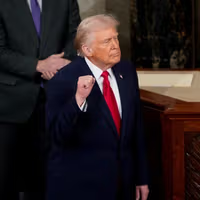
US Defense Secretary Pete Hegseth on Wednesday said Iran had continued to support Yemen's armed Houthi movement despite an explicit warning from Washington and vowed unspecified consequences for Tehran.
Pete Hegseth wrote on X: "Message to IRAN: We see your LETHAL support to The Houthis. We know exactly what you are doing. You know very well what the US Military is capable of — and you were warned."
"You will pay the CONSEQUENCE at the time and place of our choosing."
Hegseth also reposted a message from Donald Trump from March in which the US president said he would hold Iran responsible for any attacks carried out by the Houthis.
Iran maintains that it does not direct the Houthi actions in the Red Sea region. However, Yemen’s Houthis began targeting international commercial ships in the Red Sea and the Arabian Sea after Supreme Leader Ali Khamenei called on Muslim nations to blockade Israeli trade in November 2023.
In March, Khamenei responded to the same threats of retaliation for Houthi actions from US President Donald Trump. "The Yemeni nation has its own motivation and the resistance groups in the region have their own motivations. Iran doesn't need proxies," Khamenei said.
The blockade began with the aim of forcing Israel into a ceasefire but has since led to 174 attacks on the US Navy and 145 attacks on global shipping, according to the US State Department.
The US leads a coalition of over 20 nations against Houthi attacks on shipping, spearheading direct strikes on the group's infrastructure in Yemen, sometimes with British forces.
Since escalating strikes against the Houthis in March, the US has targeted over 1,000 sites. To bolster its presence in the Middle East, the US military has recently increased its assets, including the deployment of six B-2 bombers to Diego Garcia in the Indian Ocean, a location experts consider strategically advantageous for operations in the region.
Additionally, the US currently maintainstwo aircraft carriers in the Middle East and has redeployed air defense systems from Asia to the area.
The US defense chief's warning comes amid US-Iran nuclear talks, the fourth round of which is due to take place this weekend.
Outspoken Iran hawk senator Ted Cruz and a controversial former nuclear negotiator and senior Iranian diplomat turned Princeton academic Seyed Hossein Mousavian have gotten into an online tussle after the Texas lawmaker called for his deportation.
"Dear Senator Ted Cruz, Yesterday, April 28, in your interview with Fox News, you called for my dismissal from Princeton University and made baseless accusations," Mousavian wrote on X.
"I invite you to a public debate so that, while hearing responses to these claims, we can leave the judgment to the American people," he added.
Short of a meeting, Mousavian recommended Cruz read his books, emphasized he supports President Donald Trump's push for an Iranian nuclear deal and said a prison sentence means he cannot return to Iran.
Cruz was unmoved by the invitation and torched Mousavian in a curt reply.
"I try not to be in the room with people linked to Iranian terrorists who have murdered dozens of dissidents."
"Your books are unreadable, and the only debate you should be having is with DHS agents, at the end of which you should be deported," the senator added, referring to the US Department of Homeland Security.
Mousavian was ambassador to Germany when Bonn-based Iranian exile Fereydoun Farrokhzad, an singer and outspoken critic of the Islamic Republic, was murdered in 1992 apparently by agents of the Islamic Republic.
A veteran Iranian commander in March detailed the state's role in his killing, in remarks Mousavian said left him "stunned, amazed, and shocked."
In 2023, several top Republicans, including House Oversight Committee Chairman James Comer of Kentucky and now-DOGE chairman Aaron Bean of Florida, wrote to Princeton with their concerns about Mousavian's tenure.
Several Republican lawmakers wrote an open letter to Princeton in 2023 expressing their concerns over Mousavian's employment.
"A German court found (the Iranian embassy in Germany) served as the headquarters for the planning of the 1992 assassination of four Iranian dissidents," the letter said, referring to the 1994 assassination of four Iranian-Kurdish dissidents in a Berlin restaurant.
"Did Princeton consult with US government officials regarding the hiring of Mousavian?"
Iranian authorities have refused to register a newborn named Guntay, denying him a birth certificate and healthcare access over what they called the name's non-compliance with Iranian and Islamic cultural norms.
The child, born on April 22, remains without official identification over a week later.
The parents from Parsabad, a city in Iran’s northwestern Ardabil province, were informed that the name Guntay was deemed unsuitable by the national registry on the grounds that it did not align with what authorities classify as “Iranian and Islamic naming conventions," according to HRANA, a US-based news outlet focused on human rights in Iran.
“This is not the first time the government has interfered in our choice of names,” a source told HRANA. The source said the parents have filed a formal complaint and are pursuing the matter through legal channels.
Without a birth certificate, the child is unable to access basic services including healthcare and legal identity, HRANA reported.
The outlet added that the experience has imposed psychological and administrative strain on the family.
Iran's civil registry system has a documented pattern of rejecting names perceived to originate from non-Persian ethnic traditions. A similar case last year in Tabriz saw authorities block issuance of birth certificates for triplets named Elshen, Elnur, and Sevgi, all Turkish names.
Although a court later ruled in favor of the parents, the registry appealed the decision, sending the case to a higher court.
Under the UN Convention on the Rights of the Child, which Iran has signed, every child must be registered immediately after birth and has the right to a name and nationality. Article 7 of the convention specifically affirms these entitlements, while Article 2 prohibits discrimination based on language or ethnicity.
Iran’s civil registry defends its policies by citing cultural preservation. "The selection of names that insult Islamic sanctities, as well as titles, epithets, and obscene or gender-inappropriate names, is prohibited. Individuals bearing such names must take action to change them," it says on its website.
The agency maintains a name selection database and offers a name interaction system designed to guide parents toward what it calls Iranian and Islamic options.
Critics, including human rights groups and legal scholars, say the law reinforces state control over cultural expression and disproportionately affects the country's wide array of ethnic minorities in provinces with higher populations of them such as Kordestan, Khuzestan, and Sistan and Baluchestan.
Foreign exchange rates, which have a critical impact on economic life, fluctuate frequently depending on where they are traded, adding to the anxiety of businesses and ordinary Iranians enduring inflation and sanctions.
The Iranian rial hit an all-time low in March, trading at one million per US dollar in March as tensions with the United States flared.
Now ahead of a third round of Iran-US nuclear talks in Oman on Saturday, the open market rate for the dollar was around 810,000 rials, while two government-controlled rates, the EST and the official rate for importing basic goods stood at 692,000 and 280,000 respectively.
Ordinary people, who often convert their savings into hard currency or gold during periods of political and international uncertainty, generally only have access to the open market.
Many businesses — and even some semi-official entities — also turn to the open market when they cannot access foreign currency through official channels or when they require immediate liquidity.
In recent years, successive governments have attempted to reform Iran’s tangled foreign exchange system to curb corruption fueled by cronyism, where favored individuals, groups and state entities secure access to cheaper rates to import goods that are later sold at much higher open market prices.
The reforms have mostly failed because entrenched political networks benefiting from the system oppose them.
The open market
Iran’s open or free foreign exchange market operates largely outside government control. It consists of authorized currency exchange shops or sarrafi as well as informal street-level transactions.
The open market -- where currencies like the US dollar, Euro, and UAE dirham are the most actively traded -- reflects real-time supply and demand. Prices in the open market are heavily influenced by inflation expectations, political risks, sanctions developments and broader economic conditions.
Open market rates typically run significantly higher than the officially controlled rates, particularly during times of instability and often provide the clearest snapshot of Iran’s underlying economic and political realities.
They serve as a crucial, unofficial benchmark that influences pricing, import costs, and inflation across the country.
The government occasionally intervenes, injecting foreign currency through selected sarrafi or cracking down on street traders they deem illegal when volatility escalates amid ramped up political tension or rapid devaluation.
Official rates for staples, medical goods
This rate, currently 285,000 rials to the dollar, is provided through designated banks to importers of basic goods such as wheat, rice, and animal feed as well as medicine and medical supplies.
The decision on allocation of this type of currency lies with related ministries and the Central Bank of Iran (CBI).
An earlier preferential rate for these imports fixed at 48,000 rials has now been almost completely scraped.
Electronic Trading System (ETS) rates
The ETS rate, closer to the free-market rate, is set by supply and demand within the Electronic Trading System (ETS) of the Iran Center for Currency and Gold Exchange.
Established in late February 2022, the center was intended to provide a formal platform for cash currency exchanges to undercut the open market.
While exchange rates on ETS are determined by market forces, the CBI actively supervises the platform, intervening by injecting or limiting foreign currency supplies to influence rates.
This managed market — accessible to licensed banks and exchange offices — handles both cash transactions and informal transfers called hawala. Transactions that previously took place through a system dubbed NIMA are now also routed through ETS.
The defunct NIMA system
The NIMA system, an acronym for integrated system of foreign exchange, was created to regulate foreign currency earned through exports and allocate it for imports of non-essential goods and services. It was officially scrapped in January.
Within NIMA, transactions occurred between exporters and importers under CBI supervision, with the central bank setting a floor and ceiling for permissible exchange rates.
For years, NIMA served as the government’s primary tool for managing the trade balance and controlling the flow of foreign currency.
Its elimination marked a significant shift toward market-based pricing mechanisms — albeit still heavily managed — through the ETS platform.
Corruption amid multiple rates
Several major corruption scandals have rocked Iran in recent years, many of which stem from its multi-tiered exchange rate system.
The Debsh Tea Company scandal is one of the most recent and possibly largest embezzlement cases in the history of the Islamic Republic.
High-ranking officials from various ministries, the Customs Administration and the Central Bank were implicated in the scandal that first came to public attention in 2023.
The family-owned company received $3.37 billion in subsidized foreign currency (at the NIMA rate) to import tea and machinery but sold $1.4 billion of the currency it had received in the open market at higher rates, did not import the promised equipment and allegedly imported low-quality tea it labelled as premium-grade.
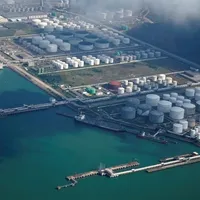
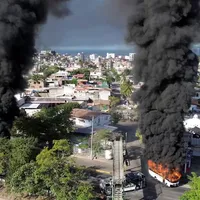
The Iranian government confirmed a media ban on coverage regarding last week's explosion at Rajaei port in Bandar Abbas where at least 70 people have died and more than 1,000 injured, with the threat of prosecutions confirmed by the judiciary.
Fatemeh Mohajerani, Iran's government spokeswoman, said the decision is aimed at “maintaining a single voice across state institutions.”
She described the directive not as a news blackout, but as a mechanism to “manage the issue properly.”
“The government is not interested in withholding information from the people,” she said, adding that provincial bodies have been instructed not to release information about the explosion’s cause until further notice.
Iran International reported earlier this week that journalists and outlets had received warnings about covering the incident, and described a heavy security presence in Bandar Abbas.
Judiciary spokesman Asghar Jahangir said on Wednesday that legal cases have been opened against several media figures for reporting on the blast, with warnings issued to individuals on social media.
Mizan, the judiciary’s official news agency, reported that violators of the media ban would face prosecution for “spreading illegal news.”
“An incident of this scale, with such casualties, demands precise and documented investigation,” he said. “We are waiting for the results to be finalized and announced." Jahangir said.
On Tuesday, The Guardian quoted a Tehran-based reporter speaking on condition of anonymity, who said, “Not only were we warned against ground reporting, we were also banned effectively from sharing reports on social media.”
“In the face of a tragedy such as this, what is there to hide? Either the death toll is way more than 70, or they are suppressing the real cause of the explosion. Following the filing of charges, our newsrooms are also self-regulating in fear that they’ll be facing legal consequences.”
No official casualty figures have been released by the health ministry, which, along with its subsidiaries, was ordered on Sunday to withhold all related information.
Iran International has been contacted independently from a worker at the port citing 29 deaths in one office alone.