US arrests 11 Iranians, including alleged army sniper and ex-IRGC member
The seal of the US Department of Homeland Security, File Photo.
An alleged Iranian military sniper and a former member of the Revolutionary Guards were among 11 Iranian nationals arrested across the United States over the weekend, the Department of Homeland Security said on Tuesday.
The arrests targeted individuals with criminal records, suspected terrorism ties, and past deportation orders, Homeland Security said. One US citizen was also taken into custody after allegedly threatening to shoot federal officers while shielding an illegal Iranian national.
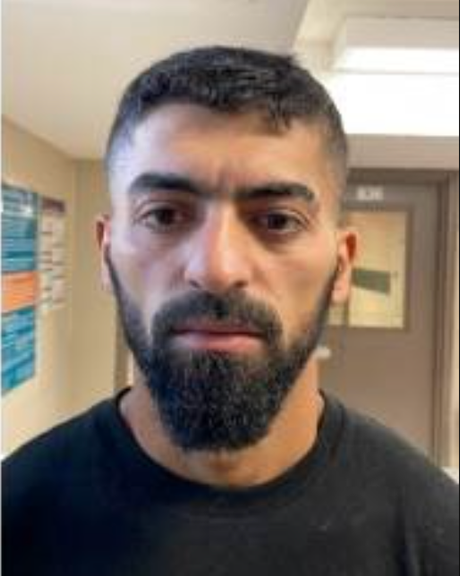
Ribvar Karimi
In Alabama, agents arrested Ribvar Karimi, a former sniper for the Iranian army from 2018 to 2021. Karimi was found with an Iranian military ID card and had entered the country in October 2024 on a K-1 fiancé visa under the Biden administration, Homeland Security said. He never adjusted his immigration status and is now in federal custody pending removal.
Mehran Makari Saheli, a 56-year-old Iranian citizen and ex-member of the IRGC, was arrested on June 22 in St. Paul, Minnesota, the department said. Saheli, who also admitted ties to Hezbollah, had previously been convicted as a felon in possession of a firearm. He was ordered removed in 2022 but remained in the US illegally, officials said.
Other arrests included individuals in Texas, Arizona, California, Colorado, Mississippi, and New York. Among them was Behzad Sepehrian Bahary Nejad, detained in Houston while carrying a loaded 9mm pistol and previously arrested for domestic violence. Hamid Reza Bayat, also arrested in Houston, had been ordered removed in 2005 and has multiple drug convictions.
In Mississippi, Yousef Mehridehno—once a lawful permanent resident—was taken into custody after being listed as a known or suspected terrorist earlier this year, DHS said. His residency had been revoked in 2017 for lying on his visa application and suspected marriage fraud.
Several of those arrested had been living in the US for years despite removal orders, some with criminal records that included drug trafficking, firearms violations, and fraud. All are now in ICE custody awaiting removal proceedings, Homeland Security said.
A tense meeting at the United Nations Security Council on Tuesday laid bare the deepening global rift over the Iran-Israel conflict, as member states clashed over the legality of US and Israeli airstrikes and Iran’s nuclear ambitions.
The meeting came just days after a fragile ceasefire ended the 12-day war between Iran and Israel that drew in the United States and marked the most direct military confrontation between the parties in decades.
“Diplomacy and dialogue are the only path to resolving the unnecessary crisis over Iran's peaceful program,” said Iran’s UN Ambassador Amir-Saeid Iravani. He accused the United States and Israel of launching an illegal war on Iran.
Israel’s Ambassador Danny Danon said, "If there were a Nobel prize for deception, the Iranian regime would win it every single year."
Iran’s actions, Danon said, left no room for trust. “While the diplomats and politicians talked, Iran built. While you negotiated, they enriched. While you hoped, they lied.”
“These strikes, in accordance with the inherent right to self-defense, collective self-defense, consistent with the UN Charter, aimed to mitigate the threat posed by Iran to Israel, the region, and to more broadly international peace and security,” said Rosemary DiCarlo, the US Ambassador to the UN.
“We must all urge Iran to seize this opportunity for peace and prosperity and abide by its international obligations.”
US forces attacked Iranian nuclear sites - Fordow, Natanz and Isfahan - on Saturday, in a mission dubbed "Operation Midnight Hammer."
Nuclear material
Germany raised alarms about the aftermath of the strikes, suggesting Iran may be moving sensitive nuclear materials out of view.
“We are particularly concerned by any possible relocation of nuclear material since the recent military strikes,” said Germany’s ambassador to the UN.
Britain's UN Ambassador Barbara Woodward said: “The situation remains extremely fragile... It is critical that Iran does not miss this window for diplomacy.”
Woodward warned that Iran’s enriched uranium stockpile is now “40 times the limit set by the JCPOA” and stressed, “It is urgent that the IAEA have full access, especially on Iran’s enriched uranium stockpiles.”
Russia, in contrast, condemned the Israeli and American airstrikes.
“The actions of the US and Israel directly violated the UN Charter,” said Russian Ambassador Vasily Nebenzya.
“They constitute a direct and very dangerous challenge to the authority of the NPT, especially Iran’s right guaranteed under Article 4 of the treaty to use nuclear energy for peaceful purposes, including uranium enrichment.”
The Islamic Republic will not return to what it was before the Israeli and American airstrikes, but what comes next is uncertain, experts tell Iran International.
The experts say Iran now faces a defining choice: abandon its decades-old doctrine of hostility toward Israel and the US, or double down and risk collapse.
“It's Ali Khamenei, whose worldview is arguably at the heart of why we ended up in this conflict,” said Alex Vatanka, Senior Fellow at the Middle East Institute and founding director of its Iran Program.
Once seen as untouchable, the clerical state is now reeling—its authority at home weakened and its future uncertain, several Middle East analysts told Iran International.
“What pushback comes from within the regime?” Vatanka asked. “The policies of hardliners, of flexing muscle, having ballistic missiles, acts of resistance, fighting the good fight against US and Israel. That brought this disaster on Iran.”
Tehran failed to defend its airspace, protect officials and loyalists, or safeguard its nuclear and missile programs.
While Iran has long fomented regional instability, this is the first time in decades that war reached its own soil. That may prove a turning point.
“So the war against Israel and the United States, that was sold as something you do outside of Iran's borders. That war suddenly was happening on Iranian soil, literally in cities and towns where people live,” Vatanka said.
Change is coming
That internal tremor may not lead to collapse—but it could produce serious transformation.
“I do expect significant aftershock waves within the structure of the regime,” said Avi Melamed, a former Israeli intelligence official and founder of Inside the Middle East: Intelligence Perspectives.
“Change within the regime, not the regime change,” Melamed said. “But again, it may be that the change within the regime will result in dynamic, that will result in, at the end of the day, change of the regime.”
Meanwhile, the Trump administration is taking a victory lap. President Trump posted Tuesday on Truth Social that China can now resume buying oil from Iran—a sharp turn from his previous threats.
“China can now continue to purchase Oil from Iran,” Trump wrote. “Hopefully, they will be purchasing plenty from the US, also. It was my Great Honor to make this happen!”
Only a month after warning the world against buying Iranian oi, Trump told reporters he hopes Iran will be “a great trading nation.”
Experts say the fact that Iran and Israel accepted a ceasefire signal that neither side wanted a prolonged conflict.
Some level of political change now appears unavoidable, according to Kamran Matin, Associate Professor of International Relations at the University of Sussex.
“The kinds of concessions that Iran will be compelled to make in the likely post-ceasefire talks over its nuclear and missile projects far exceeds the political ideological constraints of the current leadership of Khamenei,” Matin said.
“He has been forced to contradict himself on major matters of national security on a rather frequent basis since October 7.”
For now, observers are watching closely to see whether the Islamic Republic—feeling weakened—lashes out internally.
“The regime might seek to alleviate its utter humiliation by dramatically intensifying its repression of dissidents and even repeat the 1988 mass execution of political prisoners,” Matin warned.
Such a move could spark widespread protests—potentially pushing an already fragile Islamic Republic toward collapse.
The airstrikes may have ended, but the real battle for Iran’s future is only beginning. Israeli strikes shook the Islamic Republic to its core. Its leadership is bruised, its power structure exposed, and its legitimacy at home deeply eroded.
Eleven Iranian nationals, including a suspected former army sniper and an individual with admitted ties to Hezbollah, were arrested by US Immigration and Customs Enforcement (ICE) over the weekend.
The arrests, made across multiple states, highlight what officials say is a broader crackdown on individuals with ties to Iran and potential national security risks.
Among those detained is Mehran Makari Saheli, a former member of Iran’s Islamic Revolutionary Guard Corps (IRGC) who was convicted of firearm offenses in Minnesota and admitted to having ties to Hezbollah.
He had been ordered removed in 2022 but remained in the country illegally, according to Homeland Security.
ICE also arrested Ribvar Karimi, an alleged former sniper for the Iranian army found in Alabama with an Iranian military ID, and Yousef Mehridehno, labeled a known or suspected terrorist after US officials revoked his legal residency over alleged visa fraud.
Other arrests spanned Texas, Arizona, Mississippi, Colorado, California, and New York, involving individuals with histories of drug trafficking, firearms offenses, domestic violence, and prior removal orders.
One US citizen, Linet Vartaniann, was also arrested for allegedly threatening to shoot ICE agents while harboring an undocumented Iranian man.
All individuals are now in ICE custody pending removal proceedings.
Homeland Security officials say the operation is part of President Trump’s directive to proactively remove threats before they escalate.
President Trump’s campaign of maximum pressure on Iran took an unexpected turn on Tuesday when he announced on social media that China can now buy Iranian oil.
“China can now continue to purchase Oil from Iran,” Trump wrote on Truth Social, “Hopefully, they will be purchasing plenty from the US, also. It was my Great Honor to make this happen!”
In May, Trump had threatened to bar any country that bought Iranian oil from doing business with the United States.
China remains the dominant buyer of Iranian crude, accounting for the bulk of the country’s 1.7 million barrels per day in exports, according to data from Kpler, data and analytics firm that tracks global commodity flows.
Trump’s announcement comes after nearly two weeks of fighting between Iran and Israel, which began with Israeli airstrikes on Tehran on June 13. A ceasefire agreement was reached Monday evening, following US airstrikes on three Iranian nuclear sites over the weekend. The US said its objectives had been met.
Speaking to reporters aboard Air Force One, Trump said Iran “is not going to have enrichment and they're not going to have a nuclear weapon,” adding, “They're going to get on to being a great trading nation.”
Oil prices have now tumbled to levels last seen before the Israeli strikes began, as investor fears of a major supply disruption in the Middle East ease.
Initial concerns had surged after the US joined Israel’s campaign, prompting speculation that Iran might retaliate by targeting oil flows from the Persian Gulf.
Traders were particularly watching whether Tehran would attempt to close the Strait of Hormuz — the narrow waterway linking the Persian Gulf and the Gulf of Oman — through which 20% of the world’s crude flows.
It remains a critical artery for oil exports from Iran, Saudi Arabia, the UAE, Iraq, Kuwait, and Bahrain.
UN Secretary-General António Guterres has warned of the profoundly alarming risk of further military escalation between Iran and Israel, as the Security Council prepares to meet on Tuesday to review the implementation of the 2015 Iran nuclear deal under Resolution 2231.
According to an advance copy of the Secretary-General’s 19th report, obtained by Iran International from a Security Council member ahead of its official release, Guterres condemned the Israeli strikes on Iranian territory — including on nuclear-related sites — and Iran’s retaliatory attacks.
“I am profoundly alarmed by the ongoing military escalation,” Guterres writes in his report on the implementation of Security Council Resolution 2231 (2015).
He urged both sides to exercise “maximum restraint” and avoid a “descent into deeper conflict.”
“Diplomacy remains the best and only way to address concerns regarding Iran’s nuclear program and regional security issues,” the report added.
A fragile ceasefire brokered by US President Donald Trump — and confirmed by both Tehran and Jerusalem — is currently in effect. However, in the early hours after the ceasefire took effect on Tuesday morning, both sides accused each other of breaches.
Guterres repeated his call for immediate de-escalation and a return to diplomacy. “The only path to peace and prosperity is through a diplomatic solution that ensures the exclusively peaceful nature of Iran’s nuclear program,” the report says.
The meeting on Tuesday will feature briefings by Under-Secretary-General for Political Affairs Rosemary DiCarlo, Slovenia’s Ambassador Samuel Žbogar — the current Security Council facilitator for Resolution 2231 — and a European Union representative in their capacity as JCPOA coordinator.
Goals of nuclear deal yet unmet
The report said that the core goals of the Joint Comprehensive Plan of Action (JCPOA) remain unrealized, even as the resolution’s provisions are set to expire in October. “The objectives of the resolution and those of the Plan have yet to be fully realized.”
The secretary-general expressed support for recent diplomatic efforts between Iran and the US, which have included five rounds of indirect talks mediated by Oman.
In a March joint statement shared with Guterres, China, Iran, and Russia stressed the importance of preserving Resolution 2231’s framework and warned against actions that could escalate tensions.
Beijing later submitted a five-point proposal advocating for a step-by-step diplomatic resolution and reaffirming the JCPOA as a viable path forward.
However, Western governments remain skeptical. France, Germany, and the UK told the Council earlier in June that Iran is in “extensive violation” of its JCPOA obligations and is producing enriched uranium at levels far beyond the deal’s limits.
The trio warned they may trigger the so-called snapback of UN sanctions if no progress is made.
Iran rejected the accusations, blaming the US withdrawal from the deal in 2018 and subsequent European inaction for the current crisis. Tehran warned that any move to reimpose sanctions could prompt its withdrawal from the Non-Proliferation Treaty (NPT).
Russia also backed Iran’s position, accusing Western nations of violating the agreement and dismissing efforts to paint Iran’s nuclear program as a threat to international peace.
IAEA raises alarm
A recent report by the International Atomic Energy Agency (IAEA) estimates Iran’s enriched uranium stockpile at over 9,200 kilograms — more than 45 times the JCPOA’s cap — with significant quantities enriched up to 60%, a level close to weapons-grade.
The IAEA warned it had lost continuity of knowledge over much of Iran’s nuclear activities since early 2021, raising further concerns about transparency and oversight.
The UN nuclear watchdog confirmed that it continues to oversee procurement notifications under the resolution. Eight new nuclear-related notifications were received since December 2024, according to the report.
Slovenia’s Žbogar is expected to present a separate report to the Council outlining these developments, while the EU representative will provide an update on the status of the JCPOA’s implementation.