Weakened Iran brings cautious relief in Persian Gulf states
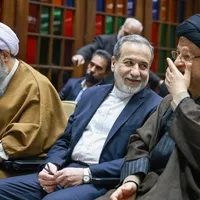
GCC leaders at the Supreme Council's 45th Summit in Kuwait in December 2024
Persian Gulf states are quietly relieved that the 12-day war with Israel has weakened the Islamic Republic, security experts told Iran International, though Tehran's Arab rivals prefer a declawed Iran to a regime change that would lead to instability.
The surprise Israeli attacks that started on June 13 were publicly condemned by Persian Gulf states which oppose Iranian hegemony in the region but seek calm to boost domestic growth agendas.
“These disruptions are of significant concern to Emirati policymakers who place a premium on regional calm and continuity,” said a senior security expert in the United Arab Emirates.
“The UAE remains concerned about the broader implications of regional conflict, economically, socially as well as politically," the expert told Iran International on condition of anonymity due to political sensitivities.
The United Arab Emirates, along with Morocco and Bahrain, is a party to the US-brokered Abraham Accords in 2020 which normalized relations between Israel.
Collective unease with Iran contributed to the historic shift toward normalization, experts say.
Last month, Abu Dhabi publicly condemned the Israeli attacks as a violation of Iran's sovereignty, but the attacks degraded the military might of a rival whose nuclear ambitions its neighbors long feared.
The campaign saw Israel gain control of Iran's airspace within days as it assassinated top military leaders and degraded Iranian missile capabilities.
However, any prolonged conflict or upheaval inside Iran would be viewed as a potential risk to the regional countries' tourism, trade and foreign investment, a taste of which was offered by the closing of air space across the Persian Gulf and crashing stock markets amid the conflict.
The United Arab Emirates is also home to around 500,000-800,000 Iranians who have been a historic force in the country’s trade and commerce concentrated in Dubai.
Interest in relative calm puts Arab capitals potentially at odds with some Iranians' hopes for fundamental change in the wake of the war, which does not appear to be forthcoming despite the punishing air war.
“The UAE takes a pragmatic approach and recognizes that broad systemic change in Iran is unlikely to be externally driven," the expert added.
Risks of regime change in Iran
Iran's southern neighbors are pleased with Tehran's chastisement but will maintain good relations for the sake of regional peace, said Emirati political commentator and academic Abdulkhaleq Abdulla.
The region "is better off now that Iran lost most of its bargaining power, namely its regional proxies, nuclear and missile powers,” he told Iran International.
“But even a weakened Iran remains a key threat to (Persian) Gulf security so the Arab states will continue with their policy of opening up to Iran and show solidarity with its people.”
The fragile ceasefire and the vulnerability of Iran's ruling system is likely to preoccupy Iran's neighbors.
Aimen Dean, of Bahraini-Saudi descent but famous for his deep work for the British spy agency MI6 embedded inside Al Qaeda, said the truce was no panacea.
“The relief isn’t here yet. Not a single government here in this region wants a regime change at least for now,” the managing director of Five Dimensions Consultants in Dubai said.
“They are afraid of two particular scenarios. The first is that an uprising happens and you end up with defections in the army and then the whole country collapses into civil war," Dean added, warning of refugee crisis on Arab shores.
The alternative scenario feared is the possibility of an ethnic breakup of Iran if the government should fall. “Nobody wants that as that also will result in a major flow of refugees and a failed state where people have access to nuclear materials,” Dean explained.
Instead, in the halls of power in the Persian Gulf, from regional juggernaut Saudi Arabia to the tiny island nation of Bahrain, Dean said there is the hope that a “defanged and declawed Iran” would be better contained within its own borders.
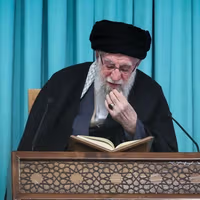
Iran’s Supreme Leader Ali Khamenei’s first public appearance in over three weeks has drawn mixed reactions, with state officials and media hailing his return as a sign of strength while some online reactions from Iranians were dismissive or critical.
Former Foreign Minister Mohammad Javad Zarif heaped praise on the leader who had not been seen in public since June 10 before his reappearance at a religious ceremony Saturday night.
“The fearless presence of Ali Khamenei in a traditional public gathering permanently shattered the delusional lies that paid pundits have been pushing. Time to wake up and admit that Iranians never surrender,” he said.
Throughout the three-week gap, social media users widely mocked Khamenei’s invisibility, some likening it to a contradiction of his own past rhetoric.
In a 2005 speech, Khamenei had derided US leaders for “disappearing” after 9/11 and said, “If a bitter experience happens to Iran, we ourselves will don battle garb and stand ready to sacrifice.”
Supporters hail ‘steadfast’ image
Government-aligned figures such as Zarif had earlier insisted that Khamenei’s absence was a leadership tactic, but shifted their tone following the ceremony on Saturday to label it a sign of bravery.
Foreign Minister Abbas Araghchi, called the reappearance “the most beautiful image I saw upon arriving in Brazil” as he arrived for the Brics summit, and added: “With you, one can brave the seas.”
Mehdi Fazaeli, a member of Khamenei’s office, wrote on X that "the mourning hall exploded", referring to the crowds' excitement for the reappearance of the elusive leader at the mourning ceremony held on the occasion of Ashura.
"The waves of this explosion will sweep through Tel Aviv and the White House. It was an explosion of love, devotion, and union," he said.
Mohsen Rezaei, a senior member of the Expediency Council and a former IRGC commander, portrayed the event as a rallying moment for a nation still suffering the fallout of the 12-day war launched by Israel on June 13.
“When people’s eyes fell on our Leader’s stature, all understood this house’s pillar is firm and no storm can uproot it,” he said.
Iran International editor Morteza Kazemian argued the reappearance is unlikely to restore the status quo of pre-war normalcy, citing the weight of insecurity now surrounding Iran’s defense posture.
“The war showed the country’s skies are defenseless, putting Khamenei squarely among Israel’s potential targets," he said.
Naim Qassem, the Secretary General of Iran's largest regional ally, Hezbollah in Lebanon, praised Khamenei for “his courage, faith, support, and guidance."
Yet while praise flowed from allies, Iranian state institutions remained notably silent on Khamenei’s prolonged absence. Neither his office nor official media offered explanations for his whereabouts during or after the Israeli strikes.
Critics cast ceremony as political theater
Some citizens saw Khamenei’s appearance not as courage, but desperation. A video submitted to Iran International mocked his choice of song, “Ey Iran”, a patriotic anthem rarely embraced by the clerical establishment.
One viewer's message to Iran International said, “If I were him, I’d have preferred to be killed by Israel than to return in this shameful way."
Iranian Nobel laureate and lawyer Shirin Ebadi criticized Khamenei on her Telegram page, saying that while he emerged from his bolthole, the Iranian public who had no shelter from the Israeli barrage were left mourning.
”History will record him as a dictator of the same era as Saddam Hussein, Gaddafi, and Mubarak—but one who lacked even a shred of dignity," Ebadi said.
"Unlike other dictators who at least believed in themselves, he begged for power, and in complete contradiction to the ideals he once shouted from the rooftops, appeared on the eve of Ashura with a smile among a group of hand-picked loyalists saying they were ready to sacrifice their lives for him—while political prisoners and ordinary people had already been sacrificed as his human shields.”
Human rights news agency HRANA said that 1,190 Iranians were killed in the war, 4,475 injured.
Another viewer of Iran International said, “After 20 days, the ‘Great Satan’ crawled out of his hole just to say he wasn’t scared. But we’ve already understood what we needed to—you are a coward and completely spineless.”
“He came out of hiding after 22 days. If I were in his place, I would’ve rather been killed by Israel than show up among the people like this,” said another.
”Since last night, ever since this 'Supreme Mouse' crawled out of his hole, the news has been subtitling it as 'his appearance in public'. But 'public' meant when he used to attend funerals for his commanders or visited missile-struck areas. This wasn’t a public appearance—it was more like a private gathering, where everything on land and in the air had been secured just so this mouse could come out,” said another citizen.
In Israel as news of Khamenei's reemergence broke, the Jerusalem Post called it a "rectifiable mistake" that Israel did not kill Khamenei and his son Mojtaba, a potential successor.
Hezbollah leader Naim Qassem on Sunday rejected international pressure on the Iran-backed group to surrender its weapons, saying Israeli threats would not force disarmament.
“This threat will not make us accept surrender,” Qassem said in a video message for the occasion of Ashura, a major Shia Muslim religious commemoration, amid a fragile ceasefire brokered in November by the US and France.
“The resistance will continue even if the whole world stands against it.”
Washington has called for Hezbollah to disarm completely. Lebanese authorities are expected to deliver a response to US envoy Thomas Barrack's June proposal when he arrives in Beirut on Monday, according to Reuters.
A Lebanese official speaking to AFP on condition of anonymity said authorities have already begun dismantling parts of Hezbollah’s military infrastructure in southern Lebanon, near the Israeli border.
But Qassem, who took over leadership of the Lebanese group following the killing of Hassan Nasrallah in an Israeli airstrike last year, made clear on Sunday that Hezbollah does not intend to relinquish its core weapons or strategic capability.
“The ceasefire was supposed to stop aggression, but violations have continued,” Qassem said. “No one can ask the resistance to drop its arms while the aggression is ongoing.”
Both Hezbollah and Israel continue to cite continuous violations of the ceasefire.
Qassem added that Hezbollah’s defensive posture was essential for Lebanon’s sovereignty. “Without the resistance, Israel would have overrun our villages,” he said, adding that disarmament would be akin to legitimizing occupation.
In a message to US and Israeli officials, he said: “We reject normalization, which is humiliating and degrading. The American-Israeli formula—‘either you surrender or we kill you’—is laughable and outdated.”
Hezbollah has faced mounting pressure in recent months following its war with Israel, which destroyed large parts of Beirut’s southern suburbs and southern Lebanon and left tens of thousands displaced.
The group is also grappling with financial strain and the loss of its long-time Syrian ally after the fall of former president, Bashar al-Assad, in December.
While sources close to Hezbollah told Reuters that internal discussions have taken place about scaling back its armed presence, Qassem’s speech signaled that any compromise would not include full disarmament. He insisted that Hezbollah’s arsenal is a red line.
He also reaffirmed Hezbollah’s alignment with Iran, offering praise to Supreme Leader Ali Khamenei and the Iranian people for their support. “They have stood firm and prevented Israel from achieving its objectives,” he said.
Hezbollah’s position remains at odds with the stance of Lebanon’s government, which has pushed for a monopoly on arms and full implementation of the ceasefire.
Last week, Lebanese Prime Minister Nawaf Salam said that his government is intensifying its efforts to confine weapons solely to state institutions and to extend its authority across the country as part of a broader push to advance the implementation of a ceasefire.
A shadow war of mutual cyber-attacks between Iran and Israel has replaced missile fire and air strikes as a fragile truce holds, security experts told Iran International.
"Although the Iran-Israel ceasefire has paused direct military engagement, cyber operations have intensified," Marwan Hachem, co-founder of FearsOff cybersecurity experts, told Iran International.
“Since the truce began, nearly 450 cyberattacks have been recorded against Israeli targets—many attributed to pro-Iran hacker groups,” he said.
Attacks on Iran's finance, infrastructure and energy complex, Hachem said, were fewer but more sophisticated and have been traced to actors linked to Israeli intelligence.
"Post-ceasefire, there are only about 10 known cyberattacks by pro-Israeli actors against Iran ... the fewer Israeli attacks tend to be more targeted and impactful.”
During the war, a pro-Israeli hacking group known as Predatory Sparrow claimed credit for a major cyberattack on Iran’s Bank Sepah.
The group also later said it had drained around $90 million from Nobitex, Iran’s largest cryptocurrency exchange, adding it had posted Nobitex source code lists on X.
In spite of a ceasefire, however, the cyber war goes on.
“The era of silent digital aggression has arrived, and even allies may become targets in this murky domain of quiet offensives. The illusion of peace doesn’t extend to cyberspace. In fact, we expect cyber operations to grow more aggressive—only more covert. Silence is no indicator of safety.”
Daily attacks
Israeli cyber expert Boaz Dolev, from Clearsky Cyber Security, said there are daily attempts to hack small to medium sized businesses in Israel, and as yet, have not succeeded in attacking critical infrastructure.
“There is a lot of smoke all of the time. Iran didn’t disrupt Israel’s infrastructure by cyber-attacks but some Israeli companies were hacked and some sensitive information was leaked."
“We think they’ve breached dozens of Israeli companies, small to medium sized ones," Dolev added. "Most of them are providing services to large organizations in Israel so there is some sensitive information that was inside."
“They tried to do it by using vulnerabilities in computer systems, or sending it as phishing, but as much as I can say, they didn’t succeed most of the time. The ones they breached and hacked, they can start the destruction process, and some companies have had servers hacked and deleted.”
One cyber expert in Israel who asked not to be named, said Israel remains “much stronger than Iran in the cyber arena”.
“They can do whatever they want in Iran. The question is how they’re using the power and who you’re going to attack, when, and what will be the damage,” he added.
“This is why they decided to attack the financial system in Iran," the expert added. "It was a message for Iran that said the infrastructure is more vulnerable than they can imagine.”
A new video showing two massive blasts near Tehran's Tajrish square has delivered a vivid illustration of the civilian toll a 12-day Israeli war wrought on Iran.
The video shows two powerful blasts roughly a second apart just steps away from the main hospital in the Tajrish area, near the capital's bustling Qods Square.
One hits a building, sending a huge cloud of smoke up on the other side of the street, and another lands between cars at an intersection.
The second blast hurls the vehicles and a huge plume of smoke high into the air.
At the time of the explosions, around 15:30 local time on June 15, the street was busy with vendors, shoppers, metro passengers and traffic as many had still not left the capital for safer places.
Other videos of the incident posted earlier on social media showed extensive flooding caused by damage to a major water pipeline from the second blast, adding to the chaos. A three-year-old child reportedly drowned in the flood.
The 12-second footage, released on social media on Thursday, appears to be from a traffic surveillance camera.
The footage emphasized the harm endured by Iranian civilians apart from Israeli strikes which assassinated commanders and nuclear scientists and pummeled key military and nuclear facilities until a June 24 ceasefire.
Iran's health ministry reported 610 people were killed in the conflict and 4,746 injured.
Independent tallies put the toll higher—1,190 according to the US-based human rights group HRANA, which reported military deaths just above 400, with the rest either civilians or yet to be determined.
Verified
Some activists and social media users allege that the video was digitally manipulated or AI-generated.
However, Factnameh, an Iranian fact-checking website, and BBC both deemed the footage genuine, comparing it with other images from the area of the impact.
Victims
Iran reported 18 people killed, including a pregnant woman and her child, and 46 injured in the strike but has not released a full list of victims.
The Israeli military reported the killing of Brigadier General Mohammad Kazemi, chief of the IRGC Intelligence Organization, his deputy Brigadier General Hassan Mohaqeq, and military intelligence officer Mohsen Bagheri on the same day.
Iran confirmed their deaths but neither side has disclosed the exact location of their deaths.
Among the dead were two prison officials, Ruhollah Tavasoli and Vahid Heydarpour, as well as Evin's top prosecutor Ali Ghanaatkar. Dozens of detainees, medical staff, visiting families — including a young child — and even a bystander were also killed.
Another Israeli attack on June 24 in Astaneh Ashrafieh in northern Iran killed 16 people, most of them from the same extended family, and completely destroyed several homes.
The bombing targeted nuclear scientist Mohammad-Reza Sadighi, who had survived an earlier Israeli attack in Tehran but lost his 17-year-old son Hamidreza in the airstrike.
Iranian missiles struck five Israeli military facilities during last month’s 12-day war, according to satellite radar data reviewed by US researchers and published by The Telegraph on Saturday.
The data, provided by a research group at Oregon State University, suggest that six Iranian missiles hit military targets across northern, central, and southern Israel, including what the report describes as a major air base, an intelligence facility, and a logistics center.
“The radar signatures we analyzed show definitive blast patterns at five separate military sites,” Corey Scher, a researcher with the Oregon State team, told The Telegraph. “These are consistent with missile strikes that likely occurred during the height of the conflict.”
The Israel Defense Forces (IDF) declined to confirm or deny the reported damage. “What we can say is that all relevant units maintained functional continuity throughout the operation,” a military spokesman told The Telegraph.
The Telegraph reported that the missile strikes described in the radar data appear to be separate from the 36 previously reported impacts on residential and industrial areas, which caused widespread damage.
Iranian missile penetration increased during conflict, report says
According to The Telegraph, the proportion of Iranian missiles that penetrated Israeli air defenses increased during the war, rising from about 2 percent early in the conflict to roughly 16 percent by day seven.
The report did not offer definitive reasons for the increase, but cited expert suggestions that the causes “may include the rationing of a limited stock of interceptor missiles on the Israeli side and improved firing tactics and the possible use of more sophisticated missiles by Iran.”
Iranian officials told The Telegraph that the use of simultaneous drone and missile attacks was intended to confuse Israeli defense systems. “Many [drones] don’t even get through—but they still cause confusion,” one unnamed Iranian official said.
The Israeli media on Friday quoted a military official as saying that Iran began the conflict with around 400 missile launchers and that “we destroyed more than 200 of them, which caused a bottleneck in their missile operations.”
The same official estimated that Iran started the war with 2,000 to 2,500 ballistic missiles and is pursuing mass production that could dramatically expand its arsenal.
A more comprehensive analysis of the damage to both Israeli and Iranian infrastructure is expected from the Oregon State research group within two weeks, according to the report.
The group uses radar-based methods that detect changes in the built environment, but it acknowledged that full confirmation of military site hits would require either on-the-ground access or high-resolution satellite imagery.