Iran mine preparations raised US alarm over Hormuz closure – Reuters
Iran loaded naval mines onto vessels in the Persian Gulf last month, intensifying concerns in Washington that Tehran was preparing to close the Strait of Hormuz, two sources briefed on classified intelligence told Reuters on Tuesday.
“The loading of the mines... suggests that Tehran may have been serious about closing one of the world’s busiest shipping lanes,” the officials told Reuters, speaking on condition of anonymity.
Reuters also reported that Iran’s military “could have also simply been making necessary preparations in the event that Iran’s leaders gave the order.”
The activity was detected after Israel launched missile strikes on Iranian territory on June 13, the officials said.
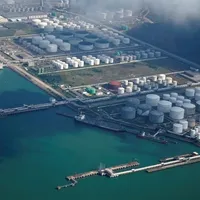
The Strait of Hormuz is a strategically vital waterway bordered by Iran, the United Arab Emirates, and Oman. Roughly one-fifth of the world’s oil and gas trade passes through the route.
Iran’s parliament approved a measure to close the strait last month following US airstrikes, state media reported. The measure was not binding, and the final decision rests with Iran’s Supreme National Security Council, the country’s highest security authority, a lawmaker said last month.
Iran has long threatened to shut the strait but has never followed through. A closure would likely disrupt global energy markets and risk triggering a broader conflict.
A White House official said the waterway remains open and credited President Trump’s military operations, pressure campaign, and efforts to restore maritime security.
Israeli officials warned Yemen’s Houthis could face strikes similar to those recently carried out against their sponsors in Iran, after Israel intercepted a missile launched from Yemen toward the Jewish state on Tuesday night.
“Yemen's law is the same as Tehran's. After we struck the head of the snake in Tehran, we will also strike the Houthis in Yemen,” Defense Minister Israel Katz said in a statement, referring to the 12-day conflict with Iran.
“Whoever raises a hand against Israel — that hand will be cut off,” he added.
US Ambassador to Israel Mike Huckabee also reacted, referencing the same operation. “Maybe those B2 bombers need to visit Yemen,” he wrote on X, referring to the American stealth bombers used in the strike on Iran’s nuclear facilities.
“Fortunately, Israel's incredible interception system means we go to the shelter and wait until all clear," he added.
The Houthis said they had carried out three operations against Israel on Tuesday.
Since the outbreak of the Gaza war, Yemen’s Houthis have launched missiles, rockets, and drones toward Israel and enforced a maritime disruption in the Red Sea, in what it describes as support for Palestinians in Gaza.
The escalation comes following a ceasefire deal announced on May 6, in which President Donald Trump said the US would stop bombing the Houthis after they agreed to halt attacks on key shipping lanes.
Oman, which mediated the agreement, said both sides committed not to target each other, including US vessels in the Red Sea and Bab al-Mandab Strait.
The ceasefire agreement, however, did not include Houthi attacks on Israel, according to the group's spokesperson.
Last month, the group's rivals in Yemeni government said that Iran is transferring parts of its military industry, including ballistic missile and drone production to Houthi-controlled areas in Saada, Hajjah, and the outskirts of Sanaa.
Moammar al-Eryani, information minister of Yemen's internationally-recognized government urged the world to treat the threat seriously.
The Trump administration's border czar Tom Homan says the recent war in Iran convinced the US Immigration and Customs Enforcement to accelerate the arrests of illegal Iranian immigrants.
“We’ve been working this since January 20th,” Homan told Iran International. “We didn’t wait for the Iran conflict. But after what happened in Iran a couple weeks ago, we put our foot on the gas.”
He confirmed that more than 200 Iranian nationals have been apprehended crossing the southern US border illegally — including one trained sniper and another carrying firearms.
He also noted a surge in “gotaways” — individuals who crossed the border without being apprehended — totaling over 2 million in recent years.
“Why would someone pay more to evade capture,” he asked, “when turning themselves in would get them free housing, food, healthcare, and even a plane ticket? They don’t want to be found — and we have to ask why.”
According to Homan, U.S. agencies including ICE, the FBI, and U.S. intelligence services are working to identify potential sleeper cells or agents acting on behalf of the Iranian regime already within U.S. borders.
Iran's fatwa against Trump
Asked about fatwas issued by senior Iranian clerics calling for Trump's assassination, border czar Tom Homan said, "It’s a little out of my lane but we've got the strongest president in the history of this country in office right now."
"So I don't think it'd work out very well for them," Homan told Iran International's Arash Aalaei.
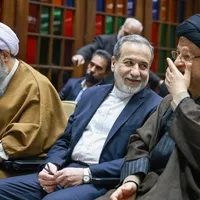
A hardline Iranian cleric close to Iran's Supreme Leader called on Muslims on Monday to kill Trump and Israeli Prime Minister Benjamin Netanyahu in response to their threats against Ali Khamenei.
On Sunday, Ayatollah Naser Makarem Shirazi and Ayatollah Hossein Nouri Hamedani also issued separate fatwas against Trump and Netanyahu.
Shirazi said in his statement: “Any regime or individual threatening the leaders of the Islamic Ummah (nation) and acting on those threats qualifies as a mohareb.”
Under Shiite doctrine, this designation can make it religiously obligatory for devout Muslims to act, including through violence.
Israeli-operated civilian drones were used from inside Iranian territory to carry out attacks during the recent 12-day conflict with Israel, Iran’s defense ministry confirmed Tuesday, criticizing the lack of regulations governing drone use in the country.
“One of the tools used by the Zionist enemy to harm public security, residential areas, and specific parts of the country was the use of civilian drones for military purposes,” Reza Talaei-Nik, spokesperson for the defense ministry, said in a televised interview.
He blamed a lack of legal and structural frameworks governing the drone industry and its use in Iran, saying that a new law passed by Iran’s parliament aims to regulate the drone sector.
“This law will oversee the process of drone manufacturing, their operational system, and their import and export."
“Drone use must be treated like cars, with ownership documents issued by the police and flight permits obtained from the Civil Aviation Organization. The law also defines regulations for domestic drone production,” Talaei-Nik added.
Israeli media previously reported that Mossad had established a drone base inside Iran as part of a broader infiltration operation.
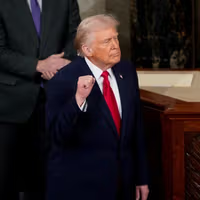
Iran has been severely weakened by the US airstrikes and sanctions, and is in no position to resist US demands, President Donald Trump said on Tuesday, expressing confidence that he can secure whatever he wants from Tehran if needed.
“We had tremendous success with Iran. They were not happy… They’re so bombed out. That place was decimated. It’ll be years before anyone can even get down there," Trump told reporters in Florida.
When asked about the possibility of the US signing a nuclear agreement with Tehran, Trump said "that’s not a priority" after the successful strikes.
"But we’ll get whatever we want, whatever we want from Iran,” he said.
“I think—and I hope—they want to have a good country. You know, they’re under massive sanctions right now. Biting sanctions. It’s very hard for them to do anything under those sanctions. I look forward to maybe a time when we can get along, and they can rebuild their country."
Iranian Foreign Minister Abbas Araghchi told CBS News earlier, “I don’t think negotiations will restart as quickly as that... but the doors of diplomacy will never slam shut.”
US envoy Steve Witkoff previously said that talks with Iran are ongoing through both direct and indirect channels.
In his Tuesday remarks, Trump also said he will celebrate the success of the Iran operation when Israeli Prime Minister Benjamin Netanyahu visits the White House next week.
“It’s going to be a very quick celebration. We had a great hit—it was an obliteration.”
Trump praised the US military’s operation on the three nuclear sites and said those involved in the mission would be invited to the White House.
Iran, however, has rejected the notion that its nuclear program was destroyed, insisting that its knowledge and scientific capabilities remain intact.
“One cannot obliterate the technology and science of enrichment through bombings,” Araghchi said. “If the will exists on our part—and it does—we will be able to repair the damage and recover lost time quickly.”
Iran remains under international sanctions not only for its nuclear program, but also over its human rights record and its support for Russia’s war in Ukraine.
The US Department of Homeland Security (DHS) on Tuesday downplayed threats by an Iran-linked hacker group to disclose stolen emails from the US president's circle, calling it a smear campaign to demean Donald Trump.
“A hostile foreign adversary is threatening to illegally exploit purportedly stolen and unverified material in an effort to distract, discredit, and divide,” the Department of Homeland Security wrote on X.
“This so-called cyber ‘attack’ is nothing more than digital propaganda, and the targets are no coincidence.”
The department warned that any individuals responsible would be held accountable.
Hackers affiliated with Iran, using the pseudonym "Robert," have threatened to release additional stolen emails from associates of Trump, Reuters reported.
The group, which leaked an earlier batch of documents ahead of the 2024 presidential election, claims to possess roughly 100 gigabytes of emails from accounts linked to White House Chief of Staff Susie Wiles, Trump lawyer Lindsey Halligan, adviser Roger Stone, and Stormy Daniels, a well-known Trump critic.
US Attorney General Pam Bondi called the breach “an unconscionable cyberattack,” while FBI Director Kash Patel vowed that anyone involved in national security violations would face full prosecution.
“This is a calculated smear campaign meant to damage President Trump and discredit honorable public servants who serve our country with distinction. These criminals will be found and brought to justice,” the DHS said.
Despite earlier comments to Reuters suggesting that no further leaks were planned and that the group had “retired,” Robert re-emerged following the recent 12-day conflict between Israel and Iran, which culminated in US strikes on Iranian nuclear sites.
“Let this be a warning to others: there will be no refuge, tolerance, or leniency for these actions,” the DHS said.