A driver in Iran relies on a printed map as widespread GPS disruptions render navigation apps unreliable.
Iranian jamming of GPS devices aims to baffle Israeli drones and missiles after a punishing wave of assassinations in a war last month, but now mostly thwarts daily commutes and food deliveries for ordinary citizens.
“If you look at the map, you sometimes find yourself tens or even hundreds of kilometers from your real location—sometimes in another country or even in the middle of the Caspian Sea!” said Amir-Ali, a company accountant in Tehran.
Another Tehran resident said friends were nearly stranded after a navigation app misled them. “They ended up in a remote valley far from the usual trail. Luckily, they made it back before dark.”
Lost drivers, cold meals
“Even ordering food has become a pain,” said Taraneh, a language instructor. “Drivers can’t find you or show up at the wrong place. By the time it gets to you—if it does—it’s cold or your lunch break is over.”
Elham, also in Tehran, said she spent over 30 minutes guiding a delivery driver who kept circling the neighborhood. “I was directing him down dead ends and one-way streets. It was maddening.”
Public transportation hasn’t been spared.
A commuter told the Sharq newspaper that both he and his bus appeared in the wrong location on the app, causing delays. A bus driver said his GPS took him off route while covering for a colleague.
“I only realized something was wrong when passengers started complaining,” he said.
Even religious routines have been affected, with worshippers across Iran reporting botched timing for calls to prayer.
“Automated call-to-prayer systems rely on GPS to determine location,” said network expert Ali Rad. “If they receive incorrect signals, they may miscalculate the time and broadcast too early or too late.”
Spoofing comes home
GPS jamming involves blocking signals while spoofing sends false ones. Both are military tools used to confuse enemy drones, hide troop movements or disrupt missiles. Iran has long deployed both but seldom so broadly.
In 2011, Tehran said it diverted a US drone using spoofing. It was also suspected of GPS interference during a period of heightened tensions in the Persian Gulf in 2019-2020.
Israel has used similar methods. In late 2023, the Israeli military acknowledged GPS restrictions in combat zones to disrupt enemy targeting.
The interference sometimes spilled over into civilian devices, triggering widespread signal errors.
During peak hostilities in June, flight-tracking platforms like Flightradar24 recorded major GPS disruptions over Iran and neighboring airspace.
Pilots reported signal loss and instrument malfunctions, prompting airlines to reroute flights.
At sea—especially in the Strait of Hormuz—spoofed signals caused ships to veer off course or appear to sail over land. Over 1,600 vessels per day were affected, according to The Guardian.
Shipping companies paused nighttime operations. The economic fallout was swift: supply chain disruptions, delays and rising insurance costs dogged the industry.
What began as a military tactic is now reshaping daily life in Iran, compounding already grave economic and security worries among ordinary Iranians.
Yemeni forces fighting the Iran-backed Houthi movement have carried out their largest ever seizure of advanced Iranian conventional weapons bound for the group, US Central Command (CENTCOM) said on Wednesday.
CENTCOM said the National Resistance Forces (NRF) confiscated over 750 tons of advanced weaponry including anti-ship and anti-aircraft missiles, warheads, hundreds of drone engines, air defense equipment, radar systems and communications equipment.
The NRF is an anti-Houthi force led by General Tareq Saleh, nephew of Yemen’s former President Ali Abdullah Saleh, and operates independently of the internationally recognized government.
CENTCOM added that many of the systems were manufactured by a company affiliated with Iran’s defense ministry and included manuals in Farsi.
“We commend the legitimate government forces of Yemen who continue to interdict the flow of Iranian munitions bound for the Houthis," General Michael Erik Kurilla, commander of CENTCOM said in a statement.
"The interdiction of this massive Iranian shipment shows that Iran remains the most destabilizing actor in the region. Limiting the free flow of Iranian support to the Houthis is critic to regional security, stability, and freedom of navigation,” he added.
Since the outbreak of the Gaza war, Yemen’s Houthis have launched missiles, rockets, and drones toward Israel and enforced a maritime disruption in the Red Sea, in what it describes as support for Palestinians in Gaza.
Last month, the group's rivals in Yemeni government said that Iran is transferring parts of its military industry, including ballistic missile and drone production to Houthi-controlled areas in Saada, Hajjah, and the outskirts of Sanaa.
The Houthis resumed attacks on the high seas following a June 24 ceasefire ending a 12-day war between Israel and Iran.
Houthi forces sank a Liberian-flagged carrier on July 6 with rockets and explosive drone boats. The group, which controls most of Yemen's population centers, says its maritime attacks are in solidarity with Palestinians in Gaza.
US Secretary of State Marco Rubio on Wednesday signed a nuclear cooperation deal with Bahrain and in an apparent reference to Iran said Washington was ready to back peaceful nuclear programs which do not menace neighbors.
“This is an important signing. It serves as the first step toward deeper civil nuclear cooperation — an example that the United States is prepared to be a partner with any nation on earth that wants to pursue a civil nuclear program,” he said.
Bahrain's activities, Rubio added, are “clearly not geared toward weaponization or threatening the security of its neighbors.”
A Shi'ite majority island kingdom ruled by a Western-backed Sunni monarchy, Bahrain has long been suspicious of Tehran's policies in the region. It is host to major US and British military bases.
“I want to restate our deep appreciation and backing for President Donald Trump's tireless work toward achieving ceasefires, building confidence, and ultimately creating a secure region where all its peoples can live in peace and prosperity,” Bahraini Foreign Minister Abdullatif bin Rashid Al Zayani said.
Iran’s nuclear program has long been a source of unease for its Persian Gulf neighbors. US President Donald Trump started talks with Iran in April, giving a 60-day deadline to reach a deal. On the 61st day, Israel launched a surprise military campaign against Iran.
A June 24 ceasefire paused the 12-day war, which was capped by US attacks on Iranian nuclear sites.
The United States had demanded that Iran end domestic uranium enrichment but said Tehran could pursue a civilian nuclear program.
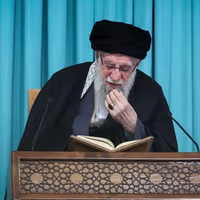
Iran could strike Israel and the United States even harder than it did during last month’s conflict, Supreme Leader Ali Khamenei said on Wednesday in his first public speech since a June 24 ceasefire.
Speaking before judiciary officials in Tehran, Khamenei said the extent of the damage inflicted—on a US base in Qatar—would become clear once media restrictions were lifted.
“The center targeted by Iran was an extremely sensitive American facility,” he said. “Once the news blackout is lifted, it will become clear what a heavy blow was delivered. And a blow even greater than this can be struck against the US and others.”
President Trump said last month that Iran provided early notice before launching missile strikes at the US Al Udeid Air Base in Qatar, downplaying Tehran’s response to US airstrikes on three Iranian nuclear sites as "very weak."
Khamenei, who had only made recorded remarks from an undisclosed location during the 12-day US-Israeli campaign, briefly appeared at a July 5 mourning ceremony without speaking.
The 86-year-old veteran theocrat said the attacks aimed at regime change but failed.
“The aggressors assumed that by targeting certain key individuals and centers in Iran, they would weaken the system. They planned to then unleash their dormant proxies — from hypocrites and monarchists to thugs — stirring unrest and dragging people into the streets to overthrow the Islamic system.”
“God Almighty nullified their scheme ... He brought the people into the field in support of the government and the system."
Amid wartime Israeli bombardments, residents of major cities fled their homes seeking safety.
Khamenei went on to say that Israel’s dependence on the United States exposed its weakness.
“If the Zionist regime could defend itself, it wouldn’t have turned to America,” he said. “It saw that it couldn’t handle the Islamic Republic.”
Israeli air strikes and drone attacks during the 12-day war killed hundreds of Iranian military personnel and nuclear scientists, along with with hundreds of civilians. Iranian missile salvos killed 27 Israeli civilians.
Turning to internal matters, Khamenei ordered the judiciary to pursue what he called “recent crimes” through all legal channels. “We must not release the collar of the criminal,” he said.
“Even if it takes twenty years, it must be pursued.” He dismissed concerns about international courts, saying they may one day act fairly “if an independent judge appears.”
The Supreme Leader also warned against public criticism of Iran’s armed forces or diplomatic corps, insisting that objections be expressed only “with an acceptable tone and after proper knowledge.” National unity, he said, must be preserved at all costs.
Defection from within Iran’s armed forces could become a serious threat to the Islamic Republic—but only if defectors are given protection, a clear pathway to safety, and a structure they can trust, experts told Iran International.
“There was a moment—those 12 days of Israeli and US military strikes—where the regime was on the run,” said Michael Pregent, a former US intelligence officer.
“People were watching closely. There was momentum.” But in the absence of a safe haven or real backing, Pregent said, “those who might have defected were left with nowhere to go.”
This renewed focus on potential defections comes amid a social media statement by exiled Prince Reza Pahlavi, who says that more than 20,000 members of Iran’s military have contacted his office through a digital registration platform expressing interest in defecting.
While the figure has not been independently verified, it has intensified questions about the loyalty of Iran’s security forces and the conditions under which they might break ranks.
Iran’s track record of retaliation remains one of the most significant obstacles to defection.
“The biggest problem usually” is “how are the defectors going to get their families out and their friends out?” said Patrick Clawson of the Washington Institute.
“The Islamic Republic has a long history of taking hostages who are quite unrelated to the offenses... I think we can assume that in the case of defectors, the Islamic Republic would go out to family and friends," Clawson told Iran International.
Defections are unlikely to gain momentum unless members of the security apparatus believe they have a viable future outside the regime, noted Alireza Nader, a senior Iran analyst.
'Safe zones'
What could shift that equation, according to Pregent, is the creation of safe zones—physical or operational—where defectors can seek protection and regroup.
Drawing on his experience in Iraq, where he worked with tribal leaders and defectors during the US counterinsurgency campaign, he described how trust was built by offering defectors equipment, radio support and armed backing.
That model, he argued, could be adapted to support Iranians who are ready to break with the ruling system.
Trust, he added, depends on action—not words—and on the presence of those “willing to sacrifice their own skin in the game.”
“We’ve seen that with the Israelis... the underground inside of Iran," Pregent added, referring to armed cells who have carried out assassinations and nuclear sabotage in league with Israel. "That’s where the trust is—people that were willing to fight for this, willing to put their lives on the line," Pregent told Iran International.
Insiders helping Israel
Israel’s assassinations of IRGC commander Ali Shadmani and Hamas leader Ismail Haniyeh in Tehran make one thing clear: Iranians inside the country are cooperating with Israel. These operations would be impossible without human assets on the ground.
Haniyeh was killed on July 31, 2024, along with his bodyguard, inside a military-run guesthouse in Tehran shortly after attending the inauguration of President Masoud Pezeshkian. The strike, like others before it, demonstrated not only Israel’s superior intelligence-gathering capabilities but also the existence of local informants within sensitive Iranian security and political circles.
When asked how Israel managed to target individuals in their bedrooms in remote parts of Tehran, he replied: "I mean, what would you guess? I think the answer is in the question, and I think it goes back to the original question about how to overcome fear. There are many, many Iranians that are overcoming fear right now. They've overcome fear in the past. They've worked in, in close tandem with forces of good, and they will continue to do so," Yechiel Leiter told Iran International.
Leiter's language—deliberately indirect—nonetheless strongly implies collaboration between Israeli intelligence and Iranian dissidents or insiders.
Legal and diplomatic ambiguity is another deterrent. Potential asylum countries must make clear that not only the defectors, but also their families, would be protected and welcomed. That clarity is missing, both in law and in practice, according to Clawson.
In many cases, intelligence agencies view double agents as more practical and valuable than outright defectors. Rather than extract a source, agencies often persuade them to remain in place and feed intelligence from within, Clawson added.
Nader added that exiled political figures must be judged by action, not intention. Those hoping to gain the trust of Iranians must show they’ve delivered meaningful results—particularly during this moment of regional and domestic upheaval.
Without external support and a clear exit plan, a viable counter-insurgency from within Iran remains unlikely. The regime will continue to maintain its grip so long as those within its ranks see no path out. “That cannot happen if it doesn’t have a safe haven,” said Pregent.
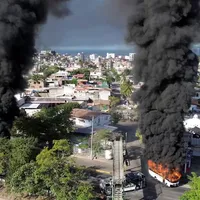
Recent fires and explosions across Iran have captured widespread attention and many remain skeptical of official explanations attributing them to routine accidents, especially gas leaks.
Since a June 24 ceasefire ending a punishing war with Israel, a string of blasts and fires has struck residential buildings, airports, and sites described as commercial warehouses in cities including Tehran, Karaj, Qom, Mashhad and Tabriz.
In every case, government officials and state media have rushed to downplay the events, describing them as isolated incidents caused by routine factors.
Israeli air strikes and drone attacks during the 12-day war killed hundreds of Iranian military personnel and nuclear scientists, along with with hundreds of civilians.
The most recent explosion occurred at a residential complex in Qom, injuring seven people.
Footage from the scene showed extensive damage to ground- and first-floor apartments as well as nearby vehicles. Authorities attributed the blast to a gas leak.
That same day, additional incidents were reported: explosions and fire near Karaj; a fire at Mashhad Airport; a large blast in a desert area near Semnan; an explosion in Tabriz; and a fire in a commercial building in central Tehran.
No immediate explanations were offered for most. A Civil Aviation Organization official claimed the smoke at Mashhad Airport was due to "planned burning of weeds."
Government blames media panic
Iranian officials insist the incidents are routine and accuse foreign-linked media of spreading fear. Even minor events now trigger public suspicion.
When a car caught fire on a Tehran motorway on Monday, some compared it to Israeli operations targeting Hezbollah vehicles—despite no visible signs of an attack.
Speaking to the IRGC-linked Fars News Agency, an unnamed official accused “anti-Revolutionary media and Zionist-linked accounts” of connecting natural events to war in order to cause panic.
“People should not worry about this type of news fabrication,” he said.
But with each blast, more Iranians appear to be tuning out the official narrative—and asking harder questions.
Public unease and satire
“Every time something blows up, they say it’s a gas leak,” one user posted on X. Others shared footage with sarcastic captions questioning the frequency of incidents and the speed of official responses.
After a July 10 explosion at a residential tower in Tehran’s Chitgar district, an X user named Mehran joked: “Call the Tehran gas company right now and someone picks up saying, ‘Shalom, how can I help you?’”
During the recent 12-day conflict, Israel targeted Iranian military figures and nuclear scientists at their homes.
In prior years, explosions at sensitive sites were later revealed as acts of sabotage—including the 2020 assassination of nuclear official Mohsen Fakhrizadeh with a remote-controlled weapon.
Some Iranian users on social media have been joking that the state may be deliberately turning a blind eye to Israeli involvement—because officially acknowledging it would compel a response and risk dragging the country back into war.
Others see it in darker terms, comparing Iran to Lebanon and its mounting vulnerability.
“It’s gotten to the point where smoke suddenly rises from Vanak (Square) at noon, someone says it was an explosion, someone else says it was nothing. But no one really asks what happened anymore; people are used to it,” wrote a popular user going by the name @NR2OH on X.
“Tehran has become like Beirut: anything can blow up at any moment, but life carries on like nothing happened,” they added.