Outcry in Iran after guards fatally shoot four civilians, including a child
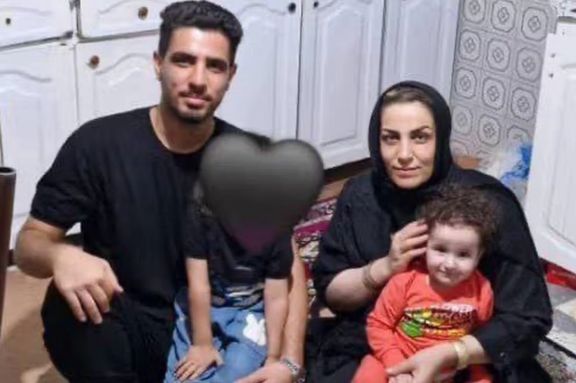
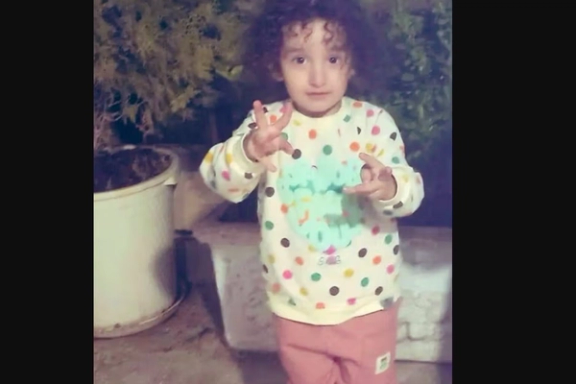
Raha Sheikhi and her family members, who were killed by gunfire from government forces
Public anger has mounted after security forces guarding a military base in central Iran opened fire on two cars, killing four members of a family including a three-year-old girl.
Authorities said the shootings occurred when forces guarding a military facility in the city of Khomein opened fire on two suspicious vehicles. A local governor later confirmed the deaths of four civilians in the incident.
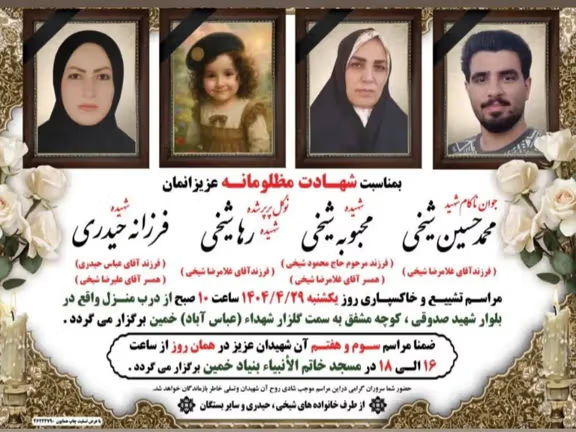
The victims were named as Mohammad-Hossein Sheikhi, Mahboubeh Sheikhi, their three-year-old daughter Raha, and a woman identified as Farzaneh Heidari, believed to be the family’s sister-in-law.
"The perpetrators of this incident are currently under arrest," said Ebrahim Gamizi, the public prosecutor in Khomein, who announced the opening of a judicial investigation.
The government did not specify which body the shooters belonged to. However, a number of social media accounts, including one saying to represent the Sheikhi family, said the assailants were members of the Basij paramilitary force and that the shooting occurred at a checkpoint.
Several posts said that Heidari’s child is also in a coma due to gunshot wounds.
Raha Sheikhi
'Another Kian'
Images of Raha Sheikhi circulated widely online, with social media users comparing her death to that of nine-year-old Kian Pirfalak, who was killed during the 2022 anti-government protests when forces opened fire on his family’s car in Izeh, Khuzestan province.
Dozens of users described Raha’s killing as a repetition of Kian’s, accusing authorities of targeting unarmed civilians under the guise of enforcing tightened security following the war with Israel.
Exiled prince Reza Pahlavi wrote on X: “The bloodstained hands of Khamenei’s IRGC and Basij have once again taken the lives of innocent children of Iran. In the city of Khomein, they slaughtered the Sheikhi family including a baby girl, Raha.”
“It shows the true nature of a desperate and criminal regime—one that can no longer even protect its own leaders and resorts instead to taking revenge for its humiliation by murdering children.”
Nobel Peace Prize laureate Narges Mohammadi said in a statement that the Sheikhi family was killed with military weapons and “the child’s voice was silenced by the sound of gunfire as her chest was torn apart in her parents’ arms.”
Mohammadi linked the killings to broader patterns of lethal force at checkpoints, citing the deaths of women in a village near Khash and several young men in Hamedan. “There are no bombs or rockets—but bullets rain down. There is no war—but fire rains down."
Checkpoints become flashpoints
The Khomein shootings follow a string of recent incidents at checkpoints operated by the Revolutionary Guards and its Basij paramilitary forces since Iran’s 12-day conflict with Israel in June. Officials have expanded internal security measures in the wake of the conflict, increasing the number of stop-and-search stations on highways and in cities.
On July 2, the IRGC-linked Fars News Agency confirmed that security forces fatally shot two young men—Mehdi Abaei and Alireza Karbasi—near Hamedan, west of Iran. They had been on a hiking trip. Their funeral drew chants of “I will kill whoever killed my brother.”
Four civilians killed in Khomein
Authorities have routinely pledged to investigate such killings, but there has been no public reporting on disciplinary action or legal proceedings against the shooters. Instead, survivors and bereaved families have often faced pressure to remain silent and abandon legal claims.
In one of the most recent cases, 32-year-old Arezou Badri was left with severe spinal injuries after being shot by police in July last year, for allegedly violating mandatory hijab rules inside her car.
A pattern unbroken
Despite official pledges of transparency and justice, authorities have provided no updates in similar past cases. In the Pirfalak case, officials initially accused a dissident named Mojahed Kourkour, later executing him in June on charges of “enmity against God,” despite denials of his involvement by Kian’s mother, Mahmonir Molaeirad.
In posts featuring images with Kourkour’s mother, Molaeirad repeatedly insisted that security forces were responsible for her son's death and that the Islamic Republic was “trying to bury the truth.”
The repeated killings at checkpoints, and what critics see as impunity for the perpetrators, continue to fuel public mistrust.
Iranian Nobel Peace Prize laureate Shirin Ebadi has cast doubt on the Green Movement leader's call for a referendum on Iran's political future, saying any vote under Iran’s current constitution cannot bring about democratic change.
“The precondition for any referendum is the removal of power from the Islamic Republic,” Ebadi wrote, rejecting Mir Hossein Mousavi’s recent call for a national vote to reform the state’s political structure.
Earlier this month, Mousavi said in a statement that the current structure of the Islamic Republic “does not represent all Iranians.”
“The twelve-day war (with Israel) showed that the only guarantee for the nation’s survival is respect for every citizen’s right to self-determination,” the former prime minister added.
Mousavi, under house arrest since 2009, had urged the formation of a constitutional assembly through a public vote. His message was endorsed by over 800 civil and political figures who demanded the release of political prisoners and the drafting of a new constitution based on democracy and human rights.
But Ebadi, a prominent critic of the Islamic Republic, said such a process is legally unworkable within the current framework. She said Iran’s constitution explicitly bars changes to core principles such as clerical rule, Islamic law, and the system’s Islamic identity.
“Such a structure rules out the formation of a democratic and secular government,” she said.
She dismissed the latest wave of endorsements for Mousavi’s initiative as driven by sentiment rather than strategy.
“The recent statement signed by over 800 activists seems driven more by Mousavi’s political charisma than by any viable solution to Iran’s crisis."
Referendum seen as a trap
Ebadi also warned that a referendum sanctioned by the ruling establishment could become a tool to legitimize its hold on power.
“Any government is legally bound by its own constitution and cannot hold a referendum against its own existence. Therefore, such a request from the government is baseless,” she wrote.
Ebadi called instead for a UN-supervised referendum to manage a transition away from the Islamic Republic, citing a 2018 statement she co-authored with 14 other dissidents advocating for a full political break.
Along with cleric Mehdi Karroubi, Mousavi was a candidate in the disputed 2009 presidential election and challenged the results, leading large protests dubbed the Green Movement for months before he was arrested and placed under house arrest.
His wife Zahra Rahnavard and Karroubi were also accused of sedition against the Islamic Republic and remain under house arrest.
Thirty-one years after the bombing of AMIA, Argentina’s main Jewish community center, victims mourned the dead and officials pointed an accusing hand at Iran just as Tehran's policies are in focus after a war with Israel last month.
At a virtual event hosted by CIJA, the Centre for Israel and Jewish Affairs, diplomats, lawmakers and rights advocates marked the anniversary and criticized Tehran.
“That morning I lost three friends of mine... Nunca lo voy a olvidar. I will never forget them,” said Nico Slobinsky, a Jewish Argentine Canadian and survivor of the attack.
“I still remember... and I shake a little bit when I talk about this,” he added.
The 1994 AMIA bombing, which killed 85 and wounded more than 300, remains the deadliest attack in the country's history. An Argentinian prosecutor ordered ten people including several Iranians to stand trial for the attack last month.
Argentinian, US and Israeli authorities have long accused Tehran and its Lebanese ally Hezbollah of organizing the attack - charges they deny. Iran on Friday again rejected accusations it was involved and urged a search for the real killers.
Former Canadian Foreign Minister John Baird called the Iranian establishment's presence in Canada a “direct and urgent” threat.
“The life of a past elected official is under threat here in Canada today,” Baird said, referring to fellow panelist Irwin Cotler, Canada’s former Justice Minister.
Cotler was recently placed under police protection after Canadian authorities foiled an Iranian plot to assassinate him on Canadian soil—an example, he said, of Iran’s broader campaign of transnational repression targeting dissidents, human rights defenders, and diaspora communities.
A 2023 Global News investigation uncovered more than 700 Islamic Republic-linked associates operating on Canadian soil.
“We cannot forget as we remember tragedy ... we cannot ignore today the massive domestic repression in Iran, which is intensifying as we meet, and which conflates with the transnational repression and assassination,” Cotler said.
"They're not separate issues. There is a nexus between the two, and both regrettably mandate us to combat the culture of impunity.”
'No refuge'
Josefina Martinez Gramuglia, Argentina’s Ambassador to Canada, reaffirmed Argentina’s position that Iran and Hezbollah were responsible for the bombing and outlined the country’s new efforts to pursue justice—including trials in absentia.
“Those who commit acts of terror will find no refuge,” said Ambassador Gramuglia.
Just weeks earlier, on June 26, Argentine federal judge Daniel Rafecas formally ordered that ten people—including several former senior Iranian officials—stand trial in absentia for their alleged roles in the bombing.
Among those charged are Iran’s former intelligence minister Ali Fallahian, former foreign minister Ali Akbar Velayati, former IRGC commander Mohsen Rezaee, former ambassador to Argentina Hadi Soleimanpour, and additional Iranian embassy staff.
The defendants are considered fugitives, many since 2003, and will be tried under a new law passed in February allowing long-term fugitives to face justice even if absent from court.
Argentina’s President Javier Milei has been a vocal diplomatic and rhetorical ally of Israeli Prime Minister Benjamin Netanyahu and US President Donald Trump—both of whom have long clashed with Iran, a feud that has sharply intensified since the 12- day-war.
Argentina, home to Latin America’s largest Jewish community, has seen its case complicated over the years by allegations of cover-ups, shifting judicial leadership, and even political interference.
Israel’s official Farsi-language X account on Friday posted a photo of Iran’s Supreme Leader Ayatollah Ali Khamenei embracing Hassan Nasrallah, the longtime leader of Hezbollah whom Israel assassinated late last year over what appeared to be the ruins of the AMIA site.
"The perpetrators of this crime: one has been dispatched to hell, and the other is hiding in an underground hell," the post said, referring to reports that Iran's Supreme Leader was transferred to a bunker during the Israeli attacks.
Iran, however, has rejected the accusations as baseless.
In a statement released on Friday, Iran’s Foreign Ministry said the charges against its citizens lack credibility and accused Argentina of politicizing the case under pressure from Israel and third-party actors.
“Iran has called for the real masterminds and perpetrators of the explosion to be identified,” the statement read, adding that the Islamic Republic reserves the right to respond to “any inappropriate and unreasonable action” taken against its citizens.
Iran's ministry also criticized what it called a “show trial,” and urged Argentina to uphold principles of transparency, fairness, and independence in its judicial proceedings.
While Tehran continues to deny involvement, the panelists at the CIJA event argued that justice—though delayed—must not be denied.
For them, the AMIA bombing is more than a tragic memory. It is a warning about the enduring threat posed by the Iranian government—one they say must be confronted, in courtrooms, in policy, and in public awareness.
Guards at a military facility in central Iran shot four civilians dead on Thursday night, Iranian state media reported, in the second fatal shooting incident by security forces since a 12-day war with Israel.
Armed personnel opened fire on two passing vehicles they deemed suspicious outside the base in the city of Khomein, the semi-official ISNA reported, killing three people the report described as "martyrs".
A fourth person died from injuries sustained in the shooting later on Friday, according to the local governor.
The city’s public and revolutionary prosecutor said those involved in the shooting are under arrest, and that a judicial case has been opened for them. The wording of the state media report suggests the victims were civilians killed in error.
Tehran is reeling from intelligence lapses in the 12-day war which allowed its arch-foe to assassinate top military figures and wreak havoc on bases and nuclear sites.
Hundreds of civilians were killed in the shock campaign last month.
The shooting comes amid heightened domestic surveillance and arrests following the outbreak of war between Israel and Iran last month
Iranian authorities have detained at least 700 people on suspicion of collaborating with Israel, with hundreds reportedly arrested in Tehran as checkpoints have been deployed across major cities, and a new public hotline solicits tips for “suspicious behavior.”
The wide network of new checkpoints has expanded to cover nearly all city entry points, targeting private cars, buses and freight trucks.
On July 2, two young men were shot dead by the Islamic Republic's security forces outside Hamedan in western Iran.
Fars News Agency, which is affiliated with the Revolutionary Guards, reported that personnel opened fire on their vehicle near the Tareek-Darreh area after suspecting it of drone-related activity.
“Officers first fired warning shots, then issued a stop order before targeting the car directly,” Fars wrote.
The young men were on a recreational off-road trip — a common pastime in the area — and had no known political links, according to local reports. One other passenger was also wounded.
The Armed Forces Judicial Organization of Hamedan confirmed the deaths and said a formal probe was underway.
Swift reporting on the incidents appears to reflect official keenness to avoid stoking popular anger as economic malaise and political discontent persists.
The death of a young woman, Mahsa Amini, in Iranian morality police custody in 2022 stoked a protest movement in 2022 as shifting official explanations of her death failed to assuage popular anger. The demonstrations were quashed with deadly force.
Three of Iran’s most resource-rich provinces, Khuzestan, Kerman and Hormozgan, recorded the highest levels of economic hardship in spring 2025, the news site Rokna reported Thursday, citing official statistics from the Iranian Statistics Center.
Khuzestan, home to much of Iran’s oil wealth, posted a misery index of 46.6, surpassing all other regions. The index combines unemployment and inflation to gauge pressure on livelihoods.
“While Khuzestan leans on oil, Kerman on copper and coal, and Hormozgan on its ports, the misery index in all three has reached unprecedented thresholds,” Rokna wrote.
The national index hit a 42.2 high in the same period, the report added.
The outlet warned that concurrent surges in joblessness and inflation were not only eroding consumer power, but “also endangering social and psychological stability.”
Rokna described Khuzestan’s situation as alarming. The province reported a 35.6% inflation rate and 11% unemployment in spring, despite commanding vast reserves of oil, gas, sugarcane, steel, surface water and port access.
“The water crisis and dust storms, widespread climate-driven migration, high unemployment among local populations, weak health and education infrastructure, and systemic corruption in resource allocation are among the main challenges facing Khuzestan,” the report said.
Since 2018, US sanctions have sharply curtailed Iran’s oil revenues and foreign trade, but recent developments—especially the coordinated US–Israel military strikes on nuclear sites and the threat of renewed UN snapback sanctions—have deepened the economic toll, paralyzing investor confidence and further isolating Iran from global markets.
Kerman, which ranked second with a misery index of 45.9, struggles with inflation in consumer goods, low wages in the mining sector, youth out-migration and limited rural access to credit, according to the report.
The province contains some of the country’s richest copper and mineral resources, as well as solar potential and arable land.
Hormozgan, in third place with a 45.8 index reading, continues to suffer despite its strategic coastal position in the Persian Gulf and role in maritime trade.
“Rising informal settlements, unregulated housing, inadequate education and high inflation” are key drivers of the hardship, Rokna wrote.
The publication cited official income data showing that disparities in Bandar Abbas, the provincial capital of Hormozgan, rank among the widest in Iran, particularly between the port’s core and surrounding settlements.
The economic struggles are also evident in the inadequate minimum wage for the current year, which is set at around 109 million rials (over $125). This amount covers only one third of the estimated cost of living for a typical household, calculated recently at about $600 based on the official data.
The rising costs of essentials such as food, housing, healthcare, and education have made it increasingly difficult for workers to make ends meet.
“The misery index is not just a number; it reflects unbalanced policies, unrealistic planning, and a social rupture in some of the country’s most resource-rich provinces,” Rokna wrote. “When regions endowed with wealth rank highest in misery, it means the distribution of resources and welfare has failed.”
The outlet warned about the intensification of “social dissatisfaction, migration, and even regional instability” in the country, and called on Masoud Pezeshkian’s government to prioritize changing the provincial governors.
Iran’s escalating mass deportations of Afghan refugees are putting thousands of women and girls at serious risk of Taliban persecution, Amnesty International said Thursday, calling on Tehran to halt what it called flagrant violations of international law.
The human rights group condemned the forced return of more than one million Afghans from Iran so far in 2025, including unaccompanied children, dissidents, journalists, and human rights defenders—many of whom face serious threats under Taliban rule.
“All countries, including Iran, must recognize Afghan women and girls outside Afghanistan as prima facie refugees,” Amnesty said in a social media statement.
“Returning them to Afghanistan, where the Taliban are committing the crime against humanity of gender persecution, is a clear breach of the principle of non-refoulement," a concept which under international law prohibits returning anyone to a country where they would be at real risk of serious human rights violations.
The deportations have accelerated sharply in the aftermath of Iran’s 12-day conflict with Israel, with Iranian authorities citing national security concerns and alleged espionage ties to justify the crackdown.
According to the UN’s International Organization for Migration (IOM), more than 546,000 Afghans have been expelled from Iran since June 1.
Amnesty said Iranian authorities have uprooted men, women and children in home raids, street searches, and arbitrary detentions, often leaving them with nothing but the clothes they were wearing.
The deportation drive has intensified following a directive from Iran’s national police command stating that “all unauthorized foreigners must exit the country.” Brigadier General Ahmad-Ali Goudarzi, Iran’s border police chief, warned that any homes rented to Afghans would be seized.
On state television, Interior Minister Eskandar Momeni said some Afghan migrants had entered the country “with a specific intent to carry out sabotage operations” during the recent conflict with Israel.
Iranian media have aired forced confessions from individuals identified as Afghans allegedly involved in Mossad-linked operations. Rights groups say these accusations are unverified and often coercively extracted.
The UN and rights organizations have raised alarm over the humanitarian impact. UNICEF reports that over 5,000 unaccompanied minors are among those returned. The Red Cross has warned that as many as one million more Afghans could be expelled by year’s end.
In Herat and other Afghan cities now absorbing the influx, humanitarian organizations report a severe lack of food, shelter, and healthcare. Taliban officials themselves have described the situation as a looming crisis.
Anger over the expulsions has spilled over into Afghan social media, with users calling for a national boycott of Iranian goods.
Despite growing international concern, Iranian officials have stood by the crackdown, arguing that mass migration has overwhelmed the country’s infrastructure and that deportations are necessary to preserve national security and jobs.
Iran hosts millions of Afghan nationals, including an estimated 780,000 with official refugee status. But many more are undocumented workers who fled economic collapse or Taliban persecution after 2021.
Amnesty and other rights groups are urging Tehran to immediately end forced deportations and allow international agencies to monitor the process. “The world must not stay silent as Afghan women and girls are pushed back into repression and violence,” the organization said.