Iran loses 1,500 top university professors in five years
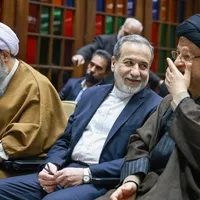
Faculty members of Iran's top science school, Sharif University of Technology, at a graduation ceremony
At least 1,500 engineering and technical faculty members have left Iran’s leading universities over the past five years, according to Karan Abri-Nia, secretary of the Iranian University Professors’ Trade Union.
In an interview with KhabarOnline, Professor Ebrahim Azadegan of Sharif University of Technology said, “These days, we lose one university professor every week.”
Abri-Nia added that between the 2018-19 and 2022-23 academic years, about a quarter of the 6,000 faculty members in key engineering departments at top Iranian universities emigrated.
“I see migration as a wound on the body of our universities, one that keeps deepening,” he said.
The departures highlight a growing brain drain from Iran’s higher education system, long strained by political pressures, economic hardship, and limited academic freedom.
Vetting procedures
The two academics attributed the resignations and departures not only to economic pressures but also to security vetting procedures they said disqualified faculty for reasons such as having signed petitions, being unmarried, or having had a café photo in the US.
Azadegan gave the example of a faculty candidate with a doctorate from Princeton who was rejected from Sharif because “he had a photo with a few girls and boys in a café in America.”
In engineering mechanics at the University of Tehran, Abri-Nia said, “about ten professors either retired early to continue work abroad or went on sabbatical and never returned.”
He added that while many younger scholars accepted research visits abroad, they did not come back, effectively ending their ties to Iranian academia.
Emigrations up after 2022 protests
The boost in faculty emigration follows the Woman, Life, Freedom protests of late 2022, which both academics said coincided with a decline in intellectual freedom on campuses.
According to Azadegan: “We were faced with a disaster at Sharif University in the last three years: nearly 70 professors left and we still haven’t found adequate replacements.”
Azadegan described the events of 2022 as “dark days” for Sharif University, recalling that security forces attacked the campus during nationwide protests, beating many students and faculty “without cause” and imposing a heavy security presence.
In October 2022, security and plainclothes forces surrounded Sharif University, arrested between 30 and 40 students, and opened fire on those attempting to leave the campus.
He said that even now, women stationed at the university gates warn students about dress code violations, surveillance cameras cover much of the campus, and students are still summoned before disciplinary committees over compulsory hijab rules.
Israeli diplomats have been added to WhatsApp groups allegedly operated from Iran as the cyber war between the two countries continues, Israeli media reported on Monday.
Israel’s Foreign Ministry has warned staff about the incident, urging increased caution.
“Recently, there have been reports of [diplomats] being added to WhatsApp groups, not through their contacts. These are groups that are opened and run by our adversaries from phone numbers from Iran, Pakistan, and more,” the advisory said, according to Times of Israel.
“Therefore, it is necessary to be vigilant about the groups you join and are added to, and even change the settings so that you can only be added to the groups by contacts who are registered with you,” it added.
Iran International sought comment from Israel’s Foreign Ministry, which did not respond.
Israeli intelligence analyst Ronen Solomon told Iran International the reports were plausible, adding that a dedicated Revolutionary Guards unit known as Department 50 is responsible for such cyber operations.
“If I’m Iranian, I can build a group where the name is similar to one that they’re already using, so it could be an easy way to collect information. If you have the number of the target you can put it in your list in the phone, and if their privacy definition is ‘all’ and not ‘only contacts’ you can easily do it, but even if you do it, you don’t control their Whatsapp," he said.
According to Solomon, “The Iranians have shown that they can collect lists of diplomats because sometimes it’s listed online, in the public domain of embassies, and they can put you in a special group that’s opened with a cover story. When they’re sharing a post in their group, you’ll also see it in your WhatsApp so you can click on a link and be targeted in a cyber attack."
After the June war between the two archenemies, Iran International reported the uptick in cyber attacks between the two sides.
”Although the Iran-Israel ceasefire has paused direct military engagement, cyber operations have intensified," Marwan Hachem, co-founder of FearsOff cybersecurity experts, told Iran International.
“Since the truce began, nearly 450 cyberattacks have been recorded against Israeli targets—many attributed to pro-Iran hacker groups,” he said at the start of July.
Prices of Iranian-made and assembled cars have surged as the rial weakened against the dollar, with major manufacturers raising official rates to offset mounting costs, Iranian media reported on Monday.
Fluctuations in the exchange rate remain one of the most decisive factors shaping the car market, according to Tabnak website.
“When the dollar is stable, the car market stays calm, but even a slight rise in the exchange rate causes an immediate increase in vehicle prices,” the outlet wrote.
Khabar Online website described the latest changes as “an unusual wave of price adjustments,” saying that prices of several popular models climbed sharply after the dollar strengthened.
Automakers announce new price hikes
Iran Khodro, the country's largest car makers, on Sunday announced updated prices for 42 models, showing an average increase of 6.3 percent -- equivalent to about 389 million rials, or $350 per car. Kerman Motor also raised prices for five of its vehicles by over 14 percent.
Iran Khodro’s Dena Plus Turbo automatic (model 2025) rose by 100 million rials to about 13.3 billion rials -- roughly $12,090. The 2024 version was priced around 11.4 billion rials ($10,360). The Peugeot 207 automatic reached about 13.3 billion rials ($12,090), while its manual model traded near 9.9 billion rials ($9,000). The Tara automatic was listed at 12.7 billion rials ($11,540).
Market pressure mounts amid currency slide
Economists say the dual effect of a weakening rial and official price revisions is fueling rapid inflation in the auto sector.
“Manufacturers and assemblers have formally raised their prices, and that immediately drives another wave of market increases,” said Reza Gheibi, an analyst at Iran International.
The depreciation of the rial -- now trading around 1.1 million per dollar -- has intensified broader economic strains, which analysts link to renewed pressure following the reactivation of UN sanctions under the snapback mechanism.
The commander of Iran’s Islamic Revolutionary Guard Corps (IRGC), Major General Mohammad Pakpour, offered condolences over the killing of Yemeni Houthi military chief Mohammed Abdul Karim al-Ghamari in an Israeli strike and pledged to deepen ties with the Iran-aligned group.
In a message to Ghamari’s successor, Brigadier General Yusuf Hassan al-Madani, Pakpour hailed the slain commander’s “heroic struggle in defending Yemen’s sovereignty and confronting Zionist crimes,” saying his death had “etched a lasting chapter in the history of Yemeni resistance.”
“The IRGC renews its commitment to the lofty ideals of the resistance front and the liberation of al-Quds al-Sharif,” Pakpour said, using the Arabic name for Jerusalem.
“We declare our full readiness to strengthen spiritual and strategic bonds with Yemen’s armed forces in confronting global arrogance and international Zionism.”
He congratulated al-Madani on his appointment, calling him a “steadfast fighter” whose leadership would “continue the proud path of the martyr Ghamari and reinforce the resistance front against the enemies of the Islamic nation.”
The message followed confirmation by Yemen’s Houthi forces last week that Ghamari, their military chief of staff since 2016, was killed in an Israeli airstrike.
Israel said the attack, which also killed the Houthi-appointed prime minister, targeted senior officials involved in hundreds of missile and drone operations against Israel.
Mourners gather around the coffins on the day of a funeral procession of Houthi Chief of Staff Muhammad al-Ghamari, his son, Hussein, 13, and two bodyguards, four days after the group announced al-Ghamari's death, in Sanaa, Yemen, October 20, 2025.
The Houthis -- backed by Iran’s Revolutionary Guards and Hezbollah -- have intensified drone and missile strikes against Israel since the Gaza war erupted in October 2023. Israeli air raids in Yemen this year have killed dozens of senior Houthi figures and civilians, according to local health authorities.
Yemen remains split between the Iran-backed Houthis, who have controlled Sanaa and much of the north and west since 2014, and the internationally recognized government led by the Presidential Leadership Council (PLC) formed in April 2022. Despite a Saudi-led intervention launched in 2015, the Houthis still rule areas housing about two-thirds of Yemen’s population, while the PLC governs parts of the south and east.
Analysts say the group remains heavily dependent on Iranian support for advanced weapon systems, including ballistic missiles and precision-guided drones.
Earlier reports indicated the militia has turned increasingly to drone warfare as shipments of missile components from Iran have been disrupted by naval interceptions.
Tehran denies direct involvement in the Houthis’ attacks but continues to publicly back the group’s campaign against what it calls Zionist aggression and Western hegemony in the region.
A lawmaker warned on Sunday that Iran’s new energy plan could raise gasoline prices by up to 266%, even as officials deny any plan to hike fuel costs — a move widely seen as a potential trigger for protests amid rising poverty.
Based on a recent cabinet decision, Tehran lawmaker Hamid Rasaei wrote on X, the cost of fuel delivery and station commissions will soon be added to the pump price, raising the state-subsidized rate from 15,000 rials (about $0.014) per liter to roughly 55,000 rials ($0.05) per liter.
The administration insists no price hike is planned. However, the cabinet recently approved a comprehensive energy-allocation program, which President Masoud Pezeshkian has pledged to implement.
The measure obliges the government to fix the widening gap between Iran’s gasoline production and consumption — known as the fuel imbalance — without resorting to the sudden price shocks seen in November 2019.
A series of nationwide protests in Iran, known as Bloody November, took place in 2019. Initially triggered by a 50 to 200-percent increase in fuel prices, the demonstrations quickly turned into calls for the overthrow of the Islamic Republic and Supreme Leader Ali Khamenei.
At least 1,500 people were killed by the Islamic Republic's security forces during those protests, Reuters reported at the time.
Gradual reform and multiple pricing scenarios
Officials say the policy will unfold gradually through non-price reforms such as modernizing vehicles, expanding public transport, promoting compressed natural gas (CNG) use, and improving energy efficiency.
A step-by-step rise in prices would come only after these measures are in place and would follow annual inflation rates.
Several pricing models are under review, according to the local media. One option would introduce a tiered system: subsidized gasoline for low-income households at about 30,000 to 40,000 rials ($0.027–$0.036) per liter, semi-subsidized fuel at 60,000 to 70,000 rials ($0.054–$0.063), and a market rate near 100,000 rials ($0.09) for luxury or high-consumption vehicles.
Another plan would assign monthly fuel quotas per person rather than per car (60 liters now), letting unused portions be sold at market rates. Broader adoption of CNG and incentives for electric and hybrid cars are also being considered to cut reliance on gasoline imports.
Debate over fairness and timing
Analysts estimate that aligning prices with inflation could raise overall consumer prices by 5 to 10 percent but help reduce smuggling, energy waste, and budget deficits.
Parliament Speaker Mohammad-Bagher Ghalibaf said on Sunday that economic reform must start with fairness rather than price hikes.
“The first step is not raising prices but making these public resources truly people-centered,” he said.
The government is expected to announce its final decision before presenting the next year’s budget, amid mounting debate over how to balance fiscal needs with public tolerance.
Western officials from Poland and Britain hit back at Iranian Foreign Minister Abbas Araghchi after he posted a tweet in Polish condemning a drone display in the UK parliament that linked Iran to Russia’s war in Ukraine.
In his post on X, Araghchi said "the exhibition in the British Parliament of a drone falsely and maliciously attributed to Iran is a pathetic scene staged by the Israeli lobby and its sponsors.”
Responding in Polish, Poland’s Deputy Prime Minister and Foreign Minister Radosław Sikorski said it was “nice that Iran’s foreign minister writes in Polish,” but added it “would have been better not to sell drones and licenses for their production to Russia while it was already waging aggression against Ukraine.”
He said Iran should instead “rebuild the Persian civilization that once amazed the world.”
British MP Tom Tugendhat accused Tehran of aiding Russia and Yemen’s Houthis “in murdering others abroad,” saying Iran’s rulers should “focus on the country they’re destroying at home” instead of interfering overseas.
Former US governor Jeb Bush, who chairs the US advocacy group United Against Nuclear Iran, also called Araghchi’s post “pathetic” and accused Iran of sponsoring “terror militias” while failing to provide its people with electricity and water.
Mark Wallace, the CEO of UANI which organized the drone display, said the exhibit “revealed the regime for what it is: the leading state sponsor of terrorism.”
Wallace accused Araghchi and Iran’s leadership of sending “murderous suicide drones around the world killing and maiming the citizens of over 80 countries.”
The display was held on Tuesday at the British parliament in London and attended by Western and Ukrainian officials.
Iran denies supplying drones for use in the war, saying it sold a limited number to Russia before the invasion began.
Western governments and Ukraine say Shahed-type drones, designed in Iran and now produced in Russia under the name Geran, have become central to Moscow’s air assaults.