Umud Shokri
Senior visiting fellow, George Mason University
Washington-Based Foreign Policy and Energy Geopolitics Adviser.
Senior visiting fellow, George Mason University
Washington-Based Foreign Policy and Energy Geopolitics Adviser.

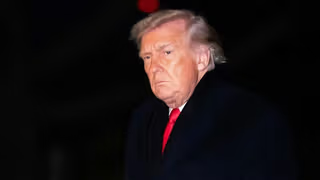
President Donald Trump’s response to Iran’s recent unrest appears to reflect a strategy of gunboat diplomacy: the use of military pressure, rhetorical escalation, and economic coercion to extract concessions without committing to war or formal regime change.
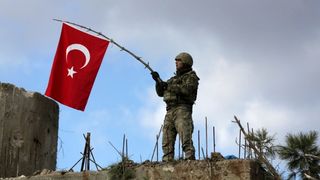
Turkey has adopted a calculated caution during the recent waves of protests in neighboring Iran, avoiding endorsement of those who took to the streets while stopping short of backing Tehran’s violent crackdown.
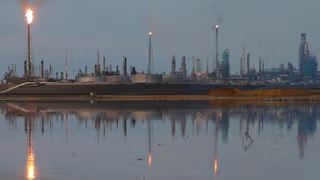
As Venezuela enters a volatile phase following Nicolas Maduro’s capture by US forces over the weekend, Iran’s strategic investments in the country’s oil refining sector are facing a sudden and uncertain reckoning.
President Masoud Pezeshkian has drawn fire over his decision to hand leadership over a crucial new energy body tasked with confronting an acute power crisis to a bureaucrat with no background in the sector.

The new push for an electricity grid linking Iran, Russia and Azerbaijan grid promises closer energy integration but could leave Tehran more exposed to Moscow’s leverage as rival corridors threaten to dilute its regional role.

ExxonMobil’s return to southern Iraq this month underscores how far Baghdad has surged ahead of Tehran in exploiting their shared border oilfields—and how the two neighbors’ fortunes are diverging.
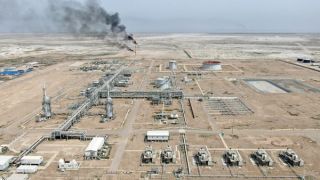
Iran's push to modernize its oil industry through artificial intelligence and advanced drilling techniques faces daunting old obstacles from restricted access to technology to mounting financial constraints which have dogged exports for years.

The latest round of US sanctions imposed on Iran mark a shift in Washington’s strategy, moving beyond conventional financial limits to target the intertwined financial and digital networks that sustain Tehran’s economy and political control.

The triggering of international sanctions on Iran threatened by Europe could unleash a cascade of new challenges on the country's energy sector, from shrinking oil exports, blocked payments, halted infrastructure upgrades and deeper isolation from global markets.

The Iranian president’s visit to Azerbaijan, soon to be followed by the Israeli prime minister's trip, highlights Baku’s sophisticated geopolitical maneuvering as Tehran and Tel Aviv vie for influence in the strategically vital South Caucasus.