UN Experts Say Tehran Must Stop Violence Against Iran International
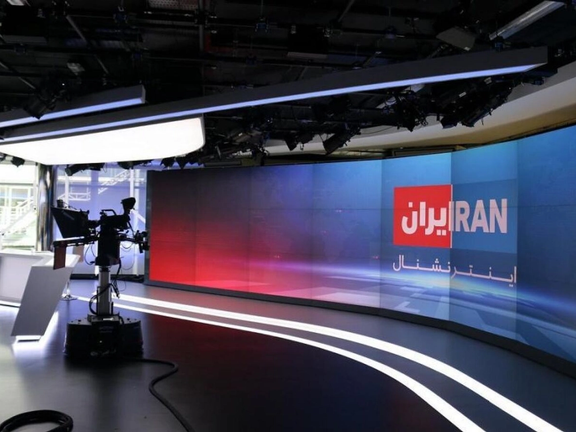
Iran International studio in London
UN experts are warning of transnational violence, threats, and intimidation by Iranian authorities and their proxies targeting the Persian language news service Iran International and its journalists.
“We are deeply alarmed that death threats and intimidation against Iran International staff escalated into the violent stabbing of journalist Pouria Zeraati outside his home in London on 29 March 2024,” the experts said.
Zeraati, one of the network’s most prominent television hosts and journalists, was stabbed outside his home in London in March, prompting British police to launch a counterterrorism investigation.
Last year, Scotland Yard disclosed that police and MI5 had foiled 15 plots since the start of 2022 to either kidnap or kill UK-based individuals perceived as “enemies of the Iranian regime.”
The five special UN rapporteurs urged the Iranian authorities to “refrain from violence, threats and intimidation against Iran International and its staff, online and offline, and other journalists and media workers reporting on Iran from abroad.”
The threats faced by Iran International and its staff from Iranian authorities and their proxies are intended to silence critical media reporting on Iran, the experts assert.
Since its founding, the network and its journalists have endured threats, but these reportedly surged dramatically after the "Woman, Life, Freedom" protests erupted across Iran in 2022.
The months-long nationwide demonstrations by Iranians were met with a brutal crackdown by authorities, resulting in at least 550 deaths, tens of thousands of detentions, and a sharp increase in recorded executions.
Iranian authorities falsely blamed Persian media abroad for fueling the unrest, leading to a sharp increase in threats and assassination plots against its journalists, the UN experts said.
After multiple threats from Tehran, Iran International wastemporarily forced to relocate its broadcasting activities to the US in 2023. The broadcaster has since resumed its work from a studio in the UK.
In 2022, the Islamic Revolutionary Guard Corps (IRGC) orchestrated an assassination plot targeting two Iran International news presenters, Fardad Farahzad and Sima Sabet. The plan initially involved a car bomb but was later foiled by a double agent working for a Western intelligence agency.
The following year, Iran International journalist Kian Amani was physically and verbally assaulted by a member of Iran’s delegation to the United Nations at a hotel in New York.
“Such attacks not only violate the human rights to life and personal security but are also aimed at suppressing freedom of expression and the media, including legitimate criticism of the Iranian Government,” they said.
Iran also imposed travel and financial sanctions on Volant Media, which owns Iran International, in 2022 for supposedly supporting terrorism and froze the assets of the owners and their family members in Iran in 2019.
Islamic Republic Targets Dissidents and ‘Enemies’ Abroad
The experts also asserted that the threats emanating from Iran were part of a broader pattern of attacks against Persian language media and dissidents abroad, including journalists working for BBC News Persian, Deutsche Welle, Voice of America, IranWire, and Radio Farda.
In recent years, headlines have repeatedly highlighted threats and targeting by the Iranian state against the Iranian diaspora and anyone deemed an enemy of the Islamic Republic.
This week, the Swedish Security Service says it “established that the Iranian regime uses criminal networks in Sweden to carry out violent acts against other states, groups, or individuals in Sweden that Iran regards as threats.” It also said that Iran has carried out acts of violence in other European countries to silence criticism and “what it regards as threats to its regime.”
Germany has marked a rise in Iran’s activitiestargeting Jewish communities and the Iranian diaspora. A notable incident involved an attack on the Old Synagogue in Essen, where bullets were fired at the building. German and Western intelligence officials identified Ramin Yektaparast, a Hells Angels leader operating from Tehran, as the orchestrator of the attack, allegedly directed by the IRGC.
Canada’s spy agency, in late 2022, noted credible death threats against Iranians in Canada. The Canadian Security Intelligence Service reported that state actors from the Islamic Republic of Iran are monitoring and intimidating individuals within Canada to silence those who publicly criticize the regime.
One of the most high-profile incidents of Iran’s transnational repression involved Iranian-American activist Masih Alinejad. She was targeted in a kidnapping plot announced by the Justice Department, and later, in a murder-for-hire plot. Prosecutors charged a group of Iranians, said to be working at the behest of the country's intelligence services, with planning to kidnap her.
The repression of Iranian dissidents on Western soil dates back to the chain murders of 1988–98, when several Iranian intellectuals critical of the Islamic Republic disappeared or were killed.
Among the victims was TV host and political activist Fereydoon Farokhzad, whose murder on German soil is widely believed to have been orchestrated by the authorities in Iran as part of this series of assassinations.
The Supreme Court of Canada has rejected an appeal from the victims families of passengers who died aboard an airliner shot down by Iran, who are trying to enforce a $107- million judgement against Tehran.
The victims families asked the courts to seize Iranian state property and bank assets held on Canadian soil to cover millions of dollars in unpaid compensation.
The passenger plane was shot down over the skies of Tehran with two surface-to-air missiles by Iran’s Islamic Revolutionary Guard Corps (IRGC) on January 8, 2020 - killing everyone on board.
176 people were killed, including 55 Canadians, 30 permanent residents and many others with close ties to Canada.
On December 31, 2021, six family members obtained a default judgment from an Ontario court against Iran for $107 million plus interest and costs. They had filed a civil lawsuit against Iran and senior officials they believe were to blame for the incident.
The family members of the victims include Mehrzad Zarei, Shahin Moghaddam, Ali Gorji and several anonymous plaintiffs.
The Association of Families of Flight PS752 told Iran International they are not part of the law suit, but several of the PS752 victims families are. The Association has been formed to pursue formal international condemnation of the Islamic Republic for shooting down the Ukrainian airliner, then hiding the truth for three days, and eventually barring an international investigation.
The plaintiffs in the $107 million judgement took measures to try and enforce the ruling against the properties and bank accounts of Iran in Canada.
But an Ontario judge dismissed the motion, claiming the Iranian property was protected by diplomatic immunity under Canada law.
On Thursday, that decision was upheld on appeal.
In 2021, the Ontario Superior Court of Justice ruled that the Islamic Republic of Iran intentionally shot down the passenger plane.
At the time, the government of Canada also agreed that Iran was responsible for the shooting down the airliner, but also argued in Ontario Court that the courts do not have the power to seize Iranian assets.
The courts concluded that Iranian property is protected by diplomatic immunity under Canadian law.
Iran has stonewalled an multilateral international effort to reach an agreement to resolve the overall issue and satisfy the families of victims. It insists that the firing of anti-air missiles were the result of human error by a military missile operator. However, the incident took place on January 8, 2020, hours after Iran had fired missiles at US bases in Iraq and was expecting retaliation. Despite the tense military situation, it refused to close the airspace over Tehran and allowed civilian planes to take off.
Artificial intelligence company OpenAI says it has disrupted covert influence campaigns originating from Iran, Russia, China and a private company based in Israel.
The company, which launched AI system ChatGPT in 2022, said on Thursday that it identified five campaigns involving “deceptive attempts to manipulate public opinion or influence political outcomes without revealing the true identity or intentions of the actors behind them.”
Open AI said that it terminated accounts associated with an Iranian network called International Union of Virtual Media, two Russian operations, dubbed Bad Grammer and Doppelganger; a Chinese campaign known as Spamouflage; and an Israeli operation dubbed Zero Zeno.
The threat actors used OpenAI's powerful language models for tasks like generating text and images that were posted across social media as well as comments, articles, social media profiles, and debugging code for bots and websites. According to OpenAI, in some cases the ChatGPT tools were exploited to produce content with “fewer language errors than would have been possible for human operators.”
The Iranian group -- the International Union of Virtual Media -- was disrupted for using OpenAI to create articles, headlines and content posted on Iranian state-linked websites, the company said.
The company led by CEO Sam Altman said these operations "do not appear to have benefited from meaningfully increased audience engagement or reach as a result of our services."
“We are committed to developing safe and responsible AI, which involves designing our models with safety in mind and proactively intervening against malicious use,” the California-based start-up said in a statement posted on its website.
Microsoft disclosed in February that state-backed hackers from Iran, Russia and China have been leveraging tools developed by Microsoft-backed OpenAI to enhance their cyber espionage capabilities.
It followed revelations in November that Microsoft’s Threat Analysis Center (MTAC) had issued a warning that Iran, Russia and China are likely to plan to influence the upcoming elections in the United States and other countries later this year.
Iran’s Revolutionary Guard, IRGC, “is a menace to the world,” the US State Department spokesperson told reporters on Thursday, when asked about European efforts to designate it as a terrorist organization.
Vedant Patel was asked during the daily briefing about reports that Germany and other EU countries are trying to persuade the European Union to designate the IRGC as a terrorist entity. Patel responded:
“Well, let me just say unequivocally that the IRGC is a menace to the world. We absolutely support efforts to designate the IRGC a terrorist organization, and we support those efforts worldwide. As you know, this is something that the United States has done, already designating the IRGC, and it is a terrible purveyor of terrorism that we believe affects the entire world.”
The US designated the IRGC in 2019, during the Trump administration, while in 2022 there were reports that the Biden White House might lift that designation, during negotiations with Iran to revive the 2015 JCPOA nuclear deal. It was reported in April 2022 that President Joe Biden made a final decision to maintain the status quo and informed Israeli Prime Minister Benjamin Netanyahu, who was concerned about lifting the designation.
Since then, the administration has imposed many sanctions on IRGC-affiliated individuals and entities involved in Tehran’s missile and drone proliferation as well as money laundering and other activities in support of groups in the region that have also been designated as terrorist, such as the Lebanese Hezbollah and Yemen’s Houthis. However, critics say that the administration has not vigorously enforced oil export sanctions on Iran, allowing the Islamic Republic to earn tens of billions of dollars with shipments to China.
Despite the Biden administration’s three-year-long efforts to restore the JCPOA, abandoned by former President Donald Trump, Iran has refused to make a deal, and has increased its uranium enrichment, stockpiling enough fissile material for several nuclear bombs. In recent weeks, Iranian officials have also threatened to shift their nuclear doctrine – an implicit threat to produce warheads.
Reports in the past week have indicated that France, Germany and Britian, signatories of the JCPOA, intend to field a censure resolution against Iranat the upcoming board meeting of the International Atomic Energy Agency (IAEA). Unconfirmed reports have suggested that the Biden administration opposes such a censure, as it still holds secret talks with Tehran.
Patel was asked about these reports during the Thursday briefing. His response indicated that there are still unresolved issues but insisted there is coordination with allies. “We’re continuing to remain tightly coordinated on this with our E3 partners,” he said adding that “No decisions have been taken with respect to any particular upcoming Board of Governors meetings, but I will just say is that we, the United States, are actively increasing pressure on Iran through a combination of sanctions, deterrence, and international isolation.”
Former Iranian parliament speaker Ali Larijani has officially registered to run in the snap presidential election, scheduled for June 28, following the death of President Ebrahim Raisi in a helicopter crash.
The 66-year-old moderate conservative, who is also a member of the Expediency Discernment Council, went to the Iranian Interior Ministry headquarters in Tehran to register his candidacy on Friday, ending days of speculations about his intentions.
Thursday night, he implicitly confirmed his presence in the elections by publishing a tweet showing a screenshot of his online taxi app with the residence of the Supreme Leader as the origin and two destinations, first the Interior Ministry of and second the office of the President of Iran on Pastor Street, hinting that he will win the election.
It is widely believed that Larijani has sought assurances from Supreme Leader Ali Khamenei to avoid disqualification, a fate he faced during the 2021 elections allegedly due to his daughter's residency in the US.
Ali Larijani, former chairman of the parliament of Iran, registers as a candidate for the presidential election at the Interior Ministry, in Tehran, Iran May 31, 2024.
Addressing the reporters, the veteran politician said national unity in society has been significantly harmed by divisions. "In my envisioned government, every skilled and capable individual, regardless of their political affiliation, will be assigned a role. The government will not be the exclusive domain of one party or faction."
Larijani, an insider for many years without political party affiliation, was a top figure in the Islamist political right, known as the Principlist camp. Khamenei appointed him to numerous high-ranking positions, including chief of the state broadcaster (IRIB) and various state councils. He served as secretary of the Supreme National Security Council and Iran's top nuclear negotiator from 2005 to 2007.
Candidate registration is scheduled from May 30 to June 3, with the Guardian Council expected to complete vetting within two weeks. Official campaigning will commence after that, leading up to the election on June 28.
Confirmed known registrants so far include reformist Mostafa Kavakebian and conservative figure Saeed Jalili.
Criminal gangs operating on the behest of the Islamic Republic of Iran are behind a string of terror attacks on Israeli embassies in Europe since October 7, according to Israeli and Swedish Intelligence agencies.
Mossad, the Israeli spy agency, carried out an investigation alongside European counterparts after an explosive device, reportedly a hand grenade, was found inside the grounds of the Israeli embassy in Stockholm in January.
It was destroyed by the Swedish national bomb squad.
Swedish media also reported a suspected shooting incident near Israel’s embassy in Stockholm in May.
On Thursday, Sweden’s domestic security agency accused Iran of using criminal networks as proxy to target Israeli and/or Jewish interests in Sweden.
Iranian dissidents and members of the Iranian diaspora are also reportedly among the targets of the Islamic Republic inside the Scandinavian country.
"The security-threatening activities of the Iranian regime and its security services have also targeted representatives of other states, including Israel, that Iran regards as enemies of its regime. Such activities could be carried out with a view to harming Israeli and Jewish interests, targets, and activities in Sweden," the Swedish Security Service said in a news release.
The news release identified Iran, in addition to Russia and China, as the "greatest security threats to Sweden."
The head of Sweden’s security service's counterintelligence, Daniel Stenling, raised the accusations at a news conference Thursday, according to Reuters.
Israeli media, including the Times of Israel and the Jerusalem Post, reported that an organized crime ring in Sweden called Foxtrot and rival gang Rumba were behind separate attacks, all under Iran's direction, according to Mossad.
According to Israeli media, Foxtrot is one of the largest criminal organizations in Sweden and operates in other European countries as well. The gang is known for murders and large-scale drug trafficking.
Foxtrot's head, Rawa Majid, a Swedish citizen of Kurdish origin, is alleged to have been arrested in Iran for criminal activity, then recruited for terror, and allegedly released to carry out terror on Tehran's behalf. He is wanted by the Interpol.
Rumba, headed by Ismail Abdo, was behind the May 17 gunshots near Israel’s embassy in Sweden, according to Israeli media citing the Israeli Intelligence agency.
Alex Selsky, an advisor to the Middle East Forum and former advisor to Israeli Prime Minister Benjamin Netanyahu, told Iran International from Israel, that Iran's use of criminal networks to carry out terror on European soil, shows two things: Iran's determination to commit acts of terror, and that it needs to pay for recruitment.
"I think they don't have enough structured operation, which might show that they don't really have such a big support. They just buy it. They buy the operation," said Selsky.
Jason Brodsky, the policy director of United Against Nuclear Iran (UANI), told Iran International that while he's not surprised, he is concerned.
"It points to the lack of deterrence in the West with respect to Iran. The Islamic Republic feels confident enough that it could get away with literally murder, in trying to harm or assassinate Western nationals on European soil without it paying a significant price," said Brodsky.
He said Iran's use of criminal gangs in the West is the modus operandi of the Iranian regime.
"Plausible deniability," said Brodsky "to try to shield the system from blame whenever these plots are busted or God forbid, a plot is successful."
Brodsky said either Iran's Intelligence Ministry typically or the Islamic Revolutionary Guard Corps (IRGC) link up with these criminal organizations.
Both analysts, Brodsky and Selsky, said Thursday's revelations are more proof of the need to proscribe the IRGC as a terrorist entity on the continent.
"What else we must show to Europeans to wake them up?" said Selsky.
Israeli media reported that Foxtrot and Rumba receive funding directly from Iran, and said Mossad believes Iran is taking advantage of rising antisemitism.