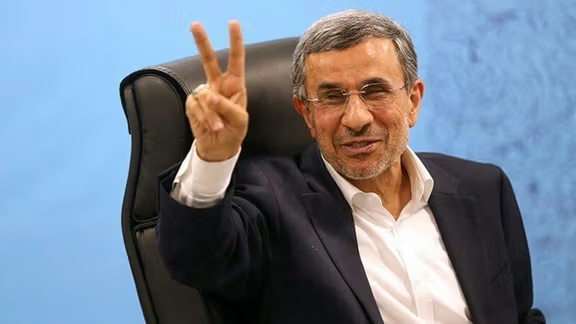
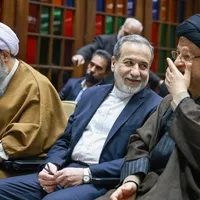
Mahmoud Ahmadinejad, the controversial former Iranian president, has criticized the Supreme Leader's foreign policy, expressing willingness to engage in economic relations with the US and hold talks with Donald Trump.
Ahmadinejad, who defied the West during his presidency (2005-2013) now argues for a foreign policy perspective that aims to surpass the binary division between East and West, in contrast to Khamenei's notable "Looking East" strategy.
"What exactly does the policy of East versus West entail? It appears to be a construct of our imagination," he said in a recent interview. "The most significant economic relationship exists between China and the US."
"What impediment exists for US investment in Iran's oil industry?" Ahmadinejad asked while stating that he would even negotiate with ex-US president Donald Trump.
During the interview, the contentious politician pondered, "For how much longer do we desire to remain in conflict with the US?" He lamented, "Following the revolution, there was potential to resolve matters with the US, but certain individuals occupied the embassy, complicating matters."
The Iran hostage crisis, spanning from 1979 to 1981, involved militants seizing 66 American citizens at the US embassy in Tehran, keeping 52 of them hostage for 444 days. Occurring amidst the tumultuous aftermath of Iran's Islamic revolution and the fall of the Pahlavi monarchy, the crisis profoundly soured US-Iranian relations for years to come.
The interview with Khabarfoori, a website in Iran, was released on Tuesday following Ahmadinejad's disqualification by the unelected 12-member Guardian Council for the forthcoming snap presidential election. However, according to Khabarfoori, the interview was recorded when the former president was still unaware of the Guardian’s decision.
Ahmadinejad was also barred from running in the 2017 and 2021 presidential elections by the Guardian Council controlled mainly by Supreme Leader Ali Khamenei. After his first disqualification, the former foreign policy hardliner, began criticizing the political machine set up by Ali Khamenei, at one point even attacking the Supreme Leader himself.
In a different segment of the interview, Ahmadinejad paid tribute to the era of the Pahlavi monarchy. “They [The Pahlavi monarchy] contributed to the country even before the [Islamic] revolution took place,” he said. “While we may have reservations about certain methods they employed, they also aimed to address inflation and improve welfare during that period.”
Ahmadinejad's remarks are contextualized by the fact that the last Shah of Iran, deposed during the 1979 revolution, is consistently depicted in a negative light by the current ruling clerical establishment.
Walking a delicate line over the past two years, he mostly remained silent to avoid backlash from loyalists allied with the Supreme Leader.
Known for his outspokenness on regime corruption and clandestine activities, Ahmadinejad notably admitted that Israel's Mossad had successfully pilfered significant documents concerning Iran's nuclear pursuits from within the nation.
Furthermore, in 2021, he alleged that the highest-ranking Iranian intelligence official tasked with thwarting Israeli espionage within Iran was actually an operative for Israel.
In an address to Hajj pilgrims, Iran’s Supreme Leader Ali Khamenei urged a global dissociation from Israel and the United States, during the upcoming Hajj ceremonies.
Khamenei’s message also emphasized the need for the dissociation to become a worldwide movement among Muslims.
"This disavowal must be evident in the words and actions of nations and governments, and it should restrict the maneuverability of the executioners and their supporters," he declared.
His comments during the Hajj echo his historical pattern of using the pilgrimage as a platform for political statements, particularly against Israel and the US, and indirectly targeting Saudi Arabia—despite recent diplomatic efforts to ease tensions with Riyadh.
Khamenei obviously hoped that Riyadh would abandon plans to establish ties with Jerusalem after the Gaza war, but this may not be the case due to mediation by the United States.
Last month, Ali Khamenei revisited a phrase introduced by his predecessor Ruhollah Khomeini, "Distancing from the infidels." The concept had previously escalated tensions between Iran and Saudi Arabia, contributing to the deaths and injuries of many pilgrims during the 1987 Hajj in Mecca, amid disturbances instigated by Iranian government agents.
The Supreme Leader's politicization of the Hajj contrasts sharply with his calls for Muslim unity. Such contradictions have deepened divisions within the Muslim world, notably during a time when discussions about establishing diplomatic ties between Saudi Arabia and Israel are underway. His comments have not only exacerbated regional tensions but have also disillusioned many Iranians who view the Hajj as a purely religious obligation, rather than an opportunity for political expression.
Iran has announced the imminent return of Hamid Nouri, a former Iranian prison official who was convicted of crimes against humanity and incarcerated in Sweden, as part of a prisoner exchange deal.
Kazem Gharibabadi, head of Iran’s High Council for Human Rights, stated on social media platform X that "Hamid Nouri, who has been in illegal detention in Sweden since 2019, is free and will return to the country in a few hours."
Nouri was sentenced to life imprisonment by a Swedish court in 2022 for crimes against humanity linked to his involvement in the mass executions of prisoners during the 1980s in Iran. He was arrested when he visited Sweden according to the principle of universal justice.
In a reciprocal move, Swedish Prime Minister Ulf Kristersson confirmed the release of two Swedish citizens, Johan Floderus and Saeed Azizi, who had been detained in Iran under unclear circumstances.
The Swedish Prime Minister noted, "Today, they will land on Swedish soil and be reunited with their families and loved ones. Welcome home!" He emphasized that the Swedish government had "worked intensively" to secure their freedom.
Saeid Azizi’s lawyer, Reza Shafakhah, revealed that the prisoner exchange deal was conducted without his or the Azizi family's prior knowledge. "This exchange was done without my knowledge as a lawyer and without the client's family's knowledge,” Shafakhah stated on X on Saturday. Shafakhah further disclosed that Azizi was released from prison last night and subsequently flew to Sweden.
The Iranian clerical rulers decided to summarily execute about 5,000 political prisoners in 1988 and prosecutors proved that Nouri was involved in the mass crime as a prison Guard.
The prisoner exchange can become controversial due to the nature of Nouri's convictions, and Iran's practice of arresting foreigners to use them as de facto hostages. Critics argue that such swaps might undermine international legal standards by effectively rewarding countries that detain foreigners on dubious grounds. The return of Nouri, in particular, raises ethical questions about the implications of negotiating with governments accused of severe human rights violations.
The United States last year released around $6 billion in Iran's frozen funds to secure the release of five dual nationals arrested on trumped-up charges and held in Iran. That arrangement raised strong public criticism about rewarding hostage taking.
In recent years, the Iranian Revolutionary Guards have detained numerous dual nationals and foreigners, predominantly on accusations of espionage and security threats. Human rights organizations have criticized Iran for these arrests, suggesting they are strategically used to leverage concessions from other nations.
Ahmad Ali Goudarzi, commander of Iran's border guards, says that a "terrorist group" allegedly planning "sabotage activities" ahead of presidential elections was intercepted trying to cross into Iran through the borders in the southeast.
Iran is scheduled to hold a snap presidential election on June 28 following the sudden death of President Ebrahim Raisi and his companions in a helicopter crash last month.
According to Goudarzi, the border guards engaged in an “intense armed confrontation”, injuring “several terrorists and preventing their entry into the country.”
“A significant cache of weapons and explosives, including C4, gunpowder fuses, electronic detonators, an M16 rifle scope, Kalashnikov and pistol ammunition, US-made hand grenades... and a walkie-talkie were confiscated,” he alleged.
Jaish al-Adl, designated a terrorist organization by Iran and included in the United States' list of foreign terrorist organizations since 2010, is often accused by Iranian officials of being behind similar attacks.
Critics argue that the Islamic Republicleverages such incidents to justify oppressive measures against its citizens, with many Iranians skeptical of the government's claims about its military and intelligence prowess. Iranian security officials often claim foiling terror plots but they rarely produce evidence to hold trials.
In a separate incident on Saturday, Hamed Torkashvand, the head of a Sharia punishment office in Paveh, western Iran, was killed on Saturday. The motive behind Torkashvand's killing remains unclear.
Mehdi Ghannadi, the Public Relations Manager of the Kermanshah Prosecutor's Office disclosed, "Investigations have shown that the assailant had been lying in ambush outside the victim's residence for several hours before the attack."
He added that the perpetrator fired four shots at the Torkashvand's head and chest.
Abdolfattah Navvab, representing Iran's Supreme Leader Ali Khamenei in Hajj affairs, has voiced objections over what he describes as the "arrest of some Iranian pilgrims" during the annual Hajj ceremonies in Saudi Arabia.
During a meeting in Mecca, attended by the Iranian Ambassador to Riyadh, Navvab stated that "Some of the host country's (Saudi Arabia) actions have been unprecedented in any previous Hajj seasons."
He highlighted the recent expulsion of six individuals, identified by Iranian officials as members of an Iranian government media group, suggesting that these expulsions occurred under questionable circumstances. Navvab also mentioned that an Iranian detained in Medina is facing harsh conditions, with little hope for a prompt release. No further details about this individual were provided.
The statement by the official come as Tehran has historically used the Hajj and the presence of Iranian pilgrims to instigate political demonstrations. In a speech on May 6, Supreme Leader Khamenei criticized the US and Israel, indirectly targeting Saudi Arabia by condemning those who befriend these nations.
He reiterated a call for Iranian pilgrims to distance themselves from "the criminal Zionist enemy and its supporters," reviving a rhetoric of confrontation reminiscent of past decades.
Although the Islamic Republic resumed diplomatic relations with Saudi Arabia last year, brokered by China, after a seven-year break, the two regional powers are far from establishing close ties and exhibiting mutual trust.
Hassan Moslemi-Naeini, head of Iran’s Academic Center for Education, Culture and Research (ACECR), claims that “a number of Iranian scientists residing in the US have shown willingness to collaborate with Iranian academic institutions.”
The Iranian official did not reveal any details or provide any names.
Doubts persist about the feasibility of these claims. The trend of Iranian expatriates returning to contribute to state-run projects remains minimal, with many questioning the viability of repatriation efforts amidst ongoing internal issues such as political instability, economic challenges, and a lack of academic freedom.
These conditions have historically driven the brain drain, pushing numerous academics and professionals to seek opportunities in more stable environments abroad.
Moslemi-Naeini discussed the plans in the context of launching a national center, focused on advancements in artificial intelligence and robotics, slated to be operational by year's end.
However, critics argue that while the Iranian government projects optimism about attracting global talent, the systemic issues that plague the nation cast a long shadow over the potential success of such initiatives.
In September, Dr. Saeid Moidfar, chairman of the Iranian Sociological Association, conveyed a grim outlook for Iran. He noted the pervasive sense of despair among Iranians, exacerbated by the government’s severe crackdown on dissent, curtailment of women’s rights, and a deepening economic crisis. Moidfar criticized the governance of the country, stating that when people feel disconnected from decision-making, suffer economically every day, and witness the degradation of social values, they see no future in staying.