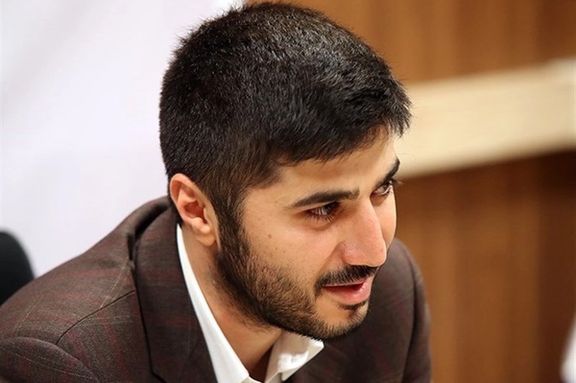
Former Iranian Official Detained in France for 'Links to IRGC-QF'
Bashir Biazar
A former Iranian official who has been under "administrative detention" in France since June 3, was detained for links to the Revolutionary Guard's Quds Force, among other reasons, Iran International has learned.
Bashir Biazar, a former director Iran's state broadcast, "is connected with the Unit 840 of the Quds Force of the Islamic Revolutionary Guard Corps (IRGC) whose mission is to conduct covert and/or terrorist operations outside Iran," according to French Interior Ministry documents seen by Iran International.
The documents introduce Biazar as a "producer for Iran's state radio and television" and as someone "very close to pro-regime Iranians or official representatives of the Islamic Republic."
Biazar, who is awaiting deportation to Iran, is currently in administrative detention—a procedure utilized for urgent deportation cases under French law.
Meanwhile, a group of activists and former French-Iranian prisoners in Iran have filed a torture complaint against Biazar to stop his deportation to Iran.
The activists and former prisoners have accused Bashir Biazar, a former director of the Islamic Republic of Iran Broadcasting (IRIB), of complicity in the torture of prisoners.
Iran's state television has on numerous occasions aired forced “confessions” of political and ordinary prisoners including dual and foreign nationals taken under physical and psychological torture.
Iranian presidential candidate and cleric Mostafa Pourmohammadi has downplayed his role in the mass executions of dissidents carried out by the Islamic Republic during the 1980s.
"The narrative of the 1980s is quite different. The people were our supporters, sharing our views. In fact, their demands were more severe, and they called for harsher sentences," Pourmohammadi said in an interview published on YouTube last week.
After a fatwa by Supreme Leader Ruhollah Khomeini, authorities carried out the extrajudicial executions of thousands of political prisoners across Iranian jails in 1988. Amnesty International estimates that between late July and September of that year, a minimum of 5,000 people were killed, with their bodies dumped in unnamed individual and mass graves. Iranian exiles claim the total number of deaths could be over 20,000.
Pourmohammadi referred to the execution of political prisoners in the summer of 1988 as "a project of the Islamic Republic.
“These were challenging times for the system, marked by intense conflict. We had to make critical decisions,” he added.
Pourmohammadi has held several key roles within the state but is widely known to the public for his role on the “Death Committee.”
These were three-person committees established by the state to oversee the purge of political prisoners in each Iranian jail. Each comprised a prosecutor, a judge, and a representative of the Ministry of Information. Pourmohammadi represented the Ministry of Information on the committee at Tehran’s notorious Evin Prison.
Along with other recognizable figures, including former President Ebrahim Raisi, he would sentence political prisoners for summary executions in 1988.
In response to the association of his name with executions on social media, Pourmohammadi stated, "What can I do? I served as a judge for a period. My duties involved either conducting trials or drafting indictments. Some individuals were fined, some were imprisoned, and some were executed. It is akin to a doctor whose name becomes synonymous with performing surgeries."
Regarding his role in these executions, Pourmohammadi attempted to justify the actions by emphasizing that “only” individuals affiliated with the opposition group Mojahedin-e-Khalq Organization (MKO) who were actively "engaging in hostilities against the people" were sentenced to death by the oversight committees.
Pourmohammadi did not refer to the many individuals, part of left-leaning opposition parties, who were also among those executed.
According to Amnesty International, throughout Iran, “predominantly young men and women, including teenagers, who were unjustly imprisoned for their political views and non-violent activities” were gathered from their cells and presented before "death commissions" composed of judicial, prosecutorial, and intelligence authorities.
They underwent brief and arbitrary interrogations where their answers could determine their fate. In some instances, prisoners were offered the chance to renounce their political beliefs and affiliations in exchange for a pardon or commutation of their death sentences. Many prisoners, however, refused to recant their beliefs, resulting in their execution.
Pourmohammadi appeared to suggest that during the interrogations of political prisoners, he implored them to answer the committee’s questions in a way that would spare them from the death sentence.
The current presidential candidate has previously held other key positions in the Islamic Republic, including deputy intelligence minister, head of the social-political bureau in the Supreme Leader's Office, and leader of the General Inspectorate Organization. He also served as interior minister under President Mahmoud Ahmadinejad and as justice minister under President Hassan Rouhani.
Last week, Javaid Rehman, the UN Special Rapporteur on Iran commented on the mass executions in the 1980s, saying, “The whole exercise of the Death Commissions was not to use law.”
“It was simply to execute people based on what those commissioners felt, whether they were going to repent or whether they were going to be steadfast in their political ideological positions. And that is what happened, that the commission sent thousands of people to their execution,” Rehman said.
“What happened was that, obviously, it was not a court of law, so they did not have any rights. They could not question the judgments of these commissions. They were executed at a very short notice. Many of them could not defend their case. They were asked questions that were not legal,” he added.
During the final days of the 1980-1988 Iran-Iraq War, executions were conducted following Khomeini's declaration that apostates and those who had taken up arms against the Islamic Republic were guilty of "waging war against God" and thus deserving of death sentences.
In 2016, an audio recording from 1988 surfaced featuring Hossein Ali Montazeri, once poised to become Iran's supreme leader, condemning the authorities for implementing a fatwa issued by Khomeini.
"I believe the greatest crime in the history of the Islamic Republic, for which history will condemn us, has been committed by you," Montazeri told a group of judiciary officials involved in the executions, including Pourmohammadi.
"Your names will go down in history as criminals," Montazeri said.
Conversely, in his latest interview, Pourmohammadi claimed that Montazeri considered him a “devout and competent” individual.
The crimes committed in the 1980s, described by Rehman as crimes against humanity, have not led to the prosecution of those involved in Iran.
In a landmark case in 2022, a Swedish court found Hamid Nouri, a former Iranian official, guilty of war crimes for his involvement in the mass executions of political prisoners. This marked the first prosecution of an Iranian official implicated in these mass murders, which Tehran has never formally acknowledged.
Earlier this month, Nouri, who had been sentenced to life in prison, returned to Iran as part of a prisoner swap between Sweden and Iran. The exchange secured the release of two Swedish citizens who were imprisoned in Iran.
A flood has hit northern Iran on Tuesday evening, leaving five people missing and 24 injured.
The flood, triggered by severe rainfall that began Tuesday afternoon, resulted in the overflow of the Telar River and subsequent flooding in the area of Savadkuh, Mazandaran province.
The event caused extensive damage to roads, infrastructure, residential homes, and farmlands in an area already suffering desperate poverty.
Gholamali Fakhari, the head of the Red Crescent Society in Mazandaran, said Wednesday afternoon that the number of people missing has increased to five.
Earlier, he had confirmed that a 15-year-old girl and a 45-year-old woman are missing and rescue operations underway in the area.
The General Directorate of Crisis Management in Mazandaran recorded between 40 to 60 millimeters of rain in less than one hour. An alert for heavy rainfall and potential flooding had been issued prior to the disaster.
The flood follows closely on the heels of severe floods earlier this month when the Red Crescent Society reported 13 provinces had been affected, including Esfahan, Tehran, Semnan, Zanjan, Qazvin, and East Azerbaijan.
In May, floods in Khorasan Razavi province resulted in at least seven deaths, and prior to that, flooding in Sistan-Baluchestan also suffered from floods that resulted in at least 18 deaths and disappearances.
Critics blame the Islamic Republic's persistent neglect of essential infrastructure, the failure to dredge rivers adequately, and the lack of a proper urban water channel system as primary contributors to the repetitive cycle of devastating floods.
Observers note that amid otherwise uneventful presidential debates, a contentious issue emerged, dividing conservatives and so-called reformists: the unfulfilled promise of a COVID-19 vaccine.
Four of the six handpicked presidential candidates, including conservative contenders Alireza Zakani, Saeed Jalili, Mohammad Bagher Ghalibaf, and Amir-Hossein Ghazizadeh Hashemi, have accused the previous "reformist" administration of cynically using sanctions and FATF regulations to justify avoiding vaccine imports, thereby misleading the public.
Their criticisms have been primarily directed at Masoud Pezeshkian, the sole "reformist-leaning" candidate.
During the debates, presidential hopeful Ghazizadeh Hashemi remarked, "They [Hassan Rouhani's government] even received the second dose of the Pfizer vaccine themselves but prevented the ordinary people from becoming 'lab rats' for COVID-19 vaccine trials and obstructed all imports. They also cited FATF as a justification. Yet now they claim to have imported COVID-19 vaccines."
He said, "They should have imported them two weeks earlier so the current administration wouldn’t claim sole credit."
In a newly released video, former President Hassan Rouhani addressed criticism from conservatives. He said that his statement about Iranians not being "lab rats" was in response to China's proposal, not US or UK, to commence vaccine trials in July 2020 in Iran.
"At the time, the prevailing understanding was that vaccine trials require two years before they are deemed safe for public distribution, so when assurances were made that their vaccine would be ready by summer, skepticism arose regarding its adequacy," Rouhani stated.
He elaborated that he had "consulted the Health Ministry and other relevant organizations," which "opposed the trials" because "China refused to assume responsibility for any potential fatalities."
Rouhani further claimed that he never prohibited vaccine imports and had "written to the Health Ministry, instructing them to purchase vaccines from 'any country' that developed a safe and effective vaccine."
"We also began using Russia's Sputnik vaccine in February 2021, followed by China's Sinopharm a month later," he said.
“Our government procured and administered approximately 30 million vaccine doses, including a separate agreement with China for 60 million doses, and secured a contract with COVAX for 16.8 million doses. Additionally, we finalized an agreement with Russia for 60 million doses of the Sputnik vaccine,” Rouhani said.
"We procured the vaccine, but its distribution was attributed to the incoming government due to the logistical delays in delivery," he added.
While allegations revolve around Rouhani's handling of vaccine imports, it was the country's Supreme Leader Ali Khamenei, who in January 2020, issued an order banning the import of COVID-19 vaccines from the US and UK, urging Iran to pursue vaccine development or secure them from more reliable sources.
“If their Pfizer company can produce vaccines, why don’t they use them themselves so they don’t have so many dead? The same applies to Britain," Khamenei said at the time.
Khamenei’s conspiracy theories regarding COVID-19 had been circulating for some time, but the explicit ban on these vaccines began then.
His directive came after the Iranian Red Crescent Society (IRCS) announced on December 28, 2020, that a consortium of US-based philanthropists had pledged to donate 150,000 doses of the Pfizer/BioNTech vaccine for transfer to Iran within three weeks. An IRCS spokesperson confirmed the abandonment of the plan shortly after.
Supreme Leader Ali Khamenei being vaccinated against COVID-19 in June 2021
According to Rouhani, they secured permits for AstraZeneca vaccines through intermediary channels, ensuring they were not directly exported from the US or the UK.
Rouhani’s administration though, presented conflicting statements regarding procuring vaccines through "COVAX," a global initiative to ensure equitable access to COVID-19 vaccines for low-income countries, and the impact of sanctions and FATF regulations.
Abdolnasser Hemmati, the head of the Central Bank of Iran, stated that depositing foreign currency into the World Health Organization's account requires approval from the US Department of Treasury, which has posed a "hindrance" to the process. However, the Drugs Importers Union chairman, Nasser Riahi, refuted this claim, asserting that there are no obstacles to purchasing vaccines through COVAX.
Government spokesperson Ali Rabiei also stated, "Due to sanctions laws and FATF regulations, several stages of money transfers encountered difficulties and obstacles."
This is while the US has always maintained that while they impose economic sanctions to curb Iran's backing of terrorism and proxy conflicts in the Middle East, it excludes medical supplies, agricultural products, personal communication devices, and humanitarian aid destined for the Iranian populace from these sanctions.
In August 2021, shortly after Ebrahim Raisi assumed office, Khamenei shifted his stance, emphasizing that COVID-19 had become the nation's foremost priority. He underscored the imperative to secure vaccines through all available means.
"Whether through importation or domestic production, vaccines should be diligently provided and made accessible to all individuals through every feasible means," Khamenei said in August 2021.
This move allowed conservatives to claim credit for the subsequent mass vaccination campaign.
The vaccination campaign saw a significant uptick under Ebrahim Raisi's conservative administration following Rouhani's tenure, coinciding with Iran's "summer of death" in 2021, with the highest daily death toll and new cases of COVID-19 in Iran.
In 2023, medical experts reported over 75,000 preventable COVID-19 deaths in Iran, attributing them to Khamenei's reluctance to permit global vaccine access.
During the final presidential election debate on Tuesday, candidates in Iran's presidential election focused their talking points on the country's internet shutdowns amid past popular protests.
The state-led internet shutdowns amid the violent crackdown on the November 2019 protests became a heated topic of discussion between conservative Amir-Hossein Ghazizadeh Hashemi and so-called reformist Masoud Pezeshkian.
Known as Bloody November, the protests were initially triggered by an increase in fuel prices but quickly evolved into calls for the overthrow of the state and Supreme Leader Ali Khamenei.
In the fifth presidential election debate on Tuesday, hardliner Ghazizadeh Hashemi claimed that a deputy head of Masoud Pezeshkian’s campaign was the “commander of the internet shutdown operation” during the November 2019 protests.
Ghazizadeh Hashemi was referring to Mohammad-Javad Azari-Jahromi, who served as the Minister of Communications in Hassan Rouhani's government during the three-day internet blackout.
He labeled Jahromi as the "main agent of filtering" and the "commander of the internet shutdown" stating, "The largest slaughter of the internet is recorded in the name of Rouhani's administration."
Azari-Jahromi responded to the allegations which were echoed in previous debates, in a tweet, stating: “Mr. Ghazizadeh, the order to cut off the internet in 2019 was approved by the candidate who was sitting next to you in the debate. Why are you misrepresenting the facts?”
Jahromi was referring to Saeed Jalili, one of the ultra-conservative candidates in this presidential election.
In response to Ghazizadeh’s attacks, Pezeshkian mentioned that in a phone call, Jahromi emphasized that during his tenure as minister, Saeed Jalili and Mohammad Bagher Ghalibaf were part of the Supreme National Security Council (SNSC) and the order to cut the internet came from there.
Pezeshkian added that Jahromi was taken to court for attempting to resist the decision to cut off the internet in November 2019.
After the debate, Jahromi corrected Pezeshkian in a tweet, stating that Ghalibaf was not a member of the SNSC at that time.
The overall issue of internet filtering and shutdowns was also discussed by other candidates in the debate.
In addition to internet shutdowns, Iran's fixed broadband internet speed for the general public is among the slowest in the world, ranking 156th out of 181 countries according to the Speedtest Global Index.
Alireza Zakani, another conservative hopeful, mentioned "protecting freedom, security, and privacy" of citizens alongside creating opportunities for "internet access and employment" as goals of his administration.
Jalili supported domestic messaging apps and the national internet, which restricts access to foreign websites.
Pezeshkian also defended the government's "intervention" in people's internet access and cutting it off during times of crisis in the country.
Under the leadership of Isa Zarepour, Minister of Communications in Raisi's administration, internet accessibility has not only stagnated but has also become more restricted.
The government has intensified its censorship efforts, routinely blocking access to popular platforms such as WhatsApp and Instagram, and deliberately disrupting service.
Iran's Acting Foreign Minister claims the country has followed the right path in nuclear negotiations and is in an excellent position, in spite of it being under global sanctions for its nuclear program.
Ali Bagheri Kani, one of Iran's top nuclear negotiators, said the incoming president to be elected in Friday's elections, "can move forward on this smooth path" with "fresh energy".
During a press briefing on Wednesday, Bagheri discussed the sanctions relief negotiations under former president Ebrahim Raisi, killed in a freak helicopter crash last month.
However, he failed to add that during Raisi's tenure in office since 2021, a series of crises occurred. Iran banned multiple UN inspectors and exceeded uranium enrichment levels beyond UN restrictions and the UN's nuclear chief said in April that Iran was in fact "weeks not months" from a nuclear weapon.
Bagheri's statements contrast starkly with the current reality of the failed nuclear talks. Earlier this month, the UN nuclear watchdog's Board of Governors passed a resolution censuring Iran and demanding that it resolve outstanding issues with the IAEA over its advancing nuclear program.
The development follows a history of UN Security Council sanctions targeting Iran's nuclear ambitions since 2006. While many economic sanctions were suspended in 2015 as part of the Joint Comprehensive Plan of Action (JCPOA), the US withdrew from the deal in 2018 and reimposed nuclear-related sanctions on Iran.
The latest confidential IAEA report reveals that Tehran has increased its enriched uranium stockpile to over 142 kilograms at 60% enrichment, a 20-kilogram rise since the last report in February.