Trump restores 'maximum pressure' policy on Iran, hopes for nuclear deal
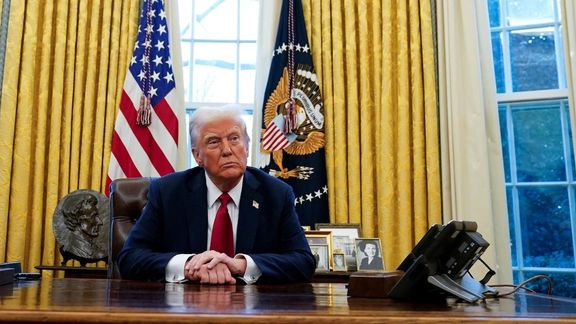
US President Donald Trump speaks as he signs documents in the Oval Office at the White House in Washington, US February 4, 2025.
US President Donald Trump on Tuesday signed a directive restoring the so-called maximum pressure policy on Iran of his first term and warned of "catastrophic" consequences if Tehran does not make a deal on its nuclear program.
Trump said he hoped for an agreement denying Iran nuclear weapons "so that it doesn't end up in a very catastrophic situation," but sounded a dovish note by saying he was prepared to speak with his Iranian counterpart.
"I really want to see peace, and I hope that we're able to do that. They cannot have a nuclear weapon," he told reporters at a press conference alongside Israeli Prime Minister Benjamin Netanyahu in the White House.
"It's very simple. I'm not putting restrictions. They cannot have one thing. They cannot have a nuclear weapon," Trump said.
Iran has denied seeking a nuclear weapon, but Israel has long contended Tehran wants a bomb and that its arch-enemy poses an existential threat.
In withdrawing the United States from a 2015 international nuclear deal in his first term, the Trump administration cited not only its alleged inability to curb Iran's quest for a bomb but also the deal's failure to address Iran's missile program or support for armed allies in the region.
Trump added that if he believed Iran was going to possess a nuclear bomb, that would be "very unfortunate" for Tehran.
"If, on the other hand, they can convince us that they won't, and I hope they can ... it's actually very easy to do, I think they're going to have an unbelievable future."
Iran Directive
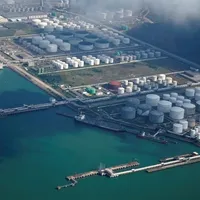
Trump earlier in the day signed a directive reviving the maximum pressure policy aimed at driving the Islamic Republic's oil exports to zero.
"This is one that I'm torn about," Trump told reporters in the Oval Office. "Everybody wants me sign it. I'll do that. It's very tough on Iran," he said.
Asked if he would engage in conversations with his Iranian counterpart, Trump responded, "I would." It was not clear whom he meant.
Iran was "too close" to being able to acquire a bomb, Trump added, saying the US has the right to block Iran's oil sales to other nations and threatened Iran with "total obliteration" should they seek to kill him in retaliation.
US law enforcement last year accused Iran of seeking Trump's assassination as retaliation for his order to kill top Iranian commander Qassem Soleimani in 2020.
Trump said he hoped he would not have to follow through on the memorandum.
"Hopefully we're not going to have to use it very much. We will see whether or not we can arrange or work out a deal with Iran and everybody can live together."
Speaking before his White House meeting with Netanyahu, Trump said his predecessor Joe Biden allowed Iran to grow stronger and richer.
"They're not weak. They're very strong right now," he said.
Netanyahu praised Trump for the renewed pressure on Iran, his original decision to pull out of the nuclear deal and helping midwife a Gaza ceasefire deal freeing some Israeli hostages.
Israeli military blows over the course of a 15-month war with Iran and its armed allies, he told the news conference, had weakened the Islamic Republic.
"Israel has never been stronger and the Iran terror axis has never been weaker," he said.
'Malign influence,' snapback
The directive instructs the US Treasury to enforce sanctions and compliance measures against entities that breach current restrictions, Reuters reported earlier on Tuesday citing a US official.
Trump's policy on Iran will be aimed at denying Washington's Mideast nemesis all paths to a nuclear weapon and countering Iran's "malign influence," the official was quoted as saying.
Secretary of State Marco Rubio will also adjust or retract sanctions waivers, working with the Treasury to reduce Iranian oil exports to zero, the official added.
The US ambassador to the United Nations will work with allies to "complete the snapback of international sanctions and restrictions on Iran," the official said.
Snapback refers to the restoration of UN sanctionson Iran which were lifted by a 2015 international deal over Iran's nuclear program, which would likely need to be activated by European parties to the agreement after the US withdrew in 2018.
Trump's maximum pressure approach in his first term beginning in 2018 pummeled Iran's economy, causing a dramatic decline in oil exports and skyrocketing inflation.
In response, Tehran began to taper its adherence to the nuclear deal and ramped up military involvement in the region. During his first term, Trump also ordered the assassination of top Iranian commander Qassem Soleimani in a drone strike in 2020, depriving Iran of its wiliest military operator in the region.
Israeli Prime Minister Benjamin Netanyahu is due to meet Trump in Washington on Tuesday, and their strategy on Iran and its nuclear program is due to loom large.
Over 15 months of punishing military blows by Israel against Iran and its armed Mideast allies has weakened the so-called Axis of Resistance Tehran leads.
Trump said last month that he hoped a deal over Iran's nuclear program would mean the United States did not have to support an Israeli attack on Iran.
Long opposed to foreign wars, Trump has nevertheless adopted a hard line on Iran, saying that Iran cannot be allowed to have a nuclear weapon but also maintaining that Washington should not pursue regime change.
The Trump administration has granted permission to several State Department-funded projects focused on internet freedom in Iran to operate for another 30 days, as the president signed a memorandum restoring his so-called maximum pressure policy on Tehran.
The continuation of long-term support for these projects is expected to be reviewed during the 30-day period.
Trump signed an executive order on January 20, his first day in office, suspending foreign development assistance for 90 days to allow for a review of its efficiency and alignment with his America First policy stance.
The decision left Iranian human rights activists concerned about its impact on Iran-related programs, with some saying the order could help Tehran further restrict its people’s access to information.
Following the executive order, the State Department halted most ongoing foreign aid programs and paused the initiation of new assistance, according to an internal memo distributed to officials and US embassies abroad.
Official government figures show Washington is the world's biggest donor of international aid, spending $39 billion in the 2024 fiscal year, out of which $65 million was allocated to funding State Department-administered Near East Regional Democracy (NERD).
The body is the main foreign assistance channel through which the United States has supported civil society and human rights in Iran since 2009, according to the Congressional Research Service.
A part of the US funds covers the expenses of Virtual Private Network (VPN) services which ordinary Iranians used to circumvent the Islamic Republic’s censorship. Many of these services will have to stop their operation following the aid cut.
“It is a very dangerous move, because the issue of internet freedom is very vital, both to the people of Iran and the allies of Iranian people in the West,” a cyber security expert based in Silicon Valley told Iran International on condition of anonymity.
Trump’s order, an internet activist told Iran International, deprives 20 million Iranians, or a fifth of the population, of US-supported VPNs they use to bypass Tehran’s internet curbs.
At their peak during the “Woman Life Freedom” protests in 2022, VPN usage in Iran hit two-third of the population. “In today’s Iran, the internet has no meaning without VPNs,” writes internet activist Soroush Ahmadi in an article for Peace Line journal, which is published by the Virginia-based NGO “Human Rights Activists in Iran”.
The VPNs commercially available in the Iranian market are believed to be controlled by the Islamic Republic and even sold by entities affiliated with the Revolutionary Guards who profit from the needs of Iranians to gain unfettered access to the internet.
US President Donald Trump and Israeli Prime Minister Benjamin Netanyahu are likely to step up pressure on Iran as tensions over its nuclear program comes to a head, Republican senators told Iran International on Tuesday.
The two leaders are due to meet in the White House on Tuesday, in Trump's first meeting with a foreign head of state in his second term.
Trump in the first hours of his new term credited Israel with badly weakening Iran over the course of a 15-month conflict in the region.
"I hope to see maximum pressure on Iran, cutting off their oil revenues and doing everything we can to stop the Ayatollah," Texas senator Ted Cruz told Iran International when asked about his expectation from the Trump-Netanyahu meeting.
Ahead of the talks, Trump signed a directive restoring his so-called "maximum pressure" strategy on Iran from his first term.
Long opposed to foreign wars, Trump has nevertheless adopted a hard line on Iran, saying Iran cannot be allowed to have a nuclear weapon but also suggesting Washington should not pursue regime change.
After signing the memorandum, Trump said he hoped he would not have to follow through on the memorandum. "We will see if we can work out a deal with Iran," he said, adding he would reach out to Tehran and hold talks with his Iranian counterpart - without specifying whom - to convince Iran to give up what Washington sees as moves toward a nuclear bomb.
"There isn't a person walking in these halls including Democrats that would be for the number one sponsor of terror in the world, the Iranians, having a nuclear weapon," Oklahoma Senator Markwayne Mullin told Iran International.
Iran has denied seeking a nuclear weapon, but Israel has long contended that a bomb in the hands of its arch-enemy poses an existential threat.
"There is no way. They should never have it. You can't trust what they say, so even diplomacy doesn't work. You have to touch their wallet where they can't afford to build it," Mullin added, referring to economic pressure.
"Obviously, we're not for Iran getting nuclear weapons," Alabama senator Tommy Tuberville said. "I think it'd be disastrous not just for us, but for them as it puts them as a target ... you've got to be able to control them," he added.
Iran’s foreign minister called on the militant groups it backs in the Middle East to rebuild, in a sign Tehran may be determined to restore regional military influence eroded by Israel in a 15-month conflict.
“The resistance has gone through a difficult and significant period; it must rebuild itself, rebuild its forces, and apply the lessons learned from this war," Abbas Araghchi told a news conference at a Gaza-related event in Tehran on Tuesday.
“We are confident that the resistance will return to the field stronger than before.”
His remarks come as Gaza faces widespread devastation following Israel’s military response to the October 7, 2023, Hamas attacks.
Israeli bombardments and ground operations have left much of the enclave in ruins, with tens of thousands of Palestinians displaced.
A long-sought ceasefire-for-hostages deal was brokered on January 15 after intense negotiations in Doha, mediated by the United States, Egypt and Qatar.
Hamas seized control of the territory in 2007. The armed cadres and military infrastructure of group, designated a terrorist organization by the United States and Britain, have been pummeled by a devastating Israeli incursion into the enclave.
Araghchi said that so-called resistance groups must adapt now that the conflict in Gaza is paused. The array of Islamist armed factions in the occupied Palestinian territories, Lebanon, Iraq and Yemen have long been funded and armed by Tehran.
Israel decapitated the leadership of Hezbollah in Lebanon and helped bring about the downfall of the Assad dynasty in Syria, Iran's oldest Arab ally.
Still, Araghchi said Israel had been defeated in the conflict and described the ceasefire as tenuous.
"Some think that this regime, due to this feeling (of defeat), may take action and violate the ceasefire, which is not unlikely given the nature of the criminal Zionist regime."
“The resistance movement is a school of thought and ideology that cannot be eliminated with weapons,” Araghchi added. “Its main weapon is not conventional arms; it is the blood of the martyrs.”
The FBI has announced a $25m reward in the manhunt for two Iranian intelligence officers believed to be responsible for the nearly 18-year disappearance of retired FBI Special Agent Robert Levinson.
The bureau has released posters seeking information on the two men with a combined reward of up to $25 million - $5 million from the FBI and $20 million from the US State Department’s Rewards for Justice program - for information leading to Levinson's location.
The two Iranian intelligence officers identified by the FBI are Mohammad Baseri and Ahmad Khazai. The FBI alleges that Baseri and Khazai, acting as officials of Iran's Ministry of Intelligence and Security (MOIS), orchestrated Levinson's abduction, subsequent detention and likely death.
The former FBI agent vanished during a freelance investigation in Kish Island, southern Iran, in 2007. His disappearance has remained an open case for the FBI, which has vowed to bring him home.
Iranian officials have never acknowledged detaining Levinson.
"The FBI remains steadfast in our commitment to return Bob to his family," said Sanjay Virmani, Special Agent in Charge of the FBI Washington Field Office’s Counterterrorism Division.
“Our extensive investigation continues to develop new leads and intelligence, and we will pursue all options to hold every Iranian official involved in his abduction accountable.”
The US Treasury Department previously sanctioned both Baseri and Khazai in December 2020 for their roles in Levinson's disappearance.
His family announced that he was presumed dead in March 2020, on the advice of US officials.
The Levinsons said in a 2023 statement, “We will never stop demanding that Iranian leaders answer for what happened to Robert Levinson, the greatest man we have ever known. His abduction on Iranian soil in March 2007, his years of imprisonment with a total lack of any human rights or decency, and ultimately his murder, are on their hands.”
UN Special Rapporteur on human rights in Iran, Mai Sato, has raised alarm over the persecution of Christians in the country, calling it a matter of serious concern that requires immediate attention.
Mai Sato addressed Article18’s joint side event at the UN in Geneva in late January, calling it a “timely opportunity” to assess the reality faced by Christian communities in Iran. Article18, a nonprofit organization, advocates for persecuted Christians in Iran and promotes religious freedom.
Sato spotlighted the plight of Christians in Iran the day before the country's Universal Periodic Review (UPR), a key UNHRC mechanism aimed at improving human rights, with Iran being one of 14 countries under review by the UPR Working Group.
Sato noted that previous UN rapporteurs had raised concerns about the systemic persecution of Christians in Iran in 2011, 2013, 2018, and 2020, yet little progress has been made.
“The violations reported in these communications mirror the very issues that presenters at this event will be discussing today,” she said, citing multiple breaches of Iran’s obligations under the International Covenant on Civil and Political Rights (ICCPR), which Iran ratified in 1975.
These include restrictions on religious freedom, freedom of expression, peaceful assembly, privacy, and non-discrimination.
Titled "Christians in the Islamic Republic of Iran: Legal Protections vs. Lived Realities," the Article18 event also included testimonies from individuals affected by religious persecution.
Sato urged civil society and what she called other stakeholders, to continue sharing evidence of Christian persecution and other religious minorities, saying the reports help keep the issue on the international agenda.
UN Rapporteur on Freedom of Religion or Belief Nazila Ghanea also contributed to the event.
In her remarks, Ghanea noted Article18's latest report's findings of the Iranian government's discriminatory treatment of Christian converts, citing severe sentencing in 2024, with 96 Christians facing 263 years in prison, 37 years of internal exile, and substantial fines, emphasizing the human cost behind these figures.
Although Christians are acknowledged as a religious minority in Iran, authorities impose severe penalties, particularly on those who convert from Islam to Christianity.