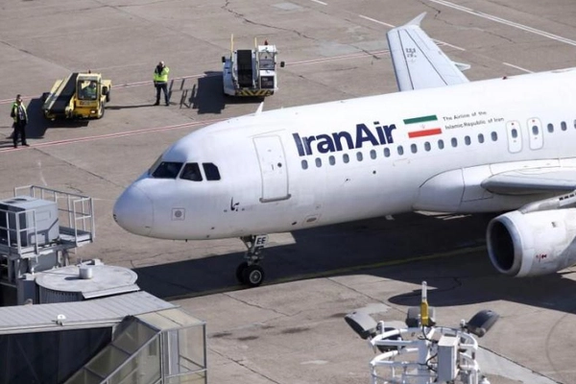
Lebanon bars Iran airlines after Israel alleges Hezbollah cash smuggling
Iranian airlines Mahan Air and Iran Air, the country’s flagship carrier, will not be allowed to fly to Beirut, Lebanese TV network LBCI reported, citing Lebanon’s aviation authorities.
The decision follows allegations by Israel's military that Iran’s IRGC Quds Force uses civilian flights to smuggle money to Hezbollah via Beirut airport.
“The Iranian Quds Force and the terrorist group Hezbollah have been exploiting Beirut International Airport international flights over the past few weeks in an attempt to smuggle funds allocated to arm Hezbollah with the aim of carrying out attacks against the State of Israel,” Israel's military spokesman in Arabic, Avichay Adraee, wrote on X.
The cancellation of flights from Iran to Lebanon was on Thursday confirmed by Saeed Chalondari, CEO of Tehran's Imam Khomeini Airport, who said permission had not been granted for Beirut flights.
Shortly after the cancellations, images surfaces on social media purporting to show Hezbollah supporters in Lebanon blocking the road to Beirut Airport in protest against the refusal to allow Mahan Air to land.
On Monday, Lebanese media reported that incoming flights from Iraq to Beirut are being subject to inspection to prevent the transfer of money to Iran-backed militant group Hezbollah.
Since the ceasefire began in November, both Israel and Lebanon have accused the other of dozens of breaches. Israel has accused Hezbollah of rearming after weeks of bombardment from Israel, targeting key infrastructure and the group’s top leadership.
Lebanon accuses Israel of territorial breaches and ongoing military action which has seen dozens of Lebanese killed amid the ceasefire.
Two weeks ago, Israel accused Iran of sending tens of millions of dollars to Hezbollah through clandestine cash deliveries, lodging formal complaints with the US-led committee overseeing the ceasefire, according to a report in The Wall Street Journal.
Iranian envoys have been flying into Beirut from Tehran with suitcases stuffed with US dollars to finance Hezbollah’s operations. Additionally, Israel has reported that Turkish nationals have been used as couriers to transport funds from Istanbul to Beirut, the report said.
Exiled prince Reza Pahlavi said on Thursday that the Munich Security Conference (MSC) retracted his invitation at the behest of the German government due to threats from the Islamic Republic of Iran.
“The Ayatollah is pulling the strings in Berlin," Pahlavi said on X. “This is a betrayal of both the Iranian people and Germany’s democratic values. This German government has not only silenced the voice of the Iranian people but has actively done the Islamic Republic’s bidding.”
In a statement to Iran International, conference organizers said its chairman, Ambassador Christoph Heusgen, decided not to follow through on an informal invitation to the exiled prince following discussions with the German government.
"After consultation with the German government, Mr. Heusgen decided not to formalize the invitation to Mr Pahlavi,” the statement said, adding "Iranian opposition figures and representatives of the Iranian civil society have been regular guests".
The German foreign office told Iran International that the government communicates with the conference, which it said makes decisions on invitees.
"Of course, the Federal Government is in constant contact with the Munich Security Conference (MSC). In principle, the MSC decides independently on its invitations," it said in a statement, appearing not to directly address the exiled prince’s allegation.
An official X account managed by US-based Pahlavi's office quoted what it said was a letter from the high-profile event's organizers saying they had decided not to formalize his invitation upon consultation with German authorities.
“Instead of supporting those fighting for freedom, Germany has chosen to appease a dictatorship that murders its citizens, takes Europeans hostage, and sponsors terrorism,” Pahlavi said, adding that Germany was "outsourcing censorship to Berlin".
Prince Pahlavi last attended the conference in 2023 and organizers told Iran International that dissident journalist and women's rights activist Masih Alinejad had been invited to attend this year.
Earlier in the month, the conference had restored its invitation to Pahlavi after it had rescinded it under pressure from the German Foreign Ministry, Iran International reported.
A source familiar with the matter, who declined to be identified, told Iran International last week that the German Foreign Ministry had asked the organizers of the Munich Security Conference to withdraw the invitation, as it believed it would harm its relations with the Islamic Republic.
"The German government was concerned that inviting Prince Pahlavi could endanger the situation of German dual-national prisoners in Iran," the source added.
The Munich Security Conference was also under pressure in 2023 to withdraw its invitation to Pahlavi, according to Karim Sadjadpour, a senior fellow at the Carnegie Endowment for International Peace.
Last year he said: "A few days before the Munich conference, one of the organizers—who used to be my student at Georgetown—told me they were under pressure to revoke Reza Pahlavi's invitation."
The mother of a protester who was killed during Iran's widespread 2022 protests now faces trial over alleged hijab violations and her advocacy efforts for her son, her family announced.
Mina Soltani has been ordered to appear before Branch 101 of Bukan’s Criminal Court on Saturday to face charges of propaganda against the Islamic Republic and appearing in public without mandatory hijab, her daughter Asrin Mohammadi announced in a post on Instagram.
"In the month when the Islamic Republic celebrates its revolution, a mother seeking justice is put on trial while the killers walk free," Asrin Mohammadi added condemning the summons.
Shahryar Mohammadi was shot by Iran’s security forces in Bukan in northwestern Iran on November 18, 2022. He later died from his injuries after being transferred to a local hospital.
His family including his mother, Mina Soltani, his sister Asrin Mohammadi and brother Milad Mohammadi have since become outspoken advocates for justice and have faced pressure from the Iranian authorities.
Soltani was arrested last September as part of a broader crackdown on activists and victims' families just days before the anniversary of the death in morality police custody of a young woman named Mahsa Amini, igniting the Women, Life, Freedom uprising. She was later released on bail.
This is not the first time the Mohammadi family has been targeted by Iranian authorities. In November 2023, just a few days before the anniversary of Shahryar’s death, his sister, Asrin Mohammadi, was arrested during a raid. She was later released on bail.
Iranian President Masoud Pezeshkian said on Thursday that if Tehran's enemies strike the country's nuclear facilities, the country's youth will be ready to simply rebuild, after reports about possible Israeli attack on the country’s nuclear program this year.
"They threaten us that they will hit nuclear facilities... If you (the enemy) strike a hundred of those we will build a thousand other ones," Pezeshkian said during a speech in Bushehr, home to one of Iran’s biggest nuclear plants.
"You can hit the buildings and places but you cannot hit those who build it... you cannot erase the minds of our scientists.”
US President Donald Trump raised on Monday the possibility of Israel hitting Iran in an interview with Fox News saying he would prefer to make a deal with Iran to prevent it from obtaining a nuclear weapon.
"Everyone thinks Israel, with our help or our approval, will go in and bomb the hell out of them. I would prefer that not to happen," Trump said.
On Thursday, the commander of Iran's conventional air force Hamid Vahedi said: "We tell all countries, friends and foes alike, that our country's doctrine is defensive, but we will respond with force against any enemy attack."
Tit-for-tat strikes between Iran and Israel punctuated last year's Gaza conflict as the years long shadow war between the two archenemies came out in the open.
The Wall Street Journal reported on Wednesday that Israel is considering attacks on Iran's nuclear sites and views its Mideast adversary as vulnerable, citing US intelligence agencies’ assessments in the waning days of the Joe Biden administration.
In January, Iran's atomic energy chief said that thousands of workers are currently involved in constructing the second and third units of the Bushehr nuclear power plant.
"Currently, 5,000 people are involved in the construction of the two new units," Mohammad Eslami said during a visit to the site, adding, "Their efforts are ensuring the project progresses with good discipline and speed."
US Secretary of State Marco Rubio's trip to the Middle East will heavily focus on countering the destabilizing activities of Iran and its proxies, as well as securing the release of hostages held by Hamas, the State Department announced.
Rubio's itinerary includes stops in Israel, Saudi Arabia, and the United Arab Emirates from February 15-18, following participation in the Munich Security Conference and G7 Foreign Ministers' Meeting starting February 13.
The State Department emphasized that discussions with senior officials will center on advancing regional cooperation, stability, and peace,with a key component being addressing the threat posed by Iran.
“The trip will center on freeing American and all other hostages from Hamas captivity, advancing to Phase II of the ceasefire agreement in Gaza, and countering the destabilizing activities of the Iranian regime and its proxies.”
On February 4, Trump signed a directive reviving his so-called maximum pressure policy on Iran from his first term aimed at driving the Islamic Republic's oil exports to zero. After signing the memorandum, he said he would prefer a deal with Tehran to an Israeli attack on their nuclear sites.
Iranian President Masoud Pezeshkian insisted on Wednesday that the country would not yield to external threats after US President Donald Trump mooted the bombing of its adversary earlier this week.
While a fragile ceasefire between Lebanese Hezbollah and Israel continues to strain, Israel has accused Iran of smuggling cash to its largest military ally via Beirut Airport.
The Israeli military spokesman in Arabic, Avichay Adraee, wrote on X: “The Iranian Quds Force and the terrorist group Hezbollah have been exploiting Beirut International Airport international flights over the past few weeks in an attempt to smuggle funds allocated to arm Hezbollah with the aim of carrying out attacks against the State of Israel.”
The internationally brokered ceasefire, which began in November, has seen both sides accuse the other of dozens of breaches. Israel has accused Hezbollah of rearming after weeks of bombardment from Israel, targeting key infrastructure and the group’s top leadership.
Lebanon accuses Israel of territorial breaches and ongoing military action which has seen dozens of Lebanese killed amid the ceasefire.
“The IDF remains in contact with the ceasefire monitoring mechanism and continuously transmits specific information to thwart these transfers. Despite the efforts made, we estimate that some of these money smuggling attempts have succeeded,” Andraee added.
The initial six-week ceasefire has been extended to February 18 and the committee includes representatives from Israel, Lebanon, the US, France, and the UN.
On Monday, Lebanese media reported that incoming flights from Iraq to Beirut are being subject to inspection to prevent the transfer of money to Iran-backed militant group Hezbollah.
Saudi Arabian outlet Al Hadath quoted Lebanese media as saying that the inspections are underway without saying by who, while the Lebanese army has been taking a greater role in domestic affairs since the ceasefire began.
Lebanese newspaper Lebanon Debate reported on Monday that "similar to what happened previously in the cases of inspection of planes coming from Iran, the same thing happens with flights coming from Iraq, as the flights are subject to a thorough security inspection in order to verify the possibility of them transporting money or assets for the benefit of Hezbollah."
Just two weeks ago, Israel accused Iran of sending tens of millions of dollars to Hezbollah through clandestine cash deliveries, lodging formal complaints with the US-led committee overseeing the ceasefire, according to a report in The Wall Street Journal.
Iranian envoys have been flying into Beirut from Tehran with suitcases stuffed with US dollars to finance Hezbollah’s operations. Additionally, Israel has reported that Turkish nationals have been used as couriers to transport funds from Istanbul to Beirut, the report said.
Last year, The Telegraph reported that Iranian weapons were being stored at Beirut’s main airport, claims which were denied by the Lebanese air transport association.
Whistleblowers at the airport told The Telegraph they were concerned about increasing weapons supplies on direct flights from Iran.
They claimed that they had observed “unusually big boxes” arriving and the increased presence of high level Hezbollah commanders.