Munich Security Conference reinstates invitation to Iranian prince
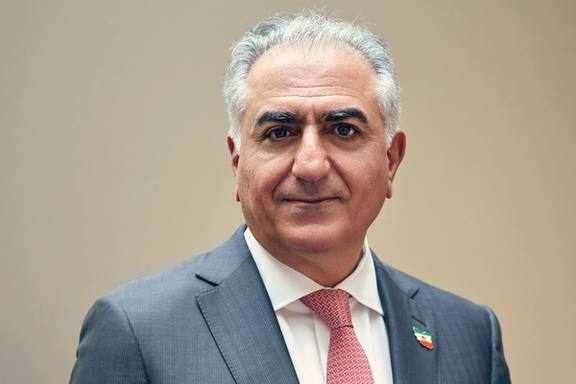
The Munich Security Conference has restored an invitation to Iranian exiled prince Reza Pahlavi after it rescinded it under pressure from the German Foreign Ministry, Iran International has learned.
"We can confirm that the invitation to Mr. Pahlavi to the MSC 2025 will be maintained," an MSC spokesperson wrote in an email to Iran International.
"As in the past, the voices of Iranian civil society and opposition will be represented at MSC 2025," the spokesperson added.
Pahlavi said in a post on X on Thursday that the German Foreign Ministry had blocked his participation in the annual security conference.
Two sources with direct knowledge of the matter told Iran International this week that Christoph Heusgen, the Chairman of the MSC, initially extended the invitation to Pahlavi on January 17, but retracted it about two weeks later under pressure from the German Foreign Ministry.
Berlin's concern about bilateral ties with Tehran
On Thursday, the German Foreign Ministry told journalists that it had no role in the withdrawal of the invitation to Prince Reza Pahlavi.
A German Foreign Ministry spokesperson also told Iran International that "the Munich Security Conference decides independently on its invitations," without offering any further details.
However, an informed source told Iran International the German Foreign Ministry had asked the organizers of the Munich Security Conference to withdraw the invitation, as it believed it would harm its relations with the Islamic Republic.
"The German government was concerned that inviting Prince Pahlavi could endanger the situation of German dual-national prisoners in Iran," the source added.
Pahlavi took to X on Friday to confirm that the MSC had told him his invitation remains in place.
"This conference, like all public engagements, was always about my compatriots and having their voices heard on the world stage. So I will go with a message from the Iranian people: our fight is not just to free Iran, but the world, from the terror and blackmail of the Islamic Republic," Pahlavi wrote.
No invitation for Iran officials
The German news website Zeit cited a conference spokesman saying that the Iranian government has not received an invitation "at this point in time".
The conference did not invite any officials from the Islamic Republic in 2023. However, Iranian diplomat Mohammad Javad Zarif—now Iran's vice president—was a regular invitee when he served as Tehran's foreign minister.
The conference, which is scheduled to begin later in February, has previously welcomed speakers that have criticized the Iranian government.
According to a list of invitees to the Munich Security Conference seen by Iran International, political activist Masih Alinejad has also been invited to the conference.
Pressure continues
The Munich Security Conference was also under pressure in 2023 to withdraw its invitation to Reza Pahlavi, Karim Sadjadpour, a senior fellow at the Carnegie Endowment for International Peace, said in an interview with Aasoo website last year.
"A few days before the Munich conference, one of the organizers—who used to be my student at Georgetown—told me they were under pressure to revoke Reza Pahlavi's invitation," Sadjadpour added.
"He said leftist groups in Germany opposed his presence, and even the German embassy in Tehran had called, warning that if Reza Pahlavi was given a platform, regime hardliners might attack the embassy."
Iran's ambassadors to France and the UK say they remain open to negotiations with the West, despite new US sanctions targeting Iran's oil exports and the reimposition of Trump-era maximum pressure policies.
“We do not reject negotiations, but we demand engagement on equal footing and with mutual respect,” Mohammad Amin Nejad, the Iranian ambassador to France said in an interview with French online media platform Thinkerview.
While acknowledging the impact of US-led sanctions on Iran's economy, he asserted that the country has become adept at self-reliance.
“After the US withdrawal from the JCPOA, we faced severe economic pressures, but the Iranian people are resilient, and the country continues to progress,” Nejad added.
US President Donald Trump reinstated his maximum pressure policy on Iran this month, issuing a directive followed by the first wave of sanctions on Thursday.
These sanctions came after decades of the Iranian state's mismanagement, corruption, and the prioritization of funneling money to terrorism, which had already severely damaged Iran's economy before the US sanctions compounded the crisis.
In London, Ali Matinfar, the Iranian Embassy's chargé d'affaires, echoed similar sentiments to his colleague in France during a ceremony marking the upcoming 46th anniversary of the Islamic Revolution.
The diplomat insisted that Tehran remains committed to the nuclear deal, despite the US withdrawal in 2018 and what he described as Europe's failure to uphold its obligations.
“The Islamic Republic of Iran has continued to adhere to its commitments and has only taken compensatory measures within the framework of the agreement,” Matinfar said on Saturday.
Referring to recent talks with the UK, France, and Germany in Geneva, Matinfar said there is hope for the potential of renewed diplomatic progress.
“Following serious and constructive negotiations, it is hoped that a clearer outlook for future diplomatic engagements will emerge. However, the realization of this depends entirely on the goodwill and confidence-building measures of the Western parties, particularly the United States,” he said.
Iran's Supreme Leader, Ali Khamenei, the country's ultimate authority, said on Friday that negotiating with the US would be neither wise, intelligent, nor honorable.
This follows an ongoing internal divide within the country in recent weeks, with varying factions offering conflicting views on the potential for talks with Washington,
During Trump’s first term, Iran’s oil exports were slashed to almost zero after he re-imposed sanctions that had been lifted under the 2015 nuclear deal between Tehran and world powers.
After the US withdrew from the agreement, there were few attempts at negotiations between Washington and Tehran until the Biden administration took office in 2021, signaling a renewed effort to revive the nuclear deal, but ultimately, no new agreement was reached.
Tehran has condemned the first round of US sanctions targeting individuals and companies accused of facilitating Iranian oil sales, calling the move illegal and unjustified.
“The Islamic Republic of Iran holds the United States accountable for the consequences and repercussions of such unilateral and bullying actions,” Foreign Ministry spokesperson Esmail Baghaei told Iranian media on Friday.
This comes after Washington imposed new sanctions on networks facilitating Iranian oil shipments to China, a move aligned with US President Donald Trump's decision to revive his "maximum pressure" campaign on Tehran.
The sanctions, officially announced by the Treasury Department, target companies and vessels across China, India, and the UAE.
“The decision of the new US administration to exert pressure on the Iranian nation by preventing Iran's legal trade with its economic partners is an illegitimate, unlawful, and wrongful act that entails international responsibility for the US government,” Baghaei said.
The US says Iran funnels billions of dollars of oil revenue into its nuclear program, missile development, and regional militant groups -- including, US-designated terrorist entities Hamas, the Houthis, and Hezbollah.
“The United States is committed to aggressively targeting any attempt by Iran to secure funding for these malign activities,” Treasury Secretary Scott Bessent noted in his statement on Thursday.
During President Trump's first term in office, Tehran's oil exports were reduced to near zero by re-imposing sanctions. Under former US President Joe Biden Iran's oil exports increased starting in 2021 as Tehran found ways to circumvent those sanctions.
Iran's Supreme Leader Ali Khamenei firmly rejected the idea of negotiations with the United States on Friday, appearing to pour cold water on optimism by US President Donald Trump and his own government for a nuclear deal.
Trump on Tuesday reinstated the so-called maximum pressure policy on Iran from his first term but said he preferred a deal. Relative moderate President Masoud Pezeshkian has publicly expressed openness to US talks.
“Negotiating with such a government should not be done; it is neither wise, intelligent nor honorable,” the the 85-year-old veteran theocrat who has the ultimate say over Iranian policy told a group of air force personnel in Tehran.
Khamenei accused Washington of perfidy over the last international nuclear deal in 2015, from which Trump withdrew the United States in 2018.
The comments were his strongest since Trump returned to office and come after the hawkish US president appeared to offer Tehran an olive branch this week, saying, "I really want to see peace ... (but) they cannot have a nuclear weapon".
"It's very simple. I'm not putting restrictions. They cannot have one thing," Trump said.
Iranian officials including Pezeshkian quickly said proving the peaceful aims of Iran's nuclear program to Trump could be easily done. US ally and Iran's arch-foe Israel says Tehran is aiming for a bomb, which it views as an existential threat.
Trump this week shocked the region by mooting the takeover of Gaza by US troops and its redevelopment into the "Riviera of the Middle East" - an idea Khamenei pilloried.
“The Americans sit and redraw the world map on paper—but it’s only on paper, with no basis in reality. They make statements about us, express opinions and issue threats."
"If they threaten us, we will threaten them. If they act on those threats, we will do the same. If they undermine our nation's security, we will undoubtedly respond in kind,” he added.
Trump's harsh sanctions directive was followed by a statement from President Trump on his social media platform Truth Social saying any reports of a devastating US-Israeli attack on Iran were "greatly exaggerated".
This sparked debate within Iran's political establishment and prompted some to urge President Masoud Pezeshkian to engage in talks to avoid further economic sanctions.
Khamenei's latest statement comes in direct contrast to those calls, offering a vague warning of retaliation against the US without clarifying whether he was referring to military action or other forms of pressure.
Iran's leader also rejected the notion that talks could ease Iran's economic hardships.
“Negotiations with the United States have no impact on solving the country's problems. We must understand this correctly and not be misled into thinking that sitting at the negotiation table with that government will resolve certain issues. No, negotiations with the United States will not solve any problems,” Khamenei said.
Iran’s economy has deteriorated significantly since 2018, when Trump imposed new oil export and banking sanctions, a decline compounded by decades of mismanagement, corruption, and prioritizing funding for terrorism over domestic welfare.
The national currency has lost 95% of its value, plummeting 22-fold, while inflation has remained around 40% for the past five years. Some official estimates indicate that more than a third of the population now lives below the poverty line.
Members of the US Congress from both parties introduced a bill on Thursday calling for denying Iran a nuclear bomb by any means necessary, days after US President Trump appeared to downplay a military option.
“An Iran that has nuclear weapons is unacceptable and a danger not only to our closest ally, Israel, but also to the whole world,” Representative Mike Lawler, a sponsor of the legislation, said in a statement.
“We must keep all options on the table when it comes to dealing with this unprecedented situation," the New York Republican added.
President Donald Trump on Tuesday reinstated the so-called maximum pressure policy on Iran from his first term but said he hoped not to implement the measures, saying he preferred a deal.
The next day, Trump said reports of US-Israeli collaboration on a devastating military attack on Iran were "greatly exaggerated".
Iran denies seeking nuclear weapons but US ally Israel says its Mideast mortal enemy is developing a bomb, which it views as an existential threat.
“If the Iranian Ayatollah and his henchman obtain a nuclear weapon, it would be one of the most destabilizing and dangerous events in world history," South Carolina Republican Senator Lindsey Graham said in the statement.
"This is not an authorization for the use of military force, but a resolution establishing the truth regarding Iran’s nuclear intentions and capability.”
The statement did not elaborate on the options cited and stops short of explicitly proposing military action.
Iran’s Supreme Court rejected a motion for a retrial in the case of Pakhshan Azizi, a Kurdish political prisoner and humanitarian worker on death row, her lawyer said on Thursday, sparking fears among rights groups that her execution is imminent.
In a post on X, Azizi's lawyer Amir Raisian said they will submit another retrial request and appeal to the judiciary chief in a final effort to halt the sentence.
Azizi was arrested in August 2023 and sentenced to death for “armed rebellion against the state”, or baghi, following a trial before a Revolutionary Court in Tehran in July last year.
Rights groups say her conviction is politically motivated and linked to her humanitarian work, including assisting women and children displaced by Islamic State attacks in northeast Syria.
Reacting to the Supreme Court’s decision, Amnesty International’s deputy director for the Middle East and North Africa, Diana Eltahawy, urged the international community to act immediately to stop her execution.
“The Iranian authorities must halt the execution of arbitrarily detained humanitarian aid worker Pakhshan Azizi, who was sentenced to death following a grossly unfair trial,” Eltahawy said.
She added that the case highlights how Iran uses the death penalty as a tool of political repression and highlighted allegations that Azizi was tortured and subjected to gender-based violence in detention.
“The death penalty is abhorrent in all circumstances, but imposing it after a grossly unfair trial … shows the Iranian authorities’ shameless disregard for the right to life,” she said.
Amnesty International has called on governments worldwide to speak out urgently to stop Azizi’s execution.