Iran receives chemical key for missile fuel production from China - CNN
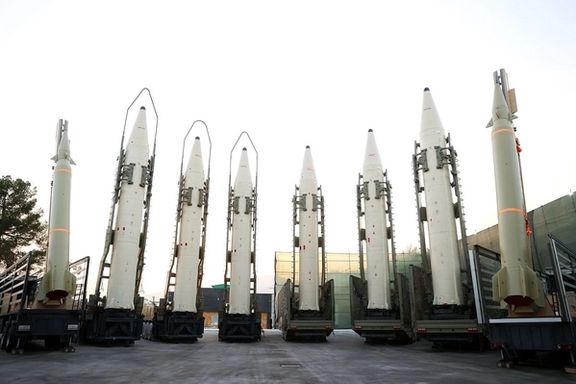
Different types of Iranian missiles
One of two Iranian cargo vessels carrying a chemical from China which is used in missile fuel production has anchored outside the Iranian port of Bandar Abbas, CNN reported Thursday, signaling a potential resurgence of Iran’s missile production capabilities.
The shipment of 1,000 tons of sodium perchlorate was transported from China aboard the Golbon, which departed from Taicang port on January 21. The second vessel, the Jairan, has yet to depart, according to ship tracking data and intelligence sources cited by CNN.
Iran’s missile production infrastructure was severely damaged by Israeli strikes on Oct. 26 2024, which some experts believed would set back its solid propellant production by a year. However, the arrival of this shipment suggests that Iran could be resuming production sooner than anticipated.
Sodium perchlorate is a key precursor for ammonium perchlorate, an essential component in solid rocket propellant used in mid-range ballistic missiles.
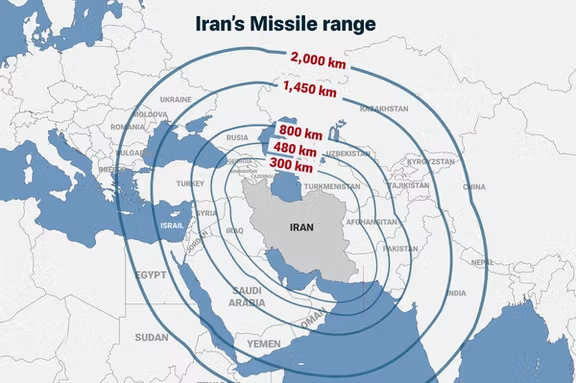
Western intelligence sources cited by CNN estimate that the shipment could enable Iran to produce enough solid propellant for up to 260 Kheibar Shekan or 200 Haj Qasem missiles—both capable of reaching targets up to approximately 1,450 kilometers away.
Range of different Iranian missiles
The delivery was purchased for the Self-Sufficiency Jihad Organization (SSJO), a division of the Islamic Revolutionary Guard Corps (IRGC) responsible for missile development, according to CNN’s intelligence sources.
The Golbon and Jairan are operated by the US-sanctioned Islamic Republic of Iran Shipping Lines (IRISL), which Washington and London accuse of facilitating military-related transfers for Tehran.
Iran, lacking an effective air force, has heavily relied on developing short- and medium-range missiles, including a variety of ballistic delivery systems.
The United States and its European allies have long pushed for limits on Tehran's missile program, citing concerns that some missiles could eventually carry nuclear warheads.
Last year, Iran launched ballistic missile attacks on Israel twice, prompting the US and allied air defenses to intercept and shoot down most of the projectiles.
The Financial Times first reported on the shipment in January, citing Western security officials who estimated that the 1,000 tons of sodium perchlorate could yield 960 tons of ammonium perchlorate, producing approximately 1,300 tons of solid propellant—enough to power hundreds of mid-range missiles.
This shipment comes as Iran faces growing regional challenges, including the fall of its ally Bashar al-Assad in Syria and Hezbollah’s setbacks in Lebanon.
A member of Iran's Assembly of Experts has called for the impeachment of US President Donald Trump during Tehran’s Friday prayers, condemning his policies against Tehran.
“In this public gathering, I want to impeach Trump,” Ahmad Khatami, who also serves as Tehran's interim Friday prayer leader, said. “For 45 years, they have tried maximum pressure on Iran, and they have achieved nothing. Their pressure only brings maximum hatred from the Iranian people.”
Khatami, formerly a member of the Assembly of Experts presidium, was also once a prominent figure in the influential Supreme Council of Seminaries, responsible for setting policies and overseeing different programs for the Qom seminary and other affiliated Shiite seminaries. Though he has been sidelined from these key institutions, Iran's government-controlled online media widely covered his remarks.
The cleric blasted Trump’s foreign policy, particularly his opposition to the Islamic Revolutionary Guard Corps (IRGC) and his administration’s stance on Iran. “Trump called the IRGC terrorists, but they are our heroes, defending our nation from the terror networks America created,” he said.
On February 4, Trump signed a directive reviving his maximum pressure policy from his first term, aiming to drive Iran’s oil exports to zero. This strategy, originally launched in 2018, had severely battered Iran's economy, causing a sharp drop in oil exports and a surge in inflation. After signing the directive, Trump said he preferred a deal with Tehran over an Israeli strike on Iran’s nuclear sites.
In response, Iranian President Masoud Pezeshkian vowed on Wednesday that Iran would not bow to threats. “We will never yield to pressure or intimidation,” Pezeshkian said.
Earlier on Wednesday, Iran’s Supreme Leader Ali Khamenei praised President Masoud Pezeshkian for rejecting talks with the United States, emphasizing that Tehran must continue advancing its military capabilities in the face of Trump’s threat to halt Iran's nuclear program by force.
“The president said what needed to be said,” Khamenei said during an address to defense officials.
After weeks of mixed signals about potential negotiations and tensions within Tehran's political landscape, Khamenei made his stance unequivocally clear on February 7, saying that talks with the US are “neither smart, nor wise, nor honorable.”
Iran will deny Lebanon’s request for flights to Tehran, an official said Friday, as long as the Lebanese government prevents Iranian airliners from landing in Beirut.
The announcement comes after Lebanon halted flights by Iranian carriers, including Mahan Air and Iran Air.
Saeed Chalondari, CEO of Imam Khomeini Airport City, after demanding reciprocity from Lebanon, confirmed that a Tehran–Beirut flight scheduled for 7:30 a.m. on Friday was canceled after Lebanese aviation authorities denied the permit.
He added that Lebanon has announced a suspension of Iranian flights until February 18, directing passengers to use Lebanese carriers instead.
“We do not agree with this decision,” Chalondari said. “If there are to be flights between the two countries, they must be on a reciprocal basis.” Adding that Iran’s Civil Aviation Organization and the Ministry of Foreign Affairs are pursuing discussions with Lebanon to resolve the matter.
The dispute follows accusations from Israel that Iran’s IRGC Quds Force has been using civilian flights to smuggle funds to Hezbollah via Beirut International Airport. Israeli military spokesperson Avichay Adraee said on X that Iran and Hezbollah were exploiting commercial flights to transfer money for attacks on Israel.
The flight ban has sparked tensions in Lebanon. Images circulated on social media showed Hezbollah supporters blocking roads to Beirut Airport in protest against the refusal to allow Mahan Air to land.
Lebanese media also reported that flights arriving from Iraq are undergoing increased inspections to prevent potential cash transfers to Hezbollah.
The standoff comes amid a fragile ceasefire between Israel and Hezbollah, with both sides accusing each other of violations. Israel says Hezbollah is rearming, while Lebanon accuses Israel of continued military actions that have caused civilian casualties.
US lawmakers are urging European allies to reinstate strict United Nations sanctions on Iran, citing Tehran’s continued violations of the 2015 nuclear deal.
A bipartisan resolution, introduced in both the Senate and the House, calls on the United Kingdom, France, and Germany to trigger the “snapback” mechanism that would restore comprehensive sanctions on Iran through the UN Security Council.
The Senate version of the legislation is being led by Sen. Pete Ricketts (R-Neb.), the number two Republican on the Senate Foreign Relations Committee, with 11 cosponsors.
"Iran is the leading state sponsor of terrorism, and their actions have led to the murder of American servicemembers," Ricketts said. "Iran’s possession of a nuclear weapon would threaten our security and the security of our allies. Snapback sanctions are key to ensuring that President Trump’s maximum pressure campaign is successful."
In the House of Representatives, Reps. Claudia Tenney (R-NY) and Josh Gottheimer (D-NJ) have introduced companion legislation, urging European nations to act before key provisions of the Iran deal expire in October 2025.
"These snapback sanctions would include export controls, travel bans, asset freezes, and other restrictions on those involved in Iranian nuclear and missile activities," a press release shared on Tenney's website read.
The 2015 agreement, formally known as the Joint Comprehensive Plan of Action (JCPOA), had lifted UN, US, and EU sanctions on Iran in exchange for commitments to limit its nuclear program. The Trump administration withdrew the US from the deal in 2018, implementing a "maximum pressure" sanctions effort. In response, Iran later restricted access for international inspectors and resumed uranium enrichment beyond permitted levels.
The US lawmakers' call comes amid reports from the International Atomic Energy Agency (IAEA) that Iran is enriching uranium to 60% purity, just below the 90% threshold for weapons-grade material. IAEA Director Rafael Grossi warned that there is no civilian use for uranium enriched to such a level, raising concerns over Tehran's nuclear intentions.
With the October 2025 deadline looming, US lawmakers are pressing their European counterparts to act swiftly and decisively, warning that failure to reimpose sanctions could further embolden Iran’s nuclear ambitions.
A senior Iranian defense official has asserted that the country’s air defense systems are stronger than ever, despite reports that an Israeli attack in October severely damaged Iran’s Russian-supplied defenses.
Speaking on Friday, Brigadier General Mahdi Farahi, Deputy Minister of Defense for Industrial and Research Affairs, said: "The reality is that in war, clashes happen. But the idea that our defense system has weakened or, as some ignorant individuals say, has been destroyed, is absolutely false".
"Our defense system, in terms of deployment, diversity, and capabilities, has not only not weakened but has become even stronger since before the Zionist regime's aggression," he added.
Farahi’s remarks come on the heels of statements from other top Iranian leaders earlier in the week. On Thursday, President Masoud Pezeshkian, speaking in Bushehr, home to a major nuclear plant, warned against potential strikes on the country's nuclear facilities, stating: "If you (the enemy) strike a hundred of those, we will build a thousand other ones. You can hit the buildings and places, but you cannot hit those who build them... you cannot erase the minds of our scientists."
On Wednesday, Supreme Leader Ali Khamenei, during a visit to an exhibition of Iran’s latest military products, emphasized the importance of advancing the country’s missile capabilities: "Progress should not be stopped. We cannot be satisfied with our current level. If we previously set a limit for the accuracy of our missiles but now feel that limit is no longer sufficient, we must push forward. Today, our defensive power is well-known, and our enemies fear it. This is crucial for our country."
The wave of statements from Iranian officials comes after former US President Donald Trump raised the possibility of an Israeli attack on Iran’s nuclear facilities this month. Speaking to Fox News, Trump said: "Everyone thinks Israel, with our help or our approval, will go in and bomb the hell out of them. I would prefer that not to happen."
Meanwhile, The Wall Street Journal reported on Wednesday that Israel is considering strikes on Iran’s nuclear sites, citing US intelligence assessments that view Iran as vulnerable in the final days of the Biden administration.
Despite President Donald Trump's announcement to reinstate his maximum pressure sanctions on Iran, experts doubt the policy can truly cut Tehran's oil shipments to force the concessions he seeks.
Although concerned about Trump's announcement last week, officials in Tehran insist that the country will continue its oil exports through illicit channels, drawing parallels to Russian oil sales.
Iran's oil minister said this week that Trump's sanctions policy on Tehran has failed, along with his goal of cutting Iran's oil exports to zero.
"The more they restrict us, the more complex our response will be," Mohsen Paknejad was quoted as saying by state media. "The dream of cutting Iran's oil exports to zero is one they will never achieve."
The CEO of the National Iranian Oil Company, Hamid Boord, said on February 13, "We are striving to ensure that oil exports continue without interruption despite possible challenges, so that Iran's economic engine does not stop."
Iran’s oil-dependent economy has faced severe financial difficulties since 2018, when President Trump withdrew from the 2015 JCPOA nuclear deal and imposed oil export sanctions on Tehran.
This cut exports to the 200,000–300,000 barrels per day range for the remainder of his first term, though shipments rose after Joe Biden took office. Shortly after returning to the White House, Trump vowed to bring Iran’s oil exports down to zero until Iran fully renounces its nuclear weapons option.
However, some analysts doubt whether the Trump administration can significantly curb Iran’s oil exports, which continue to flow to China through a shadow fleet of tankers and various circumvention methods.
Javier Blas, a Bloomberg columnist covering energy and commodities, expressed serious doubt this week about the US ability to curb Russian, Iranian and Venezuelan oil smuggling efforts.
He pointed to the substantial profits involved in the trade for numerous shipping companies and middlemen, who are adept at finding ways to benefit from illicit shipments.
“The sums involved are so vast and the business so lucrative that everyone involved — sellers, buyers and intermediaries — is highly motivated to find alternative routes, tricks and ploys to keep the wheels turning. Over time, the enforcers grow tired and the smugglers become wiser,” Blas argued.
The Paris-based International Energy Agency (IEA) expressed doubt on February 13 if recent additional sanctions imposed on Russia by the United States can reduce illicit shipments.
"Time and again, oil markets have shown remarkable resilience and adaptability in the face of major challenges – and this time is unlikely to be different," the IEA said.
Blas also pointed that industrial countries are sensitive to higher oil prices, which weakens their willingness to engage in real and tough sanctions enforcement.
In addition, Blas drew attention to Trump’s apparent uncertainty when he announced the return of maximum pressure against Iran.
“On paper, it was a strong action. But Trump undermined his own thunder by saying, pen in hand, that he was ‘torn about’ the memo. ‘Everyone wants me to sign it,’ he said, adding ‘I’m signing this, but I’m unhappy to do it’, Blas wrote.
He also argued that after Trump’s directive, no major sanctions enforcement action took place by his administration.
A separate statement was issued announcing measures against Iran’s oil shipping network, but the move targeted a single large oil tanker and two small ones. "Over the last few years, Iran has relied on more than 500 tankers to move its oil," it said.
Other oil experts have also voiced doubts to Iran International. “We’re not yet convinced that Iran’s oil exports will drop to the levels seen in May 2019, mainly because there wasn’t an extensive global dark fleet available back then, unlike what we have today," Tanker Trackers said last week.