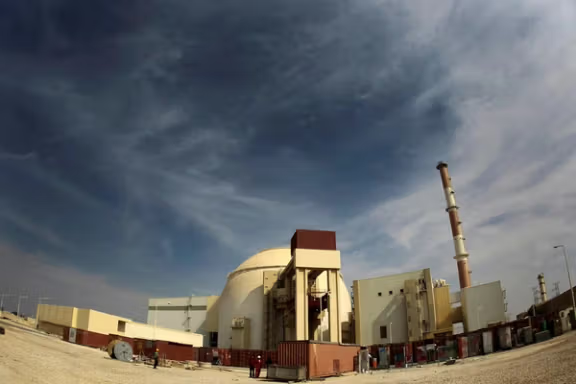
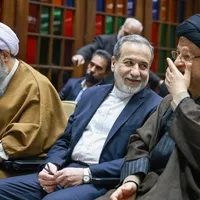
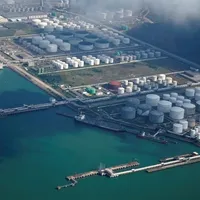
A general view of Iran's Bushehr nuclear power plant, October 26, 2010.
Iran’s potential withdrawal from the Nuclear Non-Proliferation Treaty (NPT) would not exempt it from international legal obligations, one of the world’s foremost experts on nuclear weapons proliferation told Iran International.
David Albright, President of the Institute for Science and International Security (ISIS), said “Iran may announce it has left, but under international law, such a withdrawal wouldn’t be recognized. The prohibition on nuclear weapons would still apply.”
Tehran has floated withdrawing from the NPT, with lawmakers saying a draft bill is ready and could be approved within a day. The threat follows signals from European countries that they may trigger the snapback mechanism to restore sanctions lifted under the 2015 nuclear deal.
Iran also cites US and Israeli attacks on its nuclear sites as violations of international obligations, invoking Article 10 of the NPT as grounds for exit.
Asked about Tehran’s likely direction, Albright said Iran would probably try to delay talks while concealing remaining nuclear assets. “Iran will likely attempt to stall negotiations while hiding surviving assets—including any undeclared centrifuges or uranium stockpiles,” he said.
He further cautioned that pursuing nuclear weapons would backfire. “Nuclear weapons are not going to make Iran safer, they will make the situation exponentially worse—for the regime and, most of all, for the Iranian people,” Albright said.
Devastating setback for Iran
Albright said that Israeli and American attacks did profound damage to Iran's nuclear capabilities, adding that the country’s enrichment infrastructure has suffered a devastating setback particularly at the Fordow and Natanz nuclear sites and may not recover for years, if ever.
"The Iranian nuclear program has been seriously damaged, and for many of the programs, probably they can't recover," Albright said. "This idea of a large-scale enrichment program is really something that has been seriously damaged and may not be replaceable."
Albright, citing satellite imagery from Maxar Technologies and other commercial providers, said the multiple bunker-buster bombs dropped on the underground Fordow facility likely caused "enormous structural damage inside Fordow.”
US attacks on June 22 hit Iran's nuclear sites of Fordow, Esfahan and Natanz, capping off a surprise military campaign by Israel which killed hundreds of people including military personnel, nuclear scientists and civilians.
An initial Pentagon assessment suggested the attacks had only set Iran's nuclear program back by months, but subsequent analysis released by the Central Intelligence Agency said it would take Tehran years to recover.
Albright said while Iran may still possess some residual stockpiles of 60% or 20% enriched uranium, the operational capacity of the Fordow facility has likely been eliminated, and its future viability is in serious doubt.
Around 400 kilograms—more than 900 pounds—of uranium enriched to 60% purity is unaccounted for and now with the International Atomic Energy Agency (IAEA) barred from the country, it is unsure if the location can ever be known.
"Combined with the physical impact of the bombing, we assess that most, if not all, centrifuges at Natanz are either destroyed or inoperable.”
Albright said that the Natanz facility was the backbone of Iran’s enrichment capability, and its destruction marks a strategic turning point.
“Iran now appears incapable of producing new centrifuges, and more importantly, it can’t manufacture UF6 feed gas, without which enrichment is impossible,” Albright added.
'Fear, paranoia' among Iran's technical elite
Prime Minister Benjamin Netanyahu said in an interview following the conflict that Israel had rolled back Iran's nuclear program, but implied Israel had not yet finished its confrontation with the Islamic Republic.
“Israel didn’t just bomb facilities. It eliminated key personnel—scientists and program managers with decades of experience, many of whom were involved in Iran’s early nuclear weapons program in the 2000s,” Albright said.
Albright said Israel released a semi-official list showing that 9 out of 11 nuclear figures it assassinated had direct involvement in Iran’s alleged past nuclear weapons program, adding that some family members of these individuals were also killed.
“This creates a climate of fear and paranoia among Iran’s technical elite, even if the regime wants to rebuild, they now face a workforce that’s terrified, demoralized, and potentially penetrated by foreign intelligence,” Albright added.
Iran's president said that the country is ready for further conflict with Israel as tensions continue to simmer in the wake of the 12-day war, saying that he does not believe that the fragile ceasefire is final.
“We are fully prepared for any Israeli military action, and our forces stand ready to strike deep into the occupied territories once again,” Masoud Pezeshkian told Al Jazeera Arabic, stressing however that the country does not want war.
The conflict between Iran and Israel was triggered by Israeli airstrikes on June 13 that hit military, nuclear, and civilian sites across Iran. Among those killed were senior Iranian military commanders and nuclear scientists.
Iran retaliated with ballistic missile and drone attacks on Israel.
Iran says 1,062 people were killed during the 12-day conflict with Israel, including 786 military personnel and 276 civilians.
Israeli medical officials say a total of 28 people were killed and over 3,000 were wounded by Iranian attacks.
Pezeshkian said Tehran holds Washington partly responsible for the attacks after the US conducted follow-up strikes to Israel's opening attacks on three major Iranian nuclear facilities, later saying to have "obliterated" them. A ceasefire between Iran and Israel took effect on June 23.
Iran says its nuclear program is peaceful. Pezeshkian repeated the same position in the interview, adding that the Islamic Republic has no intention of acquiring nuclear weapons.
“We categorically reject possessing nuclear weapons,” he said. “This is our political, religious, human, and strategic position.”
The president also disputed US President Donald Trump's statement that Iran’s nuclear capabilities had been destroyed, calling the claims an "illusion".
“Nuclear capability resides in the minds of our scientists, not in our facilities," he said.
Diplomatic negotiations on Iran’s nuclear program are expected to resume Friday in Istanbul, where Iranian officials will meet representatives of the E3—France, Germany, and the UK. Talks between Iran and the US, previously channeled through Oman, remain suspended following last month’s escalation.
The three European states, known as E3, have said they would restore international sanctions on Iran by the end of August if the country did not enter productive talks on its nuclear program with Western powers.
Pezeshkian said Tehran remains open to diplomacy but added that “Any future negotiations must be based on a win-win logic.”
Iran should return to nuclear talks, US Ambassador to NATO Matthew Whitaker said in an interview, despite citing President Donald Trump's position that US attacks on Iran last month had devastated its nuclear program.
"Since we obliterated their nuclear program, I think it is time for Iran to come to the table and negotiate with the United States of America on a path towards peace and prosperity for the Iranian people," US Ambassador to NATO Matthew Whitaker told Fox News.
Still, Whitaker said he did not trust Iran's Foreign Minister Abbas Araghchi to deliver an accord after he told the same network the previous day that US strikes had serious damage Iranian nuclear sites but that Tehran would not give up enrichment.
“I don’t believe a single word that the Iranian foreign minister says,” Whitaker said.
“He’s not a credible voice for peace. President Trump’s been very clear—Iran cannot have a nuclear weapon. And since we obliterated their nuclear program, I think it is time for Iran to come to the table and negotiate with the United States of America.”
Iran is expected to meet this week with France, Germany and the UK. Tehran has said it will not end uranium enrichment, even as European powers have mooted triggering renewed international sanctions if no agreement is reached by the end of August.
White House Press Secretary Karoline Leavitt said on Monday that the administration continues to be open to talks with Iran if it deems to be necessary.
Asked whether NATO allies share the administration’s stance, Whitaker said what he called the free world sees Iran and Russia as destabilizing forces.
“You’re either with the side of peace—peace through strength with Donald Trump and the United States—or you’re with the outcast crew of China, Iran, and others who don’t want peace and prosperity for their people,” he said.
“At the end of the day, our allies want to be with us.”
NATO has been critical of the role of Iran in supplying drones to Russia to use in war against Ukraine.
Secretary General Mark Rutte in May warned of increased coordination among the bloc's adversaries Russia, China, North Korea and Iran.
The United States is open to direct talks with Iran but the next move must come from Tehran, the State Department said on Tuesday, as the Islamic Republic and European powers gird for high-stakes nuclear talks in Istanbul later this week.
“As the president has said, the Iranian people stand to benefit from negotiating in good faith. The ball is in their court,” said Tammy Bruce, spokesperson for the US State Department. “The Iranian leadership has a window of opportunity to choose a path of peace and prosperity for their people.”
Bruce told reporters Tuesday that Washington is “also ready to talk directly to the Iranians,” while coordinating closely with its E3 partners—Britain, France and Germany.
Bruce's remarks come ahead of Friday’s meeting in Istanbul, where the E3 will meet directly with Iranian diplomats at the deputy foreign minister level to discuss Iran’s nuclear program and potential sanctions measures.
“The topic of the talks is clear, lifting sanctions and issues related to the peaceful nuclear program of Iran,” Iranian Foreign Ministry spokesman Esmaeil Baqaei said in his weekly briefing.
Speaking on Fox News ahead of the talks, Iranian Foreign Minister Abbas Araghchi said Tehran will not abandon its nuclear program—including uranium enrichment—despite “severe” damage from recent US strikes.
“Our enrichment is so dear to us,” he said. “Obviously we cannot give up our enrichment, because it is an achievement of our own scientists and now more than that, it is a question of national pride," Araghchi told Fox News.
Foreign Minister Abbas Araghchi’s interview with Fox News contained strategic errors that could damage Iran’s position in future nuclear talks, the IRGC-affiliated Fars News Agency said on Tuesday.
The outlet said Araghchi’s acknowledgment that the US strikes caused “serious damage” to nuclear facilities and led to a halt in enrichment signaled weakness.
“Our facilities have been damaged – seriously damaged,” Araghchi said. “The extent of which is now under evaluation … enrichment has currently ceased.”
Fars called the remarks exaggerated and warned that such statements could be viewed as a sign of excessive flexibility, encouraging the West to increase pressure on Iran.
The agency linked the remarks to a recent comment by US President Donald Trump, who said, “If necessary, we will strike again.”
Araghchi downplays fatwa targeting Trump
Fars also criticized Araghchi for dismissing a clerical fatwa calling for the killing of Trump as a move by “radical groups.” The decree, issued by two senior Iranian clerics, has drawn support from others and sparked online fundraising.
Fox News anchor Bret Baier asked Araghchi directly about the fundraising activity. In response, Araghchi distanced the government from the fatwa, a stance Fars said signaled weakness and undermined Iran’s unified position against what it called foreign aggression.
In the same interview, Araghchi also addressed the slogan “Death to America,” saying it is aimed at US foreign policy, not the American people. “It means death to US foreign policy, not death to the people,” he said.
A statement from Iran’s parliament last week said the slogan means “death to Trump” and “those who rule America,” directly targeting US leaders.
Iran denies seeking Israel’s destruction
The interview also drew attention for Araghchi’s comments about Iran’s position on Israel. When asked about threats from Iran-backed groups to wipe Israel off the map, he said: “That is up to them… but this has never been Iran’s policy to wipe out Israel from the map.”
Fars did not directly reference that part of the exchange, but the remarks contrast with statements made by Supreme Leader Ali Khamenei and other Iranian officials over the years expressing support for Israel’s elimination.
Despite affirming Iran’s right to nuclear enrichment, Iran's top diplomat failed to maintain the right balance between diplomacy and deterrence, Fars said.
The interview aired ahead of renewed nuclear talks with Britain, France and Germany, as Tehran faces threats of a UN snapback mechanism and possible reimposition of international sanctions.
A senior Iranian diplomat dismissed European efforts to trigger the reimposition of United Nations sanctions under the 2015 nuclear deal as legally baseless, arguing that the accord has not been in effect for seven years.
"The JCPOA has not been implemented for seven years, and the European countries halted their obligations after the United States withdrew from the deal," said Kazem Gharibabadi, Iran’s deputy foreign minister for legal and international affairs, in remarks to state news agency IRNA from New York on Tuesday.
"Did they themselves fulfill their commitments under the JCPOA that they now expect the Islamic Republic of Iran to do so?"
Gharibabadi's comments come ahead of a scheduled meeting on Friday in Istanbul between Iranian officials and representatives of the European E3—France, Germany, and the United Kingdom—to discuss recent diplomatic tensions and European statements regarding the activation of the so-called “snapback” mechanism.
The snapback would restore UN sanctions lifted under the Joint Comprehensive Plan of Action (JCPOA), from which the US unilaterally withdrew in 2018.
'Snapback will complicate nuclear standoff'
Gharibabadi said that reimposing international sanctions on Iran would make the situation over its nuclear program more complex.
“Any move to activate the snapback mechanism and revive terminated Security Council resolutions has no legal basis and will only complicate the situation further,” Gharibabadi said. “The responsibility will lie with the Western parties.”
Speaking about the upcoming Istanbul meeting, Gharibabadi said, “We will discuss diplomatic matters and the snapback mechanism. Of course, we will present our positions. Our goal is to explore what joint solutions we can reach to manage the current situation.”
He described the European effort to reinstate UN sanctions as “an entirely illegal action” with “no legal basis whatsoever.”
According to Gharibabadi, the meeting was arranged following outreach by the foreign ministers of the E3 countries and the High Representative of the European Union for Foreign Affairs Kaja Kalla to Iran’s Foreign Minister Abbas Araghchi.
Iran criticizes UN Security Council
Separately, on Monday in New York, Gharibabadi addressed representatives from UN member states at a closed-door briefing, where he accused the United States and Israel of violating Iran’s sovereignty and threatening global peace.
"Iran has been subjected to aggression by two regimes that possess nuclear weapons. Yet, the United States and its allies have blocked efforts to pass a resolution condemning these acts in the Security Council and the IAEA Board of Governors," Gharibabadi said.
“If the Security Council is unable to fulfill its responsibilities, then which body is accountable for maintaining international peace and security?”
Gharibabadi concluded with a warning about the future of the global non-proliferation regime.
“Does this dangerous silence not send a message to countries like Iran that if you are not a member of the Non-Proliferation Treaty, not only will you not be held accountable, but you may also benefit from immunity and privileges?”
The JCPOA, signed in 2015, offered Iran sanctions relief in exchange for limits on its nuclear program. The US withdrawal under former President Donald Trump in 2018 triggered a gradual unraveling of the deal, with Iran scaling back its commitments and European parties failing to deliver promised economic benefits.