Tehran cleric steps down from Friday prayers amid family corruption scandal
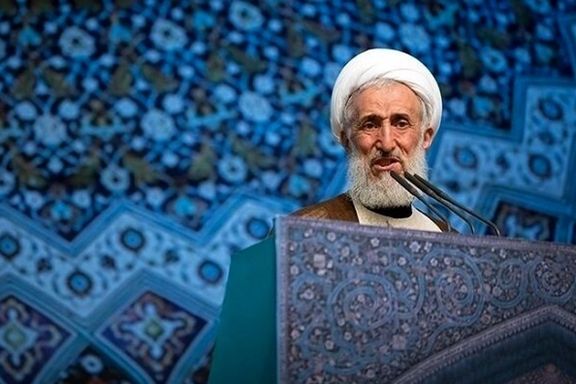
Cleric Kazem Sedighi
A senior Iranian cleric whose family is at the center of a high-profile corruption investigation has stepped down from his role as Tehran’s interim Friday prayer leader, Iranian state media reported on Sunday.
Kazem Sedighi, a longtime ally of Supreme Leader Ali Khamenei, requested to be relieved of his duties in order to focus on academic and religious work. The request was approved by Khamenei, in line with Article 110 of Iran’s Constitution, which gives the Supreme Leader authority over key appointments.
Sedighi, a prominent religious figure often seen at the pulpit of Tehran University’s weekly Friday prayers, had held the post since 2009.
The move comes weeks after Sedighi’s son and daughter-in-law were arrested by the Revolutionary Guard’s Intelligence Organization in connection with an alleged land deal involving public property in northern Tehran.
The case, which has sparked widespread attention on Iranian social media, centers on the transfer of a 4,200-square-meter plot—valued at around $20 million—from a seminary founded by Sedighi to a company linked to his family.
According to documents leaked by Iranian journalist and whistleblower Yashar Soltani, the company was established in mid-2023 and included several close associates of Sedighi, including his daughter-in-law and a member of his personal security detail.
Sedighi initially denied the allegations, saying that he was unaware of the land transfer and alleged that his signature on the documents had been forged.
However, mounting public pressure and additional disclosures prompted him to issue a public apology and confirm the return of the land to the seminary.
Iran’s judiciary and the IRGC-affiliated Fars News Agency confirmed that Sedighi’s son and daughter-in-law were arrested in July. Authorities have said the case is under “careful and independent judicial review.”
While Sedighi has not been formally charged with wrongdoing, the episode has reignited public debate around accountability and corruption within Iran’s religious and political elite.
Friday Prayer Imams in Iran serve not only as religious leaders but also as political representatives of the Supreme Leader in their respective cities. There are more than 900 such figures across the country, many of whom hold influence over local institutions and business interests.
Sedighi, sometimes referred to by his critics as “the weeping sheikh” for his emotional sermons, has been a fixture of Iran’s clerical establishment for decades and was known for his outspoken loyalty to Khamenei.
As Iran faces a deepening water crisis, a recent report by The Economist shows how the Islamic Republic is quietly flooding Persian Gulf markets with fruit and vegetables through a sprawling export scheme.
“The Islamic Republic… is in a serious pickle,” The Economist wrote in its Friday report.
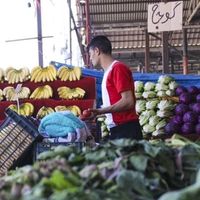
Flooding the Persian Gulf with fruit and veg is one of its ways to pay for foreign goods it so desperately needs, added the outlet, saying “Iran now supplies nine out of ten cauliflowers, tomatoes and watermelons imported by the UAE.”
The trade relies on large state subsidies that make water, fertilizers and energy almost free.
Iran’s greenhouse cultivation has more than tripled in area since the early 2010s, supported by imported technology from countries including China and the Netherlands. Much of the equipment, The Economist wrote, originates from Israel—“a leader in the field”—though routed indirectly.
But this export boom is exacerbating water scarcity across Iran. With agriculture consuming over 90% of available water, and government support concentrated on export-focused farms, residents in cities like Tehran, Isfahan, Mashhad, and many others endure hours-long daily shutoffs. Officials have warned of a collapse of groundwater resources and irreversible environmental damage.
Tomato harvest in Iran — a worker packs freshly picked tomatoes in crates on a farm.
Across Iran, families are enduring days without running water. Many are stockpiling bottles, installing rooftop storage tanks, or relying on tanker deliveries—some of which provide unsafe supplies.
Satellite images obtained by Iran International show that Tehran’s main reservoirs—Amir Kabir, Lar, and Latyan—are at historic lows, holding less than 10% of their usable volume.
At the same time, the capital is physically sinking. Excessive extraction from depleted groundwater resources has caused sections of Tehran to subside by more than 25 centimeters per year.
Iran's produce in Sharjah port
The report by the Economist details how Iran’s produce reaches the UAE’s Sharjah port via small ships from Bandar Lengeh, south of the country.
From there, trailers carry shipments to Dubai’s Al Aweer market, the region’s largest wholesale food hub, where wholesalers blend Iranian goods with other imports or repackage them entirely.
Labels are swapped to hide origin—“We just put a sticker on the carton with a new origin: Azerbaijan, Turkey—anything but Iran,” one trader said.
The export trade operates through a parallel financial system. Formal banking channels are avoided due to US sanctions, so traders use the informal system to settle payments.
UAE-based middlemen collect dirhams from food buyers and channel them to Iranian exporters—often in exchange for vital machinery and appliances Tehran cannot otherwise import.
Eggplants growing in an Iranian greenhouse
The Economist estimated the value of this clandestine export trade at $4bn to $5bn in 2024 alone.
Iran’s fruits often reach Persian Gulf supermarkets disguised and mispriced. Wholesalers inflate margins by mixing cheap Iranian tomatoes with Dutch imports and reselling the lot as premium goods.
“Instead of 4–5 dirhams, they sell the lot for 20–25 dirhams per kg,” said one insider. Some retail chains fly their staff business class and house them in luxury hotels—funded by “blended” produce profits, according to The Economist.
Despite occasional anti-dumping probes, Persian Gulf states appear to tolerate the flow. The report suggests some governments may see cheap Iranian food as a way to control inflation—or even preserve their own scarce groundwater by outsourcing farming to Iran.
But as water crisis deepens across Iran and key basins dry beyond recovery, Tehran’s strategy of exporting fruit may prove unsustainable. “However tempting,” The Economist warned, “bingeing on Iranian produce looks like a recipe for trouble.”
Capital flight from Iran’s stock market has intensified since the June war with Israel, with retail investors pulling half a billion dollars—much of it appearing to shift into gold or exit the country altogether.
The trend highlights a deepening crisis of confidence that extends well beyond the battlefield.
Roughly 450 trillion rials ( $500 million) in individual investor funds have exited the Tehran Stock Exchange (TSE) since the 12-day conflict began on June 13.
For a market valued at about $100 billion, of which retail holdings make up less than 10%, this scale of withdrawal is striking.
Though the war ended with a ceasefire on June 24, capital outflows have continued. The benchmark TSE index has yet to recover, indicating sustained unease among ordinary investors.
Safe havens over stocks
No official data is available on how capital is shifting across asset classes, but given the prolonged stagnation in Iran’s housing market, much of the capital exiting equities appears to be flowing into gold.
Recent data from the World Gold Council, published July 31, confirms the trend. In the second quarter of 2025, gold coin and bullion purchases in Iran rose by 20%, while jewelry demand increased by 12%, despite record global prices.
Iran was the only major country to record a rise in jewelry consumption during this period.
Crisis Habits Repeat
The summer of 2022 offers a telling parallel.
Iranian rial lost almost a third of its value during that year’s widespread protests—widely known as the Woman, Life, Freedom movement. The currency fall sparked a surge in gold buying that hit the highest level since mid-2018, when the US reimposed oil sanctions.
In recent years, Tehran has eased restrictions on gold imports to bypass banking sanctions. Exporters are now allowed to bring in gold instead of repatriating foreign currency, which would be subject to strict exchange rate controls or forced conversions.
As a result, Iran imported more than 100 tons of gold in 2024—worth over $8 billion. That figure is triple the previous year’s and represents roughly 11% of total imports, an extraordinary share for a single non-industrial commodity.
In a climate of banking restrictions, currency volatility, and public mistrust in the rial, gold has become the most accessible safe haven for Iranian capital.
Offshore Exodus
Precise figures for capital flight during spring 2025 are not yet available. But the Central Bank of Iran estimated that about $20 billion left the country each year in 2023 and 2024—six times more than in 2018.
For a country with a GDP of around $400 billion in 2024, such persistent outflows are economically devastating.
They signal not just financial instability, but a broader collapse of trust in the domestic system, both economic and political.
Tehran authorities closed public restroom services amid a deepening drought and water shortage, local media reported on Friday, depriving the capital's homeless and needy of badly needed facilities.
The decision deepens hardship as many residents including seniors, women and those with special needs keenly depend on the services, the Didban Website reported.
Iran is currently grappling with water shortages and widespread power outages amid high summer temperatures, while also dealing with recovery efforts following a 12-day war with Israel and its aftermath.
The reports highlight the urgent needs of people with kidney and prostate problems and note significant issues for parents with small children.
The government previously considered adding an extra day off during the week or introducing long weekends to reduce demand but ultimately did not pursue the plan.
Calls for systemic reform and restructuring of Iran’s political and security institutions have intensified after a 12-day war with Israel in June, accompanied by some signs of change but also many signs of continuity.
The Supreme National Security Council (SNSC) is already undergoing structural changes, according to semi-official Fars News, which reported on Friday that former hardline ex-nuclear negotiator Ali Larijani could be appointed as the SNSC’s new chief.
The report also suggested that a new Defense Council may be formed to guide the country’s strategic defense agenda.
Larijani, a longtime conservative figure with moderate tendencies, was closely associated with former president Akbar Hashemi Rafsanjani—widely recognized as the architect of pragmatism in Iranian politics.
His return to a senior security role could signal a shift toward a more flexible approach to domestic and foreign policy, though his recent postwar remarks have closely aligned with Supreme Leader Ali Khamenei’s positions.
Establishment hints at change
Nour News, closely linked to the SNSC, also signaled these impending changes in a July 30 post. More notably, it criticized the state broadcaster for airing interviews with individuals hostile to Western values, warning that such programming “may even lead to undesirable outcomes.”
The call for reform—long associated with Iran’s reformist factions—is now being echoed by conservative figures, reflecting shifting perceptions within the political establishment. Some have warned that failure to adapt after the war could lead to public unrest and new security challenges.
Ayatollah Mohsen Gharavian, a lecturer at the Qom Seminary, said in a July 31 interview with Khabar Online that “the Islamic Republic must revise its mode of governance in light of the war.” He specifically urged an end to government pressure on Iranian women regarding compulsory hijab rules.
He also called for major reforms in both domestic and foreign policy, asserting that Iran’s leadership now recognizes “the tremendous power of patriotism” and is exploring ways to ease the pressure on the weary citizenry.
‘Making up with people’
Ali Akbar Velayati, a former foreign minister and senior advisor to Khamenei, likewise advocated “some social changes to meet public demands,” drawing harsh backlash from ultraconservative media outlets.
Amid rising pressure, President Massoud Pezeshkian withdrew a controversial bill he had previously submitted to parliament that would have further restricted media freedom and access to information.
The conservative daily Farhikhtegan published a July 31 commentary titled “The Next Steps After the War,” urging a deeper understanding of Iran’s sociopolitical conditions to better anticipate future challenges.
While acknowledging Iranian claims of victory, the commentary emphasized credible counterarguments and criticized state television’s complacency.
It called for an assessment of public resilience amid postwar challenges—including energy shortages and the potential return of UN sanctions—which the editorial warned could provoke industrial action or even widespread protests.
Iranian officials say Tehran could run out of water within weeks, but climatologist Dr. Nasser Karami tells Eye for Iran the crisis transcends drought and is a product of government mismanagement, militarized agriculture and deliberate manipulation.
Karami calls it an “engineered drought”—a manufactured emergency that lets authorities avoid long-overdue reforms while shifting the financial burden to citizens.
“There is water,” he said. “But it costs the government more to deliver it in the summer—so they shift the burden to the public instead.”
Only 20–30% of Iran’s water shortage, Karami argues, is due to climate change. The rest is policy-driven—and reversible.
But instead of investing in infrastructure or reforming water use, the government relies on fear to suppress demand, while consumer prices remain unchanged.
“If people reduce their consumption just a little, it saves the government a lot of money,” he explained. “The price they pay for water stays the same, but the state spends less.”
The consequences are devastating.
Across the country, families are going days without water. Residents are hoarding bottles, installing rooftop tanks and depending on tanker trucks—some of which deliver polluted or undrinkable supplies.
Satellite imagery obtained by Iran International shows Tehran’s main reservoirs—Amir Kabir, Lar, and Latyan—at historic lows, holding less than 10% of their usable capacity.
Meanwhile, the capital is literally sinking. Over-pumping aquifers has caused parts of Tehran to subside by more than 10 inches a year.
The crisis is fixable, Karami says, yet the system profits from public panic as ordinary Iranians are left to suffer.
“This is not the first time they’ve said Tehran would run out of water in two weeks,” Karami said. “And yet, the water keeps flowing.”
Beyond drought
"The solution is: you have to take part of the water from agriculture and give it to the people. That is very easy," Karami said.
Agriculture, he said, consumes more than 90% of Iran’s freshwater annually, yet contributes just 9-12% of GDP and employs only about 17% of the workforce. In contrast, households use just 4-5%, and industry only 1%.
Despite its relatively small economic footprint, agriculture’s massive water consumption places unsustainable pressure on Iran’s finite freshwater supplies.
But Karami says this isn’t conventional agriculture but in large part state-guided enterprise aimed at provisioning Iran's sprawling military.
"They’re using all water resources for agriculture to make enough food for the soldiers," he said.
Wells proliferation
The numbers tell the story: Iran’s cultivated land has more than doubled since 1979. Deep wells have exploded from 40,000 to over one million. Roughly 40% of agricultural water is wasted in transport or lost to outdated irrigation methods.
Karami says just a 5% cut in agricultural water use would free up enough water—4 to 5 billion cubic meters—to supply Iran’s entire urban population.
He believes efficiency is possible: through irrigation upgrades, reduced waste, and mechanizing half of Iran’s farmland. But he doubts the political will exists to pursue it.
“We’re the first in the world for soil erosion. First in desertification,” Karami warned.
"The main legacy of the Islamic Republic won’t just be executions or war. It will be this: environmental collapse."
Despite the scale of the suffering, Karami doubts the current crisis will trigger mass protests. He believes the authorities will likely resolve the immediate shortages in the coming weeks—just enough to defuse tension and avoid unrest.