Iran, US could hold Norway-mediated talks in August – Tehran Times
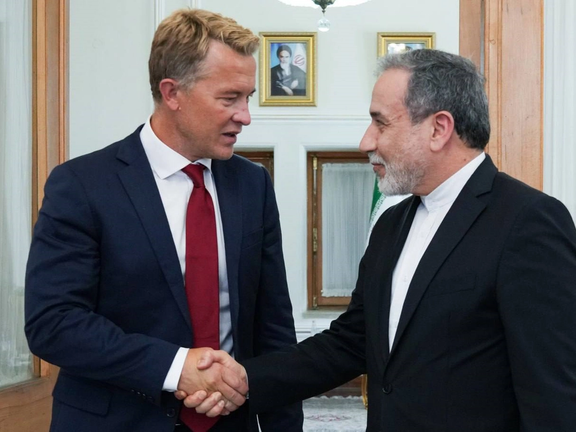
Norway’s Deputy Foreign Minister Andreas Kravik and Iran’s Foreign Minister Abbas Araghchi.
Iran and the United States could begin Norway-mediated talks in August, Iran’s state-run English-language newspaper Tehran Times reported on Friday, citing unnamed sources familiar with the matter.
The paper said the discussions would be indirect, with the mediator acting as a go-between, and would cover both Iran’s nuclear program and Tehran’s demand for compensation over damages from the June war with Israel and the United States.
The United States has dismissed Iran’s compensation demand as “ridiculous,” with State Department Principal Deputy Spokesperson Tommy Pigott saying earlier this month that Tehran should instead “stop funding terrorist death squads” and “stop wasting money on a nuclear program that isolates them further.”
Iran and the US held five rounds of talks between April and May this year in Muscat, Oman, and Rome, Italy. A sixth round was scheduled to take place in Muscat on June 15, but was indefinitely suspended after Israel launched airstrikes on Iran two days earlier.
The ensuing 12-day conflict in June included US strikes on Iranian nuclear facilities at Isfahan, Natanz and Fordow, and Israeli strikes that destroyed critical infrastructure, killing several senior military and scientific figures as well as hundreds of civilians. Iran responded with missile strikes that killed at least 27 Israeli civilians.
Norwegian visit to Tehran
Norway’s Deputy Foreign Minister Andreas Kravik visited Tehran this week and met with Iran’s Foreign Minister Abbas Araghchi. While the official readout made no mention of nuclear talks, the Tehran Times linked the trip to the mediation effort. Norway was among the few Western states to join 120 countries in condemning Israel’s June strikes on Iran.
Israeli attack was US-directed, Iranian president says
President Masoud Pezeshkian said on Saturday that the Israeli June strikes were conducted “with the guidance and support of America” and aimed to spread unrest through “blind strikes” and the assassination of military commanders, scientists and civilians. “When it comes to the security and independence of the country, all differences fade and the principle is Iran,” he said, adding that even political opponents joined in defending the country.
Trump calls Iran a ‘very evil place’
US President Donald Trump said on Wednesday that American action had prevented wider wars in the Middle East by “stopping Iran from having a nuclear weapon.” He called Iran “a very evil place” and warned that if Tehran restarted its program, “we’ll be back as soon as they start.”
Iran will stop the establishment of a US-backed transit corridor in the South Caucasus even without Moscow’s help, as it would endanger regional security and alter the geopolitical map, Ali Akbar Velayati, a senior adviser to Iran’s supreme leader, said on Saturday.
“Mister Trump thinks the Caucasus is a piece of real estate he can lease for 99 years,” Velayati told IRGC-affiliated Tasnim News, referring to the route included in Friday’s US-brokered Armenia–Azerbaijan peace deal.
“This passage will not become a gateway for Trump’s mercenaries — it will become their graveyard,” he said, dismissing the idea as “impossible” and “political treachery” aimed at undermining Armenia’s territorial integrity.
He stressed that Iran has “always opposed” the so-called Zangezur corridor, saying it would alter borders, fragment Armenia, and restrict Iran’s own regional access. He said that when Turkey and Azerbaijan previously pushed the plan, Iran staged multiple military drills on its northwestern frontier to signal readiness to block it.
US-brokered deal signed in Washington
Velayati’s remarks came a day after Armenian Prime Minister Nikol Pashinyan and Azerbaijani President Ilham Aliyev signed a US-brokered peace agreement at the White House alongside US President Donald Trump.
The accord grants Washington exclusive development rights to a strategic transit route across Armenia that would link mainland Azerbaijan to its Nakhchivan exclave, without passing through Iran or Russia. The White House said the “Trump Route for International Peace and Prosperity” would boost energy exports and trade across the region.
Armenia and Azerbaijan have been in conflict since the late 1980s over Nagorno-Karabakh, fighting several wars, most recently in 2023 when Baku regained full control of the enclave. Russia mediated in past years, but its influence has waned since its 2022 invasion of Ukraine.
Tehran warns of foreign interference
Iran’s foreign ministry on Saturday said it “welcomes” the peace text as an “important step” toward lasting stability, but warned that projects near its borders should be implemented “within the framework of mutual interests, with respect for national sovereignty and territorial integrity, and without foreign interference.”
Velayati echoed that line, saying “whether with Russia or without Russia, we will move to protect the security of the South Caucasus” and adding that he believes Moscow is also opposed to the corridor on strategic grounds.
NATO ‘snake’ at the border
Calling the corridor “a political plot, not just a trade passage,” Velayati said it would open the way for NATO to position itself “like a viper” between Iran and Russia. He argued that no Armenian government could legitimately agree to the “partition” of its territory, regardless of US pressure, and claimed that even Prime Minister Pashinyan had previously told Iranian leaders he opposed the route.
More than one million migrants were returned from Iran to Afghanistan over the past 100 days, including 450,000 from Tehran province, Tehran’s governor said on Saturday.
“Those without legal documents were identified and transferred to border crossings shared with Afghanistan and returned to their own country,” Mohammad Sadegh Motamedian told reporters on Saturday.
“Managing foreign nationals was one of the priorities of the government,” he said, adding that half of all foreign nationals in the country reside in Tehran province, prompting a province-wide identification effort.
Last year, more than 6,000 classrooms in the province were used by over 220,000 foreign national students, according to the governor.
“This year, families can register their children in those schools, which means existing educational capacity without building new schools will be available to our own students.”
In late July, Amnesty International called on Iran’s interior minister to take urgent action to halt the expulsions of Afghans.
The group said more than one million Afghans, including Iran-born individuals and long-term residents, had been forcibly returned to Afghanistan in recent months. Amnesty linked the mass returns to the escalation of hostilities between Israel and Iran, saying over half a million Afghans had been expelled since June 1, including thousands of unaccompanied children.
The organization said millions more remain at risk, particularly women and girls, who “must be treated as prima facie refugees and not returned to Afghanistan, where the Taliban are committing the crime against humanity of gender persecution against them.”
In previous remarks, Iranian officials have framed deportations as part of efforts to regulate residency and ease pressure on public services in areas with high concentrations of foreign nationals.
Over 40 days after a 12-day war with Israel left dozens of senior Revolutionary Guards dead, key command posts in Iran’s military remain unfilled, raising questions over the Islamic Republic’s operational cohesion.
The aftermath of Israel’s strikes, which dismantled parts of Iran’s military command structure in hours, continues to reverberate through the Revolutionary Guards.
The targeted attacks killed over 20 senior commanders, including Mohammad Bagheri, Chief of Staff of Iran's Armed Forces; Hossein Salami, IRGC Commander-in-chief; and Gholamali Rashid, Head of Khatam al-Anbiya Central Headquarters.
Some commanders died in their homes, others in a secure bunker during an urgent meeting said to be convened after a cyber-generated fake message.
In the immediate response, the system moved quickly to announce replacements — Abdolrahim Mousavi as new Chief of Staff of Iran's Armed Forces, Mohammad Pakpour as IRGC Commander-in-chief, and Ali Shadmani at Khatam al-Anbia.
Within five days, Shadmani was killed in what his daughter described as a car chase by an Israeli hit team.
The daily Kayhan wrote another commander had been appointed but withheld the name for security reasons, a report officials have neither confirmed nor denied.
Iran International’s review shows that other key posts remain vacant: the Armed Forces’ Deputy for Operations, previously held by Mehdi Rabbani; the Deputy for Intelligence, formerly Gholamreza Mehrabi; the IRGC Aerospace Force Intelligence post left by Khosro Hassani; and several regional intelligence commands.
Many of the 30 senior officers killed have yet to be replaced.
The attacks on June 21 also struck the IRGC’s external arm, killing Mohammad Saeed Izadi, who oversaw Palestinian operations, and Mohammadreza Nasirbaghban, the Quds Force’s deputy for intelligence. No successors have been named, even as Tehran seeks to rebuild its regional alliances after the conflict.
Silence surrounds IRGC navy chief’s absence
IRGC Navy chief Alireza Tangsiri has been absent from public view for nearly two months.
Tangsiri, who between late-March and early June appeared in over 20 official interviews and speeches in nearly 75 days and repeatedly issued harsh warnings to the US and Israel, has had no public or media presence for almost two months, since just before the war began.
On August 8, state media published a written message under his name for National Journalists’ Day, but it remains unclear if he authored it.
A source familiar with the matter, speaking anonymously, said Tangsiri has cancer and that his deteriorating health has kept him out of public events.
His absence, coupled with the unfilled naval command posts, is costly for the armed forces’ structure.
Attempted fixes and lingering risks
In an effort to restore coordination, the Islamic Republic has formed a Defense Council comprising representatives from the army, IRGC, intelligence ministry, and general staff. Chaired by the president, with Supreme Leader envoys Ali Shamkhani and Ali Akbar Ahmadian as members, the council is intended to bridge operational gaps.
Still, without permanent appointments to critical posts — especially in operations, intelligence, the Quds Force, and the navy — Iran’s military command remains in flux.
The continuing vacancies, layered over the unprecedented loss of top brass, point to more than a temporary disruption. They suggest a deeper challenge to the Revolutionary Guards’ ability to maintain both strategic direction and battlefield command.
Iran’s president said on Saturday that Israel’s attack on the country during the June 12-day war was carried out under US direction and in pursuit of Washington’s objectives.
“The Zionist regime, with the guidance and support of America, attacked Iran, and this attack was in line with America’s objectives,” President Masoud Pezeshkian said in remarks broadcast on state TV. He said the aim was to create chaos through “blind strikes” and the assassination of military commanders, scientists and civilians.
Twelve-day war
Iran and Israel fought a 12-day conflict in June that included US strikes on Iranian nuclear facilities at Isfahan, Natanz and Fordow, and Israeli strikes that destroyed critical infrastructure, killing several senior military and scientific figures as well as hundreds of civilians. Iran responded with missile strikes that killed at least 27 Israeli civilians.
Pezeshkian said the attackers aimed to spread unrest but failed. “The people, with their presence on the scene and their resistance, were victorious,” he said, adding that even prisoners and political opponents joined in defending the country. “When it comes to the security and independence of the country, all differences fade and the principle is Iran.”
Trump’s comments on Iran
President Donald Trump on Wednesday described Iran as “a very evil place” and credited US action with preventing wars across the Middle East by crippling Tehran’s nuclear program. “We have stopped wars in the Middle East by stopping Iran from having a nuclear weapon,” he said. “They can say they’re going to start all over again. But that’s a very dangerous thing for them to do, because we’ll be back as soon as they start.”
Iran cautioned on Saturday that any foreign interference near its borders could undermine security in the South Caucasus after Armenia and Azerbaijan signed a US-brokered peace agreement.
“We express our concern about the negative consequences of any foreign intervention, especially in the vicinity of our shared borders, that could harm the region’s lasting security and stability,” the foreign ministry said in a statement.
It said Iran “welcomes the finalization of the peace text by the two countries” as “an important step in achieving lasting peace in the region,” but added that projects near its borders should be developed “within the framework of mutual interests, with respect for national sovereignty and territorial integrity, and without foreign interference.”
Agreement signed in Washington
The announcement came a day after Armenian Prime Minister Nikol Pashinyan and Azerbaijani President Ilham Aliyev signed the agreement at the White House with US President Donald Trump. The agreement includes exclusive US development rights to a strategic transit corridor through the South Caucasus that the White House said would facilitate greater exports of energy and other resources.
That route will connect Azerbaijan and its autonomous Nakhchivan exclave, which are separated by a 32-kilometer-wide (20-mile-wide) patch of Armenian territory. The deal includes an agreement that will create a major transit corridor to be named the Trump Route for International Peace and Prosperity, the White House said.
Armenia and Azerbaijan have long been in conflict over territory and fought several wars. Russia acted as the main mediator for years, but its influence has declined since its 2022 invasion of Ukraine.
Tehran calls for regional framework
The ministry said Iran is ready to continue “constructive cooperation” with Armenia and Azerbaijan through bilateral and regional channels, including the 3+3 mechanism, which brings together Armenia, Azerbaijan and Georgia with Iran, Russia and Turkey to address regional issues without outside powers.