Israeli attack on SNSC meeting designed to kill Pezeshkian, official says
Iran's President Masoud Pezeshkian
The chief of staff to Iran's president said Israel’s attack on a Supreme National Security Council (SNSC) meeting on June 16 was a targeted attempt to kill Masoud Pezeshkian, who escaped with a minor injury.
On the fourth day of the Israeli 12-day war on Iran, the SNSC meeting attended by the heads of Iran’s three branches of power was hit by six bombs or missiles. Iranian state media later reported that President Pezeshkian and some other officials sustained minor leg injuries when trying to flee.
“I immediately ran out of the meeting and saw Pezeshkian walking about four meters away. He was on his feet, with a slight injury to his leg,” Mohsen Haji-Mirzaei, chief of staff to the Iranian president, said in an interview aired by the state TV on Friday.
He said that despite his injured leg, President Pezeshkian took a shower that day and met with Supreme Leader Ali Khamenei. The next day, he visited a doctor to drain a swollen hematoma from his leg.
“Israel had a calculated plan to kill Pezeshkian, but God did not will his death,” Haji-Mirzaei said.
Israel targeted the building’s entrances and exits with six missiles or bombs to block escape routes and cut off airflow, Revolutionary Guards affiliated Fars News reported last month.
“Interior Minister Eskandar Momeni had inhaled so much dust that he was struggling to breathe, and medics were helping him," Pezeshkian's chief of staff said.
“I saw General Mousavi (Abdolrahim Mousavi, chief of staff of the Iranian armed forces) with his face and body covered in dust and his clothes torn,” Haji-Mirzaei added.
Israel launched a surprise military campaign on June 13 targeting military and nuclear sites, assassinating senior Iranian commanders and killing hundreds of civilians.
During the 12-day conflict, Israel killed more than 30 senior security officials and at least 11 senior nuclear scientists. According to an Iranian government spokesperson, 1,062 Iranians were killed, including 786 military personnel and 276 civilians.
Iran retaliated with missile strikes that killed 31 civilians and one off-duty soldier. On June 22, the United States joined the campaign by carrying out airstrikes on Iran’s key nuclear facilities at Fordow, Natanz, and Isfahan.
A US-brokered ceasefire put an end to the conflict on June 24.
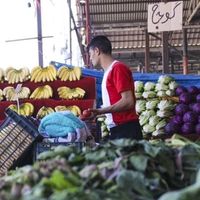
Iran’s customs data indicates that strategic reserves of animal feed have declined, raising warnings about potential impacts on the country's food security.
“Customs data shows a 60% decrease in soybean meal imports and an 8% decrease in corn imports in the first four months of this year compared to the same period last year,” ILNA news agency reported.
“Animal feed inputs of very low quality have reached end consumers at prices about twice the approved rates due to import monopolies — a trend that seriously threatens the country's food security in the sensitive period following June’s 12-day war with Israel,” ILNA quoted Mojtaba Aali, the CEO of the National Livestock Farmers Union, as saying, referring to June's 12-day war with Israel.
Aali said that livestock farmers in Fars province, a key hub for livestock production, recently held protests over the issue.
According to Iranian media, over the past five months, reserves of supplies such as corn and soybean meal, which are mostly imported from countries such as Brazil, have been significantly lower than the country’s monthly consumption.
In the same period, a rise in prices has been recorded, affecting most livestock farmers and their ability to purchase animal feed.
“Corn has been traded at 130,000 rials ($1.30), barley at 220,000 rials ($2.30), and soybean meal at 230,000 rials ($2.40),” ILNA reported.
According to S&P Global, the June war has left behind many issues facing the country's food security, not least regarding essential imports.
"Exporters of corn and soybeans in Brazil and Basmati rice from India have already raised alarms about trade with Iran due to rising insurance premiums, delayed payments, and wartime dangers such as jamming of navigation or communication systems," its analysts wrote.
As of 2025, data from Iran’s Statistics Center shows that the country’s agricultural land has shrunk to 15.43 million hectares, a decrease from 18 million hectares in previous years.
Farming continues to be a major source of livelihood, supporting over 4.5 million people, 89% of whom live in rural areas and 11% in urban settings, with the agricultural sector contributing roughly 8.3% to Iran’s GDP and employing about 27% of the national workforce.
Compounding this, over the past year, the country has experienced a 1.5°C increase in average temperatures and a 45% decline in rainfall, leading to further desertification across the country.
A senior Iranian intelligence official and a network of operatives have been identified as key figures in a cyber group that targeted London-based broadcaster Iran International and its staff, according to information obtained by the channel.
The hacking group, known as “Handala,” is tied to the Iranian Ministry of Intelligence’s Domestic Security Directorate and operates as part of a broader cyber unit known as “Banished Kitten” — also referred to as Storm-0842 or Dune.
This unit falls under the supervision of Yahya Hosseini Panjaki, the ministry’s deputy for domestic security. Panjaki was sanctioned by the United States in 2024 over alleged plots to assassinate Iranian dissidents abroad, a few months after his identity was exposed by Iran International.
The broadcaster said the latest findings show that the July cyber operation was intended to intimidate journalists and disrupt their work, with the group publishing personal documents, private images, and screenshots from an editorial meeting.
A screengrab from a video showing Ali Bermoudeh
According to information obtained by Iran International, one of the identified operatives is Ali Bermoudeh, a 27-year-old from Tabriz who runs an online store and has previously worked with Iran’s cyber police (FATA).
One source said that "Bermoudeh is an amateur hacker whose passwords for many of his main accounts are simply his date of birth. All his user credentials with that same password are stored with one service provider."
According to the source, he has been gathering user data for security agencies since his teenage years, and he is connected to the network through his father Mousa Bermoudeh, a provincial official with the state-affiliated Foundation of Martyrs and Veterans Affairs and a decorated IRGC Basij member.
The group also includes Morteza Aftabifar, said to be Bermoudeh’s handler within the Ministry of Intelligence.
Both men are from Tabriz, as is Panjaki, who heads the larger project within which the cyber unit operates.
Panjaki is described as part of a newer generation of intelligence managers trusted by Supreme Leader Ali Khamenei, with a background in political science from Azad University of Tabriz. He also founded a “Qassem Soleimani Headquarters” within the ministry, coordinating with the Islamic Revolutionary Guard Corps on overseas operations, the channel has learned.
In July, Iran International confirmed that leaked materials published by Iranian state outlets came from earlier hacks in summer 2024 and January 2025, which it attributed to Banished Kitten.
The channel said the hackers may have installed malware via compromised Telegram accounts. “These cyberattacks are part of a broader campaign of threats targeting Iran International, including physical threats against our staff.”
Iran International, which reports on events in Iran and the wider region, said its staff had faced sustained harassment since the channel was founded in 2017, including threats of assassination and kidnapping, physical assaults, online abuse, and hacking.
British lawmakers have accused Iran of engaging in “transnational repression” on UK soil, citing assassination plots, intimidation of family members, asset freezes, smear campaigns, and cyberattacks.
The channel has also been the focus of physical threats: in 2023 a man was convicted under terrorism laws after filming outside its premises, and in 2024 a presenter was stabbed in London.
Iran International said earlier in August that it had filed an urgent appeal to United Nations experts over “serious risks to the lives and safety” of its journalists worldwide and their relatives inside Iran.
US-based advocacy group United Against Nuclear Iran (UANI) called on Washington and its European allies to confront Iran’s transnational repression, which it says has escalated since the start of a 12-day war between Iran and Israel in June.
Iran’s foreign minister said on Thursday that Armenia has assured Tehran it will uphold all of Iran’s red lines regarding the Zangezur region and that no US forces will be stationed along the Iranian-Armenian border, amid concerns over the US-brokered deal in the South Caucasus.
Foreign Minister Abbas Araghchi told state media that Armenian leaders had engaged in direct consultations with Iranian officials in recent days to explain recent developments.
“Prime Minister [Nikol] Pashinyan spoke with our president, their foreign minister called me, and the deputy foreign minister of Armenia came to Tehran,” he said. “The Armenians insist on briefing us and have told us they will observe all of Iran’s red lines regarding Zangezur.”
Last week, US President Donald Trump brokered a peace deal between Armenia and Azerbaijan, which gives Washington leasing rights to develop the Zangezur transit route connecting Azerbaijan with its exclave, Nakhchivan. It will be renamed the Trump Route for International Peace and Prosperity (TRIPP).
Araghchi said the situation that has emerged is very different from earlier proposals. “It is natural that the full dimensions of the Zangezur issue are not yet completely clear,” he said. “But what the surface of the matter shows, and what the Armenians are telling us, is that what has happened is worlds apart from what was supposed to happen — a change in the geopolitical map of the region.”
Iranian Foreign Minister Abbas Araghchi during an interview with state television in the Iraqi city of Karbala on August 14, 2025
He recalled that initial discussions had involved the seizure of Armenia’s Syunik province, followed by the creation of a corridor. “We expressed our serious concerns, and that project was shelved.”
According to Araghchi, the current plan involves “an American company registered in Armenia under Armenian law, operating under Armenian sovereignty, to build the road.”
He added, “I am not saying what is happening is without concern. Based on what Armenian officials have told us, this road will be established by an American company registered under Armenian law and under Armenian sovereignty. They tell us they have respected and paid attention to all of Iran’s red lines in this matter.”
Rejecting claims that the project would make Iran a neighbor of NATO, Araghchi said Tehran had conveyed its concerns about any foreign presence to both Azerbaijan and Armenia.
“A US engineering company is to carry out the work, but there will be no American forces stationed at the Iran-Armenia border,” he said.
"Security will be provided by Armenia itself, and even private American companies will not be allowed to provide security. These are the statements from Armenian officials — of course, we will maintain the necessary vigilance.”
Hezbollah leader Naim Qassem warned on Friday that moves to strip the group of its weapons risk plunging Lebanon into war, vowing that the Iran-backed movement would not surrender its arsenal despite a recent government decision to disarm it.
Speaking in the eastern city of Baalbek at a Shi’ite religious gathering marking the Arbaeen, Qassem said “the resistance will not hand over its weapons” and pledged to fight a “Karbala-like battle” if necessary.
The Battle of Karbala, the most iconic event in Shia Islam, was fought in 680 between Imam Hussein, grandson of the Prophet Muhammad, and the forces of Umayyad Caliph Yazid I; Qassem likened Iran’s Supreme Leader to the “Hussein of our time” and named Israel and the United States as the “Yazid of our time.”
Qassem described the group’s arms as central to Lebanon’s “honor, dignity, patriotism, and sovereignty,” and credited the Islamic Republic for its ongoing financial, military, and political support.
Threatening US embassy in Beirut
Qassem also warned the Lebanese government against any moves to confront Hezbollah, saying such action would leave “no life” in the country.
He said Hezbollah and its Shi’ite ally, the Amal movement, had decided to postpone street demonstrations against a US-supported disarmament plan, citing a remaining window for dialogue with authorities.
However, he cautioned that any future protests could extend to the vicinity of the US Embassy in Beirut.
The US submitted a plan through President Donald Trump's envoy to the region, Tom Barrack, setting out the most detailed steps yet for disarming Hezbollah, which has rejected mounting calls to disarm since its devastating war with Israel last year.
Lebanon’s justice minister said on Friday that the government was already working on a plan to collect Hezbollah’s weapons before the US proposal, as part of efforts to strengthen state authority and keep arms solely in the hands of official forces.
"The threat by some to destroy Lebanon in defense of their weapons puts an end to the claim that the weapons are for defending Lebanon," Adel Nassar wrote on X.
The Lebanese cabinet’s August 5 order to disarm Hezbollah during conflict drew sharp criticism from Tehran.
Senior Iranian official Ali-Akbar Velayati called the decision “a dream that won’t come true,” labeling it an Israeli- and US-driven policy. Lebanon’s foreign ministry condemned those remarks as “unacceptable interference” in domestic affairs.
Qassem’s remarks came after Iran’s Supreme National Security Council Secretary Ali Larijani visited Lebanon, meeting Qassem, President Joseph Aoun, Parliament Speaker Nabih Berri, and other officials.
Aoun told Larijani on Wednesday that no group should bear arms outside the authority of the state or rely on foreign backing, while affirming openness to cooperation “within national sovereignty and mutual respect.”
Larijani responded by voicing respect for Lebanon’s government decisions but also urged Beirut to “appreciate the value of the resistance,” calling Israel the country’s true enemy.
He denied that Iran interferes in Lebanon’s affairs and pledged continued political and reconstruction support.
Founded in 1982 by Iran’s Islamic Revolutionary Guards Corps, Hezbollah has grown into Lebanon’s most powerful military force, surpassing the national army in capabilities. The group has fought multiple wars with Israel and has rejected any initiatives to dismantle its military wing.
“The aggression continues,” Qassem said, “and we will confront it as we have always done — with our weapons in hand.”
More than 20 members of Iran’s Baha’i minority in the central city of Isfahan have had their homes, assets and vehicles confiscated in recent weeks, in some cases being informed only by text message, the Baha’i International Community (BIC) said on Wednesday.
The Geneva-based group said the seizures were carried out under Article 49 of Iran’s constitution, which allows authorities to confiscate wealth obtained through illegal means. The BIC accused authorities of misusing the law “without any evidence, legal process, or transparency” to target citizens solely for their religious beliefs.
“Article 49 was designed to return stolen property to its rightful owners, not to plunder the possessions of citizens and deprive families of their homes and livelihoods,” said Simin Fahandej, the BIC’s representative in Geneva.
“What we are witnessing is effectively state-organized theft – confiscation by text message. This action is discriminatory, completely illegal, and aimed at impoverishing a religious minority simply because of their belief.”
The BIC said affected families have faced blocked bank accounts, frozen business transactions, and restrictions on selling or transferring property. In some cases, it said, court files were not recorded in Iran’s official judicial notification system, preventing defendants and their lawyers from reviewing them.
The confiscations were ordered by special courts operating under Article 49, which the BIC said are a branch of the Revolutionary Court overseen by the Executive Headquarters of Imam’s Directive (Setad), a state-controlled conglomerate under the authority of Supreme Leader Ali Khamenei.
The BIC said the measures in Isfahan follow a long-running pattern of property seizures against Baha’is since the 1979 Islamic Revolution, alongside other restrictions including denial of access to higher education, bans on certain jobs, and interference with religious burial sites.
According to the US-based Human Rights Activists News Agency (HRANA), the Baha’i community in Iran has faced systematic repression over the past five years, including the arrest of at least 284 people and more than 1,495 years in combined prison sentences.
HRANA said Baha’is account for an average of 72% of all recorded violations against religious minorities in Iran over the past three years.
Iran’s constitution recognizes Islam, Christianity, Judaism and Zoroastrianism as official religions, but not the Baha’i faith, which emerged in 19th century Iran. Islamic Republic authorities consider it a “cult” and have accused its followers of links to foreign powers, charges the Baha’is deny.