Iran’s foreign minister urges Europe to reverse ‘big mistake’ on sanctions
Iran's Foreign Minister Abbas Araghchi
Britain, France and Germany made a big mistake by triggering the snapback to reimpose UN sanctions on Tehran, but Iran would be ready for an agreement if the Europeans reverse course, the Iranian foreign minister wrote in an opinion piece for The Guardian.
Abbas Araghchi wrote that the European trio, known as the E3, were “enabling the excesses of Washington” by following US President Donald Trump’s strategy, which he said had derailed the 2015 nuclear deal.
“The E3’s gambit lacks any legal standing, chiefly because it ignores the sequence of events that led Iran to adopt lawful remedial measures under the nuclear deal,” he said.
He argued that it was the United States, not Iran, that abandoned the agreement, formally known as the Joint Comprehensive Plan of Action (JCPOA), in 2018, while Europe failed to deliver on promises to sustain trade and normalize economic relations.
“While failing to uphold its own obligations, Europe has expected Iran to unilaterally accept all restrictions,” he wrote, adding that the E3 “declined to condemn the US attack on my country in June – on the eve of diplomatic talks – and yet are now demanding UN sanctions on Iranians for supposedly rejecting dialogue.”
Araghchi warned that the sanctions push “will only further sideline them by eliminating [Europe] from future diplomacy, with broad negative consequences for all of Europe in terms of its global credibility and standing.”
But he also stressed that Tehran was open to negotiations on what he called “a realistic and lasting bargain.”
He wrote: “Iran remains open to diplomacy. It is ready to forge a realistic and lasting bargain that entails ironclad oversight and curbs on enrichment in exchange for the termination of sanctions.”
The minister said the alternative to diplomacy “may have consequences destructive for the region and beyond on a whole new level,” adding that Europe should “give diplomacy the time and space that it needs to succeed.”
Britain, France and Germany announced last month they had activated the “snapback” mechanism under UN Security Council Resolution 2231, which would restore sanctions unless the Council votes otherwise within 30 days.
Araghchi said on Saturday that Tehran will not return to the negotiating table under the same conditions that existed before the June war with Israel.
Iran’s parliament will on Sunday debate an emergency three-priority bill on withdrawing from the nuclear Non-Proliferation Treaty (NPT) and ending cooperation with the UN atomic watchdog, a senior lawmaker said, as Tehran faces renewed pressure over its nuclear program.
Parliament presidium spokesperson Abbas Goudarzi said the three-priority plan will be reviewed immediately without waiting in line, with Guardian Council members present to rule on its conformity with Islamic law and the constitution.
The draft, put forward by members of the national security committee, could see both general principles and details voted on the same day.
Tehran is weighing its options after Britain, France and Germany triggered the “snapback” mechanism last month to restore UN sanctions, citing Iranian breaches of the 2015 nuclear deal.
Officials have sent mixed signals: some lawmakers insist parliament can pass the measure on its own, while former nuclear chief Ali Akbar Salehi said such a decision lies with Supreme Leader Ali Khamenei.
The debate comes as Foreign Minister Abbas Araghchi said Iran will not return to pre-war negotiating terms after June’s conflict with Israel.
“It is not the case that after the war, we would just return to the negotiating table and as you call it ‘business as usual,’” he said on Saturday, though he added that indirect exchanges with Washington and talks with Europeans continue.
Araghchi also said Iranian diplomats in Vienna were “very close” to reaching a new framework of cooperation with the International Atomic Energy Agency, in line with a law passed by parliament.
Iran’s envoy in Vienna confirmed that the third round of technical talks with the IAEA had focused on drafting guidelines for safeguards implementation following strikes on nuclear sites.
Iraq’s prime minister has ordered the formation of a high-level committee to investigate allegations of corruption and smuggling of Iran's oil after the US Treasury sanctioned a network accused of exporting Iranian crude under falsified Iraqi origin.
The prime minister’s office said the committee, composed of relevant government agencies, will review information and reports pointing to corruption and suspicious operations in Iraq’s ports and territorial waters.
The US Treasury on Tuesday imposed sanctions on a vast network accused of blending Iranian oil with Iraqi crude and selling it as exclusively Iraqi, generating hundreds of millions of dollars in revenue for the Islamic Republic.
Washington said the network covertly blended Iranian and Iraqi oil through ship-to-ship transfers in the Persian Gulf and in Iraqi ports.
The sanctions target Waleed Khaled Hameed al-Samarra’i, based in the United Arab Emirates, along with his firms Babylon Navigation DMCC and Galaxy Oil FZ LLC, and nine Liberia-flagged tankers.
The Treasury estimated the operation generated about $300 million annually for both Iran and al-Samarra’i.
“Iraq cannot become a safe haven for terrorists, which is why the United States is working to counter Iran’s influence in the country,” Treasury Secretary Scott Bessent said in a statement.
“By targeting Iran’s oil revenue stream, Treasury will further degrade the regime’s ability to carry out attacks against the United States and its allies.”
The measures follow sanctions announced in July against another network accused of blending Iranian and Iraqi oil.
Tehran will not return to the negotiating table under the same conditions that existed before the June war with Israel, Iran’s foreign minister said Saturday, days after Europe triggered the snapback leaving Iran to engage with the US or face UN sanctions.
“We were serious about the negotiations on sanctions relief. We had five rounds of negotiations and had fixed a date for the sixth round, but two days before that Israel launched a military attack and the US joined it,” Abbas Araghchi said.
“After this unjust war, naturally the negotiations will have a different shape compared to before the war. It is not the case that after the war, we would just return to the negotiating table and as you call it 'business as usual'."
"This is certainly not possible as the circumstances have changed. It is not possible to enter negotiations as before the war," he said in an address to a business and investment conference.
The June conflict began with a surprise Israeli strike on Iranian military and nuclear sites on June 13. Tehran said 1,062 people were killed, including 786 military personnel and 276 civilians.
Israel said it killed more than 30 senior Iranian security officials and 11 nuclear scientists. Iran retaliated with missile strikes that killed 31 civilians and one off-duty Israeli soldier.
In his Saturday remarks, Araghchi stressed that while talks have not been taken off the agenda, they will enter a new phase.
“We are not saying negotiations are off the table, but they definitely have a new format and dimensions, and new concerns and factors have entered them that we must understand and design for."
Talks with US and Europeans
Araghchi said Iran is exchanging messages with Americans through intermediaries.
"The day the Americans reach a point where they are ready for dialogue based on mutual interests and mutual respect, we will resume negotiations," he said.
The foreign minister said Tehran's talks with the Europeans are continuing and that he hopes the two sides would reach a mutual understanding.
“I think a better understanding of the situation is emerging," he said, referring to his meeting with EU Foreign Policy Chief Kaja Kallas in Doha and his phone calls with E3 foreign ministers.
Iran 'very close' to deal with IAEA
Araghchi said Iranian diplomats in Vienna continued their negotiations with the UN nuclear watchdog on Saturday to reach a new framework for cooperation.
"As far as I have been informed, they had very good talks," Iran's foreign minister said. "We are very close to reaching an agreement on a new framework of cooperation with the Agency in line with the parliament’s law."
His remarks come as Iran has three weeks to reengage in negotiations with the United States and the UN nuclear watchdog or face the reimposition of UN sanctions, after the Europeans triggered the so-called "snapback" mechanism.
On August 28, Britain, France and Germany triggered the mechanism, demanding that Tehran return to talks, grant IAEA inspectors wider access and account for its uranium stockpile.
Under Resolution 2231, sanctions will automatically return after 30 days unless the Security Council votes otherwise.
Tehran risks sliding back into comprehensive multilateral isolation by the end of September, with the deadline for the return of UN sanctions fast approaching and Washington mulling restrictions on Iranian officials at this month’s General Assembly
Barely a week after the E3 (France, Germany and UK) set in motion the thirty-day countdown to reimpose UN sanctions, forty Republican lawmakers asked President Donald Trump to bar Iranian delegates from freely entering the United States.
Russia and China have signaled opposition to Europe’s move, offering Tehran diplomatic cover. But it’s not clear how far they would go if push came to shove.
For Israel, timing is critical.
The twelve-day war of 2025 showed both the dangers of escalation and the effectiveness of targeted strikes.
Israeli operations killed senior IRGC and Quds Force commanders and damaged Iran’s drone and missile networks. US forces joined with limited but highly consequential strikes on elements of Iran’s nuclear facilities, temporarily disrupting enrichment.
Iran can rebuild, but the episode laid bare the vulnerability of its most sensitive assets.
Yet the war also underscored the Islamic Republic's resilience and appetite for risk.
Tehran launched hundreds of missiles and drones at Israel, yet the conflict deepened doubts about its strategic trajectory under pressure.
At home, strains are mounting.
A summer of rolling blackouts, water shortages, and currency collapse has pushed the rial to historic lows. Inflation has eroded living standards, fueling discontent.
The return of UN sanctions could intensify instability, further constraining Tehran’s options abroad.
Against this backdrop, some policymakers are weighing military options, raising the question of international law.
Under Article 51 of the UN Charter, force is lawful only in response to an actual or imminent attack. Preventive strikes—such as Israel’s 1981 attack on Iraq’s Osirak reactor, unanimously condemned by the Security Council—remain controversial.
Iran’s program today is far more hardened and dispersed, and even a coordinated campaign could only delay, not dismantle, it—while risking multi-front retaliation. The global economic dimension looms just as large.
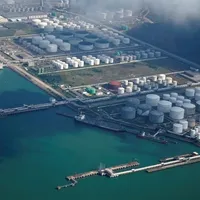
Iran has long threatened to close the Strait of Hormuz, which remains the world’s most sensitive energy chokepoint, and even limited hostilities could spike oil prices and strain fragile economies from Europe to Asia.
Despite these risks, advocates of preemptive strikes insist that the dangers of inaction outweigh the costs of escalation.
Yet the 12-day war underscored how quickly limited action can spiral into regional confrontation.
Iran has signaled tentative flexibility, but the snapback has created rare international cohesion. The coming weeks will determine whether pressure yields compliance, confrontation, or a recalibration across the region.
At least five people have died in recent months in incidents linked to electricity outages across Iran, the reformist daily Etemad reported on Saturday.
Two children were killed on August 5 in a village in northern Golestan province when a gas leak ignited as power was restored, the paper said.
Ten days later, two youths aged 16 and 18 in Fars suffocated after sheltering from the heat in a running car inside a garage; and a Tabriz resident died in an elevator-related accident as power disruptions multiplied,” according to Etemad.
“I wish we had never had electricity. It took the lives of my two children. They had just begun to live, had just stepped into society full of hopes and dreams. Suddenly, when the power came back, my house exploded. I came and saw the wall had collapsed on my daughter. Blood was coming from everywhere,” the bereaved mother said in a video shared after the Golestan blast.
Fatal incidents and urban hazards
Fire officials in Isfahan reported a 284% jump in elevator entrapments over a one-month period tied to outages. In the southwestern city of Yasuj, up to 20 people were trapped at once during blackouts, while reports from Khorramabad in west put such incidents at three to four times last year’s level, Etemad wrote.
Families sit in a dark hospital corridor during a blackout in Iran
A young woman in Shiraz said a routine 10-minute eye procedure stretched to over an hour because a surgical microscope repeatedly failed.
“Power fluctuations burned the microscope lamp in the middle of my eye surgery,” she said, adding that repeated replacements failed until the device was swapped out, leaving lasting damage to her right eye.
Patients with chronic conditions described blackouts as dangerous and costly. Frequent cuts forced daily dressing changes and purchases of pricier creams, A butterfly disease patient in Yazd said.
A man with a spinal injury in rural Urmia feared his anti-bedsore mattress would fail in surges: without it, he said, pressure ulcers were likely. Others said that when electricity goes, well pumps stop and mobile networks and home internet also drop, compounding risks for those needing help.
Surgeons continue an operation during a blackout in Iran, relying on flashlights for light.
Strain on daily life and business
Shopkeepers and small businesses reported spoiled food and lost inventory; one confectioner filmed trays of discarded cakes, blaming a single outage for rent, labor and waste. Poultry farmers in Dezful, Khuzestan province, cited higher mortality and reduced chick placement amid daily cuts.
Etemad’s reporting underscores how prolonged outages—often four to five hours a day—are cascading through homes, clinics and city infrastructure. The accounts point to a growing public safety challenge where routine power cuts are now measured not just in inconvenience, but in injuries and deaths.