Iran’s law on restricting IAEA work cannot bind agency, Grossi says
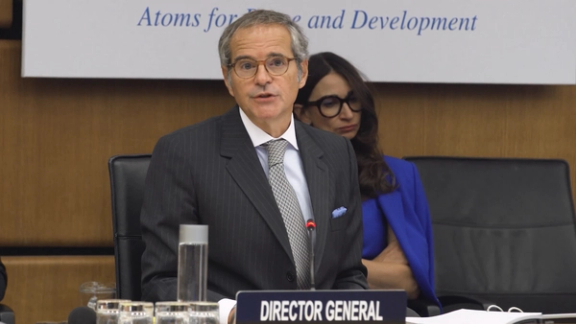
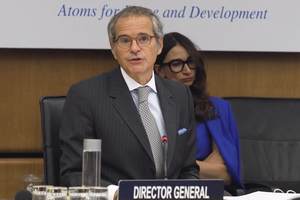
A screengrab of the IAEA Director General delivering his opening remarks at the Board of Governors meeting in Vienna, September 8, 2025.
Iran’s suspension of cooperation under a new domestic law cannot override its binding international commitments, IAEA chief Rafael Grossi told governors on Monday, opening the agency’s quarterly meeting in Vienna.
“While national law may create obligations domestically, it cannot do so for the IAEA,” he added, saying that the Non-Proliferation Treaty safeguards agreement remains fully in force.
“The consideration of Iran's nuclear program has remained at the center of our efforts in the past few weeks and especially after the attacks that took place in June.”
Iran’s curbs on inspectors
The Iranian parliament passed a law on June 25 restricting the agency’s work, approved by the president on July 2.
Since then, IAEA inspectors have been denied access to enrichment facilities at Fordow, Natanz, and Isfahan, with visits confined to the Bushehr power plant after Israeli and US military strikes in June.
A confidential IAEA report last week showed Iran’s stock of uranium enriched to 60% rose nearly eight percent before the June 13 Israeli attack, reaching 440.9 kilograms.
The agency acknowledged it “lost continuity of knowledge” over inventories during that period.
Snapback sanctions and stalled talks
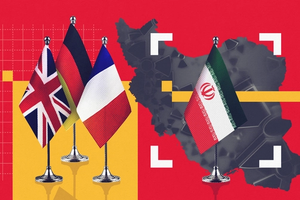
Following those developments, France, Germany, and the UK activated the UN sanctions snapback mechanism, prompting Iranian threats of retaliation.
Any new inspection framework must now be cleared by Iran’s Supreme National Security Council, and no agreement has yet been reached.
Grossi said technical discussions in Tehran and Vienna have made progress toward a practical arrangement to resume monitoring.
“It is my sincere hope that within the next few days, it will be possible to come to a successful conclusion,” he told governors.
Safeguards violations under scrutiny
The board is meeting against the backdrop of the IAEA’s May comprehensive report, which found Iran in breach of its safeguards obligations by concealing activities at sites including Lavisan-Shian, Marivan, Varamin, and Turquz-Abad.
The agency’s safeguards remain legally binding in Iran and must be fully implemented if wider diplomatic talks are to advance, Grossi told governors.
“The full implementation of the rights and obligations of the agency and Iran under Iran's NPT safeguards agreement is indispensable to paving the way towards real improvement in the overall situation,” he said.
With the general conference due next week and European powers pushing for a censure resolution, Grossi framed the coming days as decisive. “Always enough when there is good faith and a clear sense of responsibility,” he said, appealing for cooperation that could avoid escalation at the Security Council.
Press conference
After his remarks to the board, Grossi fielded questions in Vienna, saying he had no fixed plan to travel to Iran but hoped to do so “as part of the normalization of our contacts and relations with Iran.”
He described trust-building as gradual, citing consultations in Tehran and Vienna as well as his talks with Foreign Minister Abbas Araghchi. “It will take some time, but in my opinion, we are moving in the right direction,” he said.
He explained that legal deadlines under Iran’s safeguards agreement had already lapsed, and although the agency showed flexibility after days of attacks and damage to facilities in June, “we need to do what is necessary… it is not like we can go for weeks and months on end talking about this.”
On inspections and European snapback sanctions, Grossi stressed the agency’s independence: “We need to resume inspections because this is what we need to do, not because there is snapback.”
Still, he acknowledged that restarting work would carry a positive influence beyond the agency.
Grossi avoided political condemnations when asked about targeted killings of Iranian scientists, saying he would never endorse violence but that attribution was outside his mandate.
He confirmed that required 30-day checks on highly enriched uranium had not taken place and that there was still no clarity about the material’s location. The process of assessing Iran’s disclosures would only begin once access resumed, he added.
Grossi also dismissed remarks that IAEA data had been misused to enable attacks on facilities, calling the allegation “an absurd narrative.”
The agency, he said, had never shared confidential inspection information and was discussing additional measures to reassure Iran that safeguards data remained secure.
Obstacles to an agreement
Grossi said the main hurdles were practical -- gaining access to bomb-damaged facilities, addressing safety concerns, and navigating a new Iranian system that requires high-level political clearance.
Despite these obstacles, he said that negotiations were moving closer to agreement and voiced hope that a deal could be reached soon.
On the scope of inspections, he said that only the standard measures of the Comprehensive Safeguards Agreement were under discussion, since Iran is not applying the Additional Protocol.
He welcomed Tehran’s declared commitment to remain in the NPT but rejected calls to denounce individual states, warning that political condemnations would undercut his role.
Replying to Iran International
Responding to Iran International about a planned inspection at Isfahan nuclear site canceled by airstrikes, Grossi said he could not provide details of what was intended there.
He emphasized, however, that the agency had “no credible information about any other sites or places where enrichment activity would have been taking place before the attacks in June,” and added he expected access once conditions allowed.
Canada-based activist Hamed Esmaeilion on Sunday urged Iranians worldwide to take part in protests marking the third anniversary of the death of Mahsa (Jina) Amini, whose killing in police custody in 2022 sparked the Woman, Life, Freedom uprising.
Esmaeilion, a human rights activist and member of the board of the Association of Families of Flight PS752 Victims, said demonstrations will be held simultaneously in more than 20 cities across the globe.
In a video posted on X, he confirmed he would join a Toronto rally on September 14, marking the third anniversary of the 2022 protests that erupted nationwide following the death of Mahsa Amini.
He said similar gatherings were being organized in Berlin, Frankfurt, Cologne, Nuremberg, Geneva, Gothenburg, London, Barcelona, Turku, Ghent, Ottawa, Montreal, Houston, San Francisco, Sydney, Wellington and Christchurch. Events are scheduled between September 13 and 16.
Amini, a 22-year-old Kurdish woman, was arrested by Iran’s morality police on September 13, 2022, for allegedly violating the Islamic Republic’s strict hijab law. She collapsed in custody and died two days later, igniting months of nationwide unrest that rights groups say left at least 551 people dead, including dozens of women and children.
In his video, Esmaeilion said he would also attend a marathon in Toronto in memory of political prisoners and victims of executions, naming Sharifeh Mohammadi, Varisheh Moradi and Pakhshan Azizi among those he wished to honor.
He also expressed solidarity with Kurdish teachers dismissed or exiled in recent months, prisoners on hunger strike, and Mehran Bahramian, who was executed earlier in the month.
Last year, the second anniversary of Amini’s death saw protests from Melbourne and Tokyo to European capitals, with diaspora groups chanting Woman, Life, Freedom and calling for international sanctions on Iran’s leadership. The Los Angeles City Council renamed an intersection in the city’s Iranian district to mark the anniversary.
Rights organizations, including Amnesty International, have said Iran’s crackdown on the protests amounted to crimes against humanity. A UN fact-finding mission said widespread and systemic repression, particularly against women and girls, has continued since 2022.
Esmaeilion, whose wife and daughter were killed when Iran’s Revolutionary Guards shot down a Ukrainian passenger plane in 2020, has become a prominent voice among the Iranian diaspora.
He urged Iranians abroad to use the anniversary to amplify calls for justice and to ensure, he said, that “the world does not forget.”
Iran’s foreign ministry said Monday it will never negotiate on its defense capabilities, even as a third round of talks with the International Atomic Energy Agency concluded and further exchanges with the European Union over snapback remain under review.
“The Islamic Republic of Iran will under no circumstances negotiate about its defensive capacities,” spokesman Esmail Baghaei said at his weekly briefing.
“The Iranian nation will not allow talks on the tools necessary for defending our dignity and independence.”
On possible withdrawal from the Nuclear Non-Proliferation Treaty, he said the issue remains with parliament and no decision has been made.
Baghaei confirmed that EU contacts continue after Britain, France and Germany triggered the snapback mechanism on August 28, demanding wider access for IAEA inspectors and accounting for Iran’s uranium stockpile.
“Contacts between the two sides continue on a rolling basis—both at ministerial level and among deputies,” he said.
He called the foreign minister’s meeting with EU foreign-policy chief Kaja Kallas in Doha “useful” and confirmed Tehran is reviewing proposals exchanged with Brussels.
“We and the European side must examine and finalize these proposals in the relevant bodies,” he said, adding that further exchanges are likely but no timetable has been fixed.
A third round of talks with the IAEA ended on Saturday and is now being assessed in Tehran. “After the final assessment, the next stage of negotiations will be announced,” Baghaei said.
“Both countries believe that the three European states lack the legal competence to restore UN sanctions, because they have repeatedly and continuously breached their obligations,” he said.
A growing number of Security Council members share that view and argued that reverting to pre-2010 measures would be “illegal, unjustified and damaging,” he argued.
Tehran has been preparing “for all scenarios” in coordination with Moscow and Beijing, Baghaei added, describing them as key partners in the Security Council, BRICS and the Shanghai Cooperation Organization.
He confirmed Iran will present a resolution at the IAEA General Conference later this month, aimed at prohibiting attacks on nuclear facilities. The draft, he said, reflects existing international law and criticized Washington for threatening to halt agency funding if it is adopted.
Baghaei addressed Iran’s outreach to Venezuela, saying support is based on “principles of international law and awareness of the dangers of unilateralism and bullying.”
On China, he said Tehran’s 25-year cooperation agreement with Beijing is also progressing “without particular problems,” though oversight is required to address challenges as they arise.
On US limits to Iranian participation at the UN, Baghaei called the restrictions a violation of international rules but confirmed President Masoud Pezeshkian will attend the General Assembly in New York.
The spokesman ended by criticizing Washington’s proposed renaming of its defense department, saying it “explicitly declares its hostility to the principles and norms of international law.”
Donald Trump on Friday signed an executive order renaming the Department of Defense as the Department of War, reviving the title the agency held from 1789 until 1947.
US counter-narcotics operations off Venezuela are part of a broader drive to dismantle an Iran- and Hezbollah-linked drug-finance network, officials told Fox News Digital on Sunday.
Venezuela’s Tren de Aragua gang works closely with the Cartel of the Suns, a network of military elites long accused of moving cocaine in collaboration with Hezbollah, the report said.
“President Trump has taken numerous actions to curtail Iran’s terrorist proxies like Hezbollah,” State Department spokesperson Anna Kelly said.
“The president has proven that he will hold any terrorist group accountable that threatens the national security of our country by smuggling narcotics intended to kill Americans.”
Hezbollah’s role: laundering and logistics
Brian Townsend, a retired DEA special agent, called last week’s US maritime strike near Venezuela “a decisive blow against narco-terrorists.” He said Hezbollah’s role is pivotal yet often out of view.
“They don’t get their hands dirty. Instead, they launder and provide networks to help cartels send money through the Middle East. Simply, they take a cut from the drug trade, which then funds their operations in the Middle East,” he said, adding that Hezbollah has become “a main finance and money launderer for narco-terrorism groups like Tren de Aragua.”
Venezuelan National Guard personnel stand guard during the presentation of confiscated cocaine to the media in Maracaibo April 25, 2013.
Townsend and other experts pointed to state complicity as the key enabler. Under Nicolás Maduro and Hugo Chávez, Venezuelan officials and infrastructure have been tied in US indictments and sanctions designations to cocaine shipments protected by senior officers in the Cartel of the Suns, they said, with Hezbollah-linked facilitators processing portions of the proceeds.
Diaspora links and state support
Danny Citrinowicz, a senior fellow at Israel’s Institute for National Security Studies, said Hezbollah’s reach hinges on the region’s Lebanese Shia diaspora. “Hezbollah is the connector between the diaspora and Iran,” he said.
Through family ties, imams, religious centers and educational programs, he added, the group forges contacts with local cartels, sells drugs and channels profits back to Lebanon via elaborate schemes.
Citrinowicz cast Venezuela as Iran’s anchor in the Western Hemisphere, pointing to deepening military and economic ties -- from Iranian-assembled UAV production for the Venezuelan army and regular Quds Force flights via Africa, to training on sanctions evasion and billions in capital injections.
He said Tehran’s footprint is effectively tethered to Nicolás Maduro’s rule and would lose its most important Latin American stronghold if he left office.
“As long as Maduro is there, the Iranians will be there,” he said. “If Maduro goes, Iran will lose the most important stronghold of its activity in Latin America.”
Townsend argued the most effective leverage is financial: target facilitators, disrupt logistics, pursue indictments, and squeeze the money flows so cocaine shipments become less profitable.
“The priority is to attack the financial and logistical networks, indict everyone we can and pressure Maduro,” Townsend said. “If we can cut off the financial arteries, the cocaine won’t be as profitable.”
Chicken has become a measure of the Islamic Republic’s failure to stabilize basic goods, parliament speaker Mohammad Bagher Ghalibaf said Sunday, amid reports of a sharp drop in average meat consumption, with some citizens eating none at all.
“Today the price of chicken has turned into a symbol of mismanagement and poor coordination in execution and policymaking,” Ghalibaf said.
The rising costs “have made life hard for families and left fathers ashamed.”
He pressed the Pezeshkian administration to “urgently and in full coordination reorganize the market for essential goods, especially chicken.”
Once the affordable alternative to red meat, chicken has grown harder to access for many Iranian citizens.
Protein staple turns costly
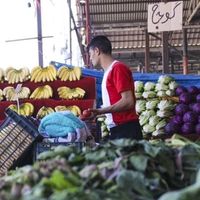
A whole slaughtered bird is about 1,250,000 rials per kilo (≈$1.25); breast around 2,500,000 (≈$2.5); thighs roughly 1,150,000 (≈$1.13); and fillet near 3,500,000 (≈$3.43). Retailers often sell above official rates, narrowing access to animal protein for low-income households. The average income in Iran is roughly $200.
Official data show food inflation in May 2025 rose 41.5% year-on-year, with the food, beverages and tobacco basket up 3.9% month-on-month.
Annual inflation hit 36.3% in August 2025. These figures reflect a persistent surge that daily market directives have failed to contain.
Ghalibaf cited international sanctions as a driving force behind rising prices. “Main remedy is to neutralize sanctions through domestic measures and that waiting for their removal is no solution."
“Sitting and waiting idly for the optimistic lifting of sanctions is no solution,” he said, adding that diplomacy has its place but cannot substitute for internal fixes.
Yet the pricing and inflation data he cites highlight problems that sanctions rhetoric may not resolve: official rates routinely flouted at retail, uneven enforcement, and a sustained rise in staple costs despite repeated announcements of market reorganization.
In June, secretary of the Meat Production and Packaging Association said Iran’s average meat consumption had dropped to as little as seven kilograms per person annually from an average of 18, with some citizens eating none at all.
“Meat consumption in Iran is deeply unequal—some eat nothing, while others manage 20 kilograms a year,” Masoud Rasouli said a few days before the beginning of Israeli war, pointing to the vast economic inequalities in the country.
Iran once averaged 18 kilograms of meat consumption per person annually, while the global average remains around 32 kilograms, he added.
Australia’s decision to expel the Islamic Republic's ambassador to Canberra was an unjustified move to please Israel, Iran's foreign ministry spokesman told Australian broadcaster Channel 9, blaming what he called a Mossad plot.
“It’s regrettable. We think what the Australian government did was unjustified,” Esmail Baghaei said in an interview with 60 Minutes.
The remarks came after Canberra expelled ambassador Ahmad Sadeghi following an ASIO-led investigation linking Iran’s Revolutionary Guards (IRGC) to two anti-Semitic attacks in Melbourne and Sydney.
Baghaei said “no one can believe in Iran that this accusation has any basis in reality. It is simply a fabrication."
The decision was “the easiest way to please or appease” Israeli Prime Minister Benjamin Netanyahu, he said, alleging that the case was the result of a Mossad-engineered plot.
Australian Prime Minister Anthony Albanese last month described the incidents — one targeting a Melbourne synagogue and another a kosher restaurant in Sydney — as “extraordinary and dangerous acts of aggression.” Albanese said they were attempts to “undermine social cohesion and sow discord in our community.”
The Australian government has since announced plans to designate Iran's Revolutionary Guards as a terrorist organization.
Baghaei dismissed such designations as the product of a “campaign of disinformation and misinformation,” saying the IRGC is a “strong force against Iran’s enemies.”
He also rejected allegations that Iranian authorities have monitored or harassed members of the diaspora in Australia, despite a 2023 Senate inquiry documenting hundreds of such claims.
“We categorically deny any such report, any such allegation of Iran doing surveillance or monitoring on our citizens in Australia,” Baghaei said.
Asked whether Iran would seek to repair relations, Baghaei said: “It was the Australian government that decided to cut down diplomatic relations. It was not vice versa … we have been self-restrained in terms of our reaction to what they did.”