Land subsidence accelerating across major Iranian provinces, official warns
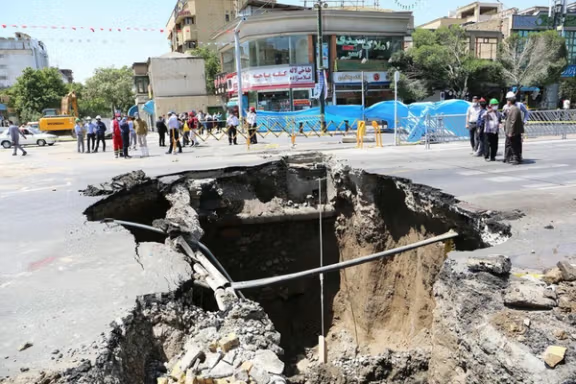
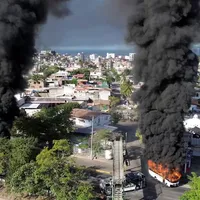
A view of the effects of land subsidence in Iran
Land subsidence has intensified across Iran in recent years, with excessive groundwater extraction, drought and climate change driving the sharpest declines in Khorasan Razavi, Isfahan and southern Kerman, the country’s crisis-management spokesman said on Friday.
“From the early 1970s, groundwater withdrawal increased and farmers and other users turned heavily to underground resources,” Hossein Zafari said in remarks published by ISNA. “Gradually, with this extraction and worsening droughts, land subsidence intensified in parts of the country and this trend has continued.”
Razavi Khorasan, Fars, Kerman, Khuzestan and Isfahan, Zafari said, contain Iran’s broadest subsidence zones, while Isfahan, Razavi Khorasan, Fars and Tehran have the highest number of cities exposed.
The largest affected populations live in Tehran, Razavi Khorasan and Isfahan, he added.
Officials in several ministries have raised similar alarms in recent months. Land subsidence now affects 30 provinces except Gilan, Culture Minister Reza Salehi-Amiri said on Monday, adding that conditions in several regions have reached a critical point.
Last month, Ali Beitollahi, head of earthquake engineering at Iran's Ministry of Housing research center, said 750 Iranian cities face subsidence, warning earlier this year that Iran ranks third globally for the scale of the phenomenon.
In 2023, reports emerged indicating that the Iranian government had withheld key information regarding the worsening subsidence crisis. Last year, Iranian experts classified the situation as "critical," warning that it threatens the lives of over 39 million people.
The crisis is driven by a combination of factors, including dam construction, climate change, inefficient water use in agriculture and industry, and the over-extraction of underground aquifers through illegal wells. These interrelated issues now pose a severe risk to millions across the country.
Tehran’s air reached the unhealthy for sensitive groups range on Friday as pollutant concentrations climbed and meteorologists issued an orange alert for six major cities, warning that stagnant conditions could drive indices toward the dangerous threshold in the coming days.
The 24-hour average for fine particulate matter (PM2.5) stood at 103 on Friday, placing the capital in the category affecting children, the elderly and people with heart or respiratory conditions, the Tehran Air Quality Control Company said.
Morning readings reached 133, extending the hazard to a broader segment of vulnerable residents.
The US EPA Air Quality Index uses six color-coded categories to show rising levels of pollution and health risk. It starts with Good (0–50, green), where the air poses little or no threat. Moderate (51–100, yellow) signals acceptable conditions but possible effects for a small number of sensitive people. Unhealthy for Sensitive Groups (101–150, orange) warns of heightened risk for those with respiratory or heart conditions. Unhealthy (151–200, red) means everyone may begin to feel adverse effects. Very Unhealthy (201–300, purple) marks a serious increase in health concerns. At the top of the scale, Hazardous (301+, maroon) indicates dangerous conditions where the entire population may face severe health impacts.
The stagnant pattern is likely to persist, Sadegh Ziaian, an official at the National Meteorological Organization, said on Thursday.
“An increase in pollutant concentrations in the major cities is certain,” he said, adding that only parts of Iran’s eastern belt would see winds strong enough to disperse particulates. “Tehran’s sky will remain clear with local haze, and air will reach unhealthy levels for all groups.”
Public health toll and calls for systemic reform
The health ministry has repeatedly stressed the human cost of chronic pollution. 58,975 deaths in the past Iranian year were attributable to poor air quality, an average of 161 a day, with economic losses estimated at $17.2 billion, according to Deputy Health Minister Alireza Raisi.
Meteorologists advised residents and authorities to curb non-essential travel, manage fuel consumption, restrict polluting industrial activity and avoid outdoor exercise. Environmental specialists continue to urge long-delayed measures – from retiring aging vehicles to expanding cleaner energy – warning that without structural reforms, cities such as Tehran will remain trapped in cycles of hazardous air and mounting health impacts.
Iran has made significant investments to restore its ballistic missile capacity, increasing the likelihood of renewed war with Israel, i24 reported on Thursday, citing Western officials.
“The fear of miscalculation and renewed conflict stems, among other things, from the fact that, like Israel, Iran feels that it is under an existential threat,” one of the Western sources said.
Western officials, according to the i24 report, assess that Tehran has prioritized missile reconstruction over accelerating its nuclear program, viewing the project as more urgent for national security. They told the channel that Iran’s new missiles are expected to be less precise because Israel damaged key planetary-mixer infrastructure during the 12-day war.
Iran has concluded it would need a large volume of missiles to overwhelm Israeli defenses, the officials added. The Houthis in Yemen, they also said, may escalate drone launches at Israel.
Satellite analyses published earlier by the Associated Press showed reconstruction work at Iranian missile-production sites struck during the war, though experts told the agency they had not seen signs of large solid-fuel mixers, a crucial component of the program.
The officials also warned that mutual damage in any new confrontation would be severe. “The Iranians know that if they attack, Israel will carry out a wide range of comprehensive attacks,” one said. “The Iranians will bring down skyscrapers in Tel Aviv, and in Tehran there will be great destruction.”
Israeli officials and Western governments have repeatedly referenced the prospect of another round of fighting in recent weeks. An Israeli security official said less than two weeks ago that the military is preparing for a conflict that could last longer than 12 days.
Israel may pursue an attempt at regime change in Iran, the sources told i24, but it is not certain that it will receive American support.
Iran said on Friday it will respond to the latest resolution by the UN nuclear watchdog’s board, calling it a political misuse of the agency and saying the vote has invalidated an inspection accord reached in Cairo.
The Foreign Ministry said the measure, backed by the United States and three European powers, has further undermined the credibility of the International Atomic Energy Agency.
Foreign Ministry spokesperson Esmail Baghaei said Tehran informed the Agency in an official letter that the understanding reached in Cairo in September is now considered void. “The so-called Cairo accord, which had been achieved through lengthy negotiations and Iran’s goodwill, is no longer valid,” he told state media.
Baghaei said the resolution showed “a clear misuse of an international body to advance the interests of the United States and three European countries.” He said Tehran will take reciprocal measures but did not give details.
In a separate statement early Friday, the Foreign Ministry described the IAEA Board of Governors’ resolution as “illegal and unjustified.” It said the measure was imposed under US and European pressure and “represents another example of their irresponsible behavior and misuse of the Agency to apply political pressure on Iran.”
The statement said the resolution violated the fundamental principles of the Non-Proliferation Treaty, which guarantees every member’s right to peaceful nuclear energy. It also said the board has “no legal authority” to revive Security Council resolutions that have already expired.
According to the ministry, “The United States and three European countries ignored Iran’s responsible and good-faith conduct, disrupting the positive path that had emerged between Iran and the Agency, and forced Iran to declare the termination of the September 9 understanding.”
The statement added that under that understanding, Iran and the Agency had resumed cooperation and allowed limited inspections of some nuclear facilities.
The IAEA Board of Governors on Thursday adopted a Western-backed resolution urging Iran to grant full access and information about its nuclear program. Diplomats said the measure passed with 19 votes in favor, three against and 12 abstentions. Russia, China and Niger voted against it.
The resolution calls on Iran to allow the Agency to verify its stock of enriched uranium and inspect atomic sites damaged by US and Israeli airstrikes in June. It also asks Iran to provide “without delay” data on nuclear material and safeguarded facilities.
Foreign Minister Abbas Araghchi said on Thursday the resolution effectively nullified the Cairo accord, an interim deal reached with IAEA Director General Rafael Grossi and Egyptian mediation. The agreement had aimed to restore limited inspections at facilities hit during the June conflict.
Iran links dispute to June attacks
Tehran says the IAEA resolution ignores what it calls the illegal US and Israeli attacks on its nuclear sites, which killed scientists and halted inspections. “Neither in the resolution nor in the statements of the United States and the three European countries is there any mention of those attacks,” Baghaei said.
Iranian officials have said the attacks caused a sharp drop in cooperation with the Agency because of safety concerns and political mistrust. Araghchi said this week that Tehran continues cooperation under the Non-Proliferation Treaty for facilities such as the Bushehr power plant but will not allow inspections at bombed sites.
‘West seeks dictation, not negotiation’
Araghchi said in a separate interview that Washington and its allies are seeking to impose demands rather than hold genuine talks. “They want us to accept zero enrichment and limits on our defense capabilities,” he said. “This is not negotiation. This is dictation.”
He said the United States has offered to close the Security Council file on Iran if Tehran accepts “unacceptable” conditions. “After the war they could not achieve their goals through force. Now they want to achieve them through pressure and so-called negotiation,” he said.
Baghaei said the new resolution will make it harder for the Agency and Iran to work together. “By disregarding Iran’s goodwill and cooperation, these countries have damaged the Agency’s credibility and independence,” he said.
Iranian Foreign Minister Abbas Araghchi said on Thursday that the United States has persistently pushed for negotiations with Iran on terms amounting to surrender, both before and after the 12-day June war.
“Even the latest message from the US was that they are ready to close the snapback sanctions issue and the Security Council file, but in exchange for things that are absolutely unacceptable,” Araghchi said in an interview with Khabar Online in Tehran published on YouTube.
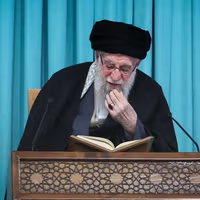
Araghchi said President Donald Trump’s letter to Supreme Leader Ali Khamenei shortly before the war explicitly offered two options: war and bloodshed, or direct negotiations to completely eliminate Iran’s nuclear enrichment and ballistic missile programs.
“When one side has maximalist demands and says from the beginning ‘accept them and then come negotiate’ – the same things they couldn’t achieve through military confrontation and now want through negotiation – they say ‘come negotiate’ but these results must come out of it,” he said.
Araghchi repeatedly accused the US of demanding the same maximalist outcomes through talks that it failed to achieve militarily, describing the approach as dictation rather than genuine give-and-take.
“Now our conclusion is not that America seeks real negotiation. They seek to achieve demands that are not only undesirable for us but harmful to our interests. Especially after this war, we cannot negotiate about our defense capabilities. We cannot negotiate to reduce missile range – there is no greater betrayal,” he added.
Iran’s top security official Ali Larijani said in September Washington has demanded Iran halt all uranium enrichment and curb its missile program.
“On enrichment – we spent 20 years, endured war and time, and before and during the war lost nuclear scientists. Now come and say zero enrichment? No one would accept such a thing," Araghchi said.
‘Witkoff could not sell it’
Araghchi said indirect Oman talks reached mutually acceptable solutions three times, but Trump’s envoy Steve Witkoff could not convince the administration in Washington.
“The thinking Trump has – and early in his term he said peace through strength, through force. Previous administrations said peace through diplomacy, but he said diplomacy through force,” he added.
Iran and the US held 5 rounds of indirect talks in Oman in April and May. The 6th round was scheduled but was cancelled due to Israel's surprise attack on Iran in June.
The strikes killed senior nuclear scientists along with hundreds of military personnel and civilians. Iranian counterattacks killed 32 Israeli civilians and an off-duty soldier.
Joining the conflict, the United States attacked three Iranian nuclear sites and Iran responded with missile attacks on a US airbase in Qatar before US President Donald Trump enforced a ceasefire.
“I repeatedly said you can hit buildings and facilities but not knowledge and will. That’s why he (Trump) says come negotiate – says come sign that you won’t enrich,” Araghchi said. “Their goals went beyond nuclear attack. But with our resistance they didn’t achieve them and won’t in future.”
‘Dictation not negotiation’
Asked what happened in New York alongside the UN General Assembly – where a meeting was reportedly planned but did not take place – Araghchi said it was due to White House preconditions.
“Our mediator was Rafael Grossi (IAEA Director General) and he was very eager to play a positive role. He told us Mr. Witkoff is very satisfied provided we negotiate directly – that Witkoff, I and Mr Grossi sit and negotiate,” he said.
“We were on the way to the airport when Mr. Witkoff messaged: my mandate for negotiation is ‘first accept this, then come negotiate; otherwise I won’t come to that meeting’. I told him everyone negotiates first then agrees – you want me to agree then negotiate? I used the phrase and said this is dictation,” Araghchi added.
Iranian government spokeswoman Fatemeh Mohajerani said last month that Iran had proposed a meeting in New York, but the US side did not attend due to preconditions.
“In New York again Grossi and the Europeans tried to make it happen and Witkoff said he would come, but my mandate is the same – if you accept I come. We said no,” Araghchi said.
'Dispute with IAEA'
Asked what will happen in Iran’s relations with the International Atomic Energy Agency (IAEA), Araghchi said there is a serious dispute over inspecting attacked sites.
“We are still a Non-Proliferation Treaty (NPT) member. We don’t say we won’t cooperate with the Agency. We currently still have cooperation with the Agency but regarding places not attacked, like Bushehr nuclear power plant,” Araghchi said.
“The Agency must clarify how inspection of a facility that was attacked works. Because there is no precedent. That they attack and then the Agency reports the extent of damage – that can’t be. Plus it’s dangerous: radiation danger and unexploded bombs danger exist,” he added.
The interview was conducted hours before the vote at the IAEA Board of Governors, which adopted a Western-backed resolution demanding greater transparency from Tehran.
“The resolution they raised against us at the Agency is very bad. But if passed it makes work with the Agency harder. Unfortunately it’s the West pushing the hard path, not us,” he said.
The resolution, adopted on Thursday and submitted by the United States, Britain, France and Germany, urges Iran to give the Agency access and information about its nuclear program.
In a separate interview with The Economist published on Thursday, Araghchi said any negotiations should be in a balanced setting. “We are ready to go for a deal, but for a fair and balanced deal, not a one-sided deal.”
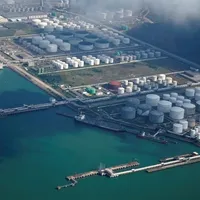
The US Department of the Treasury on Thursday imposed broad new sanctions on what it described as a network helping Iran evade restrictions on its petroleum exports and fund illicit activities.
The Office of Foreign Assets Control (OFAC) added more than 50 individuals, companies, vessels, and aircraft to its Specially Designated Nationals (SDN) list, focusing on front companies and shipping entities linked to Iran's Sepehr Energy Jahan Nama Pars Company — a key oil broker — and the already-sanctioned Mahan Air.
“Today’s action continues Treasury’s campaign to cut off funding for the Iranian regime’s development of nuclear weapons and support of terrorist proxies,” Secretary of the Treasury Scott Bessent said in a statement.“Disrupting the Iranian regime’s revenue is critical to helping curb its nuclear ambitions.”
Among the designated individuals are Singapore-based Fadzlon Bin Ahmad and his son Muhammad Danial Bin Fadzlon, who managed covert payments for Iranian oil, according to the Treasury announcement.
Several Iranian nationals directly tied to Mahan Air and Sepehr Energy operations were also added to the list, including Mohammad Reza Moaref Jahromi, Mohammad Mahdi Maghfoori, Ahmad Ghaedi, Hamidreza Heidari, Sayyed Mojtaba Hosseini, and Kaveh Rostami Zahabi.
Carriers and companies
UAE-based ship management firms including Alsafeenah Althahabya, Deep Current Shipping, and Mars Investment, as well as Singapore shipping entities Anbo Shipping and Strasselink, were designated.
Indian firm RN Ship Management and a newly established carrier, Yazd International Airways Company, which the treasury said was a front company for previously designated Mahan Air, were sanctioned as well.
A series of shadow-fleet oil and LPG tankers flying flags of convenience (Panama, Comoros, Cameroon, Palau, Gambia) were sanctioned for transporting Iranian petroleum products. Seven additional aircraft operated by Mahan Air were also designated.
Treasury officials say the action disrupts critical revenue streams Iran uses to fund proxies and destabilize the region, closing loopholes exploited through UAE, Singapore, and India-based facilitators.
The sanctions were announced the same day the IAEA Board of Governors passed a resolution demanding Iran provide urgent access and information on its enriched uranium stocks and bombed nuclear sites.