Iran executed at least 24 people over the weekend, rights groups say
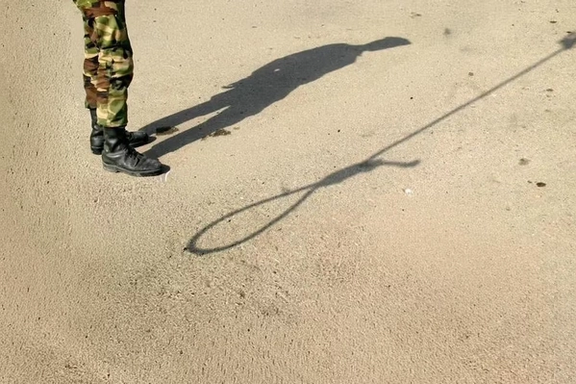
Iranian authorities executed at least 24 people across the country on Saturday and Sunday, underscoring what monitors describe as a rapid escalation in the use of capital punishment, human rights groups reported.
The figures indicate an average of 12 executions per day – roughly one every two hours.
The executions took place in prisons in different cities across Iran, reports from the US-based Human Rights Activists News Agency (HRANA) and the Oslo-based Iran Human Rights (IHR) said. Iranian state media acknowledged only one case.
According to the groups, 23 of those executed had been convicted on murder or drug-related charges, while one person was hanged in connection with an economic case. The judiciary confirmed the latter, describing the individual as a business owner accused of “economic corruption.”
Rights groups warn the real toll is higher
Activists said the announced figure reflects only confirmed cases. Many executions in Iran are carried out in secrecy, and details often reach human-rights organizations weeks or months later due to what monitors call systemic opacity within the judiciary.
The Oslo-based Iran Human Rights said on December 4 that at least 152 people – including five women and several foreign nationals – were executed in November. At least 1,426 people had been executed in the first 11 months of 2025, a 70-percent increase over the same period last year, the organization reported. HRANA has documented more than 1,500 executions between October 2024 and October 2025.
Growing international criticism
The surge has drawn condemnation from foreign governments and international bodies. The UK Foreign Office last month urged Iran to halt executions immediately. Days earlier, the UN General Assembly’s Third Committee passed a resolution condemning the Islamic Republic’s human-rights record, citing the rising number of executions, violations of women’s rights, repression of protesters and cross-border intimidation.
Rights organizations continue to call for stronger international pressure, warning that Iran’s accelerating execution rate reflects what they view as a deepening crisis in due process and the protection of fundamental rights.
President Masoud Pezeshkian acknowledged on Sunday that his government has been unable to lift longstanding internet restrictions, saying he has ordered the deactivation of so-called “white SIM cards” that granted unfiltered access to a circle of state-linked users.
Speaking at a ceremony marking Student Day, Pezeshkian addressed the controversy surrounding the preferential access system, which drew widespread criticism after a November update to X revealed that numerous journalists, officials and pro-government figures were using unfiltered connections.
“We have instructed that these white internet lines be turned black as well, to show what will happen to people if this blackness continues,” he said.
Pezeshkian has repeatedly promised to lift filtering, a key pledge of his 2024 presidential campaign. On Sunday, he again suggested that political constraints lie beyond his control. “It is not enough for me to simply order the lifting of filtering. If it could be solved by instruction, we would have done it on the first day,” he said.
The comments came as government spokeswoman Fatemeh Mohajerani said that the administration seeks “free internet for all,” despite saying last year that no such promise had been made. Instagram, X, Telegram, and some other platforms remain blocked more than a year into Pezeshkian’s term.
Iran's President Masoud Pezeshkian
A stalled pledge
Filtering reform was central to Pezeshkian’s campaign, when he said he would “risk his neck” to fix it. Yet in his first meeting of the Supreme Cyberspace Council he emphasized implementing the Supreme Leader’s directives on internet governance rather than easing restrictions and ordered action against the flourishing trade in VPNs.
Since then, senior officials have offered varying timelines. In December, Majid Farahani from the presidential office said filtering would be removed in three phases by the end of the year. The newspaper Farhikhtegan later reported consensus among Iran’s three branches of government to move from blocking toward “smart restrictions,” indicating the system is being recalibrated rather than dismantled.
Public anger intensified after revelations of the white SIM scheme, which critics said exposed a tiered access system contradicting the government’s rhetoric about digital equality.
Israel may strike Iran within the next year if it concludes Tehran is moving to restore high-level uranium enrichment, European diplomats told Al-Monitor on Saturday.
One Western diplomat said a new campaign would be “short and intense” but strategically limited. “Iran will evidently retaliate with a missile launch, perhaps hitting buildings the way it did last time,” the diplomat said, adding that the fundamental balance of power would remain unchanged.
Enrichment described as the main red line
The current post-war equilibrium is deeply unstable, Raz Zimmt of the Institute for National Security Studies told Al-Monitor. Israel, he added, has yet to define precise red lines on Iran’s ballistic missile program, but a return to enrichment, weaponization work or attempts to recover the roughly 408 kilograms of uranium enriched to 60 percent believed lost in the June attacks would almost certainly trigger a response.
“The more time passes without the United States and Iran reaching a nuclear agreement, the more likely a new round of conflict becomes,” Zimmt said.
Stalled diplomacy and Iranian pressure
Iran is rebuilding its air defenses, missile systems and protective measures around nuclear sites – a process Zimmt said could continue for up to a year without prompting an Israeli strike. But he warned Iran is effectively stuck in a “no war, no peace” posture, a phrase invoked by Supreme Leader Ali Khamenei, with sanctions eroding the economy while enrichment remains constrained.
Khamenei’s recent remark that the US is “not worthy” of engagement has further complicated prospects for diplomacy. Israeli officials argue any future US-Iran deal must cap enrichment at 3.67 percent, restore intrusive inspections and resolve the fate of the missing enriched uranium. Without those terms, some say, sanctions relief would be unjustified.
Zimmt noted Washington shows little urgency. Trump, he said, appears convinced the 2025 strikes destroyed Iran’s program – a view that reduces US pressure and leaves Israel preparing for what it sees as an increasingly likely confrontation.
Members of the European Parliament and the US Congress have urged major technology companies to strengthen support for secure, uncensored internet access in Iran, citing a surge in digital repression and discriminatory access systems, Euronews reported.
In a letter addressed to Google, Meta, YouTube and Amazon Web Services, the European Parliament’s Delegation for Relations with the Iranian People warned that Iran’s widening use of AI-driven surveillance, recurrent shutdowns and a “white SIM card” scheme for officials had created a two-tier digital system isolating ordinary citizens.
The Iranian government enforces some of the world’s toughest online restrictions, blocking platforms such as X (formerly Twitter), Facebook, YouTube, WhatsApp, and Telegram for the general public. Most people rely on slow, unreliable VPNs that authorities routinely disrupt.
By contrast, X's new location feature recently revealed that select users receive government-issued SIM cards or whitelisted connections to bypass national filtering and throttling altogether.
The issue drew wide attention over the past few weeks, when the X feature revealed numerous pro-government figures were posting from inside Iran without VPNs – despite long claiming they used the same circumvention tools as ordinary citizens.
The disclosures triggered heavy public criticism, with many describing the system as “digital apartheid” or a “caste-based internet” that rewards political loyalty and entrenches inequality.
EU says firms must bolster anti-censorship tools
Hannah Neumann, who chairs the EU delegation, said a free internet remains the only barrier against propaganda and intimidation. “Technology companies are the guardians of this freedom, and now is the time to take their responsibility seriously,” Neumann said, according to a copy of the letter obtained by Euronews.
She added that companies were capable of measures that “ensure these voices are not silenced.”
Deputy chair Bart Groothuis said digital repression had become central to Iran’s authoritarian model. “By supporting tools to circumvent filters, we can improve secure communication and give Iranians access to the free internet,” he said.
The letter urged firms to fund open-source VPN and censorship-bypass projects, expand encrypted communication features and develop in-app proxies to keep users connected during outages. It also asked Amazon Web Services and human-rights–oriented VPN providers to offer free or discounted server space to stabilize services for Iranian users.
European legislators pressed Google to continue backing Jigsaw, Outline VPN and its SDK, and to consider integrating these tools into major apps. Meta was asked to embed filter-bypass technologies into Instagram, Facebook and Threads. Companies were also urged to provide simple procedures for appealing blocked accounts and to increase cooperation with digital-rights groups.
A young man plays a computer game in an Iranian internet cafe in this file photo.
US lawmakers pursue parallel push
In Washington, lawmakers introduced the FREEDOM Act on Thursday, which would require the secretary of state, the FCC and the Treasury to assess technologies capable of supporting unfiltered internet access for Iranians.
Representative Claudia Tenney highlighted the potential of satellite-to-mobile systems that could “bypass the limitations of censorship and government networks.” The feasibility review will also evaluate UAV-based platforms and counter-jamming tools.
Representative Dave Min, whose district includes a large Iranian-American community, said promoting internet freedom strengthens global family ties while confronting authoritarian practices.
Khosrow Alikordi, a 46-year-old prominent lawyer for jailed protesters and a former political prisoner, was found dead under unclear circumstances, prompting some attorneys and activists to suggest possible Islamic Republic involvement.
Alikordi died of cardiac arrest on Friday night in his office in Mashhad, northeastern Iran, according to a report on Saturday by Iranian lawyers news agency (Vokala Press).
His body was transferred to the forensic institute for determination of “the main cause of cardiac arrest,” while police restricted entry to and from the office, according to media reports.
However, fellow lawyer Marzieh Mohebbi wrote on X that Alikordi died from “a blow to the head”, according to what she called "trusted contacts".
Security officers, she said, removed cameras from the area and that access to his family had become impossible.
Mohebbi said the body was discovered inside his office, adding that security forces had taken over the site.
The US-based civil-society group Tavaana relayed a similar account, quoting a witness who said blood was flowing from his mouth when he was found. Another source cited by the group said his skull appeared fractured.
Human rights activist Javad Tavaf also described blood coming from the lawyer’s mouth and nose, saying he had suffered a severe head injury.
Longstanding pressure on a prominent defender
Alikordi, originally from Sabzevar and living in Mashhad, had represented political detainee Fatemeh Sepehri, several people arrested during the 2022 Woman, Life, Freedom protests, and bereaved families including that of Abolfazl Adinezadeh, a teenager killed during protests.
“We find his death highly suspicious and do not believe he died of a heart attack," Abolfazl's sister Marziyeh said in an Instagram post about their lawyer's death.
Some colleagues said he had recently warned clients of new “case building” against him and other activists, and that the intelligence ministry “intended physical elimination.”
Lawyer Babak Paknia posted an image of a conversation with Alikordi in which he said a new case had been filed against him and that authorities “did not leave him alone until the very last moment.”
According to that exchange, Alikordi had been sentenced by the Revolutionary Court to one year in prison, a two-year ban from practicing law and two years of internal exile for joining the “No to Executions Tuesdays” campaign, on charges of “propaganda against the state.”
He had faced previous arrests and in early 2024 received another set of sentences including prison time, exile, travel bans and a prohibition on legal practice.
Tributes evoke a pattern of pressure
Former political prisoner Hossein Ronaghi said the lawyer resisted “countless pressures and threats,” adding that many deaths labeled “natural” in recent years were in fact the result of sustained coercion.
“Recent suspicious deaths testify to the disorder governing our country,” he wrote.
Dozens of users on social media went further, directly attributing the death to the Islamic Republic and calling it a “state killing.”
The circumstances remain under official investigation, though the accounts circulating among lawyers and activists have intensified scrutiny of his death and revived warnings over the risks faced by attorneys defending political cases.
Gulf Cooperation Council Secretary-General Jasem Mohamed Albudaiwi urged Iran to take to build trust with its neighbors and stop policies that undermine stability in the Middle East.
“Nobody in the GCC wants Iran to go down the drain,” Albudaiwi said at a panel titled Iran and the Changing Regional Security Environment during the Doha Forum 2025.
“We are here to talk about the present and the future – how to make our region as peaceful, as stable, as prosperous as possible along with our brothers and sisters in Iran.”
He said the GCC seeks a cooperative relationship with Iran based on dialogue, respect for the UN Charter, and non-interference in regional affairs. “We need to take the right steps towards trust-building measures,” he said.
“But there are really serious measures that we would like our brothers in Iran to take. The policies that Iran sometimes take really shake the stability of the region.”
Albudaiwi cited Iran’s support for Yemen’s Houthi group as an example of destabilizing activity and said Arab states astride the Persian Gulf had already taken steps toward de-escalation, including Saudi Arabia’s 2023 normalization agreement with Tehran and mediation efforts by Oman.
“We have put the right steps toward Iran,” he said. “What the GCC wants from Iran is simple and basic – like any normal neighborhood.”
He described Iran as part of the region’s shared culture and history but said progress required concrete change. “Iran is our neighbor, our history, our culture,” Albudaiwi said. “We have so much to share with Iran. It’s the present and the future that we should concentrate on.”
Meanwhile former Iranian foreign minister Mohammad Javad Zarif said Iran remains resilient despite recent challenges, stressing that the country has endured hardship throughout its history.
“We’ve had our ups, and certainly today is not one of our ups,” Zarif said at the Doha Forum. “Iran has gone through storms for almost seven millennia – we’ve been invaded, we’ve been occupied, but we never went down the drain. We are still standing up and we will continue to stand up.”