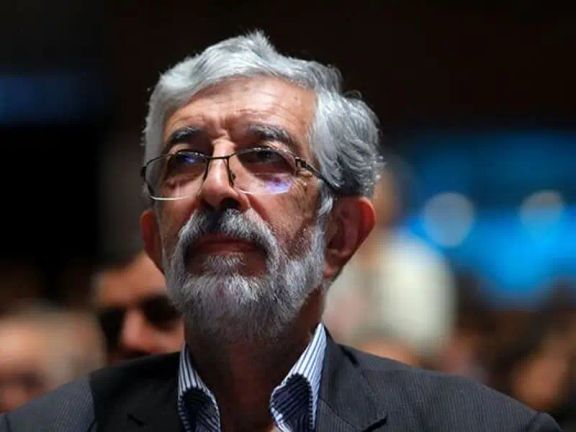
Former Iranian Parliament Speaker Gholam Ali Haddad Adel
Former Iranian Parliament Speaker Gholam Ali Haddad Adel has called for the establishment of a ministry dedicated to promoting population growth as Iranian families witness reduced birth rates and the exodus out of Iran continues.
Haddad Adel, closely associated with Supreme Leader Ali Khamenei, pointed to global trends where countries have set up similar ministries to preemptively tackle potential demographic crisis.
"Focusing on the youth of our population is crucial. We must address this before it's too late," he stated.
He cited South Korea as an example, saying despite its economic progress, it is facing severe population growth challenges and has consequently decided to create a ministry to address population growth issues.
Haddad Adel also commented on socio-economic disparities affecting birth rates, stating that "those who are poorer have more children, while the wealthier have fewer, largely due to lower marriage rates and fertility."
His call comes in response to Iran’s troubling demographic trends. Despite government expenditure, with at least 250 trillion rials ($500m) a year allocated to enhance birth rates, the population growth has continued to decline.
Iran's population growth rate has plummeted to 0.6 percent from 1.23 percent two years ago, a sharp decline from the 4.21 percent recorded in 1984, just five years after the Islamic Revolution. With Iran’s population having doubled from 40 million in the early 1980s to 84 million now, Supreme Leader Khamenei has underscored the necessity of increasing Iran's population to at least 150 million by 2050 to avoid an aged demographic profile.
In line with Khamenei's directives, the Iranian parliament passed the Supporting Family and Regenerating Population Act in March 2021, which includes measures to encourage marriage and childbearing, alongside penalties for promoting birth control. The law also saw the prohibition of government health services from providing family planning services and scrapped routine prenatal screening for genetic diseases or disabilities, though without a total ban.
An exodus of professionals, including the health sector, is also deepening the population crisis amid Iran's economic disaster. According to a recent article in the Tehran newspaper Arman Melli, during the past year about 30,000 personnel of different medical professions, including doctors, nurses, and paramedical technicians, have applied for Certificates of Good Standing with intent to immigrate to Oman. Many more have gone abroad to the likes of the UAE and Canada.
At least 23 women have been killed in Iran by their husbands or male relatives since late March this year according to a report on Saturday by Iran's 'reformist' Etemad news outlet.
Last year Etemad had reported that in a period of two and a half months, from late March 2023 to the beginning of June 2023, at least 10 women were killed by their male relatives as a result of domestic violence or so-called 'honor' based violence.
This means the number of such murders in Iran has more than doubled this year.
Tahereh Taleghani an Islamic expert told Etemadthat she considered the lack of laws to protect women in Iran as one of the reasons for these murders.
Taleghani added that "a society that is suffering from various crises, problems, and issues, unconsciously goes towards tension and violence. This tension and violence extend into families."
Highlighting the ongoing crises faced by women and girls in Iran, she underscored the insecurity they experience both in the streets and at home. She emphasized: "Violence at home leaves women feeling helpless, as neither the law nor the men in their families respect their rights."
Details of the murders and motives
Critics have highlightedthe Islamic legal system, along with Iran's deeply entrenched patriarchal culture and traditions, as factors contributing to the rise of such killings. Others in the past have attributed the cause of 'honor killings' to fanatical beliefs.
Etemad cited the various motives behind these murders as being dissatisfaction with the way of cooking, marriage proposals being declined, refusal to have sex, requests for divorce, family disputes, and honor-based violence.
Among the women killed in, a 21-year-old girl was killed by her father on 29 March in one of the border villages of Abadan city with an ‘honor' motive.
In Ahvaz, a 27-year-old woman was stabbed to death by her brothers on 7 April, also with ‘honor’ motive. The brothers of this young woman killed her in front of her husband and injured him too as he tried to intervene.
On 4 May, a man in Mashhad killed his wife based on ‘honor' motives and injured the wife's 16-year-old sister and brother with knife stabs. The victim's sister is still in a coma.
On 1 May, a young woman named Shahin Govili died of severe injuries in Kausar Hospital after her husband set her on fire.
On 3 May, an Afghan woman who was six months pregnant was killed by her husband in Mashhad for being "disobedient" according to her husband's confession.
In Tabriz, one of the daughters of the family, fearing that her father would kill her in addition to killing her mother, attempted suicide twice.
In one of the murders in Tehran, the father of the family killed his own son along with his wife.
Prevalence of ‘honor-based’ killings
A number of the murders reported were associated with honor-based motives. Historically some provinces in Iran have had a higher number of such forms of violence against women.
During her interview with Etemad Taleghani pointed out the higher prevalence of honor-based killings in certain provinces in comparison to other provinces and attributed this to a lack of modernization in those regions.
In the cases of honor-based killings, Taleghani stated that in Iran, one of the causes of honor killings is attributed to child marriage, further adding that “honor killings occur due to some inefficient laws or the lack of laws protecting women”.
“The female representatives in the parliament should also understand that some of the country's laws are oppressive to women and should be amended," she added.
According to Article 630 of the Islamic Penal Code, if a man catches his wife in the act of consensual adultery, he is allowed to kill both parties without facing publishment. This law only applies to women. Additionally, the killing of a child by the child's father or paternal grandfather is exempt from the Qesas (retribution) sentence.
In this regard, Taleghani argued that “we do not have a word called ‘honor’ in the Quran" and that Iran's Islamic Penal Code is “ineffective and does not work to solve today's problems".
According to the human rights organization, Hengaw, "at least 50 cases of femicide have been recorded in various cities of Iran since the beginning of 2024, with 10 of these cases, equivalent to 20%, being classified as honor" killings".
Moreover, Human Rights Activists News Agency (HRANA) reported 40 cases of honor killing, in the Iranian calendar year that started in mid-March 2023.
Iranian Kurdish Women’s Rights Organization (IKWRO) based in the UK asserts that it is imperative to understand the distinct characteristics of ‘honor’ based abuse and “not to conflate it with other forms of violence against women and girls, such as domestic abuse” warning that this can “dangerously undermine the ability to safeguard those at risk".
A video surfaced from Boroujerd, western Iran, depicting hijab enforcement police violently assaulting a young girl in Fadak Park for wearing a short-sleeved t-shirt.
The footage, obtained by Iran International, shows the police's harsh enforcement of mandatory hijab. According to an eyewitness, bystanders eventually intervened and rescued the girl. It is unclear how old the child is, but in Iran girls start to wear hijab as young as six or seven years old.
The incident is part of a pattern of aggression associated with hijab enforcement in Iran even against children. Just last year, another young girl was recorded being struck in the face for not wearing a hijab. The video showed her bleeding from the nose, sitting by the roadside in distress.
In September 2022, the death in morality police custody of Mahsa Amini, arrested for not wearing her hijab properly, triggered a nationwide uprising which has since seen tens of thousands of women reject the mandatory hijab.
In October, 16-year-old high school student Armita Geravand fell into a coma and later died due to a head injury after an altercation with hijab enforcers in the Tehran subway. Details of the incident remain obscured, but reports suggest she was pushed by a female agent.
The Iranian regime last month ramped up its enforcement of hijab laws under what it claims is a "national and public demand," introducing a new initiative called the Noor plan. This has led to an increase in hijab police presence, especially in central Tehran, with more patrols, vans, and motorcycle units in operation.
The United Nations branded Iran's crackdown on hijab and oppression of women 'gender apartheid' and rights groups continue to fight for women's rights in the country where women are being violently oppressed amid toughening laws.
An Iranian daily has accused Azerbaijan of planning to confiscate several Iranian properties and “cultural sites” in Azerbaijan as relations between the two sides continue to slide.
According to the Farhikhtegan newspaper, the targeted properties include the offices of Supreme Leader Ali Khamenei's representatives, Iran state television, and buildings of the Al-Mustafa International University, among others.
The Al-Mustafa University, operating under the Islamic Propaganda Bureau of the Qom Seminary, functions as a state-funded, university-style Shia seminary with branches in nearly 60 countries. Al-Mustafa has emerged as Iran’s primary instrument for promoting Shi'ism internationally.
The newspaper also criticized Azerbaijan's recent acquisition of a property in Tehran's upscale Pasdaran district, a building spanning over three thousand square meters and valued at around $20 million.
The move, described as a result of Baku's lobbying efforts following an embassy attack, has been labeled "completely meaningless" by the newspaper as “Azerbaijan continues to seal and aims to confiscate Iranian properties.”
The publication claims the properties are “diplomatic sites” and there are no legal proceedings in Azerbaijan that justify their confiscation.
The accusation comes amid a backdrop of extensive Iranian activities in Azerbaijan Republic, including offering free education to Azerbaijani seminary students, promoting Shiism, and funding various cultural and religious activities aimed at bolstering Iran's influence in the region.
The situation underscores a long-standing effort by the Islamic Republic to wield religious and geopolitical influence in Azerbaijan, particularly following the latter's independence.
The Azerbaijan Islamic Party, established post-independence in 1991 with Iran's support to export the Islamic Revolution, was dissolved four years later, accused of attempting to overthrow the government and transform the country into an Islamic republic.
Relations with the two countries were put under further strain when Azerbaijan recently opened an embassy in Israel, Iran's archenemy. Just last year, an Iranian-backed attack was foiled on Israel's embassy in Baku.
Iranian MP Amir Hossein Bankipour announced that the proposed Hijab and Chastity Bill includes measures for deporting illegal foreign nationals who defy hijab.
Bankipour outlined that under the new law, police would have the authority to arrest individuals in five scenarios: “semi-nudity, affiliation with foreign movements, resistance after being cautioned, and foreigners lacking proper documentation.”
The proposed amendment targeting hijab offenders is part of the contentious Hijab and Chastity Bill which Parliament passed in June 2023. However, the Guardian Council, a constitutional watchdog, rejected the bill in October, citing unclear language, and returned it to parliament for revision and clarification.
Following the backlash from the death of Mahsa Amini in September 2022, who died in custody after being arrested for "improper hijab," hardliners are seeking new methods to enforce hijab regulations. The incident ignited the extensive Woman, Life, Freedom protests across the nation, deeply challenging the Iranian regime. The protests led to the deaths of over 550 civilians and the arrest of approximately 22,000 by security forces.
Despite the enforcement attempts, significant resistance persists among Iranian women, who continue to defy the mandatory hijab in public spaces like streets, shops, malls, restaurants, and government buildings in the biggest challenge to the regime since the founding of the Islamic Republic.
A government billboard in Tehran encouraging young girls to be homemakers and mothers has sparked a social media backlash amid the country's violent oppression of women.
The poster, at Valiasar Square in Tehran for Iran's National Girl's Day, depicts a girl sweeping the house, feeding a baby, massaging her father, and helping her brother, titled "The light of the eye," a term of endearment in Farsi.
It comes while there has been a new wave of crackdowns to compel women to comply with compulsory hijab laws under a new initiative called the "Noor [light] Initiative." A user on the X social network wrote, "The irony of the Noor Initiative patrol vans being parked under the same billboard to arrest the ‘the light of the eye'."
The juxtapositioning of the poster has fueled the anger, the area in front of the billboard mainly used as a parking space for morality police vans to enforce hijab on women passing by in Valiasr, one of the capital's main squares.
Since the launch of Noor, social media has been flooded with videos of morality police violence against women rebelling against the hijab. There have also been allegations of police officers extorting money from women in exchange for leniency, as well as accusations of theft and sexual harassment.
Several social media users have written that the girl "The light of the eye" is introduced in this banner. Still, if the same girl, "showing a bit of hair," sets foot outside the house, "she will become a thorn in the eye of the regime and will be taken into those vans at the bottom of the picture."
Some users shared pictures of women killed during the 2022 Woman Life Freedom movement, such as Mahsa Amini, Nika Shakarami, Sarina Alizadeh, and Hadis Najafi. They said that the government of the Islamic Republic is celebrating the day of the girls while "for no other reason than their hair, they torture, rape and kill them."
The death of 22-year-old Amini in morality police custody sparked the months-long nationwide protests. During the movement, regime forces killed around 550 protesters, injured hundreds, and arrested over 22,000 people.
Many progressive Iranians criticized the outdated portrayal of women in a country in which women have fought for their right to education. “Couldn't you show a girl playing sports, studying, having fun, or hanging out with her family?”
Between 2011 and 2022, women outnumbered men on Iran's college and university campuses, yet women in the labor force accounted for only 19 percent in 2020. The government has made “systematic efforts to limit women’s access to the workplace,” according to a 2021 State Department report. The women who are employed reportedly earn 41 percent less than men for the same work.
Iranian leaders have stated numerous times that the primary function of women in society is to bear children, raise children, take care of the household, and serve their husbands.
The wife of Iran's President, Ebrahim Raisi, said it is an example of violence when women study and work like men in an interview with Venezuelan state TV. Jamileh Alamolhoda claimed, "We want women to remain women. Why should we be like men? Why should we study, work or live like men? This is a form of violence". She has continued to call the murder of Mahsa Amini “fake media hype".
During a meeting with women in December, Supreme Leader Ali Khamenei reiterated his views that holding a job shouldn't prevent women from carrying out their “actual duties.” “There is, however, a crucial requirement that women won’t be ‘deprived’ of that important and fundamental ‘feminine task’, housekeeping and childbearing,” Khamenei said.
Just months ago, the United Nations branded Iran's new laws on hijab 'gender apartheid' and rights groups such as Amnesty International have slammed the regime's ongoing gender-based oppression and violence.