Friday's Election Not Expected to Change 'Iran’s Direction': US Envoy
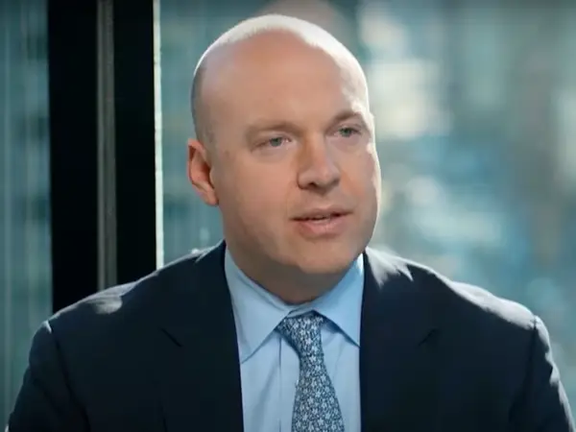
US Acting Special Envoy Abram Paley in an interview with Iran International
The US does not expect Iran's June 28 presidential election to result in any "fundamental change" in the Islamic Republic's direction, the Biden administration's acting special envoy for Iran said.
"As the Iranian regime prepares for its presidential elections, the US unfortunately has no expectation of free and fair elections or fundamental change in Iran’s direction," Abram Paley said in a series of posts on his X account on Wednesday.
Paley stressed that the six candidates are hand-picked by the Guardian Council and that Iranian voters "lack access to even the most basic freedoms; necessary features of any democracy."
"In the face of the authoritarian regime’s long history of harassing and intimidating journalists, suppressing election coverage, and denying freedom of peaceful of assembly, we support the Iranian people," he said.
Paley also vowed that the US "will continue to defend human rights in Iran, shine a light on the regime’s repression, and support a free and democratic future."
As the Islamic Republic faces its greatest battle for legitimacy since its founding, a new survey shows at least 65 percent of the country will boycott the Friday's presidential election.
According to the survey conducted by the Netherlands-based Gamaan Institute, only 22% of respondents confirmed they would definitely vote, while 12% remain undecided.
The results of the survey highlight deep-seated dissatisfaction with the current political system, with roughly 68% of respondents citing "opposition to the overall system of the Islamic Republic" as their primary reason for not voting. Other notable reasons included "the limited power of the president" (18%) and the "disqualification of my preferred candidate" (8%).
Former US State Department spokesperson Morgan Ortagus took aim at the Biden administration's strategy on Iran, urging for more robust and assertive US policy to prevent Iran from having nuclear weapons.
In an exclusive interview with Iran International, Ortagus warned that if stronger action isn't taken, Iran will get a nuclear weapon.
"Under the current trajectory, the Iranian regime will get a nuclear weapon in the next administration unless we have a president with the fortitude to stop it," said Ortagus.
She told Iran International's Arash Alaei that no matter who gets elected president in November, will have to make "some very serious and very hard decisions about the regime and their nuclear weapons proliferation."
That means Iran's estimated stockpile of enriched uranium had reached more than 30 times the limit set out in the 2015 nuclear agreement between Tehran and world powers. Iran insists that its nuclear program is for peaceful purposes.
Ortagus also took the opportunity to criticize some Western perspectives that she feels underestimate the resolve and capacity of the Iranian government to advance its nuclear program.
Responding to a question about the enrichment rates of uranium under different US administrations, she provided figures to illustrate her point:
“What was the enrichment rate in the Trump administration? You know the answer to this, 5%. What's the most recent enrichment rate in the Biden administration? 84%," highlighting a significant escalation that has occurred under the current US policy framework.
Ortagus served as a spokesperson for the United States Department of State from 2019 to 2021 during the Trump administration.
She said under Biden's administration, the Islamic Republic has been emboldened
Ortagus said attacks on US forces, the atrocities of October 7, and Iran's support and funding of its proxies known as the 'Axis of Resistance', is further destabilizing the region and the world.
"We just saw the British merchant Marine ship that was sunk. I mean, it's insane to me that we have the Houthis fully funded and armed and backed by Iran, sinking British merchant ships... It is wild to me that we have a terrorist group shooting ballistic missiles at US Navy ships after 911," she said.
“It was Iranian-made drones that killed 3 American service members in Jordan in January... It’s Iranian-made hardware, military hardware... the Houthis [use] ballistic missiles to attack American ships on a weekly basis,” she stated, pointing out the direct consequences of a less assertive US policy on regional security.
Ortagus advocated for Trump's 'maximum pressure' policy to contain Iran.
She argued that Trump's policies had effectively brought Iran "to its knees" by significantly curtailing its oil exports and crippling its economy. She credited these measures with hindering Iran's ability to fund terrorism and pursue its ballistic missile and nuclear weapons programs.
“We took Iran’s ability to export oil off the market, right? I mean, they pursued some black-market endeavours, but because we simultaneously sanctioned Iranian oil and also unleashed American energy exports, we had a situation where we kept the price of oil down,” Ortagus explained.
Ortagus lamented what she views as a relaxation of the strict measures under President Joe Biden, suggesting that the current administration has failed to enforce sanctions with the same vigor, thereby allowing Iran to mitigate some economic pressures.
“The Biden administration will say, well, the sanctions are still in place, sure, but they’re not being enforced as effectively as they were in the Trump administration,” she noted, adding that this lax enforcement has enabled Iran to continue funding and equipping its proxies throughout the Middle East.
Looking to the future, Ortagus discussed the potential for policy changes in a possible second Trump administration, emphasizing that a return to a stance of maximum economic pressure could be expected.
She argued that such measures would be necessary to prevent Iran from achieving its nuclear ambitions: “President Trump has said unequivocally that Iran will not get a nuclear weapon on his watch, and that means every option is on the table.”
Ortagus told Iran International that the Iranian government remains a significant threat not only to its own people but also to regional peace and global stability.
She said Donald Trump would not say "no to a negotiation" with Iran under a second Trump administration but would enter it "from a position of strength," but maintained that "every option is on the table."
Mothers of slain Iranian protesters and dissidents have denounced the upcoming June 28 snap presidential election in Iran, calling it a "circus."
In a joint statement Wednesday, they said that Iran's government has caused immense suffering through executions and violence. Yet, ahead of elections, candidates implicated in these crimes talk of freedom and improvement
They added, "We will not stop seeking justice until we get our right to try and punish the criminals who innocently executed and shot our children."
Gohar Eshghi, mother of blogger Sattar Beheshti who was killed under torture in an Iranian prison, separately urged the public to boycott the elections in a video message shared on her Instagram.
""Boycott this government charade! Let the liars and their reformist/hardliner pawns play alone. The world will again hear our answer: NO to the Islamic Republic!” she wrote in the post’s caption.
Azamat Azhdari, whose sister Ghanimat Azhdari was killed on Ukrainian Flight PS752 shot down in 2020 by Revolutionary Guards (IRGC), also released a video. Azhdari said that there is an "ocean of blood" between the voters and people like her.
Similar statements have been shared recently by other family members of slain Iranian protesters of the 2022 uprising in Iran.
Many Iranian activists, student groups, cultural figures, and prominent current and former political prisoners in Iran have called for a boycott of the upcoming elections.
During Iran’s 2022 protests, at least 500 protestors were killed by state security forces, and tens of thousands were arrested.
Iran's 2024 snap presidential elections were announced following the sudden death of Ebrahim Raisi in a helicopter crash last month.
An Iranian dissident escaped an assassination attempt in the Netherlands earlier this month, according to the French daily Le Monde, in what seems to be yet another sign of Iran’s resolve to silence voices of dissent outside the country.
The targeted dissident, Siamak Tadayon Tahmasebi, was singled out in an Iranian intelligence press release last summer, accused of leading a “terrorist” ring inside Iran from exile. The statement, dated 30 August 2023, linked Tahmasebi to the Israeli secret service.
On 6 June, Tahmasebi noticed two men attempting to enter his home near Amsterdam. He alerted the police, who arrived in time to arrest the armed intruders. The northern Netherlands prosecutor's office confirmed the arrests and the possession of firearms by the intruders.
One of the two suspects, Mehrez Ayari, is a 38-year-old Tunisian criminal from Villejuif, Val-de-Marne, France. He has been previously linked to the failed assassination of Spanish politician Alejo Vidal-Quadras, a supporter of Iranian opposition, in November 2023.
“When I learned about Ayari's profile,” Tahmasebi told Le Monde, “I was half happy because the police had caught a big fish, and half worried because it meant that the Islamic Republic really wanted to kill me: they had sent a professional.”
Ayari had been sought by French police since August 2022, accused of murdering a cannabis dealer. His involvement in both the attempted assassination of Vidal-Quadras and the attempt on Tahmasbi strengthens the hypothesis of Tehran's involvement.
The Islamic Republic has a long history of targeting dissidents in exile. Dozens of assassinations have been attempted ever since the 1979 Revolution, often involving non-Iranians that help those who order the attacks deny complicity.
Last month, Israeli and Swedish intelligence agencies revealed that criminal gangs operating on Iran’s behest were behind several terror attacks on Israeli embassies in Europe.
In the past few years, Iranian journalists working outside Iran have become a prime target for Tehran's campaign of terror and intimidation.
Iran International presenter Pouria Zeraati was stabbed outside his home in south London in March, but survived with injuries to his leg. Investigations into the crime suggested that the three suspected assailants were recruited in Easter Europe and flown to the UK to attack Zeraati.
Earlier this month, another Iran International reporter, Mehran Abbasian, had to be moved to a secure location following threats to his life.
The threats against Iran International staff have become a recurrent issue, stemming back to 2022. The threats reached a climax with the UK's MI5 saying it could no longer protect the team, forcing a temporary relocation to the US.
As the only pro-reform individual among six handpicked candidates in Iran’s presidential race apparently enjoys a lead, Masoud Pezeshkian has come under attack by the others, who mostly prescribe the same old policies.
They have accused Masoud Pezeshkian of not being a reformist, but trying to win the election in order to form a government that would be a continuation of pragmatist former President Hassan Rouhani’s administration.
Pezeshkian did not respond to the repeated accusations during the last two debates on Monday and Tuesday. Instead, he reiterated his obedience to Supreme Leader Khamenei and his commitment to implementing Khamenei's master plan for the country. He likely aimed to demonstrate his loyalty to Khamenei in an attempt to appease hardliners. However, this stance did little to impress reform-minded Iranians who were considering voting for him.
On Tuesday, three players other than the candidates made news by what they said. First it was Khamenei who delivered a speech that was aired live. He cautioned voters to vote for a candidate who is loyal to the regime and is determined to carry out “positive executive work.”
While some observers said he was alluding to Pezeshkian who has pledged allegiance to Khamenei during the debates and has a background in executive affairs as a former Health Minister, others opined that Khamenei was telling the voters to choose Saeed Jalili, who happens not to have played any part in the executive branch . Some netizens pointed out that the color of the stone on the gem in Khamenei's ring during his speech was the same as Pezeshkian campaign's chosen color.
On the ground and apart from the online world of armchair political analysts, videos that went viral on social mediashowed that in some cities including Qazvin there were posters on the walls that showed another candidate, Mohammad Bagher Ghalibaf next to Khamenei's son Mojtaba. Netizens interpreted that as part of the plan to groom Ghalibaf as the next president.
Another non-candidate player who came under media spotlight, was former Oil Minister Bijan Namdar Zanganeh who was accused several times by some of the candidates including Tehran Mayor Alireza Zakani of financial corruption by signing the wrong harmful oil contracts with entities in the United Arab Emirates.
Videos of Zanganeh went viralon the Persian social media on Tuesday rejecting the accusations and calling on the state television and the candidates involved to take part in live televised debates with him.
Meanwhile, a quarrel broke out between Jalili and Pourmohammadi over the same issue as Jalili accused Pourmohammadi of concealing the evidence in the case when he was the chief inspector. Pourmohammadi also said that he was ready to discuss this with Jalili on live television.
The third player whose words became more important than what the candidates said was former President Hassan Rouhani who protested for the third time that some candidates have levelled accusations on him and his government that he needs to be given an opportunity to respond and make the matter clear for the nation based on the country's election law.
Rouhani said in an interview posted on social media that hardline candidates spoke in a way as if the Raisi administration (2021-2024) never existed and blamed him and his government for the shortcomings and wrongdoings that took place under Raisi's presidency. The state TV was not observed to react to Rouhani's statement although he also sent a complaint in writing to the state television.
Still, thestrangest comment was made by Khameneiwho spoke in a way as if he was not sure the Guardian Council had made the right decision with handpicking the six candidates. He warned the voters that some of the candidates might serve the interests of the United States, repeating his decades-long argument that “the enemies” were plotting against the Islamic Republic.
A former Iranian official who has been under "administrative detention" in France since June 3, was detained for links to the Revolutionary Guard's Quds Force, among other reasons, Iran International has learned.
Bashir Biazar, a former director Iran's state broadcast, "is connected with the Unit 840 of the Quds Force of the Islamic Revolutionary Guard Corps (IRGC) whose mission is to conduct covert and/or terrorist operations outside Iran," according to French Interior Ministry documents seen by Iran International.
The documents introduce Biazar as a "producer for Iran's state radio and television" and as someone "very close to pro-regime Iranians or official representatives of the Islamic Republic."
Biazar, who is awaiting deportation to Iran, is currently in administrative detention—a procedure utilized for urgent deportation cases under French law.
Meanwhile, a group of activists and former French-Iranian prisoners in Iran have filed a torture complaint against Biazar to stop his deportation to Iran.
The activists and former prisoners have accused Bashir Biazar, a former director of the Islamic Republic of Iran Broadcasting (IRIB), of complicity in the torture of prisoners.
Iran's state television has on numerous occasions aired forced “confessions” of political and ordinary prisoners including dual and foreign nationals taken under physical and psychological torture.