Israel's finance minister: Iran has an orderly plan to destroy Israel
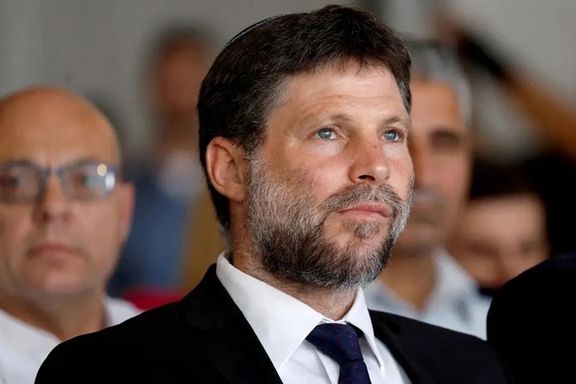
Israel's Finance Minister Bezalel Smotrich
Israel's Finance Minister Bezalel Smotrich stated that Iran has developed a detailed strategy for the destruction of Israel relying on extensive missile and rocket attacks followed by ground assaults.
“The Iranian regime has an orderly plan for the conventional destruction of the State of Israel,” said Smotrich speaking at a conference co-sponsored by the national-religious Makor Rishon newspaper and the Jerusalem College of Technology on Sunday.
According to the report of Ashkan Safaei, Iran International’s correspondent in Israel, Smotrich stated that this plan does not involve nuclear weapons. Smotrich stated that Iran wants nuclear weapons to ensure its survival.
In his speech, Smotrich detailed the strategy, which includes launching tens of thousands of missiles and rockets from various Middle Eastern locations where Iran has established military bases over the years. He indicated that this initial bombardment would be followed by coordinated ground attacks from multiple fronts, including internal fronts.
To counteract this threat, Smotrich proposed a multifaceted approach. He stated that Israel's response should be to strive to overthrow the Islamic Republic and, concurrently, neutralize all of its proxy forces in the region. He added that the response should be pursued on both political and military fronts.
Specifically, Smotrich pointed to Hamas and Hezbollah as Iran’s key proxies. He argued that Israel must first destroy Hamas "in a way that it cannot stand up and be a threat to Israel for a long time."
Additionally, he advocated for a swift and forceful strike against Hezbollah in northern Israel to incapacitate the group for at least a few years, so that it would not be a threat to Israel within Iran's broader regional ambitions.
Since the beginning of the current war in Gaza, Iran-backed Hezbollah has had daily clashes with Israeli forces along the southern borders of Lebanon.
Smotrich acknowledged that a war with Hezbollah would come at a high cost to Israel, but said “Any price we pay today will be much smaller than what we will be forced to pay in the future if we don't act."
Smotrich stated that the creation of a Palestinian state was a part of Iran's plan to destroy Israel. He emphasized that the Israeli government should fight this issue as well.
According to Ynetnews, in recent weeks, Iran has recently increased its weapons smuggling to Hezbollah, including critical air defense systems used to counter Israeli Air Force strikes in southern Lebanon.
In recent months, Hezbollah, designated a terrorist group by Israel and the United States, has attempted to target Israeli army drones, achieving some success. In response, the Israeli Air Force has targeted the intercepting systems or their parent units.
On Monday, the Jewish News Syndicate (JNS) reported that Hezbollah is collaborating with Iran to establish a new front against Israel in the Mediterranean to neutralize Israel’s air force capabilities. According to the report, Hezbollah Secretary-General Hassan Nasrallah fears a preemptive Israeli Air Force (IAF) strike from bases in Cyprus, a scenario IAF practiced in recent military exercises in the last year.
On June 19, Nasrallah threatened Cyprus for the first time, accusing the country of assisting Israel: “The Cypriot government must be warned that opening Cypriot airports and bases for the Israeli enemy to target Lebanon means that the Cypriot government has become part of the war and the resistance will deal with it as part of the war.”
Last week, Nasrallah statedthat the fate of the "Resistance Front"—an alliance of militant groups sponsored by Iran, including Hezbollah, Hamas, Palestinian Islamic Jihad, Houthis in Yemen, and Iraqi Shiite militias—is closely tied to that of its main sponsor, the Islamic Republic of Iran.
In an attempt to engage the 60 percent of voters who abstained from the first round of Iran's presidential election, Masoud Pezeshkian, a candidate in the race, made additional pledges to merchants and shopkeepers on Tuesday.
"I promise that I will never lie and will never make a promise that I cannot keep. I will make every effort to solve the problems of poverty, unemployment, discrimination, and injustice," said Pezeshkian.
The June 28 election, now proceeding to a runoff between two candidates, recorded the lowest presidential voter turnout in the Islamic Republic's history. Over 60 percent of the electorate abstained, a 9 percent drop from the 2021 election won by the late President Ebrahim Raisi, who died in a helicopter crash in May.
Despite Supreme Leader Ali Khamenei's June 25 call for "maximum" turnout to legitimize the system, many Iranians remain apathetic. The Guardian Council, a 12-member body with the power to disqualify candidates, maintains stringent control over the electoral process.
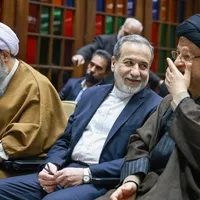
Pezeshkian emphasized the need for economic reforms and international engagement, but he did not address how he plans to achieve these under the eyes of Supreme Leader Ali Khamenei, who holds the ultimate power over Iran's foreign policy.
Iran's trade is hampered by international sanctions, particularly from the United States, aimed at curbing its nuclear program and addressing its support for terror activities and its human rights abuses. The sanctions restrict Iran's access to global markets, technology, and foreign investment, further isolating its economy.
Pezeshkian further stated, "We will ensure that those who cannot afford to pay taxes are not burdened," but he again failed to provide concrete plans or resources to support his promises.
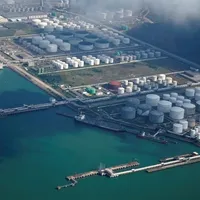
Iran’s oil minister Jawad Owji says the country is selling crude to 17 countries, including some in Europe, in spite of global sanctions.
"We sell our oil wherever we want to," Owji said in a video shared by Mehr News Agency, defying sanctions which are in place to limit Iran's nuclear program. Others are in place for its support for Russia's war on Ukraine and human rights abuses at home.
Iran's oil exports plummeted from more than two million barrels per day to less than 300,000 by 2019, drastically reducing its primary source of foreign currency income.
However, following President Joe Biden's indication of a potential return to the nuclear agreement, China began purchasing large quantities of Iranian oil, with shipments reaching 1.3 million barrels per day in 2023.
Owji refrained from providing further details regarding the amounts sold or the identity of the buyers, the sales a key way to bypass sanctions and generate income for the country which is amid a dire recession.
He revealed that the group claims to bypass sanctions using "diversionary paths," selling 1.3 million barrels daily at discounts ranging from $15 to $30 per barrel, averaging a $20 discount.
Ansari emphasized the financial loss to the Iranian people due to such discounts, stating that the sale of 1.3 million barrels per day at a $20 discount results in a daily loss of $26 million, or over $9 billion annually, exacerbating the country's shortage of hard currencies for essential imports.
Washington re-imposed sanctions on Tehran in 2018 after exiting a 2015 nuclear pact that allowed Iran to sell its oil in exchange for constraints on its nuclear program. Consequently, Iran's list of crude buyers dwindled, with most exports directed to China and smaller amounts to regional ally Syria.
A few days before the runoff election that will decide whether the relatively moderate Massoud Pezeshkian or the ultraconservative Saeed Jalili becomes President of Iran, a fierce smear campaign is raging between the two.
A specific article links Jalili to hardline cleric Mohammad Mehdi Mirbagheri, who was reportedly behind the chemical attacks on girls' schools in 2022 and 2023. It also claims that the ideology Jalili subscribes to is detrimental to the country's development.
Those opposed to the government-controlled election doctor and merge the pictures of the two candidates alleging that the two men are part and parcel of the same system, calling them "the two halves of the same apple."
Supreme Leader Ali Khamenei has warned the candidates against engaging in smear campaigns more than once. While groups close to their campaigns are clearly involved in these tactics, a larger political force appears to be at play. Election boycotters and foreign-based opposition forces are trying to persuade voters to stay away from the polls on Friday. According to official numbers, at least 60 percent of voters stayed home during the first round on June 28, and the opposition is aiming for an even more extensive boycott this time.
Meanwhile, a report on moderate conservative Khabar Onlinewebsite also highlighted the link between Jalili and Mirbagheri, dubbing Mirbagheri as the new Mesbah Yazdi, the founding father of the ultraconservative Paydari Party. Mirbagheri, who has endorsed Jalili, is known for his belief in conspiracy theories and the clash of civilizations theory.
Their ideology, the article charged, that the fundamentalist group believes it is the mission of the Islamic Republic to to change the nature of the world and to take it back to the "Islamic civilization." They call moderate Islam the "American Islam."
In another development, former President Hassan Rouhani warned "officials," presumably including Khamenei and his aides that "the coming to power of a radical government in Iran will drag the country to the brink of war, more sanctions, poverty and misery. The forming of such a government will be a loss for everyone, whether they vote or not."
Rouhani also warned the boycotters that they would bear full responsibility for the consequences of their actions. He further cautioned those who are passively observing the situation that this is a matter of war and peace, life and death, and that inaction will not protect anyone.
He described the runoff election as a choice between Pezeshkian and Jalili, framing it as a decision between realistic progress and a "wishful U-turn" that could impact the fate of the Iranian nation for at least a decade.
Iran faces a critical shortage of fire trucks with a current deficit of 2,000 vehicles, all while the country faces increasing numbers of deadly fire incidents.
Ghodratollah Mohammadi, the head of Tehran's Fire Department, said most of the existing fire trucks are 30 years old and dilapidated, unable to meet the demands of the force.
Speaking at the Sixth International Fire and Urban Safety Conference, Mohammadi stated that current municipal budgets "only cover firefighters' salaries" and lack the necessary funds for critical equipment. He called for national budget allocation to address the issue, warning that without it, some cities face "very dangerous" conditions.
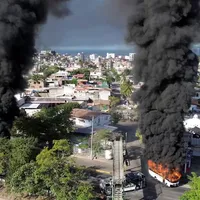
The shortage comes as Iran grapples with a surge in fires at factories, industrial centers, and refineries. These incidents are often labeled as "sabotage" by the government, adding to the pressure on the already strained firefighting services. In Tehran, fires in unsafe buildings continue to claim lives, as seen in the 2017 Plasco building tragedy, which killed 16 firefighters.
Tehran City Council recently identified 35,000 unsafe buildings in the capital.
Criticism is also directed at insurance companies. Mohammadi criticized them for their inaction in supporting firefighting efforts, advocating for a portion of their profits to be redirected to reduce public risk. He lamented that "firefighters have been forgotten in society," despite the high stress and danger of their work.
While the Iranian government allocates millions of dollars to support proxy groups in regional conflicts, domestic needs like firefighting infrastructure are being ignored, fueling unrest in the country which since 2022 has witnessed the largest uprising in the regime's history.
An adviser to Iran’s supreme leader has issued a warning that an all-out Israeli offensive against Hezbollah could trigger a regional war.
Kamal Kharrazi, foreign affairs adviser to Ali Khamenei, stated that Tehran and the “axis of resistance” would support the Lebanese militant movement with “all means.”
“All Lebanese people, Arab countries, and members of the axis of resistance will support Lebanon against Israel," he said.
Hezbollah, Iran's most formidable proxy, funded, trained, and armed by Tehran, continues its daily skirmishes with Israeli forces amid the ongoing Gaza conflict.
In an interview with the Financial Times on Tuesday, Kharrazi claimed that the Islamic Republic was “not interested” in a regional conflict and urged the US to pressure Israel to prevent further escalation. Meanwhile, Iran's regional proxies continue to attack both Israel and US targets in the region.
Kharrazi emphasized the risk of the conflict spreading, stating, “There would be a chance of expansion of the war to the whole region, in which all countries including Iran would become engaged. In that situation, we would have no choice but to support Hezbollah by all means.”
Lebanon's Hezbollah began targeting Israel after the eruption of the Gaza war, sparked by Iran-backed Hamas's invasion of October 7. At least 1,200 mostly civilians were killed and 250 more taken hostage.
The supreme leader's aide added, “The expansion of war is not in the interest of anyone — not Iran or the US.”
In April, Iran launched the first direct attack on Israel with a barrage of 350 missiles and drones following an alleged Israeli strike on Iran's consulate in Syria targeting a senior Quds Force commander and other senior IRGC figures.
A US-led coalition intercepted most of the projectiles in what was seen as the beginning of direct conflict between the two arch-enemies.