Persian Gulf Arab states back Israeli retaliation on Iran - Alhurra
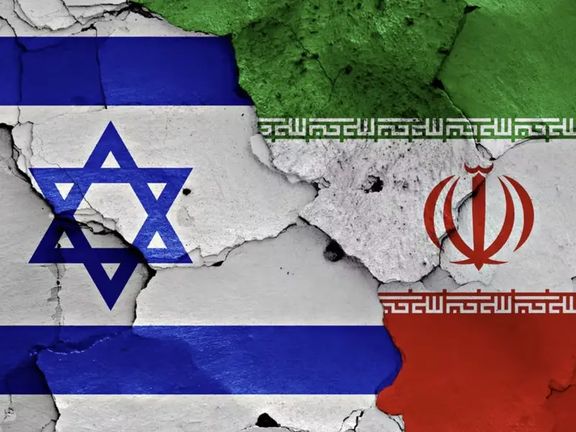
US-funded outlet Alhurra cited an Israeli source saying Arab nations along the Persian Gulf have urged Israel to deliver a decisive blow to Iran even as Tehran continues efforts to engage with those states to de-escalate tensions with Israel.
"Gulf countries have sent messages to Israel stressing the need for its response to Iran to be strict and clear," Alhurra cited the source as saying.
"Israel is receiving contacts and requests from Gulf countries to inform it in advance of the expected response so that it can take precautions in the event of a counterattack," the channel added.
Israel says it will retaliate for an Oct. 1 attack in which Iran launched over 180 ballistic missiles at the Jewish state. Iran has publicly said it is not seeking full-scale war but officials have emphasized the country is prepared for a conflict should one arise.
Iranian Foreign Minister Abbas Araghchi sought to shore up support among regional nations to mitigate Israel’s actions during a recent tour of the Middle East which included visits to Saudi Arabia and Iraq .
Over the weekend, Israeli Prime Minister Benjamin Netanyahu accused Iran of orchestrating an assassination attempt after three drones targeted one of his residences. Neither Netanyahu nor his wife were at home during the incident.
The attempted strike comes just days after the Israeli Defense Forces (IDF) killed Hamas leader Yahya Sinwar in a precision operation in southern Gaza.
“The attempt by Iran’s proxy Hezbollah to assassinate me and my wife today was a grave mistake,” Netanyahu said in a statement on Saturday night, adding Israel would “eliminate the terrorists and those who dispatch them”.
Alhurra’s interviews cited former Israeli military spokesperson Jonathan Conricus saying the assassination attempt on Netanyahu could represent a miscalculation by Iran by providing Israel with a justification for a broader response.
The news outlet further reports that Israel, while coordinating with regional militaries under US Central Command (CENTCOM), sees its response to Iranian missile attacks as a strategic opportunity to assert its military power in the Middle East and counter the threats from Tehran, both direct and indirect.
Israeli sources, including Conricus, emphasized to Alhurra that Israel's goal is not just to shift the balance of power between Israel and Iran, but to reshape the broader dynamics of the Middle East.
The report suggests that Arab nations on the Persian Gulf also view this moment as an opportunity to weaken Tehran through support of Israel’s military actions.
While in Germany last Friday, US President Joe Biden told reporters that he has a good understanding of how and when Israel plans to respond to Iran’s missile attack but declined to provide further details.
Although the timing and specifics of Israel's retaliation remain unclear, sources informed CNN last week that it is expected to take place before the US presidential election on November 5.
Previous reports from multiple news outlets indicate that Israel has assured the US it will refrain from targeting nuclear or energy infrastructure, though other reports suggest that all options are still on the table.
An imprisoned Iranian dissident has delivered a warning to Iran’s Supreme Leader through an open letter, predicting that Ali Khamenei will face the same fate as the assassinated leaders of militant groups Hamas and Hezbollah.
Writer, educator, and civil activist Abbas Vahedian Shahroodi is serving a lengthy prison sentence at Vakilabad Prison in the city of Mashhad, for his outspoken criticism of Khamenei.
“I suggest you open your eyes and clear the blood that has clouded your vision, so you can see the reality of Iranian society, which is being crushed under poverty, inflation, corruption, unemployment, prostitution, and addiction," Shahroodi’s letter said.
He further warned, “There is no need to look back at history; just look at the fate of your close friends like Ismail Haniyeh, Hassan Nasrallah, and Yahya Sinwar.”
In his letter, Shahroodi revisits his prominent 2019 open statement, in which he and 13 fellow political activists peacefully called on Khamenei to step down after two decades in power, emphasizing the pressing need for more competent governance in Iran, and a transition from the Islamic Republic to a secular and democratic government.
The initial letter, part of a larger movement, led to the imprisonment of many signatories, with Shahroodi stating that he and others have been detained on direct orders from Khamenei since its publication – while the activist has said that Khamenei has stayed silent in the face of criticism.
Amnesty Internationaland other human rights organizations have documented Shahroodi's torture by the Ministry of Intelligence, including his prolonged solitary confinement on at least one occasion.
In his recent letter, the dissident further warns that Khamenei's leadership has not only inflicted severe internal damage on Iran but also contributed to the destabilization of the broader Middle East, where proxy groups under his influence, such as Hamas and Hezbollah, have intensified regional unrest.
Shahroodi criticizes Khamenei by referencing pivotal moments in Iran's modern history, from the Islamic Republic's founding after the 1979 Revolution to its ongoing suppression of dissent. He highlights key events, including the state-led mass executions of the 1980s, the prolonged Iran-Iraq war, and the authorities severe crackdowns on protests – such as the post-election unrest in 2009 and the nationwide demonstrations in 2017 and 2019.
"The Islamic Republic," he writes, "dragged the country into a long war with Iraq—a war that could have ended within the first few months but was extended to eight years at Khomeini’s will, imposing severe human and financial losses on Iranians."
Throughout his letter, Shahroodi accuses Khamenei of neglecting the deep-rooted issues plaguing Iranian society under his rule. He implores Khamenei to open his eyes to the suffering of the Iranian people and urges him to resign before it is too late.
Shahroodi’s 2019 letter, co-signed by other dissidents, was released on the 10th anniversary of Iran’s 2009 presidential election, widely regarded as fraudulent and followed by mass protests calling for regime change. Among the signatories were prominent activists, including Hashem Khastar, Gohar Eshghi (mother of murdered blogger Sattar Beheshti), and Mohammad Nourizad. A few months later, 14 Iranian women activists issued a similar letter, condemning theocratic rule for promoting gender apartheid and erasing women’s rights.
Several signatories of both letters have since been imprisoned or faced repression for their demands.
Iran’s President has tapped as governor of Tehran a senior official tied to a deadly nationwide crackdown on protests in 2022, in the latest selection of a hardliner with a controversial past to a senior post.
The appointment on Sunday of Mohammad Sadegh Motamedian was confirmed in a cabinet meeting led by Masoud Pezeshkian, a relative moderate.
Motamedian, who previously served in key positions in the ministry of intelligence, has been accused of overseeing mass arrests and authorizing the use of lethal force during the 2022 uprising in West Azerbaijan province.
The unrest was sparked by the death of 22-year-old Mahsa Amini while in the custody of the so-called morality police enforcing Iran's mandatory hijab law.
“Motamedian played a critical role in suppressing protests in Urmia, Mahabad, and other cities, where dozens of protesters were killed,” according to Justice for Iran, a human rights organization.
Born in Kermanshah in 1970, Motamedian has held various positions in the Iranian government over the past two decades, including roles as governor of South Khorasan and Razavi Khorasan. In October 2021, he was the first senior Iranian official to meet with Taliban leaders in Afghanistan following their return to power.
Motamedian’s tenure as governor of West Azerbaijan saw the deaths of at least 56 protesters in the province, part of a broader crackdown by the Iranian government that resulted in more than 550 protesters being killed nationwide, according to human rights groups including the Norway-based Iran Human Rights Organization.
Mohammad Sadegh Motamedian, Tehran's new governor
Motamedian’s appointment comes in the context of President Pezeshkian’s broader governance approach, which has seen other controversial figures placed in key provincial positions.
Earlier this month Pezeshkian named Hossein Ali Amiri, a former judiciary official known for persecuting Jewish and Baha’i communities as governor of Fars Province. Amiri oversaw the 1999 arrest of 13 Jewish citizens in Shiraz for espionage on behalf of Israel - a charge frequently used against religious minorities in Iran.
Pezeshkian has faced criticism over his cabinet picks, particularly for naming as interior minister Eskandar Momeni, who has an extensive military and law enforcement background and played a role in suppressing popular protests in 2017, 2019, and 2022.
Seven Azerbaijani immigrants to Israel have been accused of working for Iran for two years, carrying out 600 operations, including sharing information on the air bases targeted in this month’s ballistic missile barrage from Iran.
They were also accused of sharing information about Israel’s air defense system, the Iron Dome, and the Hadera power plant, sharing intelligence directly with Iran.
The team, who lived in northern Israel, had been paid thousands of dollars, also in crypto, according to Israel’s Shin Bet.
Israel Police named the Jewish suspects as Aziz Nisanov, Alexander Sedikov, Vyacheslav Goshchin, Yevgeny Yufa, Yigal Nisan and two minors.
“The investigation revealed that for over two years, the suspects have been carrying out a series of different security missions for the Iranian intelligence agencies, under the direction of two agents from the Iranian intelligence - Alkhan and Oran, while the members of the infrastructure are aware that the information they pass on to the agents harms the security of the state, and in some cases can even assist the enemy in a missile attack,” the statement detailed.
The group carried out hundreds of information gathering tasks on IDF bases throughout the country, with an emphasis on air force and navy bases, ports, locations of Iron Dome defense systems and energy infrastructures.
“The activity included photographing and documenting the various sites that the members of the infrastructure handed over to the agents,” the statement added, the team given advanced and dedicated equipment that they had purchased ahead of time, all under the guidance of the Iranian agents.
The cell was also asked to collect information about a number of Israeli citizens with the view of them being future targets.
An indictment is expected to be filed by the prosecutor's office in the coming days.
Ronen Solomon, an Israeli intelligence analyst, said it is likely communication from Iran was done in Azeri language. "It is one of the tools of Iran's Unit 840 and IRGC Unit 4000," he said. "But how they managed to work under the radar for two years is something crazy," he said.
Israel’s state attorney's office stressed that "this is one of the most serious cases investigated in recent years."
Asher Ben Artzi, Israel's former head of Interpol, told Iran International: "I never in my life thought I would see something like this. Assisting an enemy during war, I am in shock."
After decades in the security service, he said the incident will send shockwaves through the tight-knit country of just 10 million. "It's a betrayal," he said. "It's the worst thing that a citizen can do.
Ben Artzi said the operation highlighted the sophisticated nature of Iranian intelligence, targeting "weak links" in Israel, immigrants who are more economically challenged and less integrated into Jewish life.
"They have blood on their hands," he said, as he says the cell gave information about the elite Golani unit's army base attack by Hezbollah this month, which led to the deaths of five soldiers with dozens more injured.
"I'm not sure this is the end of the story," Ben Artzi warned, expecting more such cases in the future.
It’s the latest such case in a series over recent weeks. While Iran has been trying to recruit Israelis for over a decade, the incidence of arrests has increased since the Gaza war when Iran-backed Hamas invaded Israel. Since then, Iran's proxies have been targeting Israel across its borders.
Most recently, arrests were made in two cases of Russian-Israeli citizens linked to Iran. They, like the Azerbaijanis, had come to Israel under the law of return which allows Jews around the world to immigrate to the world’s only Jewish state.
Yaron Binyamin, from unit Lahav 433, told Ynet News that "this is one of the most serious security incidents that have been investigated here,” adding that “there is a very high possibility that the main clause will be aiding the enemy in war, for which the penalty is death or life imprisonment.”
He said that the barrage of 181 ballistic missiles was able to have impacts due to the intelligence shared by the Azerbaijani team whose motive was “a thirst for money”.
The arrest of the suspects took place during a photo mission in the south of Israel. Binyamin said the relationship with Iran was managed through a Turkish intermediary named Alhassan.
He added that all the suspects were aware that they were working for Iran. "They knew they were carrying out the tasks for an enemy country, so the punishment expected of them will be particularly severe.”
Minister Micky Zohar called for the threat of the death penalty as the state faces a new and unprecedented threat from within.
On Monday he told Channel 12 in Israel "the phenomenon of traitors to the country and harming Israel's security for the sake of money while we are fighting for our future .... requires the application of extremely harsh measures, including a death penalty law for aiding the enemy in wartime."
In 1954, Israel abolished the death penalty for murder but kept it in place for war crimes, though since the establishment of the state in 1948, has enacted the death penalty only once, for Nazi Adolf Eichmann.
For the second night in a row, Russia pounded the Ukrainian capital, Kyiv, and other regions with multiple waves of Iranian-made Shahed kamikaze drone attacks.
According to the Kyiv Independent, Russian attacks across Ukraine killed at least four people and injured at least 37 over the past day, including a child.
Ukrainian air defenses shot down 59 of the 116 Iranian Shahed drones launched by Russia overnight, the Ukrainian Air Forcesaid.
Russia’s drone attacks using Iranian-made UAVs have led to global sanctions on Tehran, for having targeted civilian areas.
"Another night, another worry," Serhiy Popko, head of Kyiv's military administration, said on Telegram. "The enemy does not reduce the intensity of air attacks on Ukraine and Kyiv.”
Russia also attacked Ukraine with an Iskander-M or North Korean KN-23 ballistic missile, one Kh-35 guided aerial missile, and one Kh-31P guided aerial missile, according to the Kyiv Independent.
Kyiv Mayor Vitali Klitschko wrote on Telegram that shrapnel from around 10 downed drones landed in three main districts of the capital. Multiple buildings and power cables suffered damage in addition to casualties.
According to the Atlantic Council’s February analysis, Russia’s capacity as a leading weapons exporter has been damaged by the more than two years of war on Ukraine, meaning Iran has “become more dominant and attractive in the eyes of countries that previously depended on Russia’s supply of military equipment”.
However, with collaboration between Iran and Russia deepening, from military exercises to building a drone factory, the Atlantic Council report by Danny Citrinowicz said that “the current situation can create a joint venture between Iran and Russia that may increase their conventional mutual arms sales due to their high production capabilities”.
Citrinowicz said that Iran has sold more than two thousand drones to Russia alone until 2024, making millions of dollars from the sales, in spite of both nations being heavily sanctioned. Current estimates of drone deliveries range from 4-8 thousand units.
“Iran has no political or legal restrictions that prevent it from selling these weapons around the world; it is apparently not afraid that these products will fall into the hands of dangerous foreign parties,” he warned.
However, it is not only drones which Iran is exporting. Earlier this month, the EU sanctioned seven individuals and seven entities following Iran’s missile and drone transfers to Russia.
“This decision follows the indication by the European Council in March 2024 that, were Iran to transfer ballistic missiles and related technology to Russia for use against Ukraine, the EU would be prepared to respond swiftly, including with new and significant restrictive measures,” a statement said.
“Today’s designation includes individuals and entities responsible for the development and transfer of unmanned aerial vehicles (UAVs), missiles and related technology to Russia in support of its war of aggression against Ukraine, and to armed groups and entities undermining peace and security in the Middle East and the Red Sea region,” the statement added.
As Iran’s crackdown on the Baha’i minority continues at full force, 10 women have been given a total of 90 years in prison plus punishments including fines and travel bans.
Charged in the Isfahan Revolutionary Court with "educational and propaganda activities against the sacred Islamic law”, a source familiar with the case told Iran International that the court classified the verdict as "confidential and security-related”.
Lawyers have been prevented from photographing or receiving a copy of the judgment, delivered to the legal team in person on Sunday.
The women have had all phones, laptops, digital devices, gold items, necklaces, rings, and US and Australian dollars confiscated from their homes as a "supplementary punishment" for the benefit of the "Muslims' Fund (the state).”
They are also on travel bans and social media bans for two years in addition to being levied $15,000 in fines.
According to information obtained by Iran International, the court cited activities such as organizing educational classes on music, yoga, painting, English language, and nature tours for Iranian and Afghan children and teenagers as evidence of the charges.
Among the women charged are Yeganeh Rouhbakhsh and Arezou Sobhaniyan, a mother and daughter, Rouhbakhsh just 19 years old.
The women were arrested in October2023, and one month later, Iran International reported that Ministry of Intelligence agents had threatened their friends, neighbors, and non-Baha'i classmates, warning them that if they did not file complaints against the group or claim they were being coerced by them, they would face legal consequences.
A source close to the families told Iran International that the threats included dismissal from their jobs or expulsion of their children from schools and universities. In some cases, the authorities warned, "We will use any political content or evidence found on your phones to build a case against you."
Baha'is are the largest non-Muslim religious minority in Iran and have faced systematic persecution since the 1979 Islamic Revolution and in recent months it has intensified.
Last month, the Baha'i International Community issued a statement noting that despite promises by President Masoud Pezeshkian’s administration to respect the rights of all ethnic and religious minorities, Baha'is in Iran continue to face persecution.
Unofficial sources estimate that over 300,000 Baha'is live in Iran. The Constitution of the Islamic Republic officially recognizes only Islam, Christianity, Judaism, and Zoroastrianism.
Since the 2022 Women, Life, Freedom uprising which has seen woman in Iran under even greater threat of arrest than ever before, the risks for Baha'i women have soared, with dozens summoned to court facing vague criminal charges.
Human Rights Watch found that Baha’is face "a spectrum of abuses". "Government agencies arrest and imprison Baha’is arbitrarily, confiscate their property, restrict their education and employment opportunities, and even deny them dignified burial," a statement said.
Michael Page, deputy Middle East director at Human Rights Watch added: “Iranian authorities deprive Baha’is of their fundamental rights in every aspect of their lives, not due to their actions, but simply for belonging to a faith group. It is critically important to increase international pressure on Iran to end this crime against humanity.”