Yemen's Houthis fire surface-to-air missile at US F-16 - Fox News
Houthi rebels
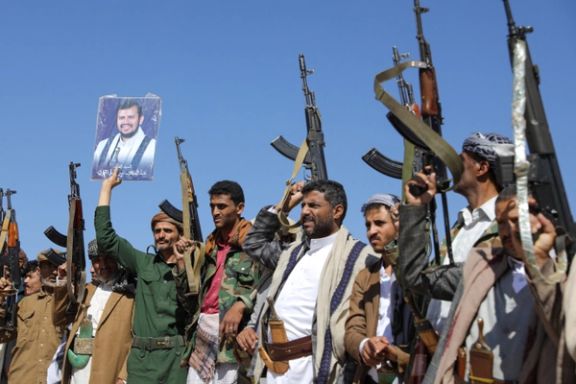
Yemen's Houthi rebels have for the first time fired surface-to-air missiles at a US F-16 fighter jet over the Red Sea, Fox News reported, in what officials describe as a significant escalation in the Iran-backed group's ongoing conflict with the US military.
The missile fired at the American warplane did not hit the target, according to the Saturday report by Fox News.
The Houthis also fired a surface-to-air missile at an American MQ-9 Reaper drone that the US military was flying over Yemen on February 19.
The Houthis have earlier shot down several MQ-9 Reaper drones over the past year. Every single one of these drones costs about $32 million, according to a Congressional report.
Last month, US President Donald Trump re-designated the Houthis as a Foreign Terrorist Organization over their attacks on Red Sea shipping and Israel linked to the Gaza war.
Now there is a policy debate at the highest levels of the Trump administration's military about the best way to counter the Houthis, according to Fox News.
Shortly after Trump's inauguration, Iran directed its allied forces across the Middle East including the Houthis to act with restraint, the Telegraph reported, citing a senior Iranian official in Tehran.
“Forces and allies in the region have been instructed to act with caution as [the regime] feels an existential threat with Trump’s return,” the Iranian official said.
“In Iraq and Yemen, forces have been told not to target any American assets, and if they do, they are explicitly warned against using Iranian weapons,” the official added at the time.
“They have been told to keep defensive positions for a while and to avoid any actions that might provoke the Americans.”
Iranian foreign minister Abbas Araghchi and parliament speaker Mohammed Bagher Ghalibaf are due to attend the funeral of slain Hezbollah leader Hassan Nasrallah in Beirut on Sunday.
His assassination by Israel last year marked an epochal setback to Tehran and its network of armed allies in the Middle East.
Ghalibaf secured attendance after personal follow-ups and an official invitation from Lebanese Parliament Speaker Nabih Berri, IRGC-affiliated Fars News reported Saturday.
The outlet also said Lebanese authorities did not extend an official invitation to Iranian President Masoud Pezeshkian..
Additionally, Fars noted that religious and Islamic jurisprudential considerations, specifically the obligation to expedite burial after a temporary interment, prevented the funeral from being held in Iran.
Lebanese authorities recently blocked Iranian flights from landing in Beirut, citing security risks and warnings from the US that Israel might target incoming Iranian planes. According to AFP, Israel had informed Lebanon via Washington that it would consider an Iranian flight landing in Beirut as a military escalation, alleging that Hezbollah uses civilian flights to transfer weapons and funds from Iran.
The flight restrictions have prevented a larger Iranian delegation and citizens from attending the funeral, according to Iranian media.
Nasrallah’s burial, five months after his assassination by Israel, will take place at Beirut’s Camille Chamoun Sports City Stadium and also honor Hashem Safi al-Din, who briefly led Hezbollah before being assassinated by Israel.
Once Iran’s most powerful regional proxy armed militia, Hezbollah was founded with the support of the Revolutionary Guards in 1982 but suffered heavy losses in last year’s war, with Israel significantly weakening its military and political power. While Tehran remains its key backer, the group’s diminished strength has raised questions about its ability to project power as it once did.
Earlier this month, US envoy Morgan Ortagus declared that Hezbollah’s “reign of terror” was over, crediting US pressure on Iran for the group’s decline. After meeting Lebanese President Joseph Aoun, she warned that Hezbollah’s involvement in the new government crosses a US “red line.”
As the group prepares for its leader’s funeral, it faces mounting challenges both militarily and politically.
US President Donald Trump's administration is pressuring Iraq to allow Kurdish oil exports to restart to help offset a potential fall in Iranian oil exports, Reuters reported citing eight sources with direct knowledge of the matter.
Trump this month reinstated the so-called "maximum pressure" campaign on Iran from his first term, with the stated aim of driving its oil sales to zero.
Iraq’s oil minister announced on Monday that exports from the Kurdistan region would resume next week.
Sources cited by Reuters said Trump’s administration was a key driver behind the announcement.
Reuters cited two US administration officials confirming that the US had asked the Iraqi government to resume Kurdish exports. One of them said the move would help dampen upward pressure on oil prices, the report added.
"It's not only important for regional security that our Kurdish partners be allowed to export their own oil but also help keep the price of gas low," Reuters cited a White House official as saying.
Iran has been a major recipient of cut-price Kurdish oil. Last July, a Reuters report detailed how the closure of the pipeline transporting Kurdish crude to Turkey in 2023 led to an increase in oil smuggling to Iran, with an estimated 200,000 barrels per day being transported by truck.
In December 2024, Reuters also reported on a fuel oil smuggling network generating at least $1 billion annually for Iran and its proxies, which had flourished in Iraq since Prime Minister Mohammed Shia al-Sudani took office in 2022.
The US aims to cut this supply route as part of Trump's maximum pressure campaign, the report said.
"Washington is pressuring Baghdad to ensure Kurdish crude is exported to global markets through Turkey rather than being sold cheaply to Iran," Reuters cited an Iraqi oil official with knowledge of the crude trucking shipments crossing to Iran as saying.
Turkey’s Energy Minister Alparslan Bayraktar told Reuters that Turkey has not yet received any official notification from Iraq regarding the resumption of oil flows.
Iran’s armed forces are set to begin a large-scale military exercise dubbed Zolfaghar 1403 on Saturday as tensions with Israel and the United States persist over Tehran’s nuclear program.
The drills, led by the Iranian Army, will span an area from the Makran, in southeastern Iranian coast, to the northern Indian Ocean, covering strategic waters up to the 10-degree latitude.
The Makran coast, which lies along Iran’s border with Pakistan on the Arabian Sea, is a key military and economic zone, home to the country's growing naval infrastructure.
Admiral Habibollah Sayyari, the commander of the exercise, warned that any attack on Iranian interests would not go unanswered. He said, “Any enemy that thinks it can harm our interests on land, in the air, or at sea will certainly suffer great damage.”
He added that the Zolfaghar 1403 exercise will demonstrate Iran’s latest military capabilities, showcasing the strength of ground forces, air defense, strategic naval forces, and the Joint Air Defense Headquarters.
Sayyari’s remarks come amid reports that Israel is considering launching an attack on Iranian nuclear sites as early as the first half of this year.
According to The Wall Street Journal and The Washington Post, US intelligence findings from last month indicate that Israel views Iran as vulnerable following the October 26 Israeli air strike, which reportedly knocked out large portions of Iran’s air defenses. The reports also suggest that Israel perceives increased US willingness to support military action, particularly with President Donald Trump back in the White House.
During a recent visit to Washington, Israeli Prime Minister Benjamin Netanyahu said that Israeli strikes had "crippled Iran's air defenses."
While Zolfaghar 1403 is an Army-led exercise, Iran has also recently conducted joint drills between the Iranian Army and the IRGC, focusing on defending key nuclear sites such as Natanz and Fordow.
The exercises, which are set to continue until mid-March, come after Iran unveiled the Zagros, its first signals intelligence (SIGINT) vessel for electronic surveillance. Additionally, Iran has expanded its drone fleet, receiving 1,000 new drones to bolster its capabilities.
As Iran ramps up its military posture, US Central Command (CENTCOM) and the Israeli Defense Forces (IDF) are closely coordinating on regional security.
On Wednesday, CENTCOM Commander Gen. Michael Erik Kurilla hosted IDF Chief of Staff Lt. Gen. Herzi Halevi at headquarters in Tampa, Florida, where they discussed Iran’s growing influence along with the ceasefire in Gaza, hostilities in Lebanon, and the Iran-backed Houthis in Yemen. The CENTCOM statement, published on Thursday, reaffirmed the deep US-Israel military partnership as both countries assess Tehran’s actions in the region.
Last month, 110,000 paramilitary Basij forces took part in a large-scale IRGC drill aimed at preparing for potential security threats in Tehran.
With Iran ramping up military activities across multiple fronts, the region remains on high alert as the country signals its readiness to counter any external threats. Iranian military commanders have been making frequent statements about their military capabilities, and recently have renewed direct threats against Israel.
A high-ranking general in Iran’s Revolutionary Guards has said that a third large-scale missile attack on Israel will wipe out the country and destroy Tel Aviv and Haifa.
“Operation True Promise 3 will be carried out at the right time, with precision, and on a scale sufficient to destroy Israel and raze Tel Aviv and Haifa to the ground,” General Ebrahim Jabbari said.
In 2024, Iran launched two large-scale missile and drone attacks against Israel, but with limited success.
Israeli air defenses, combined with intervention from the US and other allies, intercepted most of the projectiles, preventing significant damage.
The general, who is an adviser to IRGC chief commander Hossein Salami, was speaking on Thursday to paramilitary forces during ongoing drills, dubbed “The Great Exercise of Prophet Mohammad's Power.”
Jabbari claimed that “the United States can do nothing against Yemen.” He added that the resistance fronts in Lebanon, Iraq, and Palestine are at the peak of readiness, and Supreme Leader Ali Khamenei also ordered to increase the range of missiles.
Israel's Foreign Minister Gideon Sa'ar said on X that it took the threat seriously and was prepared to defend itself.
“If the Jewish people have learned anything from history, it is this: if your enemy says his goal is to annihilate you—believe him,” Sa’ar said, citing Iran International’s original article on Jabbari’s threat.
“We are ready."
Tehran faced significant setbacks in the region in 2024, including Israeli operations that severely weakened Hezbollah in Lebanon and the overthrow of Bashar al-Assad in Syria. In October, an Israeli airstrike reportedly delivered a decisive blow to Iran’s Russian-supplied air defense system.
Since Donald Trump took office in the United States, Tehran has grown increasingly insecure, issuing repeated warnings against further attacks. It has also conducted continuous military drills since early January.
General Jabbari at length praised IRGC Quds Force former commander Qasem Soleimani and Hezbollah leader Hassan Nasrallah who was killed by a targeted Israeli air raid last September.
They were “teachers who trained a whole generation of younger commanders,” he said.
Praising what he called their devotion to Khamenei, he said, “These martyrs believed their success lay in absolute obedience to the Supreme Leader.”
Palestinian Islamic Jihad leader Ziyad al-Nakhalah praised Iran for its support of allied armed groups in the region, calling it a crucial factor in their military operations against Israel.
Speaking in Tehran on Thursday during a meeting with Iran’s armed forces chief Mohammad Bagheri, he called Iran the "home of the resistance."
"The victories of the resistance in Palestine and Lebanon were achieved with the support and effective role of the Islamic Republic of Iran," he said.
He also described Iran’s direct involvement in the True Promise 1 and 2 operations—missile and drone attacks launched by Iran on Israel—as a "strategic and influential shift in the spirit of the region’s nations."