US sanctions three Iranian spies over FBI agent's disappearance
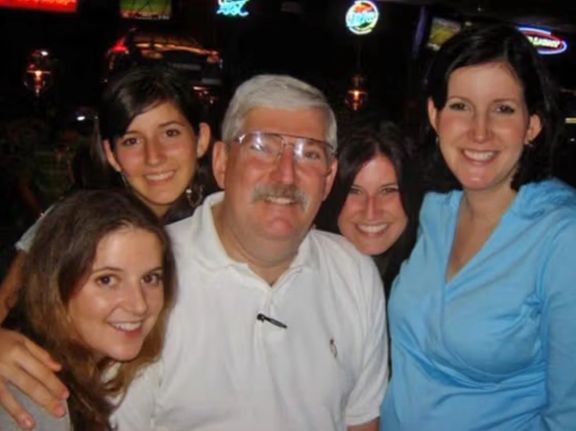
Retired FBI agent Bob Levinson and his family
The United States on Tuesday sanctioned three senior Iranian intelligence operatives accused of playing a role in the disappearance and presumed death of retired FBI agent Robert Levinson, who vanished in Iran over 17 years ago.
“The United States will also continue our relentless efforts to secure the release of all US nationals who are held hostage or wrongfully detained abroad and reunite them with their loved ones. We condemn Iran’s longstanding record of unjust detentions of and lethal plotting against US nationals,” said Tammy Bruce, spokesperson for the US State Department.
She called Iran’s continued detention of US nationals and involvement in lethal operations “a longstanding pattern of unacceptable behavior.”
The three men—Taqi Daneshvar, Reza Amiri Moghaddam, and Gholamhossein Mohammadnia—are now listed on the US Treasury’s Specially Designated Nationals (SDN) list.
All are linked to the Iranian Ministry of Intelligence and Security (MOIS), a body the US describes as instrumental in hostage-taking and overseas plots targeting Americans.
The move builds on the December 2020 sanctions against two other MOIS officers, Mohammad Baseri and Ahmad Khazai, for their alleged roles in Levinson’s detention.
Levinson, who disappeared in 2007 from Iran’s Kish Island while on an unauthorized CIA mission, is believed by US officials to have died in Iranian custody, though Tehran has never acknowledged holding him.
Iran has repeatedly denied involvement in Levinson’s case. Iranian officials did not immediately comment on Tuesday’s sanctions.
The US offered a reward of up to $20 million for information leading to Levinson’s recovery or the identification of those responsible for his fate. The State Department said its Rewards for Justice program remains active.
Due to the sanctions, any assets the men hold under US jurisdiction must be frozen, and Americans are generally prohibited from engaging with them. Foreign individuals who do business with them also risk being blacklisted.
“Iran’s treatment of Mr. Levinson remains a blight on Iran’s already grim record of human rights abuse,” Treasury Secretary Scott Bessent said in a statement. “The Department of the Treasury will continue to work with US government partners to identify those responsible and shine a light on their abhorrent behavior.”
The Treasury Department added that all three sanctioned individuals were involved in the abduction, detention, and likely death of Levinson, as well as in attempts to conceal Iran’s role in the case.
The sanctions are being imposed under an executive order signed by former President Joe Biden, aimed at holding terrorist organizations, criminal networks, and other “malicious actors” accountable for taking hostages for financial or political gain.
The sanctions come amid heightened scrutiny of Iran’s detention practices, including the cases of several dual nationals held on security charges widely viewed by Western governments as politically motivated.
Iran warned on Tuesday that it would respond strongly to any use of the so-called snapback mechanism by Western countries, a tool within the 2015 nuclear deal that could reimpose international sanctions on Tehran lifted by the deal.
Behrouz Kamalvandi, spokesman for the Atomic Energy Organization of Iran (AEOI), dismissed Western threats to invoke the mechanism as "hollow," arguing that Iran's reduction of its nuclear commitments was a direct result of the United States' withdrawal from the deal and the failure of other signatories to uphold their obligations.
"If they had fulfilled their commitments and the sanctions had been lifted, and if the US had not withdrawn from the JCPOA, naturally Iran would have fulfilled its commitments," Kamalvandi said, using the acronym for the nuclear deal.
"If Iran has stopped its commitments, it is because it does not benefit from this general agreement."
He emphasized that Iran views the trigger mechanism as a pressure tactic, similar to economic and military threats.
"The Islamic Republic of Iran considers the trigger mechanism as a tool of pressure, like other economic and military threats, and will certainly stand firmly against these issues and defend the country's rights," Kamalvandi said.
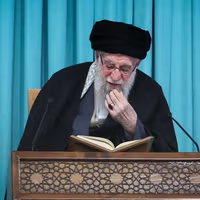
While he highlighted Iran's openness to dialogue, he stressed that it would not succumb to pressure. "Iran is always ready for interaction, but this does not mean accepting pressure," he said, adding that the country's policies are determined by Supreme Leader Ali Khamenei.
The 2015 nuclear deal, formally known as the Joint Comprehensive Plan of Action (JCPOA), offered Iran sanctions relief in exchange for curbs on its nuclear program. The US withdrew from the deal in 2018 under then-President Donald Trump, reimposing sanctions on Tehran.
Iran has repeatedly warned of severe consequences, including NPT withdrawal, if snapback sanctions are triggered.
Activating the snapback would then fall to one of the three European countries, or E3, parties to the deal, France, Britain and Germany. Those powers are currently negotiating with Iran about future steps to salvage the agreement.
US lawmakers are pressing European allies to trigger the JCPOA's snapback mechanism, citing its nuclear deal violations. The bipartisan move, driven by concerns over Iran's near weapons-grade uranium enrichment, aims to curb Tehran's nuclear ambitions before key deal provisions expire in October 2025.
Iran's uranium stock refined to up to 60% grew by 92.5 kilograms (kg) in the past quarter to 274.8 kg, one of the IAEA reports said. According to an IAEA yardstick, the amount is enough in principle for six nuclear bombs if enriched further.
While Tehran has reduced IAEA inspections since 2021 and in 2023 barred a third of the inspectors, it continues to argue that its nuclear activities are peaceful.
Iran’s currency hit a record low of 1,039,000 rials to the US dollar on Tuesday, as the absence of nuclear talks with the US continues to fuel economic uncertainty.
The rial has halved in value since President Masoud Pezeshkian took office in August, deepening concerns over Iran’s worsening economic outlook, amid continuing US economic sanctions and negative regional developments for Iran.
The steep decline began after Israel launched devastating attacks on Iran’s proxy, Hezbollah, in Lebanon in September, undermining Tehran’s regional influence. The election of Donald Trump, who takes a harder line on the Islamic Republic, has added to the uncertainty.
Last week, the currency dropped to one million per US dollar in Tehran, a day after Trump warned Iran of retaliation if its Houthi allies in Yemen retaliated against US airstrikes designed to weaken them.
The rial, which was valued at around 40,000 per dollar in early 2018, began to plummet after Trump withdrew from the JCPOA nuclear deal in May of that year and imposed tough economic sanctions, pushing inflation above 40%.
Prices for food and other essential goods have recently surged, with inflation in these categories estimated at 100%. As the rial continues to lose value, even higher inflation is expected in the coming months.
Sanctioning a Chinese refinery for buying Iranian oil is the first real sign of President Donald Trump’s “maximum pressure” on Tehran, the Wall Street Journal’s Editorial Board said on Sunday.
On March 20, the United States sanctioned Shandong Shouguang Luqing Petrochemical Co, which is known as a “teapot refinery” purchasing Iranian oil shipped by illicit methods to China in violation of US sanctions.
The WSJ said that after years of a lenient approach toward Tehran’s oil exports to China, the Trump administration finally took a step targeting the main source of Iran’s oil revenues. Chinese teapot refineries buy 90% of these exports and provide a lifeline for Tehran, which is financially strapped.
Officially, China buys almost no Iranian oil but its small refineries, not directly linked to government enterprises, unload tankers that wholly or partially carry Iranian cargoes.
“Unlike larger firms with links across the global economy, the teapots are less vulnerable to sanctions. But they tend to have links across the domestic Chinese economy. That’s what makes this move a warning to China,” the editorial said. It added that while Beijing might be willing to tolerate risk with its small refineries, it might not be ready to endanger US punitive measures against its bigger, state enterprises.
“If that’s trouble Mr. Xi could do without, he can make the business and political decision to drop Iran as a supplier. When Iran’s oil exports collapse, you’ll know the regime is feeling the heat. That’s when nuclear talks will have their best chance of success.”
President Trump last month announced the revival of his so-called maximum pressure policy toward the Islamic Republic, demanding talks to dismantle its nuclear program. Iran has responded by saying that it will not negotiate under Mr. Trump’s pressure, although it is facing serious financial pressures to a large extent brought on by US sanctions.
European Union foreign policy chief Kaja Kallas warned on Monday that Iran poses a serious threat to global stability and must never be allowed to obtain a nuclear weapon, during a press conference in Jerusalem with Israeli Foreign Minister Gideon Sa’ar.
"On Iran, we agree the immense threat Iran poses to the region and global stability. Iran is a threat also supporting Russia's war in Ukraine," Kallas said.
"Iran must never be allowed to acquire or build a nuclear weapon. And EU supports all diplomatic efforts to that effect," she added.
Sa’ar said it was “only natural” for Israel to expect European backing in the ongoing conflict the country is fighting against Iran's allies, and framed the war as part of a broader global struggle.
“We are now fighting the war of the free world,” he said. “Iran, Houthis, Hamas, and Hezbollah attack us because we are nearby", he said after last week saw three of Iran's allies once again firing on the Jewish state as ceasefires collapsed.
"But make no mistake, the war is against Western civilization—against its values and its ways of life," he added.
Earlier this month, the European Union's top diplomat called for an international nuclear deal with Iran along the lines of the 2015 JCPOA agreement, days after US President Donald Trump mooted military action to dismantle it.
High Representative Kaja Kallas told a United Nations Security Council session on EU-UN cooperation: "The constant expansion of Iran’s nuclear programme fully contradicts Iran’s own commitments as endorsed by the Security Council."
Iranian oil tankers stopped by US forces in the Persian Gulf were using forged Iraqi documents, according to Iraqi Oil Minister Hayan Abdel-Ghani.
"We received some verbal inquiries about oil tankers being detained in the Persian Gulf by US naval forces carrying Iraqi shipping manifests," Abdel-Ghani said on state television late on Sunday.
"It turned out that these tankers were Iranian ... and were using forged Iraqi documents. We explained this to the relevant authorities with complete transparency and they also confirmed this."
Later on Monday, Iran's oil ministry denied the reports about Iranian oil tankers being seized by the United States.
This comes as Washington has been ramping up sanctions on Iran's oil exports, as part of US President Donald Trump renewed "maximum pressure" campaign, aimed at cutting Iran’s oil exports to zero in a bid to force Tehran into talks over its nuclear program.
In December, Reuters reported that a fuel smuggling network using forged documents has generated at least $1 billion annually for Iran and its proxies in Iraq.
The network sells crude exclusively to companies that own refineries and does not supply trading firms, Abdel-Ghani said, adding that several traders were behind the scheme.