West uses nuclear issue as pretext for hostility towards Iran, Khamenei says
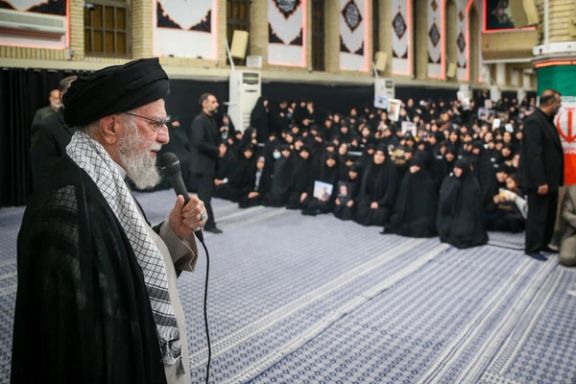
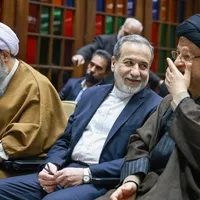
Iran’s Supreme Leader Ali Khamenei during a ceremony marking the 40th day after the deaths of Iranian military commanders and scientists killed during a recent 12-day conflict with Israel, Tehran, July 29, 2025
Iran’s Supreme Leader Ali Khamenei said on Tuesday that Western powers, led by the United States, are using Tehran’s nuclear program as an excuse for confrontation with the Islamic Republic.
“The nuclear issue, uranium enrichment, and human rights are just excuses,” Khamenei said during a ceremony marking the 40th day after the deaths of Iranian military commanders and scientists killed during a recent 12-day conflict with Israel.
“Their real problem is Iran’s religion, knowledge, and national unity under the banner of Islam and the Quran.”
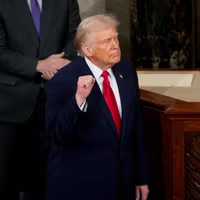
US President Donald Trump on Sunday expressed surprise at Tehran’s continued insistence on uranium enrichment despite last month’s American airstrikes on its nuclear facilities, vowing renewed strikes if Iran restarts nuclear work.
Speaking at the Imam Khomeini Hosseiniyeh at his residence in Tehran on Tuesday, Khamenei addressed families of the deceased and government officials.
“The world has now seen the full capability of the Islamic Republic up close,” he said. “These events are not new for us. For 46 years, we have resisted coups, wars, political unrest, and all types of plots.”
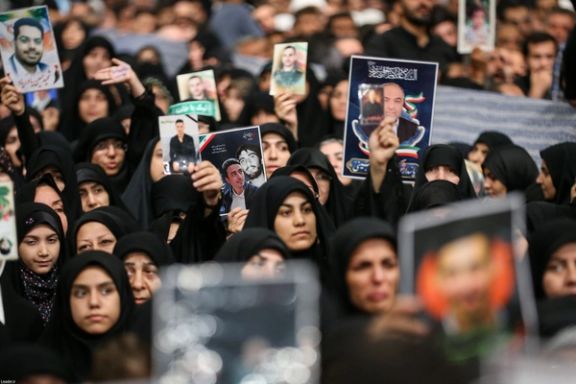
People hold photos of those killed in the recent Israel-Iran conflict during a meeting with Supreme Leader Ali Khamenei in Tehran on July 29, 2025.
Khamenei added that Iran would not abandon its twin foundations of “religion and knowledge” despite mounting international pressure.
“With God’s help, we will continue to take great strides in strengthening our faith and deepening our scientific achievements,” he said. “To the dismay of our enemies, we will elevate Iran to the height of progress and pride.”
Iran’s nuclear program has long been a flashpoint in its relations with the West, with the US and European powers accusing Tehran of seeking to develop nuclear weapons. Iran denies the accusation, saying its nuclear activities are for peaceful purposes.
An Iranian lawmaker on Tuesday urged a vote on a draft proposal to bar US talks unless the Gaza blockade ends, a day after President Trump accused Tehran of blocking ceasefire efforts.
“I drafted a proposal and requested it be reviewed as a double-urgency item,” Tehran lawmaker Hamid Rasaei said in parliament. “According to this proposal, any negotiations with the US must be tied to the end of the Gaza siege. I keep following up, but this proposal is not being raised.”
Rasaei said the proposal also covers negotiations with France, Germany and the UK, and cooperation with the International Atomic Energy Agency. “This is not just about the US,” he said. “The crimes in Gaza are happening with the full backing of Europe, and the agency cannot be treated as neutral while silence continues.”
He called the proposal a direct response to Western support for Israel’s war in Gaza. “Even the German chancellor says the Zionist regime is doing their dirty work,” Rasaei said. “So long as Gaza is under siege, Iran cannot continue talks as if nothing is happening.”
Trump blames Iran, warns of military action
Trump on Monday accused Iran of playing a role in blocking ceasefire efforts. “I think they got involved in this negotiation, telling Hamas, giving them signals and orders,” Trump said while visiting the UK. “And that’s not good.”
He also threatened military action if Iran resumes its nuclear program. “If they do, we’ll wipe it out faster than you can wave your finger at it,” he said.
Iran rejected the accusations and accused Washington of shifting blame. The foreign ministry said the US is directly responsible for enabling Israel’s actions in Gaza and called Trump’s remarks a form of deflection.
Speaker defends delay in parliament
Rasaei also criticized parliament’s leadership for delaying the bill, despite a rule that requires committee review of proposals within ten days when backed by ten members. “It has not even been sent to the commission,” he said.
Deputy Speaker Hamidreza Hajibabaei acknowledged the delay but said some bills carry broader consequences. “I agree proposals should be reviewed, but in some cases, they affect the whole system,” he said. “That doesn't mean your proposal won’t be examined.”
Rasaei insisted the urgency of the matter cannot be ignored. “This is the least we can do while Gaza is being bombed and starved. Let the people see where each lawmaker stands.”
Iran's foreign minister on Monday insisted Iran would not give up enrichment and the United States has no way to end it militarily, hours after US President Donald Trump vowed to wipe out Iran's nuclear sites again if it revived its activities.
"All should know that we Iranians have NOT BOUGHT our PEACEFUL nuclear program; we have BUILT IT WITH BLOOD, SWEAT, AND TEARS," Araghchi posted on X on Monday.
"Yes, our enrichment facilities are severely damaged, but our DETERMINATION IS NOT."
“They can start again. If they do, we'll wipe it out faster than you can wave your finger at it. We'll have to do that. We will do that gladly, openly and gladly,” Trump said.
"They still talk about enrichment. I mean, who would do that? ... How stupid can you be to say that?" Trump said.
On his message on X, Araghchi said the damage of the military strike were severe, but Iran will follow through with enrichment plans.
“The technology and know-how that our formidable human resources have developed cannot be destroyed by bombings. Yes, our enrichment facilities are severely damaged, but our determination is not,” Araghchi said.
"Iran knows exactly what happened during the recent American-Israeli aggression, both to us and our adversaries, including the extent of blows that are still being censored," Araghchi added.
Iran fired 13 missiles towards the United Stated Al Udeid based on Qatar on June 23 and one day after US attack on nuclear facilities in Fordow, Natanz and Esfahan.
At the time, President Trump said "13 (missiles) were knocked down, and 1 was ‘set free,’ because it was headed in a nonthreatening direction."
Iran International reported on July 11 citing satellite imagery that a cutting-edge communications hub within the United States base in Qatar was apparently destroyed due to Iran missile attack.
Israel launched a 12-day military campaign against Iran on June 13, killing hundreds of Iranian military personnel, nuclear scientists and civilians. In retaliation, missile strikes by Iran killed 29 Israeli civilians.
Two renowned Iranian filmmakers have condemned authorities for raiding the home of fellow dissident director Ali Ahmadzadeh and seizing his laptop and communication devices.
According to Iranian media, Ahmadzadeh’s residence was raided by several armed agents on July 26. There was no immediate announcement by Iranian judiciary on possible charges or why Ahmadzadeh residence was raided.
However, he is known as a dissident filmmaker and a supporter of protests against the Islamic Republic. He is also among the filmmakers who defy hijab regulations in their underground films.
“Fifty people raided the house of a prolific artist, stole his suitcase, laptop and mobile communication devices and held him at gunpoint, ordering him to appear the next day for questioning,” acclaimed director Jafar Panahi wrote on Instagram on Monday.
Panahi shared video footage from the aftermath of the raid, calling it “state terrorism.”
“This illegitimate power of the government allows them to imprison filmmakers or seize their belongings, but creativity cannot be imprisoned or detained. Iranian filmmakers will continue making their movies,” wrote fellow renowned filmmaker Mohammad Rasoulof in a separate Instagram post.
The raid occurred while Ahmadzadeh was on location filming his new project. He has faced previous restrictions, and some of his films have struggled to gain approval for release in Iran.
Both Panahi and Rasoulof are internationally acclaimed directors whose works have been featured at major film festivals, including Cannes.
Rasoulof was sentenced to eight years in prison in Iran before fleeing the country in 2024. Panahi also won the Palm d'Or at the 2025 Cannes Film Festival for his film "It Was Just an Accident".
Panahi has also previously faced restrictions and imprisonment and is still banned from filmmaking but continues to reside in Tehran and makes his films secretly.
Under Iranian law, all films must obtain government permits before production and receive official approval prior to any public screening.
Ahmadzadeh was arrested in Tehran in 2022 on charges of making a movie without permit.
His film “Critical Zone” won the Golden Leopard award at Locarno film festival in Switzerland in 2023. The movie was also screened at the 41st Haifa International Film Festival in Israel, a taboo in Tehran.
Iran continues to be ranked among the world’s worst countries for press freedom.
According to Reporters Without Borders, “Iran has reinforced its position as one of the most repressive countries in terms of press freedom, with journalists and independent media constantly persecuted through arbitrary arrests and harsh sentences handed down after unfair trials before revolutionary courts.”
US President Donald Trump on Monday expressed frustration over stalled efforts to reach a ceasefire with Hamas in Gaza and accused Iran of obstructing the negotiations.
“I think they (Iran) got involved in this negotiation, telling Hamas, giving them signals and orders. And that's not good,” Trump told reporters on the sidelines of a meeting with the United Kingdom's prime minister on Monday.
His remarks appeared to be the first blaming Iran for the continuing impasse.
The latest round of negotiations with the Iranian-backed Palestinian armed group in Qatar ended without results. White House Special Envoy Steve Witkoff cut his trip short and left on July 24.
“While the mediators have made a great effort, Hamas does not appear to be coordinated or acting in good faith. We will now consider alternative options to bring the hostages home and create a more stable environment for the people of Gaza,” Witkoff announced on X.
Trump said the United States remains engaged with the Gaza issue, including plans to ensure unimpeded access to humanitarian aid amid an escalating hunger crisis and initiatives to secure the release of Israeli hostages held by Hamas.
'We'll wipe it out'
Turning to Iran's nuclear program, Trump warned that if the Islamic Republic moves toward any form of nuclear weapons capability, he will not hesitate to authorize further military strikes.
“They can start again. If they do, we'll wipe it out faster than you can wave your finger at it. We'll have to do that. We will do that gladly, openly and gladly,” Trump said.
Israel launched a 12-day military campaign against Iran on June 13, killing hundreds of Iranian military personnel, nuclear scientists and civilians. In retaliation, missile strikes by Iran killed 27 Israeli civilians.
On June 22, the United States entered the conflict by striking Iran’s nuclear facilities in Isfahan, Natanz, and Fordow using long-range bombers and submarine-launched missiles. The United Stated promptly brokered ceasefire between Iran and Israel which effect on June 25.
The Trump administration has maintained for months that it does not oppose peaceful Iranian nuclear activity but has demanded Tehran end domestic enrichment.
Iran opposes any attempt by European powers to activate the UN sanctions snapback mechanism, the foreign ministry said on Monday after recent nuclear negotiations in Istanbul.
“We have clearly said, and we stress, that the European parties do not have the legitimacy or the authority to invoke the so-called snapback mechanism,” foreign ministry spokesman Esmail Baghaei said during his weekly press briefing in Tehran.
“No other topics were raised in these negotiations,” he added.
Delegates from Britain, France, and Germany—collectively known as the E3—met at the Iranian Consulate in Istanbul on Friday for their first discussions since the 12-day war in June between Iran and Israel, during which US bombers targeted Iran's three heavily fortified nuclear sites.
Iran conveyed its opposition directly to its European counterparts to any snapback effort, according to Baghaei.
“Such a right does not exist for them, and we fundamentally reject the move,” he added.
Under the terms of the 2015 nuclear deal, known formally as the Joint Comprehensive Plan of Action, the snapback clause allows for the reimposition of UN sanctions if a participant claims significant non-compliance.
Baghaei also dismissed European narratives of the recent negotiations. “The European side has presented its own version of events, but this account does not align with the facts and differs from the viewpoint of the Islamic Republic of Iran,” he said.
Earlier on Sunday, France said it will push for sweeping global embargoes on Iran unless a broader deal is reached by the end of August covering not just Tehran’s nuclear program but its missile and regional activities.
Tehran excludes defense from nuclear talks
Iran’s nuclear negotiations with European powers remain narrowly confined to sanctions relief and atomic issues, the foreign ministry spokesman added, rejecting any suggestion of broader terms.
“These talks have a clear and limited focus: the lifting of sanctions and matters related to the nuclear program,” Baghaei said.
“Any attempt by some Western states to introduce unrelated issues only reflects their confusion and lack of coherence.”
Iran’s defense matters, Baghaei said, are not on the table and will not be subject to negotiation. “Especially under current conditions, Iran is more determined than ever to maintain and enhance its deterrent capability.”
No plans for talks with US
Iran is not pursuing negotiations with the United States, Baghaei said, ruling out direct dialogue under current conditions.
“The Islamic Republic of Iran at present has no plan to negotiate with the United States,” he added.
“Whenever national interests and necessities demand, an appropriate decision will be taken and announced.”
“There is no doubt that the Zionist regime provides financial and logistical support to terrorist groups targeting Iran,” Baghaei said. “This reality has been proven repeatedly over the years.”
He described the Zahedan attack as “a clear act of terrorism” and said its goal was to disrupt public security.
“These actions are aimed at creating insecurity in Iran and threatening the safety of its citizens. This terrorist act is strongly condemned.”
Nine people, including three assailants, were killed and 20 others wounded in an armed attack on a courthouse in the city.
“These attacks are part of a broader pattern of crimes committed by the Zionist regime against Iran,” he added. “The message is clear: this regime will stop at nothing to destabilize Iran’s security.”
Iran’s judiciary chief also on Monday blamed foreign powers for Zahedan attack. “Such acts of terrorism undoubtedly originate from global arrogance, led by the criminal United States,” Gholam Hossein Mohseni Ejei said.