UK, French, German leaders threaten Iran with renewed sanctions
Iran will face the return of UN sanctions unless it resumes cooperation with nuclear inspectors and returns to talks, the leaders of Britain, France and Germany agreed on Saturday during a phone conversation.
UK Prime Minister Keir Starmer, French President Emmanuel Macron and German Chancellor Friedrich Merz "agreed that unless Iran co-operated with the IAEA and returned to diplomacy, sanctions would be reinstated at the end of August," according to the British government's readout of the joint call.
The three European powers have until October to trigger the so-called snapback mechanism under UN Security Council Resolution 2231, which would restore all international sanctions on Iran lifted by the 2015 nuclear deal.
Once invoked, if the UN Security Council fails to unanimously agree within 30 days to continue waiving the sanctions, the previous UN measures will automatically be reinstated.
Negotiators from Iran and the three European powers held a fresh round of nuclear talks in Istanbul on Friday. In the meeting, Iran pushed back on an alleged proposal by Europe to extend the deadline for triggering the snapback mechanism.
Friday's talks marked the first round of nuclear negotiations following the US-Israeli airstrikes on Iran. Washington was not part of the talks, as Tehran has said it is not currently willing to engage in further talks with the Trump administration.
'No talks with US without guarantees'
Iran’s Deputy Foreign Minister Majid Takht Ravanchi said on Saturday Tehran had conveyed messages to the US via intermediaries and would not re-enter talks without firm guarantees against further attacks.
“Before a new round of talks, we must receive guarantees that we will not face similar attacks again,” Turkish outlet Haberturk quoted him as saying.
Citing Israeli and US strikes, he said more than a thousand people had been killed. “These acts must be condemned,” he said.
He confirmed discussions with the E3 are ongoing and centered on uranium enrichment and sanctions relief. “In any agreement, enrichment must be preserved. That is a key element of our position,” he said. “Sanctions must be lifted fully. This is an essential requirement.”
Takht Ravanchi rejected Western demands to limit enrichment, calling them incompatible with Iran’s rights under the Non-Proliferation Treaty.
“Zero enrichment is not acceptable. Our nuclear program is peaceful, conducted on our soil, and in line with the NPT,” he said.
No date has been set for the next E3 round, though Takht Ravanchi said Turkey remains Iran’s preferred venue.
Israel was preparing a final wave of attacks aimed at toppling Iran’s ruling system when US President Donald Trump announced a ceasefire, The Washington Post reported, citing Israeli and American officials involved in the operation.
“When Trump declared a ceasefire, Israel was moving into a final phase of attacks intended to topple the regime,” said David Ignatius in an opinion piece published by The Washington Post on Friday evening.
The final phase, which Israeli planners believed could bring down the Islamic Republic, was halted when Trump intervened.
The ceasefire announced by Trump on June 23 ended a 12-day conflict between Israel and Iran that was capped off by US strikes on Iranian nuclear sites.
The United States had signaled it would join only if the campaign was going well, officials were quoted by the Post as saying.
At the height of the conflict, both Israeli Prime Minister Benjamin Netanyahu and Trump hinted at favoring Iranian regime change.
"It’s not politically correct to use the term, 'Regime Change,' but if the current Iranian Regime is unable to MAKE IRAN GREAT AGAIN, why wouldn’t there be a Regime change??? MIGA!!!" Trump said in a post on Truth Social in late June.
According to the Washington Post, Israel’s 12-day assault dealt such severe damage to Iran’s nuclear and military infrastructure that it set Tehran’s weapons program back by at least one to two years.
“Iran is no longer a threshold nuclear state,” one Israeli source told the paper. The official said the campaign eliminated nearly all of Iran’s first- and second-tier nuclear scientists and crippled both enrichment and weaponization capabilities.
Strikes on facilities at Natanz, Fordow, Isfahan and hidden uranium caches were paired with targeting of electromagnetic pulse and nuclear fusion research. The Israeli source said the intent was to dismantle not only Iran’s hardware but also the human and logistical backbone of its nuclear efforts.
The Post described the operation as combining aerial bombing, intelligence penetration and algorithm war.
After the first two days, Israel achieved total air superiority and destroyed around half of Iran’s ballistic missiles and 80 percent of its launchers, according to the report.
Israel's surprise campaign of airstrikes and drone attacks killed hundreds of Iranians including civilians, military personnel and nuclear scientists. Iran's retaliatory missile strikes killed 27 Israeli civilians.
Iranian President Masoud Pezeshkian on Saturday called for the return of Iranians living abroad and urged coordination between the judiciary and intelligence services to ease concerns, despite past detentions of returnees.
“We must create a framework for Iranians abroad to return comfortably and without fear, and this requires coordination with the judiciary and the Ministry of Intelligence,” Pezeshkian said during a meeting at the foreign ministry.
“These individuals are also assets of this land,” he added, appealing for their reintegration. His remarks followed a state media interview one day earlier in which Cultural Heritage, Tourism and Handicrafts Minister Reza Salehi Amiri said, “This land belongs to you, and we are rolling out the red carpet.”
Yet the government’s invitation comes against a record that has left many expatriates wary. In recent years, dual and foreign-based nationals returning to Iran have faced arrests, lengthy interrogations, and prison sentences often without formal charges being made public.
Nasrin Roshan, an Iranian-British dual citizen, was detained at Tehran’s Khomeini airport in November 2023 while trying to leave the country. She was held for 550 days before being freed in May, after repeated inquiries by rights groups and British officials.
In another case, Iranian-American journalist Reza Valizadeh returned to Iran in early 2024 after a 14-year absence. Within days, he was taken to Evin Prison’s Ward 209 and sentenced in December to 10 years by the Revolutionary Court. His family said he had returned only for a family visit.
The Iranian parliament last week passed the general outline of a bill titled “Support for Iranians Abroad,” backed by 209 lawmakers. The draft law includes measures such as easing entry and exit, offering consular support, reviewing dual citizenship policies, and facilitating academic and investment opportunities.
But critics in parliament questioned its likely impact.
“Until domestic issues such as administrative corruption, a weak banking system, and lack of meritocracy are resolved, this bill will not encourage Iranians to return,” MP Ahmad Fatemi of Babol said earlier this month.
Despite the doubts, Pezeshkian has consistently urged diaspora engagement. In a July 14 message, he told expatriates, “We must join hands and strive for the dignity of our country.”
A nationwide survey in December 2024 titled “Migration of Iranians: Causes and Motives” found that while 19 percent of 12,000 respondents lived abroad, only a fifth of them expressed any interest in returning.
Only 16 percent of Iranians are not considering emigration, according to this study.
The defense and foreign ministers of Australia and Britain hit out on Friday at what they called Iran's rising use of the death penalty and ongoing repression of women, girls and human rights defenders.
“Ministers condemned Iran’s unjust detention of foreign nationals and raised ongoing concerns over the human rights situation in Iran,” said the joint statement by the four ministers, who met for consultations in Sydney on Friday.
It cited “the escalation of the use of the death penalty as a political tool during the 12-day conflict, and the ongoing repression of women, girls, and human rights defenders.”
Their broad remarks also covered shared policy toward many other countries.
Iran’s judiciary chief announced on Wednesday that around 2,000 people were arrested during and after the 12-day war with Israel. Some detainees, accused of collaborating with Israel, could face the death penalty.
“Some of these individuals face severe punishments, including the death penalty, while others may receive lighter sentences,” Judiciary Chief Gholamhossein Mohseni Ejei said in an interview with state TV.
The UN Special Rapporteur on human rights in Iran Mai Sato urged Tehran last month to end what they described as a “post-ceasefire crackdown.”
Australia and the UK also called on Iran to fully cooperate with the International Atomic Energy Agency (IAEA) and “refrain from actions that would compromise efforts to address the security situation in the Middle East.”
Iranian Foreign Ministry spokesperson Esmail Baqaei said a senior IAEA official is expected to visit Tehran in the coming weeks to discuss a new cooperation framework.
“Ministers stated their determination that Iran must never develop a nuclear weapon,” the UK-Australia joint statement added.
Iran challenged European powers over their threat to renew UN sanctions during nuclear talks in Istanbul on Friday, Deputy Foreign Minister Kazem Gharibabadi said, in the first negotiations since Israeli and US attacks last month.
Gharibabadi said he and Deputy Foreign Minister Majid Takht Ravanchi led what he called “serious, frank, and detailed” discussions with Britain, France and Germany. The meeting focused on sanctions relief and the future of the 2015 nuclear deal, with both sides presenting specific proposals and agreeing to continue consultations.
“We explained our principled positions, including on the so-called snapback mechanism,” Gharibabadi wrote on X, adding that Tehran strongly criticized the E3’s stance on last month’s military strikes.
Iran’s Foreign Ministry spokesman Esmail Baghaei said earlier in the day that the talks were a “test of realism” for the E3 and warned against any effort to extend UN Security Council Resolution 2231, which expires in October.
Baghaei said the three powers had “no legal standing” to pursue such a move and accused them of aligning with the United States and Israel and Israel.
Iran did not reject a European offer to extend the UN resolution tied to the 2015 nuclear deal during talks in Istanbul on Friday, The Wall Street Journal’s Laurence Norman reported citing a European diplomat.
Norman said the meeting produced no breakthrough or breakdown and involved meaningful discussion as the E3 and EU offered a clear diplomatic proposal, with the European side prepared to pursue snapback sanctions but also expressed openness to an extension if Iran takes certain steps.
“There was a sense until recently that Iran seemed uninterested in any extension. Today that seems to have shifted,” Norman said on X, describing the talks as a potential turning point ahead of a decision expected by the end of August.
The Financial Times cited Western diplomats as saying that the E3 is considering offering Iran a delay in reimposing sanctions if Tehran resumes cooperation with the International Atomic Energy Agency and engages with Washington. Without progress, the snapback could be triggered by mid-September.
Gharibabadi said a technical IAEA team will travel to Tehran in the coming weeks, but inspections of nuclear facilities are not planned. Any future cooperation, he added, will depend on Iran’s Supreme National Security Council and laws passed in response to the June strikes.
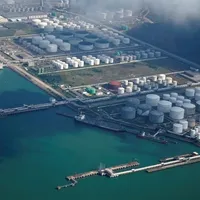
The triggering of international sanctions on Iran threatened by Europe could unleash a cascade of new challenges on the country's energy sector, from shrinking oil exports, blocked payments, halted infrastructure upgrades and deeper isolation from global markets.
Originally designed as a safeguard within the 2015 Joint Comprehensive Plan of Action (JCPOA), so-called snapback allows any member of the United Nations Security Council to unilaterally reimpose sanctions if Iran is found to be in serious noncompliance.
The mechanism cannot be blocked by a Security Council veto.
What’s at risk?
If activated, snapback would reintroduce bans on Iran’s banking, insurance, shipping, and, most crucially, oil and gas sectors.
Iran’s already limited energy exports would be further squeezed, particularly as China—the country’s top customer—faces its own pressure from US secondary sanctions.
The blow wouldn’t stop at exports. Renewed sanctions would also block access to international banking systems, complicating payments and deterring investment.
With infrastructure already aging, efforts to modernize production facilities or increase capacity would stall. Crucial imports of equipment, spare parts, and technology would dry up, making basic maintenance difficult—let alone expansion.
Ripple effects
The reimposition of sanctions wouldn’t just hit Iran—it would ripple across global energy markets. A sharp decline in Iranian exports could tighten supply and drive up oil prices, especially in Asia and Europe.
Investors and insurers are already wary. A full snapback would only raise the stakes.
More concerning is Tehran’s potential response.
Iranian officials have warned that reactivating the snapback mechanism could trigger a shift in military posture, an exit from the Non-Proliferation Treaty (NPT), or an acceleration of its nuclear program.
The risk isn’t just economic—it’s strategic.
A more isolated Iran might double down on asymmetric tactics, expand regional proxy activities, or escalate maritime disruption in the Gulf.
The symbolic weight of snapback could also undercut any remaining diplomatic channels and push Tehran further from the negotiating table.
Iran’s energy goals on the brink
Despite sanctions, Iran has managed to modestly expand oil production—targeting an increase of 600,000 barrels per day by 2025—and made incremental gains in natural gas output, including at South Pars Phase 11.
But snapback could freeze or reverse this progress.
Refinery upgrades are already underway, but vulnerable to supply chain disruptions. Without access to critical technology or parts, domestic fuel production could falter, forcing greater reliance on crude exports just as export channels are closing.
Meanwhile, renewable energy remains marginal, and any growth in that sector would likely be stifled by sanctions-induced isolation.
Endurance and limits of pressure
Iran’s shadow export network has proven resilient.
Since 2022, an estimated 42 million barrels have moved via sanctioned tankers. Strategic ties with China have helped cushion the impact, and Tehran’s evasion playbook is growing more sophisticated.
Still, the economic toll is real.
Iran loses billions of dollars annually due to reduced crude sales. And snapback could widen that gap—though it may not deliver the decisive blow some expect.
Fragmented global enforcement, selective compliance by neighboring states, and geopolitical shifts toward multipolarity all chip away at the tool’s practical effect.
Reactivating the snapback mechanism would undoubtedly raise pressure on Iran’s economy, particularly its energy sector. But it may also entrench defiance, destabilize the Persian Gulf and weaken the very diplomatic leverage it’s meant to reinforce.
Whether it isolates Iran or backfires will depend not only on Tehran’s response, but on how fractured and fatigued the global sanctions consensus has become.